

World Birds IUCN statusLC · Least ConcernGlobal IUCN. BirdLife v10 (2025); taxon matching AviList 2026 / IOC 15.2; checked: 29.10.2026. The list year is not the species’ assessment date. Source and method · BirdLife OrderPasseriformesPasserines FamilyZosteropidaeZosteropidae
White-naped Yuhina
Yuhina bakeri
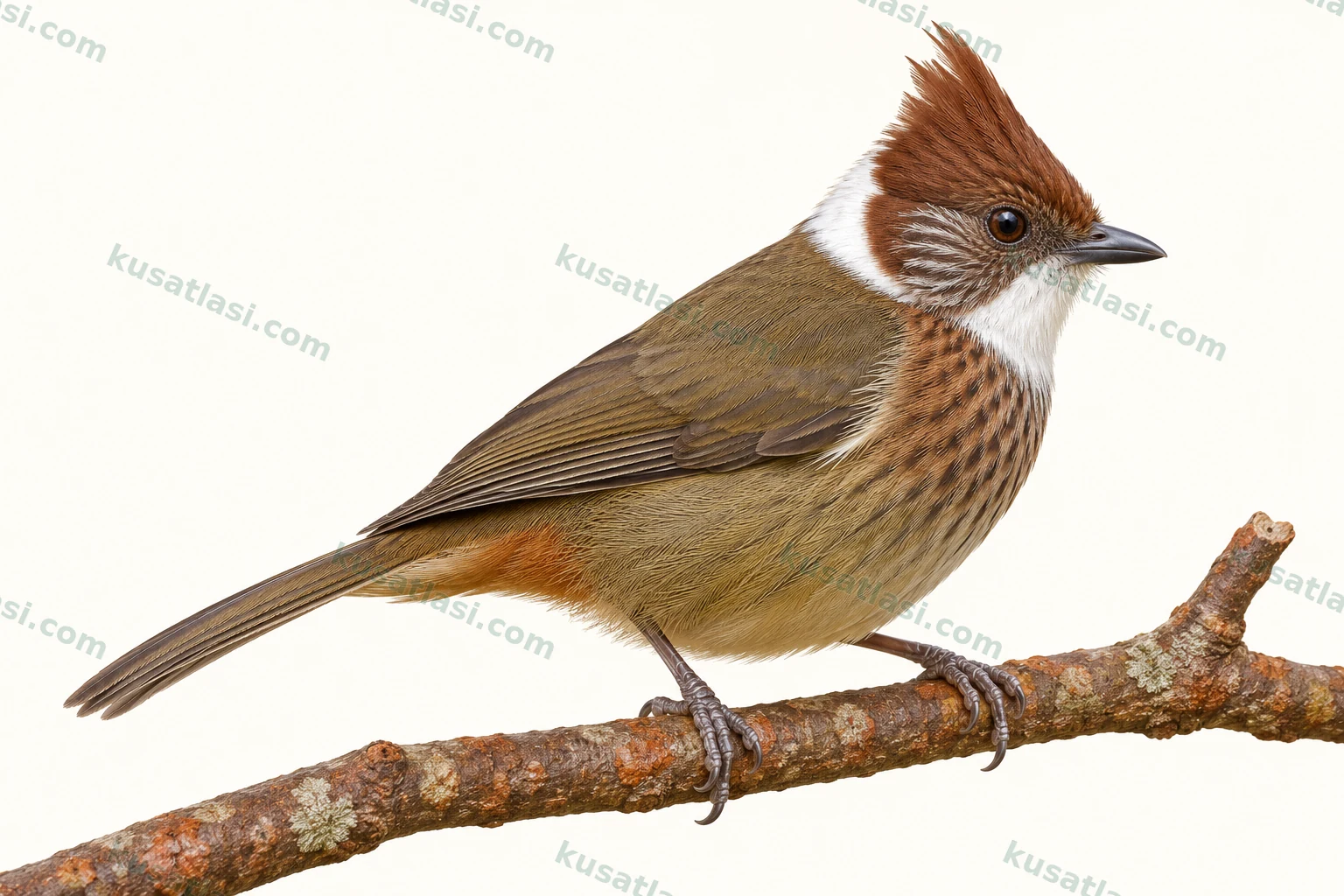
Rufous crested head, white head sides and pale throat; active forest songbird around the eastern Himalayas.
Biometrics
Length
Male12–14 cm
Female12–14 cm
Shared species value
Wing length
Male6.8 cm
Female6.8 cm
Shared species value
Weight
Male21 g
Female14 g
White-naped Yuhina
Eastern Himalayas and neighbouring mountain forestObservation guide in its natural range
Look for three features together
Do not rely on a single featureSee rufous crown, white head side and pale throat together.
The pale rear crest border does not look like a large white patch from every angle.
Searches the middle forest layer and scrub in pairs or mixed flocks.
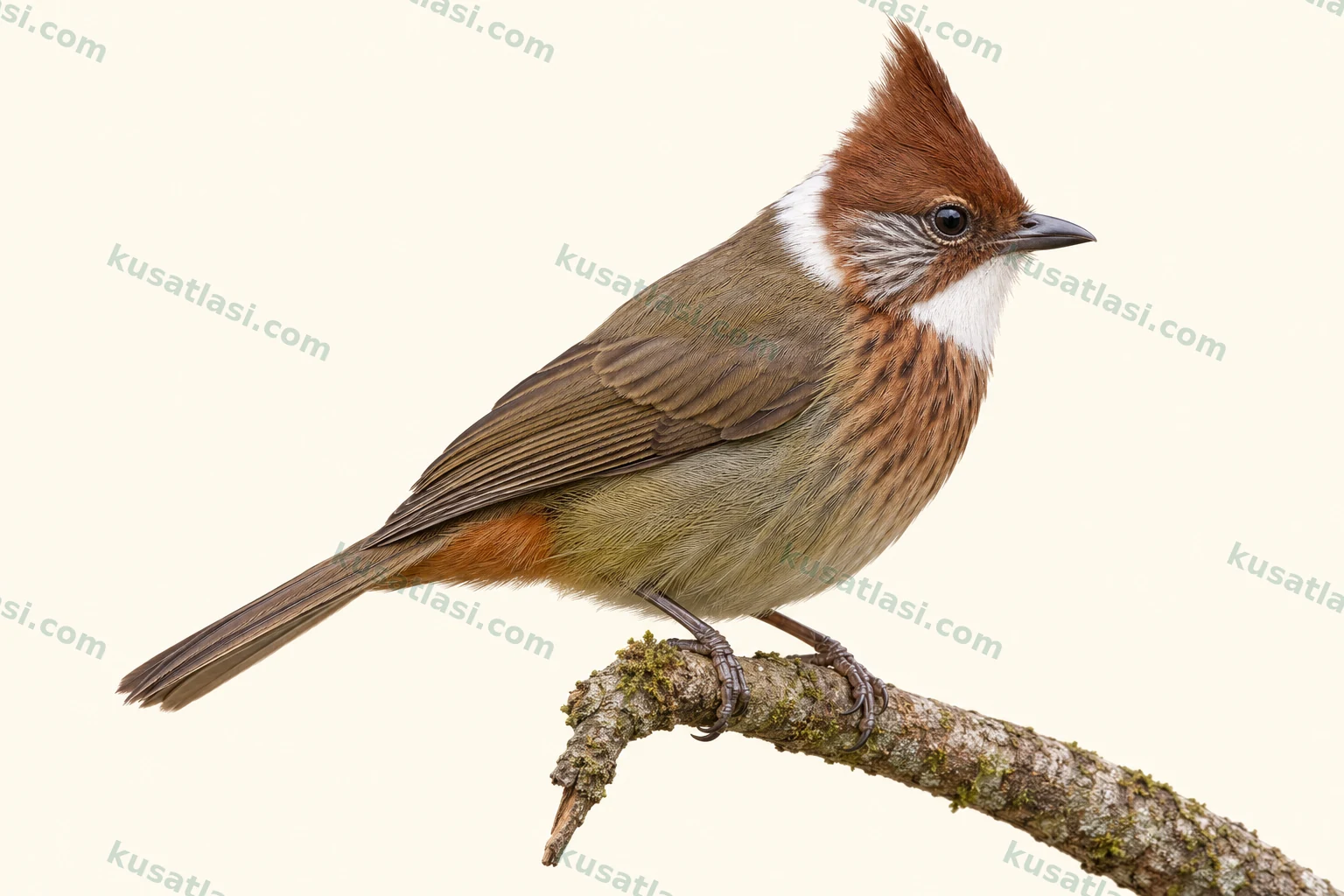
Compare male and female
 FemaleMale
No reliable visual sexing key or detailed juvenile profile was found; crest posture does not establish sex.
Where to look in its natural range?
Broadleaved evergreen forest, scrub and forest edges.
Resident with seasonal elevation movements. The Indian specialist account’s April–July breeding is not a shared calendar for the entire range. Resident and seasonally mobile along elevation.
January
Data unavailable
February
Data unavailable
March
Data unavailable
April
Indian regional account: April–July breeding, chiefly May–June.
May
Indian regional account: April–July breeding, chiefly May–June.
June
Indian regional account: April–July breeding, chiefly May–June.
July
Indian regional account: April–July breeding, chiefly May–June.
August
Data unavailable
September
Data unavailable
October
Data unavailable
November
Data unavailable
December
Data unavailable
Nest, egg and incubation
Mossy cup or roofed nest low in a shrub or beside a mossy trunk. Typical egg number, incubation and first-flight duration were not sufficiently verified.
Flowing twittering and short nasal calls; see the caller in a mixed flock.
Do not play recordings to attract birds; observe quietly, especially near nests.
Species information
Quick identification
The White-naped Yuhina Yuhina bakeri is a small crested songbird of leafy forests around the eastern Himalayas. Orange-rufous head, white head sides and white throat attract attention together. A narrow pale border behind the crest helps explain the name. It is not always visible from a distance as a large brilliant white patch across the whole nape. Check head colour, white head side and crest shape on one individual.
In a group moving through the middle forest layer, first follow a bird with its head exposed. Leaves and branches can hide the throat; a rufous crest alone does not establish the species. Observe that white head side and throat are separate areas.
General appearance and posture
Its pronounced crest relative to its small body separates its appearance from an ordinary foliage bird. Rufous head, pale head sides and throat must be read separately. Raised and flattened crests do not make two species. The Bhutan specialist report also notes the dark area between eye and bill, pale lines on the head side, fine pale feather streaks on the back, and fine brown streaks on a pale pink-cream breast. Pale head area and fine breast streaking are different patterns. A perched bird may reveal these better than one moving rapidly through branches.
Daily searching is mostly on branches and shrubs. The middle forest layer is useful for observation; do not search exclusively in treetops or on the ground. Following nearby movements when one bird pauses can reveal the group's direction.
Males, females and young birds
This account uses the rufous crested head, white head sides and pale throat as shared adult marks. The sources did not provide a species-specific reliable distant male–female key. A higher-looking crest does not establish a male; feather posture changes appearance.
Sufficient independent information for a detailed age-changing juvenile plumage profile was not verified. Juvenile colours of other yuhinas are therefore not added. If adult marks are poorly seen, consider image quality and head angle first.
Appearance in flight
Diagnostic head colours may appear briefly in movements between trees and shrubs. A fast passage through leaves may not reveal complete upper- or underwing surfaces. No distinctive wing pattern giving certain flight-only identification was verified.
Seasonal descent on mountain slopes does not make every short flight migration. Daily forest foraging movements and elevation movements differ in scale. Recording the slope and forest layer makes an observation more meaningful.
Voice and behaviour
It is very vocal. Flowing fine twittering sequences and shorter nasal, bleating-like calls may be heard together. Group voices help locate birds.
Pairs, small groups or larger gatherings occur according to season and region. Specialist accounts describe joining mixed flocks of small insectivorous birds. A large group does not prove a nest at that point.
Similar species
The Whiskered Yuhina Yuhina flavicollis is a comparison in the same mountain-forest region. A crest or mixed-flock behaviour alone may be shared. For White-naped Yuhina seek rufous head tone, white head sides, pale throat and pale border behind the crest together.
With Stripe-throated Yuhina Yuhina gularis, examine whether the throat is truly plain pale or streaked. Branch shadows are not recorded as feather streaks. Several yuhinas may share a flock; do not combine one bird's crest and another's throat into an imaginary individual.
Global range
Its natural area is the eastern Himalayas and neighbouring mountain forests. Northeastern India, Bhutan, Myanmar and Yunnan in southwestern China form the main geography. There are limited eastern Nepal records too. Current taxonomy and regional studies are read together; a country name does not imply equal density in every forest. Records are particularly scarce at the western range edge.
Status within its natural range
It is Least Concern globally. Nepal's 2016 national Red List, however, assessed it as Critically Endangered within that country. The categories concern different geographical scales. The Nepal account considers very limited eastern records, a small local group and broadleaved forest loss; its population interpretation is not today's global total.
Movements and migration
It is a resident forest bird with seasonal altitudinal movements also described. In colder periods it may descend to lower forest and scrub. This does not mean every bird makes the same long migration between countries. Specific Nepal dates are local records, not fixed arrivals and departures across the range. Dated map points mark observations, not an individually tracked altitudinal route.
Breeding habitat
It uses broadleaved evergreen forest and regrowth. Forest paths, streams, openings and edges can be chosen for nesting. The Indian research institution's compilation gives April–July, chiefly May–June breeding. This belongs to that regional account; populations from Nepal to Myanmar are not assumed to nest in the same weeks.
Nest site
A nest low in a shrub or against a mossy trunk can be an open cup or roofed according to shelter. Moss, dead leaves, roots and small twigs are used, lined with fine rootlets. A roofed structure in an exposed site and an open cup in a bank hollow are described as arrangements of the same species. Typical egg number, incubation and time to the young's first flight were not sufficiently verified; another yuhina's numbers are not transferred.
Daily habitat use
It searches actively in the middle forest layer and scrub. Pairs or groups progress through branches and join mixed flocks outside breeding. Forest fragmentation reduces suitable habitat, especially at restricted range margins. Do not enter a nesting shrub; watch from the existing path without blocking birds carrying material or food.
What does it eat?
Insects are among the main foods; small fruits are eaten too. Both the Indian specialist habitat compilation and Nepal account mention these groups. This does not give the same insect-to-fruit ratio for every meal. No detailed seasonal food percentage across the range was found. A particular insect or fruit is therefore not declared food merely because it occurs nearby.
How does it forage?
It searches branches and scrub for small prey, often in the middle forest layer. Joining a mixed flock does not mean taking the same prey as every neighbour. Reaching towards a leaf may be searching; without seeing prey, its invertebrate identity is not certain.
Fruit-tree visits may show a temporary food source, not a lifetime spent on that tree. Feeding and nesting areas are observed separately. Follow searching at different branch layers from a natural path instead of trampling understorey to keep up.
Its named white nape is not a big patch from every angle
The rufous crest and pale border behind it help explain its name. Cornell's identification account specifically notes that the nape does not always look conspicuously pale. Do not overlook other strong marks while searching for white. Checking white head sides, pale throat and rufous head on one bird reduces angle-dependent mistakes.
One species, two conservation scales
Global Least Concern and Nepal's 2016 national Critically Endangered assessment do not cancel one another. The national study addressed very few eastern Nepal sites and forest loss. A wider global range does not make a small edge population safe. Retaining the study date and country boundary prevents false generalization of numbers and categories.
Nest shape can depend on site
The specialist habitat account describes both cup and roofed nests. Roofed construction in an exposed place and an open cup in a natural hollow require reading shape with shelter. An open-topped nest alone does not establish another species; material, site and the bird using it are verified together.
A small forest group is not the whole population
Several birds in a mixed flock do not directly give the local total. The Nepal account also notes insufficient targeted counts. One path visit cannot calculate birds in the entire forest. Seasonal elevation shifts, observed forest layer and surveyed area matter when comparing records from different dates.