

World Birds IUCN statusAccording to the source taxonGlobal IUCN. BirdLife v10 (2025); taxon matching AviList 2026 / IOC 15.2; checked: 29.10.2026. The checklist year is not the species assessment date. Related IUCN assessment: Zosterops senegalensis — African Yellow White-eye: LC · Least Concern. The category belongs to the named source taxon. An exact match to this page’s species scope has not been verified, so it is not transferred as an independent species category. Source and method OrderPasseriformesPasserines FamilyZosteropidaeZosteropidae
Forest White-eye
Zosterops stenocricotus
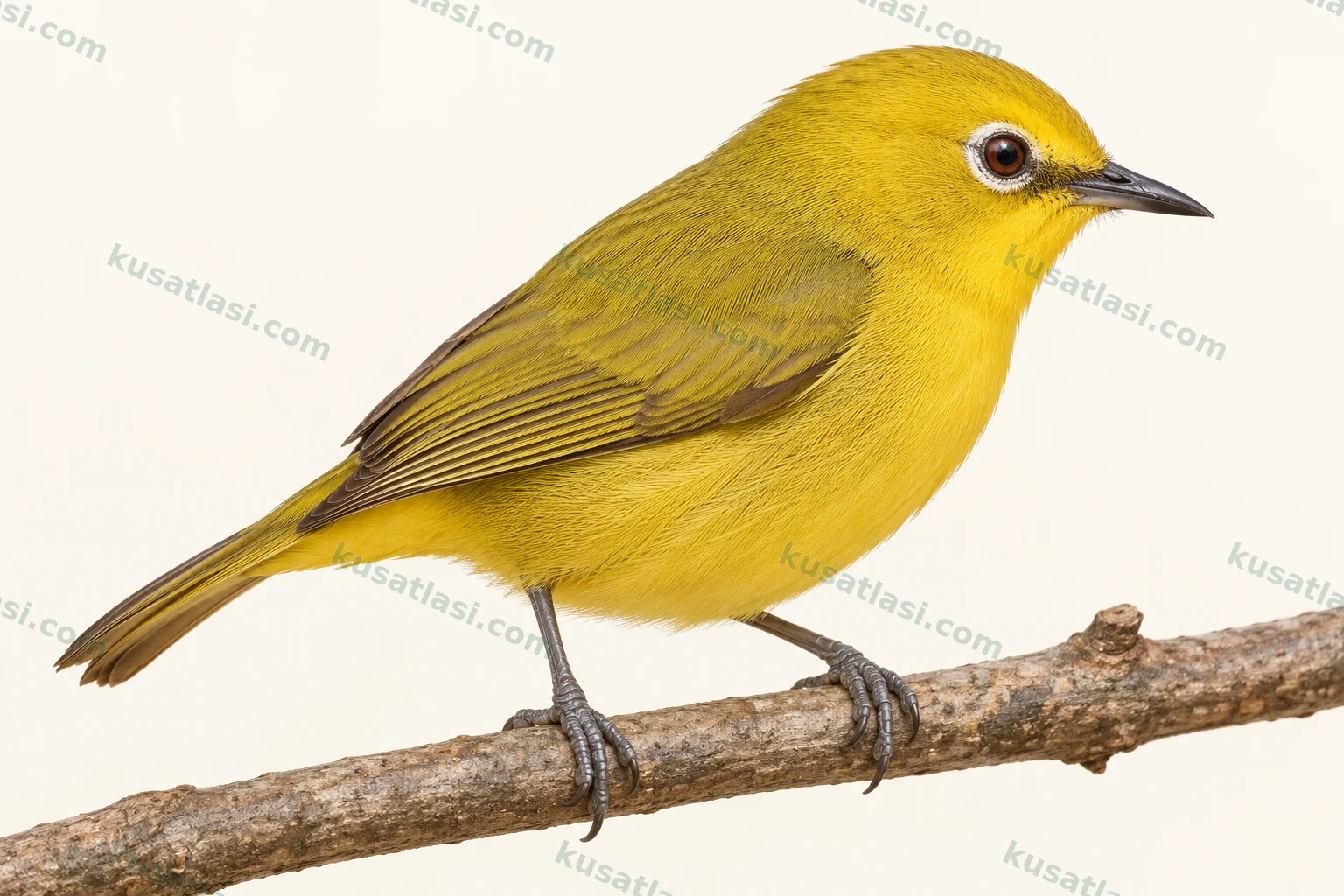
A small yellow-green songbird around the Gulf of Guinea, with a pointed bill and conspicuous white eye-ring. It occurs in active, sometimes mixed bird parties.
Biometrics
Length
Male11.5 cm
Female11.5 cm
Shared species value
Wing length
Male5.46 cm
FemaleData unavailable
Weight
Male6.8–14.1 g
Female6.8–14.1 g
Shared species value
Forest White-eye
Mainland woodlands around the Gulf of Guinea and BiokoObservation guide in its natural range
Look for three features together
Do not rely on a single featureAssess the white feather ring around the eye together with the whole head.
See the yellow underparts and olive-yellow back on the same individual.
Use the range of southeastern Nigeria–Cameroon–northern Gabon and Bioko.
Compare male and female
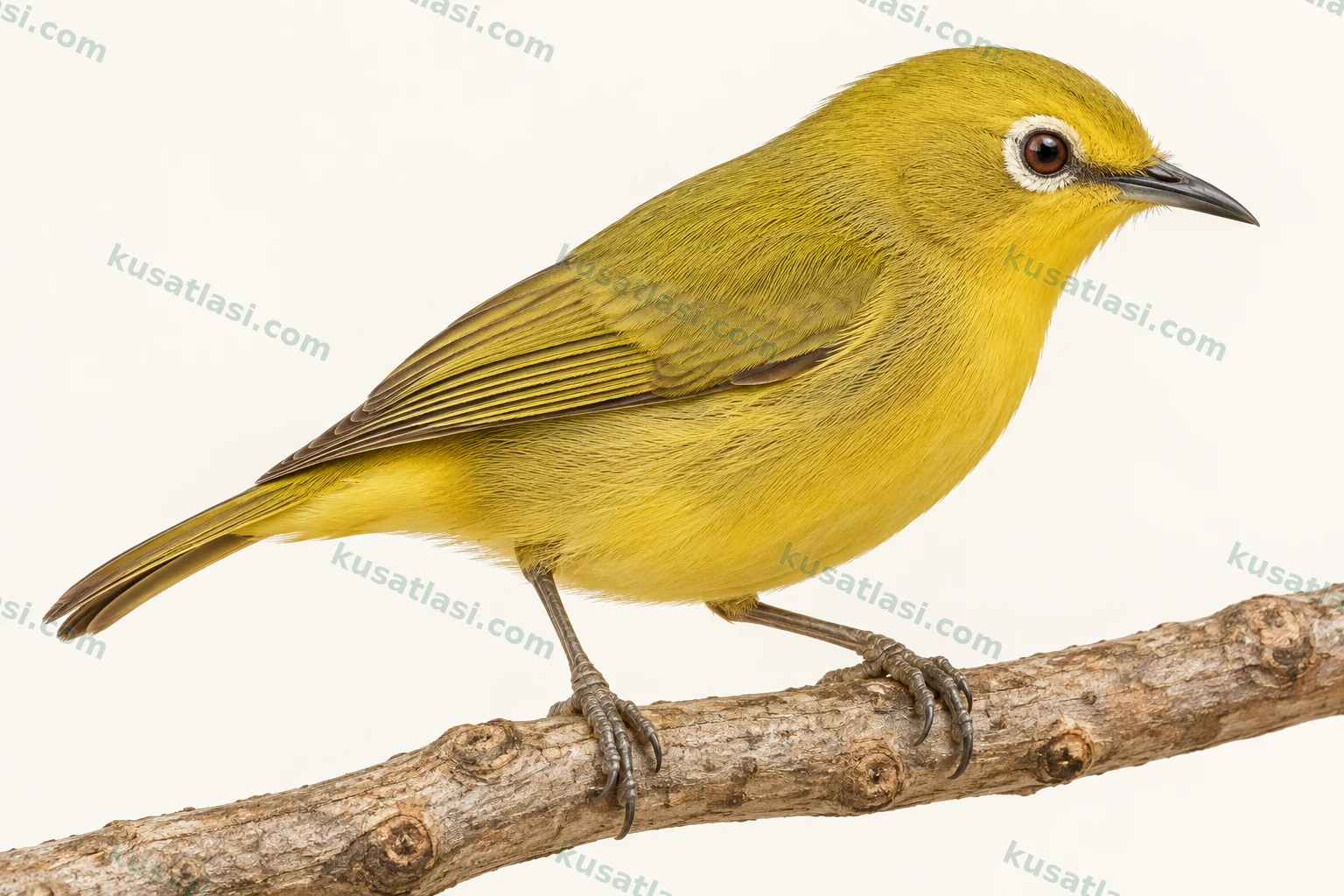 FemaleMale
No reliable external identification key for males and females was verified. A yellower or darker appearance is not used to determine sex.
Where to look in its natural range?
Watch active small-bird parties in forest cover, gardens, montane scrub and plantations.
The taxon is essentially resident; verified regional egg-laying months for the current species concept were not found.
All months: Classified as resident; no verified species-specific regional egg-laying period was given for this month. No verified regional date specific to this month was provided; this does not mean local absence.
January
February
March
April
May
June
July
August
September
October
November
December
Nest, egg and incubation
Nest form, typical clutch size, incubation duration and days to first flight confidently attributable to the current taxon could not be verified. Values from related species are not used.
The call is a thin, rising trill; the quieter song consists of successive short, conversational-sounding notes. In a mixed party, the sound must be linked to the correct individual.
Do not play recordings to attract birds; observe quietly, especially near nests.
Species information
Quick Identification
The Forest White-eye, Zosterops stenocricotus, is a small, active songbird of woodlands around the Gulf of Guinea. Assess its pointed bill, yellow underparts, olive-yellow upperparts and conspicuous white eye-ring together. This ring is not the eye’s own colour: it is a pattern formed by pale feathers surrounding the eye. When the bird turns its head, part of the ring may fall into shade. A single white reflection is not enough for identification without seeing the whole head pattern.
It often appears in active parties and may join mixed groups with other small birds. Not every yellow bird in such a group need be the same species. Follow the eye-ring, underparts and back of the same individual together. Its closest lookalikes are also yellow-green. A somewhat darker, greener appearance can help identify Forest White-eye, but this character is affected by light and cannot establish identification alone.
General Appearance and Posture
The ring of white feathers around the eye strongly contrasts with the yellow and olive tones. The underparts are yellow and the back olive-yellow. The small pointed bill appears as a fine line in front of the head. AVONET gives an upper-bill length of 1.3 cm in eight male specimens; this is not the same measurement as bill length taken from the nostril. A slender-looking bill also cannot establish the food being taken from a photograph.
Some measurement differences between Bioko and Mount Cameroon populations have been directly studied. A historical thesis found larger bill and leg measurements and shorter tails in the Bioko samples. This does not mean that every island bird is larger than every mainland bird. The sample compared and body part measured matter. General apparent size in a photograph cannot replace these detailed differences.
Males, Females and Young Birds
Yellow underparts, an olive-yellow back and a white eye-ring describe the basic species appearance. A species-specific colour key reliably distinguishing males from females externally was not verified in this work. Dividing birds into sexes according to a yellower, greener or darker appearance is not reliable.
Sufficient species-specific information on every stage of juvenile plumage change and reliable distinctions from adults was unavailable. A weak-looking eye-ring in a photograph is not evidence of youth by itself. Head angle, leaf shadow and image sharpness may hide the ring. Nearby adults do not establish a family relationship either, since the species may occur in mixed parties.
When birds move rapidly among the same branches, following individuals becomes difficult. A bird briefly lost and then seen again should not be counted as a new bird. An observation remains valuable without age or sex information. Clear recording of the basic plumage pattern and natural geography strengthens identification more than assigning an unknown sex.
Appearance in Flight
Short flights may be seen during movements within a party, allowing the small body and tail proportions to be followed as the wings open and close. Nevertheless, seeing the eye-ring and body colours in several suitable poses is more useful. No detailed colour key for the flight feathers was verified for this species, so a single bright or dark wing frame is not used as a definitive mark.
Presence on Bioko and the mainland does not mean that every observed party has crossed the sea. Molecular research examines past lineage relationships; it does not track the flight route of a present-day individual. Movement between a few branches and colonisation of an island over generations occur at different scales. Showing two areas together on a map is insufficient to add a directional annual migration arrow between them.
Voice and Behaviour
The specialist field account describes the frequently heard call as a thin, rising trill. The song is quieter and consists of short, conversational-sounding notes in succession. Call and song have different behavioural contexts. In a mixed bird party, the sound must be linked to a particular individual: a nearby songbird may otherwise be mistaken for this species. A short silent observation also does not mean the species is always silent.
Researchers have discussed vocal and genetic differentiation together when separating the species from related African white-eyes. Genetic lineage separation does not prove that every call is readily recognizable in the field. The region of recordings and the taxon to which they are assigned matter. A similar short syllable alone does not confidently name every yellow-green bird. The visible eye-ring, plumage colour, habitat and natural range are assessed together.
Similar Species
1. Zosterops senegalensis is very similar in plumage colour. The specialist account describes Forest White-eye as slightly darker and greener; geography and habitat may also help. A photograph’s colour-temperature setting or forest shade can imitate that difference. The region and bird’s basic pattern are checked together using current species boundaries. Measurements described under the old broad Z. senegalensis concept are not all transferred to this page.
2. Zosterops brunneus on Bioko may appear in older sources as Speirops brunneus. A regional evolutionary study addresses the presence of both birds on the same island and their different appearances. Close lineage relationships do not show that they are the same species or use the same elevations everywhere. The current name, eye-ring and body pattern are examined for the appropriate taxon; an old genus name does not justify merging its records with this page’s.
Global Distribution
The current natural range includes the mainland from southeastern Nigeria through Cameroon to northern Gabon, and Bioko in the Gulf of Guinea. Research samples were taken directly from Mount Cameroon and Bioko. A few sampling localities do not show that the species occurs only at those two points, but neither is every intervening forest assumed continuously occupied. This species does not inherit the entire continental range of the formerly broad African yellow white-eye concept.
Status Within Its Native Range
The current AviList entry indicates that the separate species has not been assessed. Silently transferring the threat category of the older broad taxon to the new species is inappropriate. It may occur in forest, gardens, montane scrub and plantations. An observation in a planted woodland does not prove that natural forest loss has no effect or that all plantations have equal value. Dated field studies are needed to assess local populations.
Migration
AVONET treats the current taxon as resident. This classification does not mean every individual remains in the same tree for life. Historical lineage connections between Bioko and the mainland have been investigated in molecular studies; explanations of past dispersal are not present-day regular seasonal routes. Regional breeding months and a directional annual migration line have not been verified and are not added to the map. Dated observation cells show approximate record locations; one cell does not prove breeding or permanent residence there.
Breeding Habitat
Habitats used include forest, gardens, montane scrub and plantations. This broad list does not mean nests have been observed in all of them. Mount Cameroon and Bioko samples support research on local distribution and measurement differentiation; they are not a complete inventory of nest preferences. Recording vegetation height, structure and surrounding natural woodland makes an observation’s context clearer.
Nest Site
Nest form, typical clutch size and incubation duration in days could not be verified here with sufficient confidence for the current Zosterops stenocricotus taxon. A cup nest or day count from another yellow white-eye species is not presented as belonging to this bird. Unless nest entry and exit were observed directly, intense activity around a branch is recorded only as space use. An uncertain nesting record requires separate verification of species and developmental stage.
Daily Space Use
Highly active parties are followed through tree and shrub cover, sometimes alongside other small birds. Movements to remain with the party can complicate counting individuals at a point. A garden observation alone does not establish which food is used or whether breeding occurs there. Following natural movements without shaking branches or calling the party back with sound separates habitat records from behaviour caused by intervention.
What Does It Eat?
AVONET’s current species record classifies Forest White-eye as feeding on invertebrates. This describes the dominant dietary tendency, not every food type or annual proportion. Detailed species-specific stomach contents or fruit and nectar percentages were not verified in this work. Other white-eyes consuming fruit or nectar does not justify assigning the same proportions to this species.
How Does It Obtain Food?
Watch for actual food-taking while following an active party through vegetation. A pointed bill directed at a leaf and prey actually being taken are not the same record. If small prey is not clearly visible, no particular insect or larval name is given. Feeding in a mixed party must also be assigned to the correct individual; food taken by another bird is not added to this species’ list. Shaking leaves or drawing the bird to bait is unnecessary for observing its natural search. Recording returns to branches, searching movements and unseen intervals separately prevents limited observations being portrayed as more certain than they are.
Similar Colours Can Conceal Species Boundaries
Africa’s yellow-green white-eyes can look extremely similar. Molecular research showed that the old broad Zosterops senegalensis concept did not form a single lineage group. Forest White-eye was treated separately in that assessment. This does not mean that choosing a shade of green in one photograph reveals genetic identity; field identification and lineage research provide different information.
Sharing an Island Does Not Require One Evolutionary Explanation
Bioko is connected historically with the mainland but separated from it by sea. A regional thesis compared the island’s white-eyes with Cameroon samples. Explanations involving past dispersal, separation and later contact are discussed; they are not all directly observed, established events. A current flock’s movements cannot be drawn from old lineage relationships.
The Body Part Measured Matters
Bill, leg and tail measurements differed between Bioko and Cameroon samples, but not all in the same direction. Some parts may be larger in one group while its tail is shorter. A general description such as “larger” cannot therefore replace detailed measurements.
New Species Boundaries Also Affect Assessment
The current list’s indication that the separate taxon has not been assessed does not by itself mean that it is highly threatened or safe. First establish which population was evaluated. Taxonomic research and conservation assessment complement each other; the difference in scope must be retained when comparing categories attached to broad and narrow species names in different years. Any new assessment should state both its date and the taxon it covers.