

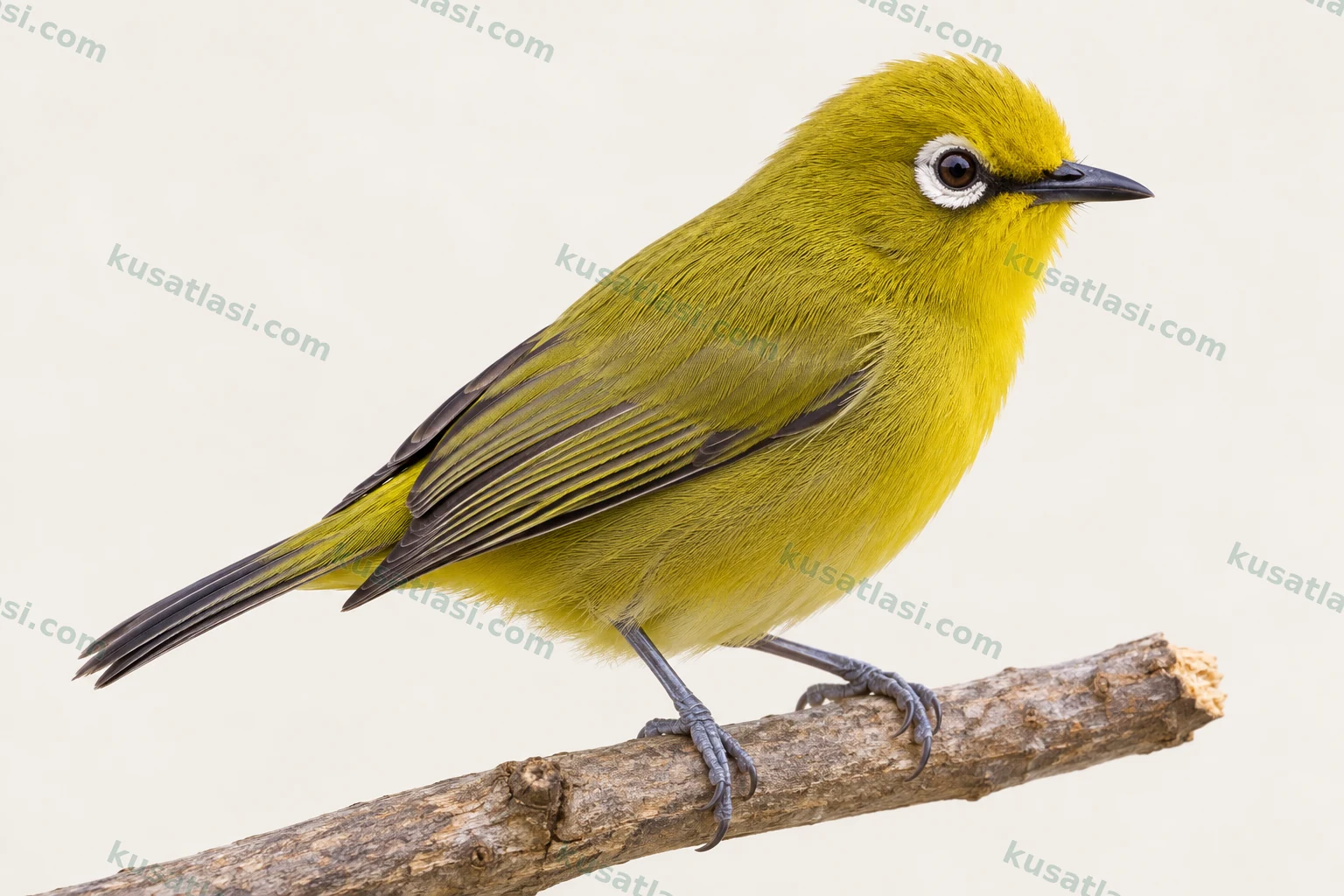
World Birds IUCN statusAccording to the source taxonGlobal IUCN. BirdLife v10 (2025); taxon matching AviList 2026 / IOC 15.2; checked: 29.10.2026. The list year is not the species’ assessment date. Source and method OrderPasseriformesPasserines FamilyZosteropidaeZosteropidae
Green White-eye
Zosterops stuhlmanni
A white eye-ring, olive-green upperparts, yellow underparts and slender pointed bill; very active groups on branches and regional habitat are assessed together.
Biometrics
Length
Male11.5 cm
Female11.5 cm
Shared species value
Wingspan
MaleData unavailable
FemaleData unavailable
Weight
Male6.8–14.1 g
Female6.8–14.1 g
Shared species value
Green White-eye
East-central Africa; around Lake Victoria and the Albertine RiftObservation guide in its natural range
Look for three features together
Do not rely on a single featureThe white feather-ring is not the colour of the eye itself.
The upperparts are olive-green and the underparts yellow.
Different lowland and mountain populations occur around Lake Victoria and in the Albertine Rift.
Compare male and female
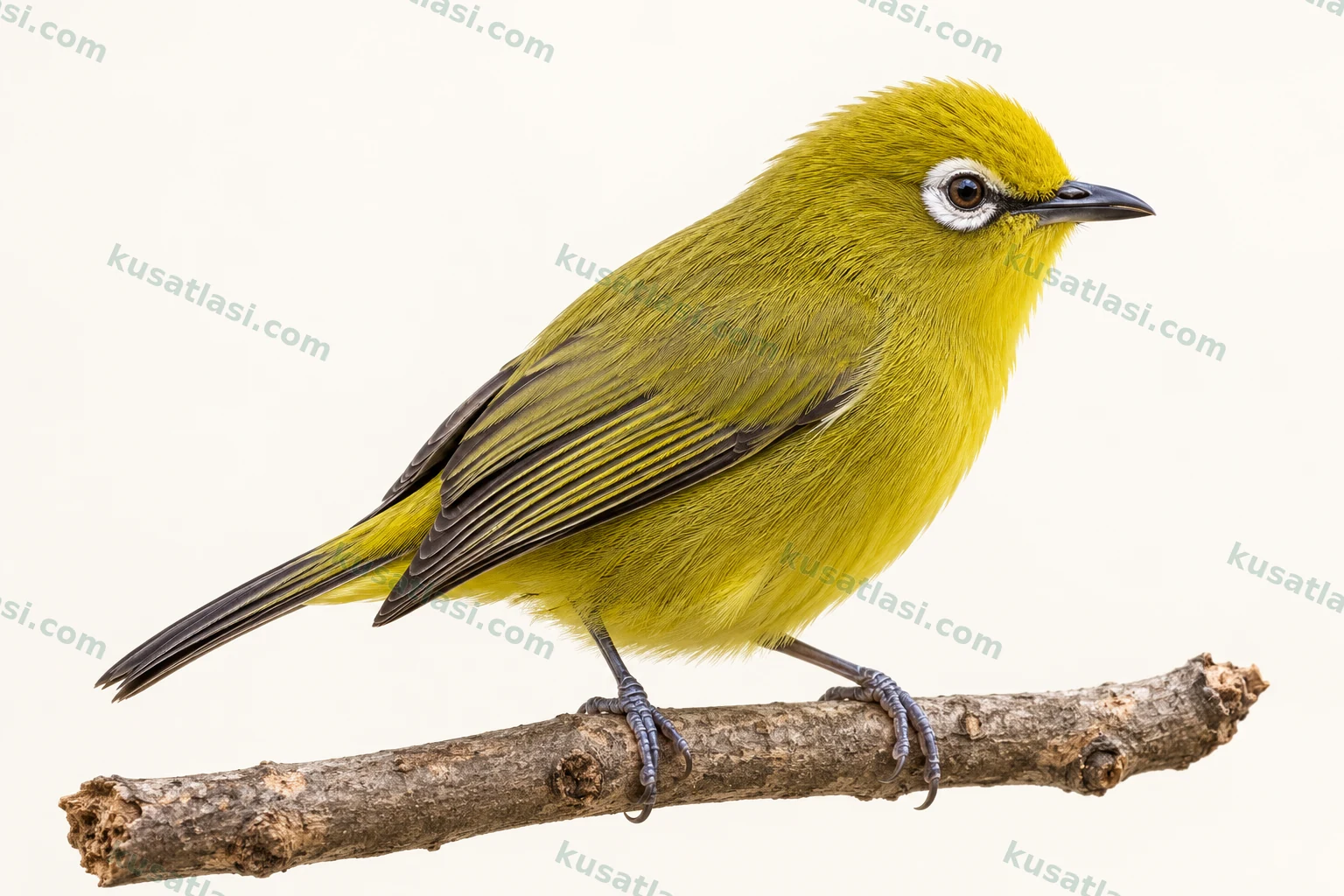 FemaleMale
No reliable key to adult sex or juvenile plumage specific to the current species scope has been verified; brightness and ring width are not used to determine sex.
Where to look in its natural range?
Watch the active small groups among trees and leaves.
The regional review reports resident populations; no verified shared breeding months for the current species were found.
All months: These are resident populations; a detailed breeding calendar has not been verified. No verified regional date specific to this month was given; this does not mean local absence.
January
February
March
April
May
June
July
August
September
October
November
December
Nest, egg and incubation
Nest structure, typical clutch size, incubation duration and time to first flight tied to the current species scope could not be verified; values from related white-eyes were not transferred.
The bird gives rising, trilling and chirping sound sequences; natural voice is matched with its appearance.
Do not play recordings to attract birds; observe quietly, especially near nests.
Species information
Quick Identification
Green White-eye Zosterops stuhlmanni is a small, active passerine recognized by the white feather-ring around its eye, olive-green upperparts and yellow underparts. A slender pointed bill and groups moving rapidly among branches are initial clues. The white ring is not the colour of the eye itself. Part of it can be hidden when the bird turns its head; identification is not based solely on how wide it looks in one photograph.
Its current English name is Green White-eye. Older sources may call it Zosterops virens stuhlmanni or Zosterops senegalensis stuhlmanni. The current classification recognizes a separate species. African measurements, nesting information or the conservation category from the older broad yellow white-eye account are not transferred wholesale to this page. Birds sharing a green-and-yellow appearance may not form one closely related group in genetic studies.
General Appearance and Posture
Green and olive tones dominate the upperparts, and yellow the underparts. The white eye-ring is the most conspicuous facial detail. The bill is slender and pointed; head and body have the unified appearance of a small branch-dwelling bird. Among leaves, only part of the belly and breast may be exposed. Waiting for another natural posture is more reliable than filling in the colours of unseen areas.
Reflections from green leaves and forest shade can make the same feather look different yellow-green tones. The relative differences between head, back and belly are more meaningful when seen in the same light. A darker-looking bird in shade is not evidence of a new subspecies or a male. Bill structure, white ring, overall underpart colour and observation locality are used together.
The East African taxonomic review distinguishes populations of this species in low country and high mountains. Nominate birds around Lake Victoria and the scotti population of the Albertine Rift are not birds of the same elevational belt. This difference prevents a narrow expectation of looking for green white-eyes only on mountain summits or only in lowland forest. A mountain name alone does not identify the population; elevation and the slope on which the observation was made also matter.
Males, Females and Young Birds
No plumage key specific to the current species scope and reliably separating adult males and females at a distance was verified in this research. Ring width or the brightness of yellow does not establish sex with certainty. Nor does a bird being more vocal in a group identify it as male by that behaviour alone. Following individuals separately is useful; an unknown sex is left unknown in the record.
No verified key to juvenile colour and feather development was found either. Begging with an open bill and being fed by an adult can support identification as young through behaviour. Not every plain or pale-looking bird is young, however. Wet feathers, shade, image quality and the bird's angle can change appearance. Behavioural support for age does not mean every pale bird in another photograph is the same age.
The taxonomic review considers four geographical populations. Their regions and elevational belts describe a different variable from sex. Not every difference between a bird in Uganda's low country and one in high mountain forest is read as male–female variation. The two adult images on a species page do not replace a scientifically unverified sex-identification key.
Appearance in Flight
A small body, rapid wing movements and green-yellow appearance may be noticed in short branch-to-branch flights. The white eye-ring can reappear when the head turns but disappear in fast, distant flight. A small silhouette against open sky is insufficient by itself to distinguish the current African white-eye species. Seeing the face and underparts again where it lands helps identification.
No verified certain flight key based solely on an underwing mark was found here for this species. Nor is it assumed that all birds moving through trees together belong to the same species. Viewing several group members separately may reveal the presence of similar small passerines. Long migratory flight or a large migration flock is not inferred from a single observation of a brief branch crossing.
Voice and Behaviour
The specialist field account describes rising, trilling and chirping sound sequences. Birds may occur in very active groups; their voices help reveal individuals among leaves. When several calls overlap, however, one individual's sequence may be indistinguishable. Matching natural voice and appearance to the same bird provides stronger identification than a written sound comparison alone.
The species may occur in moist forests, woodlands, gardens and plantations. A group in a garden does not alone show that the entire species has no need for closed natural forest. Daily feeding site, breeding site and the complete habitat are different measures. Waiting quietly on a path makes it easier to follow the small group's natural movements among branches and leaves.
Similar Species
Northern Yellow White-eye Zosterops senegalensis shares the broad colours and white ring. The specialist account generally describes Green White-eye as darker and greener, although light can alter that difference. Identification requires even more care where the East African review reports contact and intermediate appearances. One shade of green is not a certain distinguishing character.
Pale White-eye Zosterops flavilateralis is compared by its paler appearance and different habitat context. The yellow area above the bill, underpart tone, eye-ring and locality are examined together. Other white-eyes from different African regions are not listed as usual neighbours in every Ugandan forest merely because they share the genus. Identification must also consider the current scope of the scientific name.
Global Distribution
It occurs in east-central Africa around Lake Victoria and in various parts of the Albertine Rift. The current taxonomic account places nominate stuhlmanni in northwestern Tanzania and Uganda; toroensis in the lowlands of northeastern Democratic Republic of the Congo and western Uganda; reichenowi in eastern Congo around Tanganyika and Kivu; and scotti in mountainous parts of the Albertine Rift. Entire countries are not continuous range; low surroundings and mountain forest are separate habitat patches.
Status Within Its Natural Range
Assessment status for the current species scope is retained as Not Evaluated. The global category of the former broad Zosterops senegalensis is not transferred here. The 2017 East African review reports contact and intermediate appearances in some parts of Kenya; these do not mean that every boundary of the current taxon has been firmly drawn. Rather than filling whole countries on a map, existing prediction and licensed observation layers are shown with their own limits. An observation cell does not automatically verify a subspecies or breeding.
Movements and Migration
Regional records in the East African review describe resident birds. No verified regular intercontinental migration route was found, so none is drawn. A small group moving between trees is not migration evidence. Separate populations in low and high country do not show that every individual travels seasonally between those elevations either. No artificial shared breeding season is created in the calendar because breeding months tied to the current species scope are insufficiently verified.
Breeding Habitat
The specialist field account reports moist forests, woodlands, gardens and plantations. The taxonomic review separates low country around Lake Victoria from mountain populations. It describes regional records below 1700 m for the nominate population and high parts of Rwenzori, Bwindi and Virunga for scotti. These figures are not one elevation limit for the whole species. The type of green space and its elevation should be added to the observation.
Nest Site
Detailed nest structure, typical clutch size, incubation duration and time to first flight that can be tied to the current Zosterops stuhlmanni scope were not verified in this research. Inserting another white-eye's cup nest and day counts would conceal scientific uncertainty. A breeding record is assigned to this life stage only when supported by a species-identified nest, young or relevant behaviour. Seeing several birds in a tree does not by itself mean a nest exists.
Daily Space Use
Active groups move among branches and leaves. An exposed individual and one calling within cover may use the same place at different moments. A record in a garden or plantation does not make nearby natural forest unimportant. Tree cover, plant diversity and surrounding habitats are assessed together. A short visit without sightings is not certain absence, and a few visible birds are not a complete population census of the area.
What Does It Eat?
Peer-reviewed research on white-eye biology reports mixed feeding on insects, fruit and nectar across the genus. This is not a separately measured dietary proportion for every region of Green White-eye. No reliable prey list or seasonal food percentages tied to the current species scope were found in this research. Another close species' caterpillar share, fruit preference or pollination result is not directly transferred here. A small bill and occurrence in a tree do not by themselves establish which food is consumed.
How Does It Forage?
The active groups on branches described by the field account provide a natural setting in which to observe foraging. Reaching towards leaves and actually taking prey are recorded separately; visiting a flower does not automatically prove nectar consumption or successful pollination. Only the visible behaviour is written when food cannot be distinguished. This approach separates the genus's known mixed diet from details not yet measured for the particular species. Providing artificial food in a garden does not replace research on the natural diet.
Similar Appearance Does Not Necessarily Mean the Same Species
Genetic research on African white-eyes has shown that the former broad yellow white-eye assemblage was not one closely related group. Current distinctions are not based only on how dark the green appears. Similar-looking birds can have different evolutionary histories. Gathering information from the whole continent under one older scientific name into a single new species is therefore misleading; a record's geography and the population concerned are retained.
Low Lake Surroundings and High Mountains Are Not the Same Habitat
The nominate population around Lake Victoria and scotti in the Albertine Rift mountains show different geographical contexts within the species. A mountain record does not prove that all birds depend on high mountains; a lowland garden record does not show that mountain forests are unnecessary. Recording elevation, vegetation and locality together helps explain the species' different habitats more accurately.
The White Ring Helps Locate a Small Bird's Face
A green body easily blends into foliage, while the white eye-ring reveals the face from a suitable angle. The ring is not iris colour or eye size. Its visible shape can change as the bird turns its head. Before interpreting ring width in different photographs as a sex or age difference, consider angle and image quality.