

World Birds IUCN statusEX · ExtinctGlobal IUCN. BirdLife v10 (2025); taxon matching AviList 2026 / IOC 15.2; checked: 29.10.2026. The list year is not the species’ assessment date. Source and method · BirdLife OrderPasseriformesPerching birds FamilyZosteropidaeZosteropidae
White-chested White-eye
Zosterops albogularis
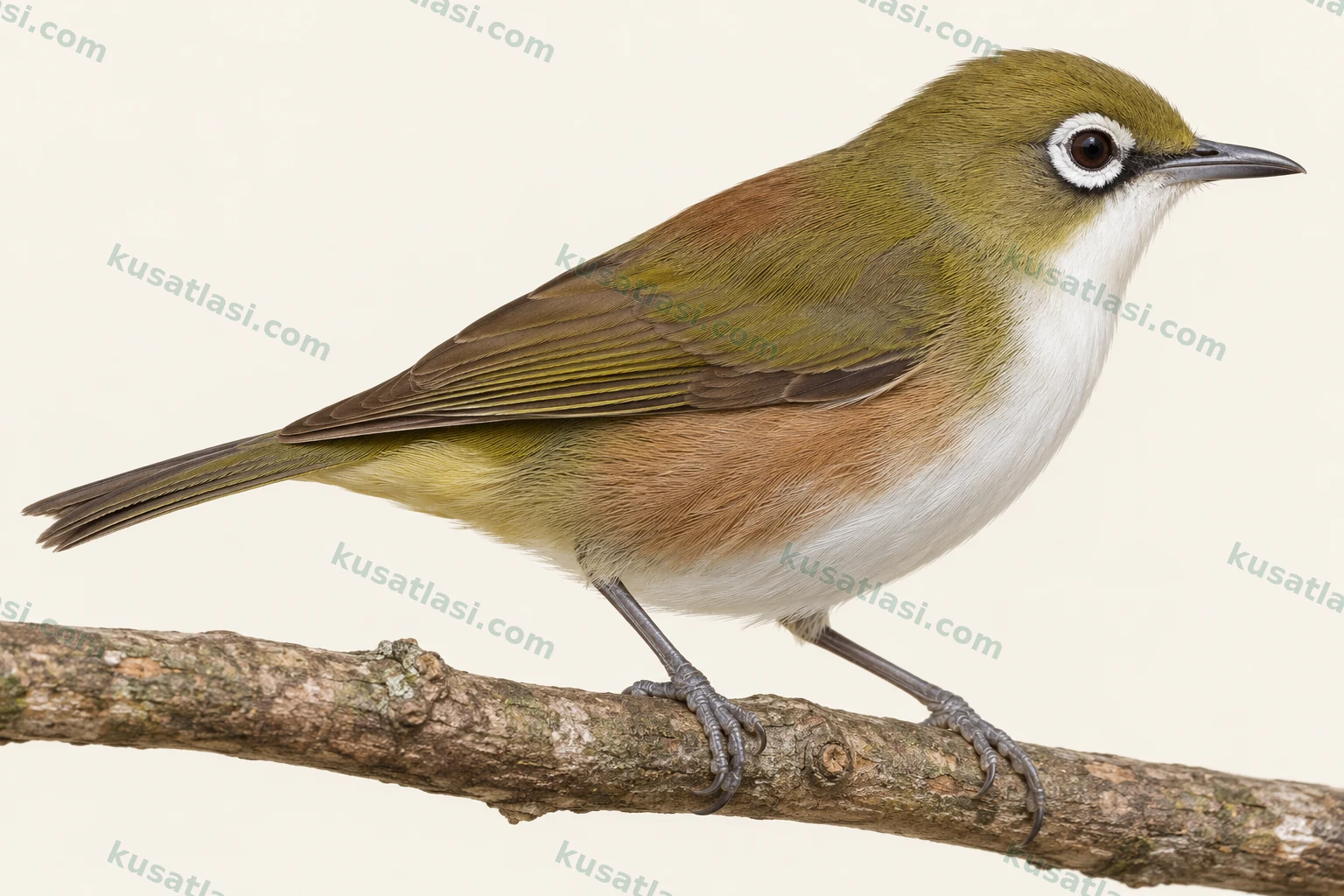
Norfolk Island’s extinct white-eye. It had a white throat and belly centre, chestnut-toned sides, olive-green upperparts and a broad white eye-ring.
Biometrics
Length
Male13–14 cm
Female13–14 cm
Shared species value
Wing length
Male7.52 cm
Female7.52 cm
Shared species value
Weight
Male30 g
Female30 g
Shared species value
White-chested White-eye
Norfolk Island — historical rangeObservation guide in its natural range
Look for three features together
Do not rely on a single featureIt is white. The sides are pale chestnut and the centre of the belly is white.
The white ring is made of feathers. Do not confuse it with iris colour.
The species is extinct. The map shows the historical island location.
Compare male and female
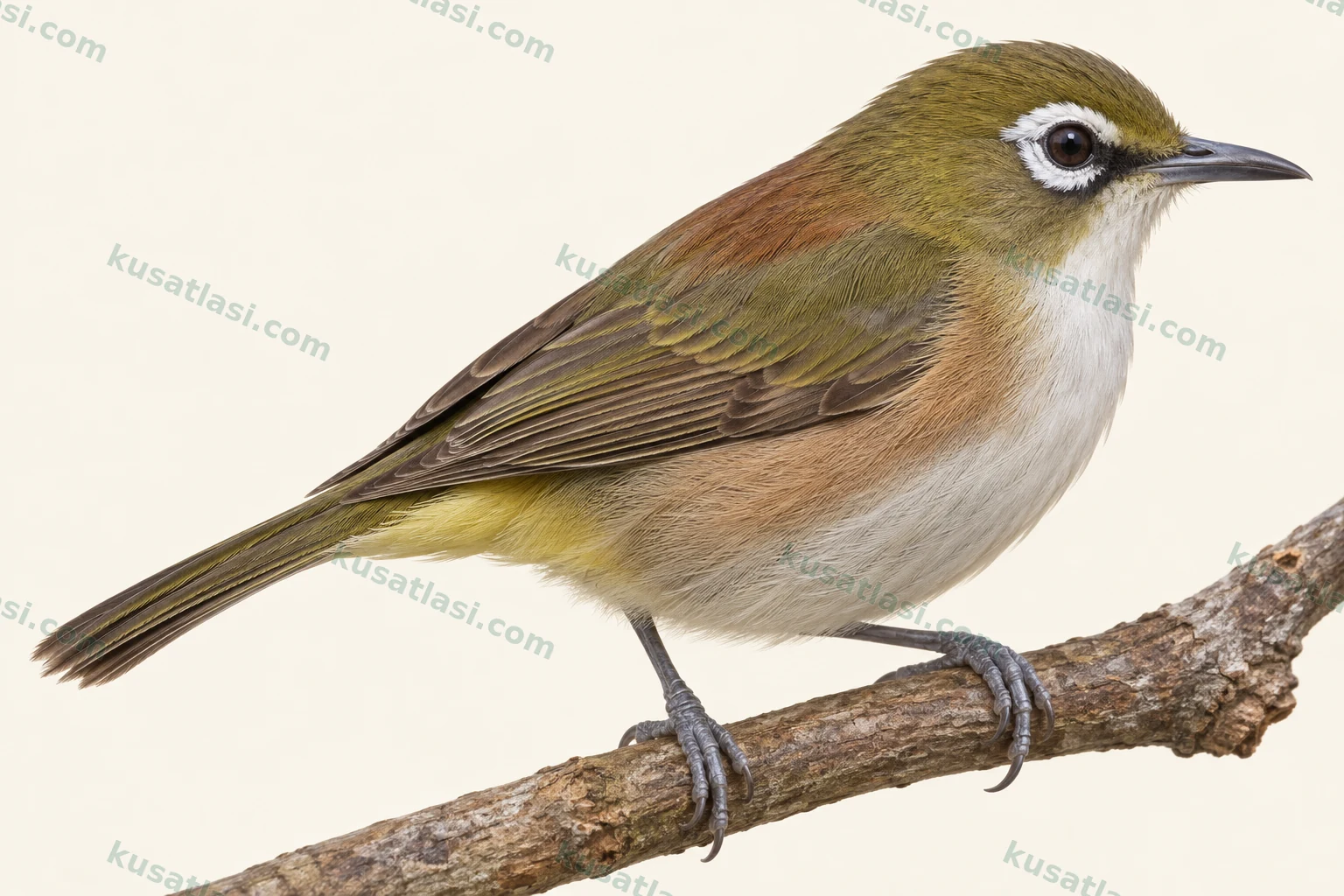 FemaleMale
Historical specimens of both sexes look alike. A reliable identification key for young birds has not been verified.
Where to look in its natural range?
Historical records come from native forest and gardens. No living population is shown.
The species is extinct. The calendar gives historical context. It does not show present-day occurrence, breeding months or the likelihood of migration.
All months: historical Norfolk Island records. There is no living population.
January
February
March
April
May
June
July
August
September
October
November
December
Nest, egg and incubation
There are historical nest records from forest and gardens. A reliable typical clutch size, incubation duration and number of days to first flight have not been verified.
No reliable detailed voice description has been verified for this species.
Do not play recordings to attract birds; observe quietly, especially near nests.
Species information
Quick identification
The White-chested White-eye Zosterops albogularis was endemic to Norfolk Island and is classed as extinct in the current assessment. Identify historical specimens by considering the white throat, white centre of the belly, pale chestnut sides and broad white eye-ring together. The upperparts are olive green. The chestnut tinge on the back should not be overlooked because the Turkish name refers to the throat. The appearance described here is that of historical specimens. The island on the map does not mark a population living there today.
The current English name is White-chested White-eye. Historical publications also used White-breasted Zosterops or White-breasted White-eye. These names refer to the same bird when matched to Zosterops albogularis. Zosterops tenuirostris and Zosterops lateralis from the same island are separate species. The island name alone is not a reliable basis for assigning an old egg or photograph to this species.
General appearance and posture
In Gould's original account of Norfolk specimens, the upperparts and wing coverts are greenish olive and the back has a distinct chestnut tinge. The whole back should therefore not be imagined as uniformly cold grey or bright grass green. The wing and tail are brown with olive-green feather edges. On the folded wing, these edges can overlap and produce a greener surface. Distinguish the dark centre of a feather from its pale edge.
The broad white eye-ring consists of feathers. It does not mean the iris was white. Black feathers along the front and lower border make the ring stand out. Turning the head sideways or forward can alter the apparent width of the ring. Do not add a new iris colour to the identification key from the lighting of an old illustration when the colour inside the eye has not been verified.
The throat and centre of the belly are white. The sides are pale chestnut and the undertail coverts are described as pale yellow. These three colours are not interchangeable. Viewed from the side, the chestnut flank can completely conceal the white centre of the belly. Describing the entire underside as rufous or yellow from a single angle on a museum specimen would misrepresent the pattern. Examine the throat boundary, sides and undertail together.
The original historical account describes the bill and legs as lead-coloured. The faded colour of a preserved specimen may differ from that of a living bird. Examine the large feathered areas and eye surround first, then the small bare areas. The leg colour of a dried specimen, shadows in a photograph or the pigment of an illustration cannot alone establish the identification.
Males, females and young birds
Gould noted that the specimens he received looked very similar and that the sexes differed little in appearance. That historical assessment does not allow a white-throated bird to be called male or a paler bird female with certainty. Extinction does not supply the missing information about the sexes. If the specimen's sex is not reliably stated in the collection record, do not reassign it based on appearance.
This review did not verify a reliable, detailed age key for young birds of this species. Juvenile colours of other white-eyes do not transfer to it. A narrower eye-ring, pale throat or different bill colour is not accepted as a juvenile character without scientific evidence. Species, sex and age are treated as separate questions. Knowing one does not resolve the other two.
Appearance in flight
The original museum description of brown wing and tail feathers edged in olive green is the basis for evaluating flight appearance. No reliable species-specific identification scheme for the open underwing was verified beyond that. The folded wing colour does not justify depicting the whole underwing as white or yellow. The feather surfaces show different anatomical areas, so information from one does not replace information about the other.
Voice and behaviour
This review did not verify a detailed identification description that could be compared with a reliable recording of the species. Calls of other white-eyes on the island are not presented as its voice. Historical appearance information does not establish the rediscovery of an extinct species when an uncertain call is heard today. Such a claim requires independent evidence that can be examined.
Similar species
The Slender-billed White-eye Zosterops tenuirostris is also endemic to Norfolk Island. Gould's original account describes a longer bill and a yellow throat with a reddish centre. Compare that arrangement with the broad white throat and white centre of the belly of the White-chested White-eye. Living on the same island or having a white eye-ring does not make them one species.
When comparing the Silvereye Zosterops lateralis, the white eye surround alone is insufficient. The identity of white-eyes associated with old egg sets has also been disputed. Without an adult that can be examined or a reliable collection match, a clutch cannot be assigned to the target species with certainty. Consider appearance and the identity of the record together.
Global range
The species' native home was Norfolk Island, east of Australia. Gould's original specimen account explicitly names the island. The erroneous mainland locality in the original description is not evidence of distribution throughout Australia. Current taxonomy corrects it to Norfolk Island. Zosterops albogularis is not combined with large white-eyes on other islands. The map shows the historical home without colouring the whole ocean as habitat.
Status within its natural range
The current checklist gives EX, or Extinct. The official park plan of 2025 likewise classifies the species as extinct. The small numbers of birds in historical texts are records of their time, not a current population. The date of the last reported confirmed observation and the date of the assessment decision are different events. A recent decision does not mean that the last bird is known to have died in that year. No current population density or likelihood of observation is calculated as if the species were still living.
Movements and migration
This review did not verify a reliable route showing regular annual migration away from the island. Old island sightings are not connected into an intercontinental route. Listing the species under a migratory heading in an official conservation agreement is not in itself evidence of biological migration. Read the historical range, island location and dates together. The calendar does not show arrival and departure months for a flock that can be observed today.
Breeding habitat
The official park account associates the species historically with native forest and notes that some old nest records came from orchards and red guava areas. This does not show that it bred in all gardens or depended on guava alone. The name of a tree used by the bird and its whole habitat are distinct concepts. Finding the same plant community today does not prove the target bird is still present.
Nest site
No reliably attributed typical clutch size, incubation duration or time to first flight from the nest was verified in this review. Specialists have questioned the identity of the birds to which old egg sets were attributed. An egg count from another white-eye cannot fill the gap. Assess the specimen label, matching adult identification and collection history together.
Daily use of habitat
Historical use of forest is not described as current habitat use. Protecting island forest benefits living native birds. That benefit does not establish that the target species still exists. When investigating historical specimens and records, do not disturb other birds in the habitat or approach nests to try to bring an uncertain species into view.
What did it eat?
The official park's historical account mentions feeding on small insects. The general feeding category published by AVONET is omnivorous. The broad category does not name specific fruits, plants or insects consumed. The small-insect account is not presented as dietary percentages measured in every season. Detailed fruit lists from other white-eyes on the island are not added to this species' diet.
How did it forage?
The historical field account describes searching for small insects in the upper tree canopy. Moving on trees in this way does not make the bird a treecreeper or woodpecker from another family. The foraging surface, prey actually observed and the taxonomic identity of the bird are kept as distinct information. Pecking speed, daily prey counts and prey size are not calculated for a species that cannot now be directly observed. The shape of a preserved bill can help with dietary comparisons, but it cannot prove the entire diet by itself.
The eye-ring consists of feathers
The white area around the eye that recalls the bird's name is not the colour inside the eye. Gould's original description treats the white feather ring and the black front and lower border separately. This distinction helps when reading old plates and studying collection specimens. A white ring in an illustration does not mean that the iris or bare skin was white.
The same island had different white-eyes
Gould treated Norfolk specimens in separate accounts. The longer bill and yellow throat of the Slender-billed White-eye distinguish it from the white throat of the target species. An island can have more than one closely related species, which explains why an island label does not suffice for identification. The same problem can arise in historical nest and egg records without an adult bird sighting.
An old record is not a current population
The appearance of a museum specimen or historical sighting in a database today does not mean the bird lives today. The date of the event and the date the data were uploaded may differ. Historical island locations are therefore distinguished from current observation density. Treating records of an extinct species as encounters that could be made today would misrepresent the map and conservation information.
A scientific correction strengthens the record
In a BirdLife assessment discussion, the attribution of old three-egg sets to this species was questioned and the original claim was withdrawn. Do not suppress that correction and repeat the original figure as certain. Typical clutch size is left open because the attribution is doubtful. A collection is valuable evidence, while reliably identifying the species it represents requires separate study.
The decision date and extinction date differ
Assessing a species as extinct does not mean that the dates on which the last individuals died are known. Survey results, the last reliable records and later searches are considered together. A new classification does not erase the scientific value of historical specimens. An older threat category is not retained on the current page as if a living population were still present.