

World Birds IUCN statusLC · Least ConcernGlobal IUCN category. BirdLife v10 (2025); taxon matching: AviList 2026 / IOC 15.2; checked: 29.10.2026. The list year is not the species assessment date. Source and method · BirdLife OrderPasseriformesPasserines FamilyTimaliidaeTimaliidae
White-bibbed Babbler
Stachyris thoracica
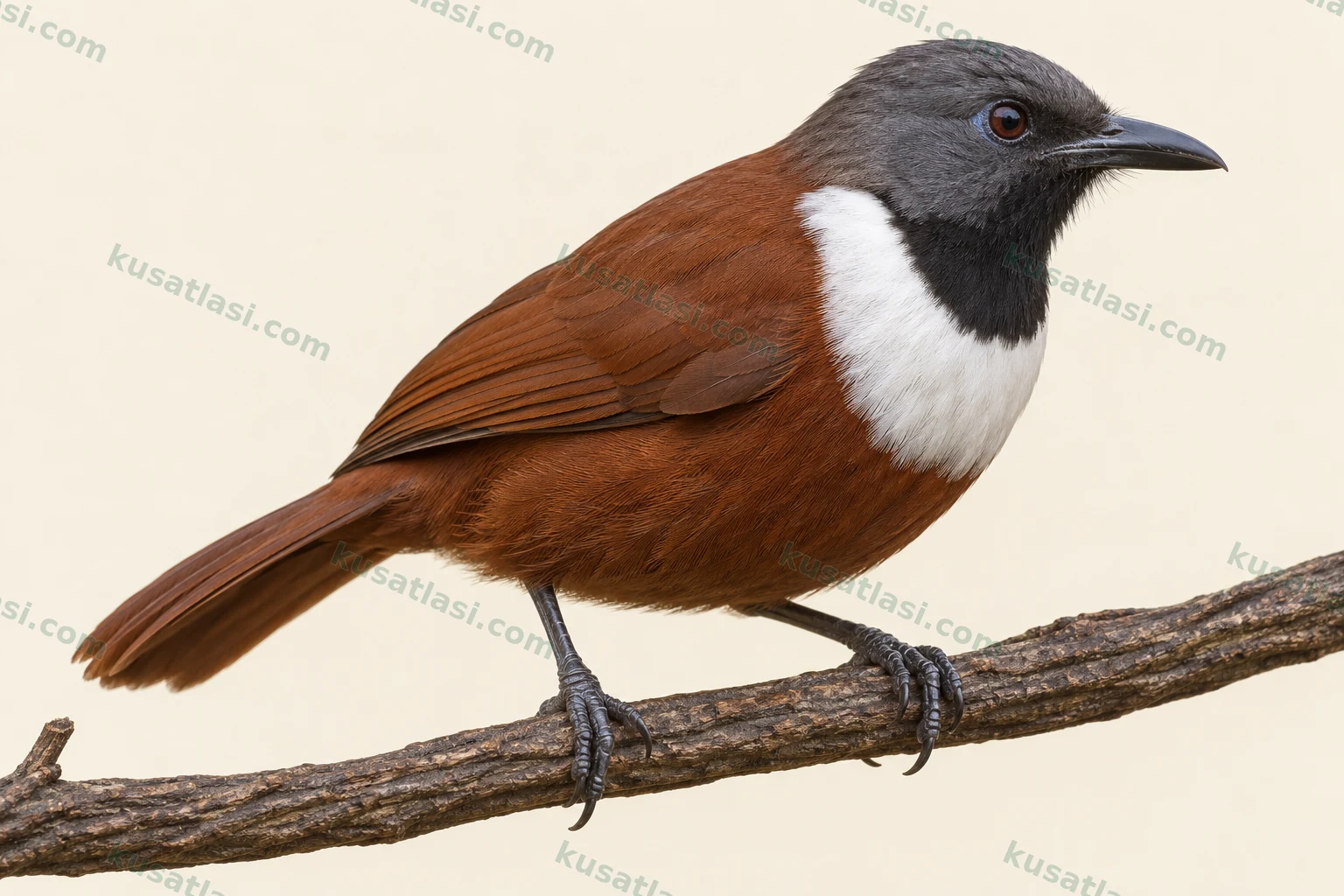
A chestnut-backed babbler of Java's forests, with a broad white bib beneath the dark throat, blue facial skin and a head that varies from brown to grey by region.
Biometrics
Length
Male18 cm
Female18 cm
Shared species value
Wing length
Male7.92 cm
Female7.92 cm
Shared species value
Weight
Male12 g
Female12 g
Shared species value
White-bibbed Babbler
Java, IndonesiaObservation guide in its natural range
Look for three features together
Do not rely on a single featureLook at where the broad white patch lies below the dark throat.
Check the blue facial skin. Crown colour can vary by region.
Compare male and female
 FemaleMale
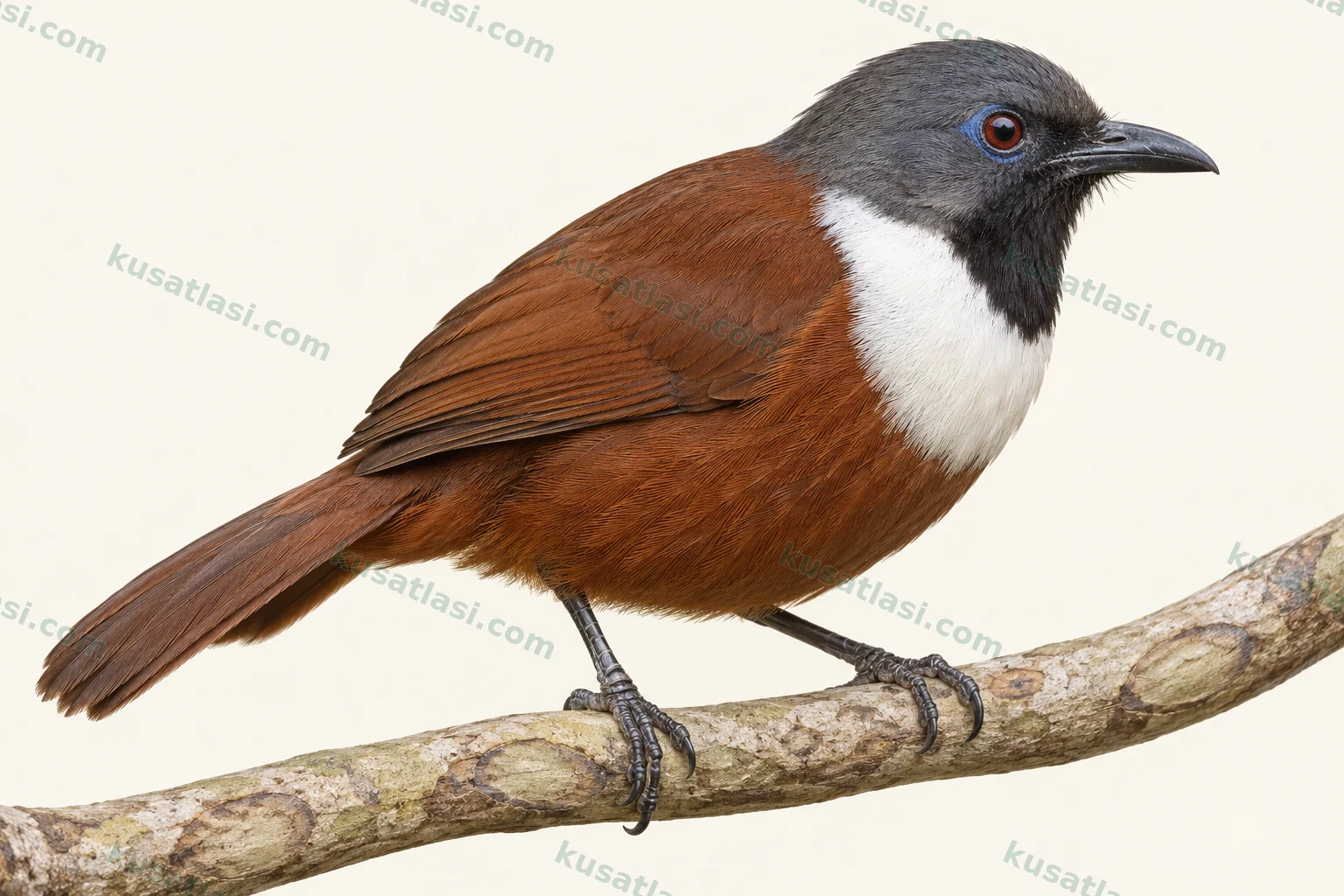
A grey or brown head can reflect geography. No reliable field key was confirmed for identifying adult sex or young birds at a distance.
Where to look in its natural range?
Look among dense shrubs and vines in foothill and mountain forests.
The species is resident on Java. Direct sources have not confirmed the months in which it nests across its range.
All months: The species is resident. Exact monthly breeding limits are unknown. No verified regional date is given for this month. This does not indicate local absence.
January
February
March
April
May
June
July
August
September
October
November
December
Nest, egg and incubation
Nest details, typical clutch size, incubation duration and the time young birds take to develop were not verified from original sources.
Listen for dry rattling calls and a brief flute-like whistle. Match the sound to the bird you see.
Do not play recordings to attract birds; observe quietly, especially near nests.
Species information
Quick identification
The White-bibbed Babbler Stachyris thoracica is a songbird of Java's forests. Look for its chestnut-brown back and the broad white patch on the upper breast. The white extends onto the lower sides of the neck, forming a bib below the blackish throat. Bare blue facial skin is another clue. Crown colour varies across Java. Birds in the west have browner crowns, while those in central and eastern Java look greyer.
The plumage stands out, but dense shrubs and vines can hide the bird. When it crosses an opening, look at the position of the white breast patch and the boundary between head and back. A white throat alone does not identify the species. Look for the broad white breast beneath a dark throat. If the blue skin is not visible, it may be hidden by the head angle or shadow.
General appearance and posture
The field description notes that the bird hops and climbs among branches and vines. It may stretch its head forward, changing the apparent width of the white breast patch. As it turns its head, distinguish the facial skin from the head feathers. Compare the warm chestnut of the back with the grey or brown of the head under the same light. Wet or fluffed feathers do not change the underlying plumage pattern.
Males, females and young birds
No reliable visual key for distinguishing adult males and females at a distance was verified. A greyer head does not indicate a female, and a browner head does not indicate a male. Geographic variation is particularly important here. Light and feather condition also matter when comparing birds in the same forest. Leave sex undetermined when it is not directly known.
No verified species-specific key covers all juvenile stages. A small or pale-looking bird is not necessarily young. If you directly see one bird receive food from another, record the care behaviour. Membership in a group alone does not establish that a bird is dependent young. Juvenile plumage in other babblers does not establish age in this species. First get a clear view of the head, throat and breast to identify the bird.
Voous's 1948 museum study describes the grey head and chestnut back of the eastern form in specimens from Slamat and Lawoe in central Java. It also notes that dark throat colour can extend into parts of the white breast patch. Its outline need not form a perfect line in every bird. The locations of historical specimens help interpret regional forms in current observations. Those specimens do not measure present population size.
Appearance in flight
Short movements between branches in dense cover show where to look again. A brown body glimpsed in flight does not establish the species. No key based solely on the underwing or upperwing was verified. Once the bird perches naturally, recheck the white bib, dark throat and head colour. Do not fill in unseen wing details from an image of a similar babbler.
A group passing from shrub to shrub is not showing regular migration. Records from different mountains in Java do not show that the same birds were tracked between mountains. Points record where birds were found. Joining them with a line does not establish an annual route. Quietly watch natural movements from an existing path instead of trying to flush the bird.
Voice and behaviour
The specialist account describes a dry rattling trill and a short flute-like whistle. Several birds in a group may call at once, so do not assume all notes come from one bird. Record the shrub where the sound came from and the place where the bird was seen. A written imitation does not replace a sound recording. Consider appearance and geography alongside the call. Hearing a bird first in dim forest does not complete its identification.
It searches for food in small groups in dense vegetation. Moving together does not establish shared care of young or that the birds belong to one nest. The size of one group is not the number of birds throughout the forest. A second encounter with the same group should not increase the count. Keeping the place, time and direction of movement helps evaluate repeated encounters.
Similar species
When comparing Java's other brown babblers, look for the broad white upper breast, dark throat, crown colour and bare blue facial skin together. One pale line on the head or a small white throat mark is a different pattern. Group size alone does not identify a forest bird. Similar behaviour in two birds does not establish that they are different sexes of the same species.
The brown-headed western Java form and the grey-headed central and eastern form belong to the same current species. This geographic difference alone cannot identify a different species or determine sex. The voice, measurements and nests of similarly named white-throated babblers are not data for Stachyris thoracica. Consider the observed pattern and locality together.
Global range
Its natural range is Java, Indonesia. Current specialist taxonomy treats the forms of western and central-eastern Java as one species. The island name does not imply that all its forests are used at the same density. Consider documented records, suitable forest cover and regional forms together. Similar babblers on other Sunda islands do not extend this species' range.
Status within its natural range
BirdLife's 2024 assessment gives Least Concern but reports a decreasing population trend. The total number of mature individuals is unknown. The category does not mean conservation concerns are absent. Loss of suitable cover in foothill and mountain forests matters when assessing local occurrence. Historical museum specimens demonstrate earlier presence in an area. They do not count current birds or show ongoing breeding in all suitable forest patches.
Movements and migration
BirdLife treats it as non-migratory and resident in its natural habitat on Java. Movements of groups within forest are not long-distance seasonal migration. Records from different mountains in different months do not track the same individuals. Approximate map points indicate records. They do not establish exact nesting-season limits or a movement corridor. A monthly breeding calendar requires direct breeding records of this species.
Breeding habitat
The bird uses dense shrubs, vines and evergreen vegetation in foothill and mountain forest. Consider dense undergrowth and the presence of trees together. A group in thick shrubs does not establish a nest there. Foraging habitat and direct evidence of breeding should be evaluated separately.
Nest site
Nest structure, typical clutch size, incubation duration and young development were not verified from the original sources examined. A fractional egg figure in a compiled data field is not an egg count from a real nest. Nest descriptions or development times of related babblers cannot substitute for this species' data. Avoid keeping birds from a suspected nest or opening the cover around it.
Daily use of habitat
It hops through dense shrubs and clings to vines as it moves. Entering the vegetation to see the group can disrupt natural habitat use. Open views from existing paths allow brief checks of head and breast together. Seeing it again in the same place may document use of that habitat without showing a nest there.
What does it eat?
An ecological review classifies this forest bird as an invertebrate eater. A complete list of prey and their daily proportions was not verified. Seeing it on a branch with an insect does not establish that it took the insect. The stomach contents of another babbler are not added to this bird's food list. If you see it take prey, record the place and behaviour with the observation.
How does it forage?
It searches while moving through low, dense vegetation. Branches and vines give it access to different surfaces, but not every movement ends in a capture. Leave prey unidentified if it cannot be seen. Birds in one group may search different places during the observation. Opening the shrubs or shaking branches changes where prey occurs and how the bird behaves. Observe natural foraging from a distance.
Head colour can vary with geography
The specialist field description gives browner heads in western Java and greyer heads in central and eastern Java. This is variation within one species. One plate does not set a fixed head colour for every Java bird. Consider the locality and the pattern of the white breast patch together. Head colour alone does not indicate sex.
Conspicuous plumage does not make the bird easy to see
Even with a white bib and chestnut back, the bird can be hidden by dense shrubs and vines. A short visit without a sighting does not establish absence. Following the source of sound and natural movements through cover gives a stronger record. Opening the vegetation to expose the bird changes the observation. Blue skin visible during a brief turn of the head gives another clue beyond the white breast.
Least Concern does not mean the population is rising
BirdLife's 2024 account gives conservation category and population trend separately. A species can be listed as Least Concern while its population is decreasing. The account also states that the number of mature individuals is unknown. A large group in one shrub neither fills this global information gap nor shows an increase across Java.