

World Birds IUCN statusNT · Near ThreatenedGlobal IUCN. BirdLife v10 (2025); taxon matching AviList 2026 / IOC 15.2; checked: 29.10.2026. The list year is not the species’ assessment date. Source and method · BirdLife OrderPasseriformesPasserines FamilyTimaliidaeTimaliidae
Snowy-throated Babbler
Stachyris oglei
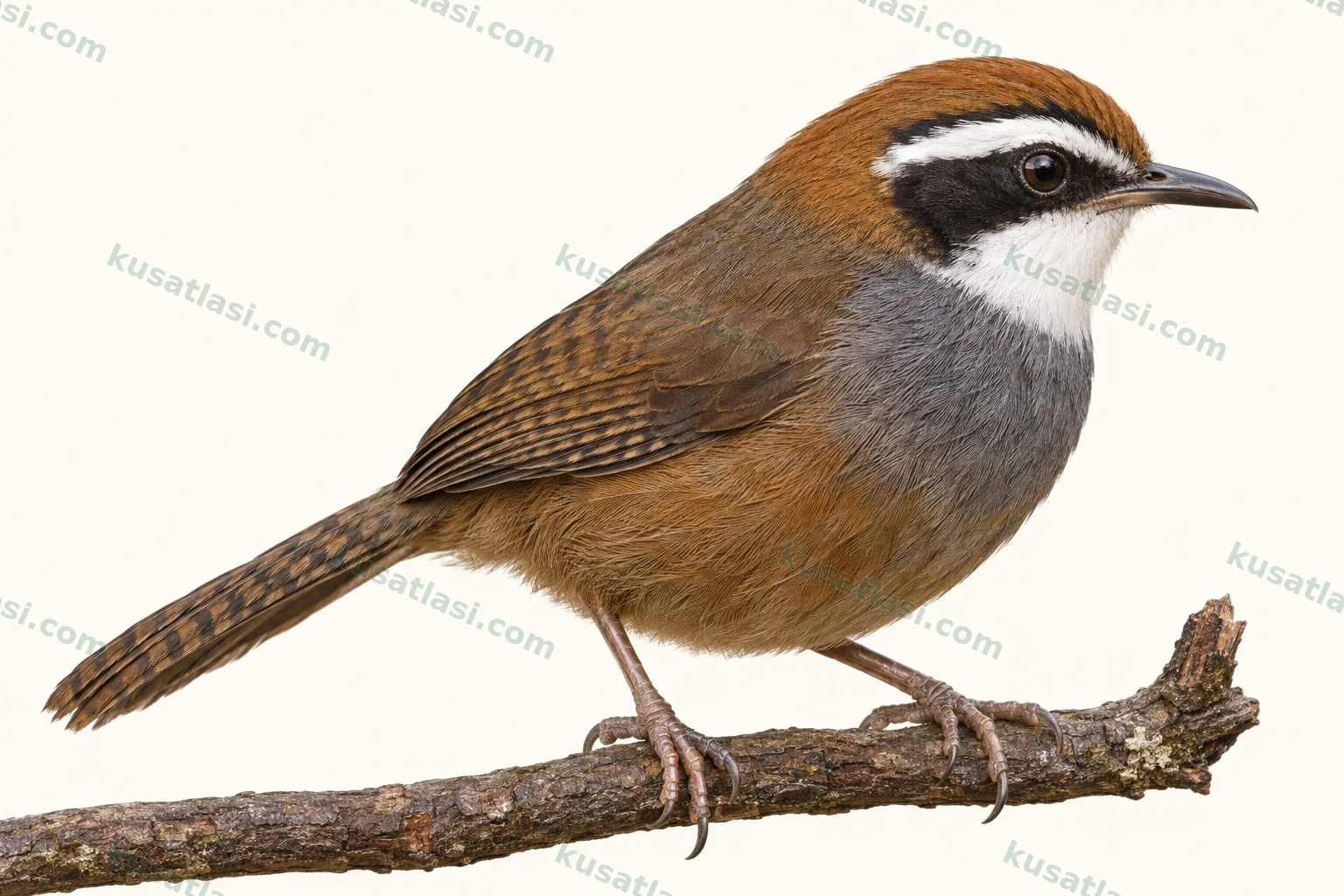
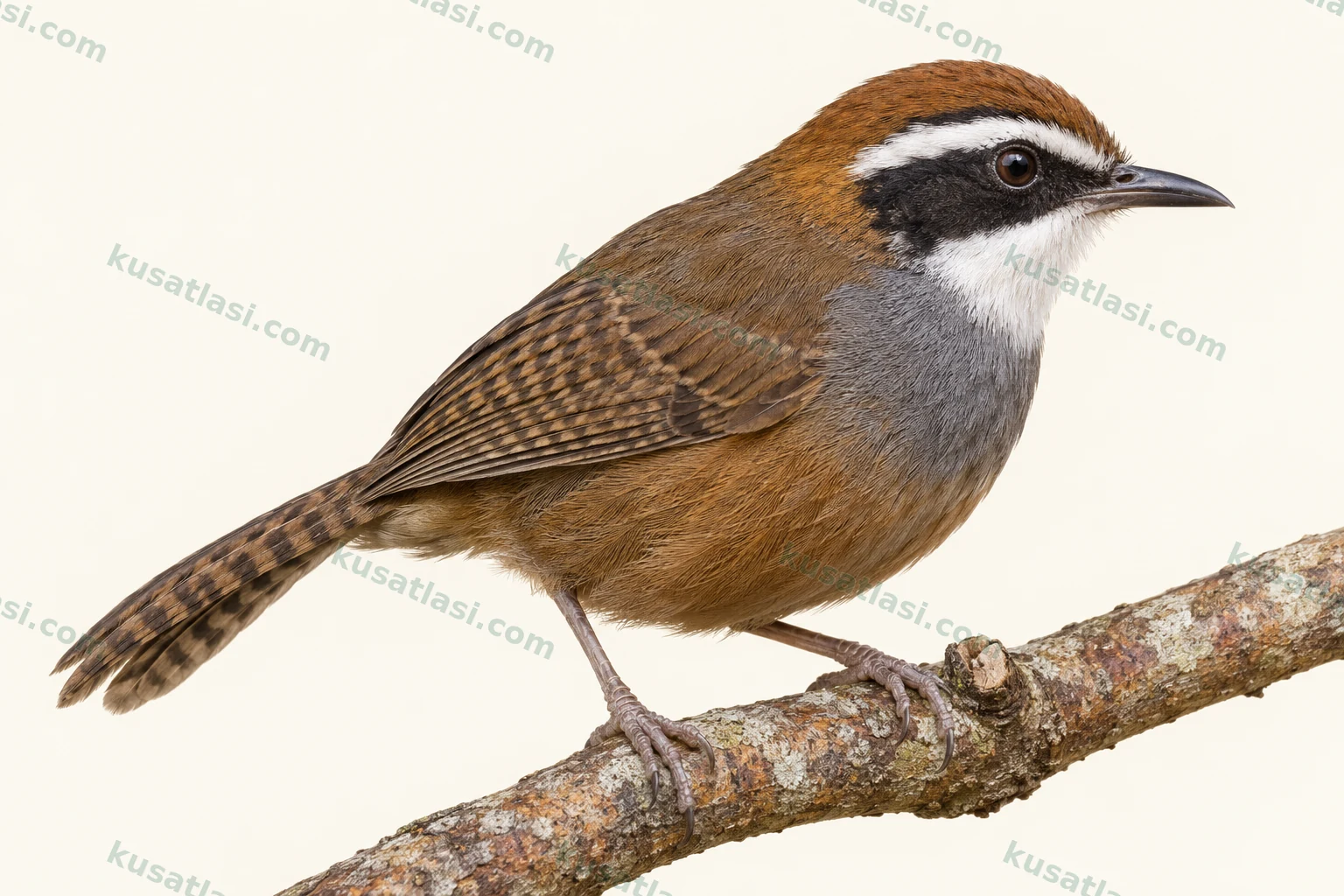
Small dark bird of dense undergrowth; black cheek between a broad white eyebrow and white throat.
Biometrics
Length
Male15 cm
Female15 cm
Shared species value
Wingspan
MaleData unavailable
FemaleData unavailable
Weight
Male28–36 g
Female28–36 g
Shared species value
Snowy-throated Babbler
Northeastern India; historical northern Myanmar recordObservation guide in its natural range
Look for three features together
Do not rely on a single featureSee the white eyebrow–black cheek–white throat arrangement together.
Humid dense forest undergrowth and some bamboo patches.
May give brief views in mixed-species feeding flocks.
Compare male and female
 FemaleMale
A reliable separate adult sex key and detailed juvenile key were not verified in this search.
Where to look in its natural range?
Humid dense forest undergrowth and bamboo patches around Namdapha and Kamlang.
Resident; historical April–July breeding reports have verification limitations. They are not definite general monthly boundaries. Resident; detailed modern data on possible elevational movements are lacking.
All months: Data unavailable
January
February
March
April
May
June
July
August
September
October
November
December
Nest, egg and incubation
Historical collection reports describe a domed side-entrance nest on the ground under a bush and 3–4 eggs; renewed confirmation in place is needed. Incubation and juvenile development periods were not found.
Sharp whistles and successive harsh short calls; match them to the actual individual in a mixed flock.
Do not play recordings to attract birds; observe quietly, especially near nests.
Species information
Quick identification
Snowy-throated Babbler Stachyris oglei is a small, dark brown bird of dense forest undergrowth in northeastern India. A black cheek lies between a long, broad white eyebrow above and a white throat below. This black-and-white facial pattern, together with the dark body, is the most useful first identification feature.
It can be difficult to see clearly as it moves quickly through dense leafy cover. Part of the head may be visible while the whole body remains behind leaves. First establish the actual arrangement: pale eyebrow above the dark cheek, white throat below it.
General appearance and posture
The strongest contrast in the dark brown plumage is on the head: white eyebrow and throat bound the black cheek on opposite sides. Leaf shade may obscure the brown tone. The relative positions of the facial markings can be more useful than the warm or cool tint of a single photograph. Turning the head changes the apparent length of the eyebrow.
Brief movements within dense cover and a low posture fit its daily life. It may occur in forest patches with bamboo or in humid, scrubby valleys. Not every bamboo patch is said to be equally suitable; the actual structure of the surrounding forest and cover matters.
Males, females and young birds
This research did not find a reliable separate colour key that distinguishes every male and female externally. The black cheek and white eyebrow–throat arrangement must not be confused with certain sexing. Do not assume a darker bird is male or a paler one female. Seeing a bird sing also provides no certain sex label without independent confirmation.
A sufficiently detailed independent key to juvenile appearance and age-related changes was not verified either. A partly visible head marking cannot simply be called an undeveloped juvenile pattern; leaves or posture may hide feathers. Juvenile colours from related babblers are not transferred here.
When assessing historical nest and egg information, the bird's identity and how the record was obtained matter. Although nests were brought into old collections with adult specimens, it was specifically noted that an ornithologist had not observed them in place. Such a record is not treated with the same certainty as a new, directly observed breeding study. Missing information on young birds or sex is not filled by guessing.
Appearance in flight
The primary identification lies in the black-and-white head pattern, which may not be fully visible in short crossings between cover. No reliable key providing certain identification from separate upperwing or underwing surfaces was verified. A glimpse of a small dark body alone is insufficient.
Successive short movements through forest may be the progress of a feeding flock. They are not converted into a long-distance migration route. Historical discussion of possible changes in elevation also does not mean every individual travels at the same height in the same months.
Voice and behaviour
Cornell describes sharp whistles and successive harsh, short, percussive calls. In dense cover the voice may be heard first; when the actual bird is seen, match it to the facial pattern. Historical assessments calling it quiet do not entirely exclude vocal behaviour recorded later.
Its occurrence in mixed-species feeding flocks is important. Not every sound in the same bush necessarily belongs to this species; identify the sound's source separately. A brief view of one bird within the moving flock offers a real identification opportunity.
Similar species
Similar dark forest babblers may have a pale throat or eyebrow separately. Here, check the combination of a broad white eyebrow, black cheek below it and white throat beneath that. Seeing one pale line does not mean the other two marks have been seen.
Do not add the behaviour of larger, longer-tailed or differently patterned birds in a mixed flock to this small bird's description. Being in a group does not mean belonging to the same species. Two different birds may appear in succession through the same gap; do not combine the first bird's eyebrow with the second bird's breast.
World distribution
It occurs in northeastern India, especially wooded areas of eastern Arunachal Pradesh near the Assam border. Namdapha and Kamlang are important record areas. BirdLife's historical account also reports a flock sighting near Putao in northern Myanmar in 1998. This single record does not justify depicting all northern Myanmar as a continuous, currently densely occupied range; its date and place are retained. Local valleys and forest cover are assessed separately.
Status within its natural range
The current list snapshot places it in Near Threatened. Vulnerable classifications in older sources are not used instead of the current label. Uncertainty about the total population and the extent of suitable habitat matters in conservation assessment. Multiplying Namdapha's large forest area by a single density is not a valid way to generate a total bird count; specialist discussions stress that the bird does not use every forest patch equally.
Movements
It is generally regarded as resident. Historical accounts discuss possible local elevational movements; some breeding and observation elevations are uncertain. A route taken by the whole population to the same altitude on the same date was not verified. Daily short forest crossings and group foraging are distinct processes. The calendar shows the scope of the evidence rather than definite monthly boundaries.
Breeding habitat
It uses humid forest and scrubby valleys with dense undergrowth; bamboo patches may be important. Elevational limits conflict in older sources. It is therefore not described solely as a bird of high mountain summits; lower forest observations exist too. Suitable cover matters when assessing actual habitat in the field.
Nest site
BirdLife's historical account reports old collection descriptions of a large domed nest with a side entrance, on the ground beneath a bush, and 3–4 eggs. Grass, bamboo leaves, roots and small twigs are described as materials. It explicitly notes, however, that a specialist did not observe the nests in place and that renewed confirmation is needed. These details are not a certain modern nesting prescription; incubation and juvenile development periods were not verified.
Daily use of space
It moves quickly within forest undergrowth and may join mixed feeding flocks. Bamboo patches, dense scrub and valley bottoms are different parts of the same daily surroundings. A flock crossing a path does not show that the whole park is used at equal abundance. Do not open the cover or enter a possible nesting place; watch the birds' natural progress from a distance.
What does it eat?
It is treated as a bird feeding on invertebrates, especially insects. The historical account reports insect use from stomach-content information, while the modern ecological compilation also agrees with invertebrate feeding. These do not mean all prey is the same species in every month. A reliable detailed prey list divided by season was not verified in this search.
How does it forage?
It may seek prey in feeding flocks moving through dense undergrowth. Looking at a leaf or branch and actually taking prey are separate observations. An insect in another bird's bill in a mixed flock is not added to this species' diet. If prey identity cannot be seen, retain only the information that invertebrate food was taken. Waiting for its natural movement between bamboo and scrub allows feeding behaviour to be understood without drawing the bird into an opening. Clearing cover or offering prey changes its natural feeding pattern.
The face is an arrangement of three parts
The relative positions of the broad white eyebrow, black cheek and white throat matter more than the presence of one white patch. In dense forest these parts may appear in turn. Avoid combining marks from different birds before seeing them all on one individual. Small gaps offer brief but genuine identification opportunities.
A mixed flock is not a single-species flock
Finding it with different forest birds while feeding does not mean all sounds in the same bush belong to it. Track the source of the voice and facial pattern separately. Counting all members of the flock may not give this species' count; only birds actually identified enter its own record.
The evidence level of old nest information remains explicit
Historical nests were brought into collections with bird specimens, but the account notes that direct specialist observations in place were lacking. Nest form and egg number are therefore presented with the source's caution. Repeating a report for years does not turn it into a new field experiment. Incubation cannot be calculated from the old description.
A large park does not automatically give a population total
Conservation assessment recognises Namdapha's forest as important while retaining uncertainty about the full extent of suitable cover and actual population size. Do not invent a global total by combining a park's area with a few easily seen groups. The local structure of bamboo and forest patches is assessed separately.