

World Birds IUCN statusNT · Near ThreatenedGlobal IUCN. BirdLife v10 (2025); taxon matching AviList 2026 / IOC 15.2; checked: 29.10.2026. The list year is not the species’ assessment date. Source and method · BirdLife OrderPasseriformesPasserines FamilyPellorneidaePellorneidae
White-chested Babbler
Pellorneum rostratum
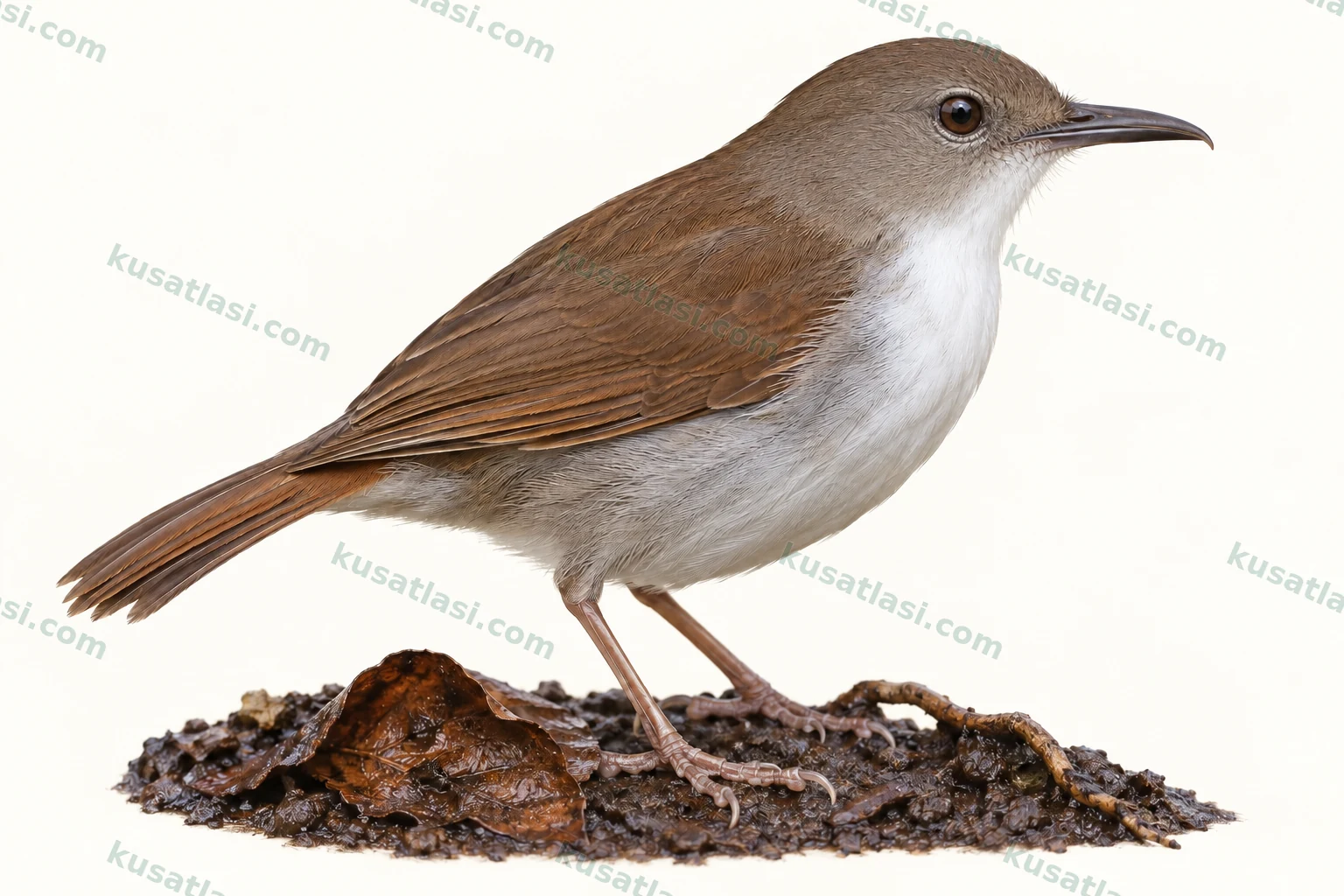
Brown above and whitish below, in humid lowland forest and mangroves; usually in pairs near water.
Biometrics
Length
Male15 cm
Female15 cm
Shared species value
Wing length
Male7.04 cm
Female7.04 cm
Shared species value
Weight
Male18–24 g
Female18–24 g
Shared species value
White-chested Babbler
Malay Peninsula, Sumatra and around BorneoObservation guide in its natural range
Look for three features together
Do not rely on a single featureRead brown upperparts, whitish underparts and greyer flanks together.
Stream banks, wet low cover and mangroves.
Duller than Ferruginous Babbler; white breast alone is insufficient.
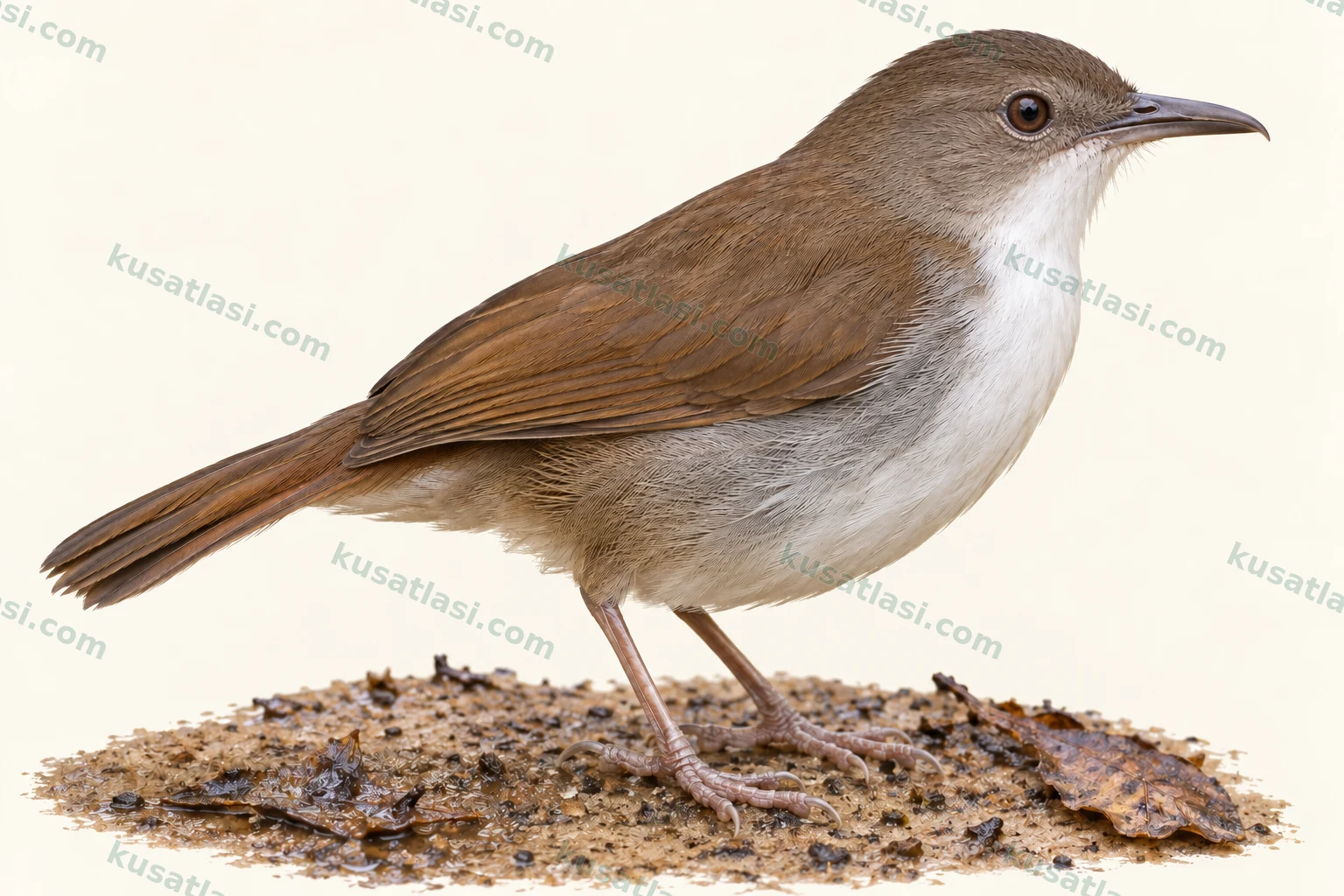
Compare male and female
 FemaleMale
A certain appearance-based sexing key was not verified. The Perak juvenile observation concerns one family.
Where to look in its natural range?
Stream margins in humid lowland forest, waterside scrub and mangrove cover.
Resident; August juvenile care in Perak is one record, not the breeding calendar of the whole range. Resident; shared definite breeding months were not verified.
January
Data unavailable
February
Data unavailable
March
Data unavailable
April
Data unavailable
May
Data unavailable
June
Data unavailable
July
Data unavailable
August
Malaysia: Ipoh, Perak: juvenile feeding in one family recorded in 2023.
September
Data unavailable
October
Data unavailable
November
Data unavailable
December
Data unavailable
Nest, egg and incubation
Specialist dataset: two eggs; museum work: pale greenish spotted eggs. Shared nest structure and incubation were not verified here.
High-pitched song with sharp elements; regional and antiphonal differences are not reduced to one pattern.
Do not play recordings to attract birds; observe quietly, especially near nests.
Species information
Quick identification
The White-chested Babbler Pellorneum rostratum is a small bird foraging near the ground in humid lowland forest and mangroves. Brown upperparts contrasting with whitish underparts first attract attention along streams or wet cover. It usually moves in pairs. Compared with the warmer rufous Ferruginous Babbler it looks duller and greyer; a white breast alone does not identify it.
Habitat provides useful context: small streams, muddy banks, coastal mangroves and wet low cover are places to search. Being near water does not make it a bird that floats on the surface.
General appearance and posture
The brown plumage lacks bold colour display; whitish throat and breast are read with greyer flanks. A comparative museum study shows the absence of a prominent black cap and the importance of white underparts. This plain appearance requires careful comparison with other brown forest birds.
Upperpart warmth can reflect regional appearance as well as lighting. A bird looking grey in wet forest shade may seem warmer brown in an opening. Do not combine one bird's white breast with another's dark head.
Males, females and young birds
No independent key reliably sexing every adult by appearance was verified here. Different illumination of a pair is not accepted as a male–female colour difference.
Near Ipoh, Perak, on 4 August 2023, two adults and a dependent juvenile were followed together. The young bird had darker eyes and upperparts and dirtier grey underparts. This one family's appearance does not mean all young in every region have the same colour on the same date. Less clean white below does not alone prove another species.
Age and care relationships are considered together. A second bird nearby is not the same evidence as actual feeding. A young bird receiving food more directly indicates dependence.
Appearance in flight
The most useful marks are on birds feeding on the ground or in low cover. A pale underside during a short covered passage does not exclude every similar species. No reliable separate flight key distinguishing upper- and underwing by one mark was verified.
Short flights by a pair along a stream may be daily habitat use, not evidence of long-distance migration. Do not drive birds into the open for a clearer waterside view; await natural passages from an existing path or bank opening.
Voice and behaviour
Cornell describes high-pitched song with short sharp elements. Some regional sources discuss antiphonal singing in pairs; it is not expected in one identical form in every population. The current taxonomy assessment says Bornean vocal behaviour needs further research.
Foraging pairs can be watched with small details of wet ground. Stones, mud, low branches and cover are different places within one observation. In a family observation, two adults fed the juvenile in turn.
Similar species
The Ferruginous Babbler Pellorneum bicolor has warmer rufous-brown upperparts and white underparts and may occur in small groups in low and middle cover. Here assess duller, greyer appearance and wet-bank association together. White underparts alone do not separate them; consider the light in which colours are seen.
Some sources separate the Bornean population as Pellorneum macropterum. The current AviList used here retains it as a subspecies within Pellorneum rostratum. Measurement and range scopes of these two treatments are not silently mixed.
Global range
Under the current AviList scope, the Malay Peninsula, Sumatra, Belitung, Riau and Lingga islands, Borneo and Banggi Island are natural range. This is not one uninterrupted forest: suitable waterside cover is patchy. Peninsula and Bornean populations are assessed in separate geographical contexts. Sources separating Malayan and Bornean names require careful reading of map scope.
Status within its natural range
The list snapshot gives Near Threatened. Humid lowland forest and mangrove condition matters locally. An easily seen stream pair does not give the whole island's numbers. Genetic research examined differentiation between western Sunda and Bornean populations, not present movement between every stream or equal conservation conditions in every region.
Movements and migration
The specialist dataset treats it as resident. Daily waterside movements or young accompanying adults are not regular long-distance migration. A genetic model of historical land connections does not replace tracking a bird today. Shared breeding months and a current migration route across the whole range were not verified; the single August care record keeps its place and date.
Breeding habitat
Humid lowland forest, waterside scrub and mangroves are used. A streamside juvenile-feeding record does not locate the nest it left. Closed vegetation structure provides more information than water alone. Not every bare bank beside flowing water is equally suitable.
Nest site
The specialist dataset gives two eggs. The museum study describes pale greenish eggs with fine chestnut dots and larger pale grey marks. Knowing egg appearance does not mean knowing nest supports everywhere or incubation duration. Reliable shared nest structure, incubation and young development duration were not separately verified here.
Daily habitat use
Foraging relates to ground and low cover. Waterside stones and branches may provide brief perches or prey-searching places. Do not block food-carrying adults or open streamside cover. Watch natural movement through existing gaps without forcing the family to move for a better view.
What does it eat?
It mainly eats invertebrates. In the Malay Peninsula family observation, one item fed to the young was identified as a stick insect. Most small prey remained unidentified, so this example does not make the whole diet stick insects. Waterside association alone also does not establish fish or other aquatic animals as regular main food.
How does it forage?
It searches wet low cover and waterside ground. A stream observation in Perak, Malaysia, reports food taken from the bank and sometimes while entering water. The same frequency is not claimed everywhere. Unclear objects in the bill are not assigned a prey species. Clearing a bank to create an exposed feeding area is not natural observation; leave mud, stones and plants in place. Adult feeding and actual transfer to young are followed separately.
Land connections do not unite every bird equally
Genetic research on historical Sunda land bridges examined differences between western and Bornean populations. Exposed land may not always have provided the same connection for understorey birds. This is a historical model, not a tracked route of present pairs' daily movements.
The same name can have different scopes
Some lists separate the Bornean population as a species; current AviList treats it as a subspecies. Writing rostratum alone does not establish geographic scope. Sample origins matter particularly when reporting a measurement or juvenile appearance. One local bird's data are not automatically extended to every island.
Prey delivery can be directly seen
The 2023 Perak family observation documented a stick insect fed to a juvenile. This is actual prey transfer, unlike landing with an empty bill. No details are added to unidentified small prey. Watch the family at a natural distance to understand care.
Egg colour does not give incubation duration
The comparative museum work describes pale greenish egg ground colour and spots. This does not date laying or predict hatching day. Two measured eggs are not an invariant species-wide egg size; sample information and general biology stay separate.
White underparts alone do not identify it
Similar forest birds can have pale breasts. Assess duller upperparts, wet low habitat and natural behaviour together. If a few seconds in cover do not show every mark, remain cautious without driving birds into an opening.