

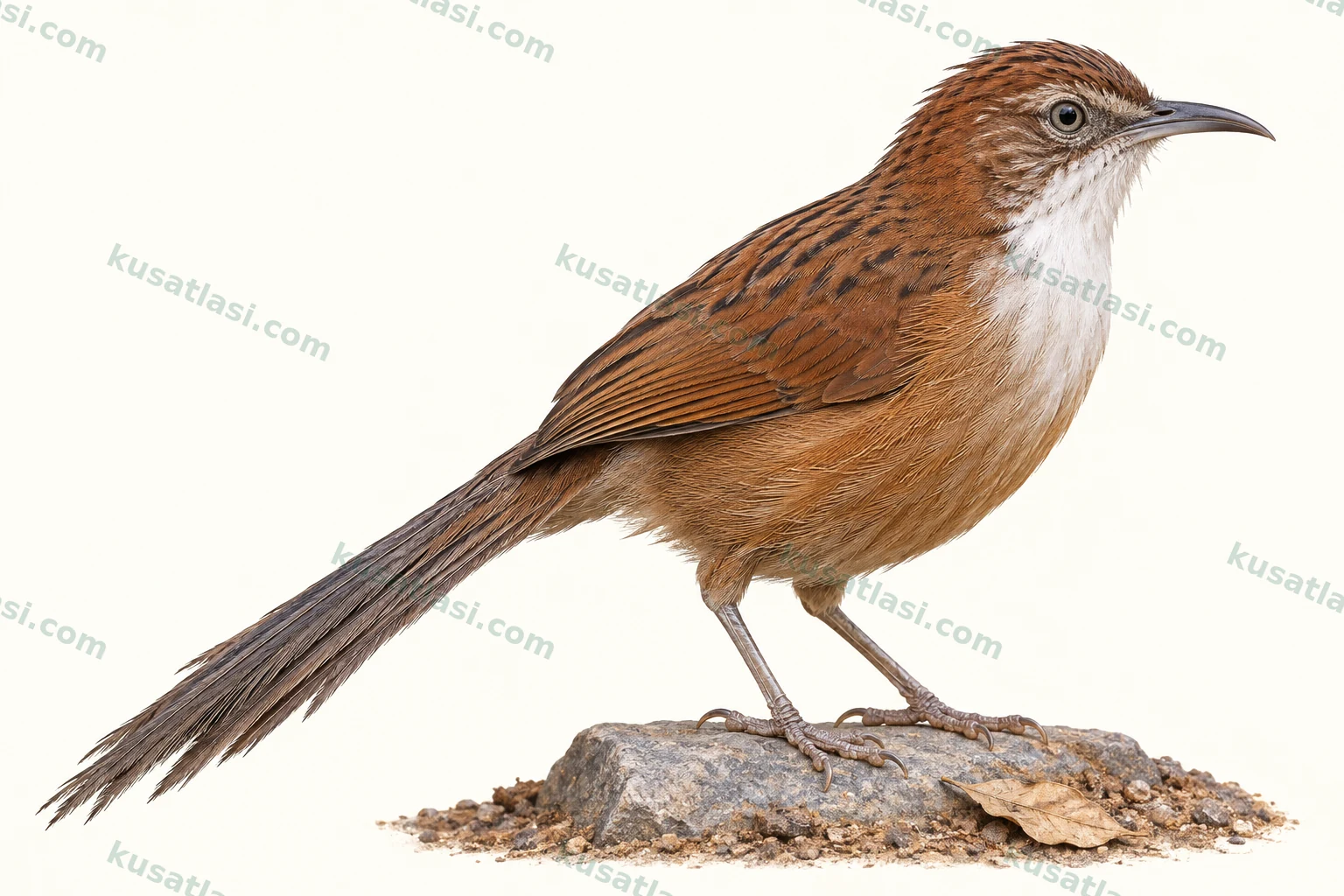
World Birds IUCN statusLC · Least ConcernGlobal IUCN. BirdLife v10 (2025); taxon matching AviList 2026 / IOC 15.2; checked: 29.10.2026. The list year is not the species’ assessment date. Source and method · BirdLife OrderPasseriformesPasserines FamilyLeiothrichidaeLeiothrichidae
White-throated Babbler
Argya gularis
White-breasted, long-tailed group-living babbler of Myanmar’s dry scrub.
Biometrics
Length
Male25–27 cm
Female25–27 cm
Shared species value
Wing length
Male8.82 cm
Female8.82 cm
Shared species value
Weight
Male43.1–47.9 g
Female43.1–47.9 g
Shared species value
White-throated Babbler
Central and southern MyanmarObservation guide in its natural range
Look for three features together
Do not rely on a single featureWarm chestnut-brown; white throat and breast.
Very long.
Small groups feeding together on the ground with thin chatter.
Compare male and female
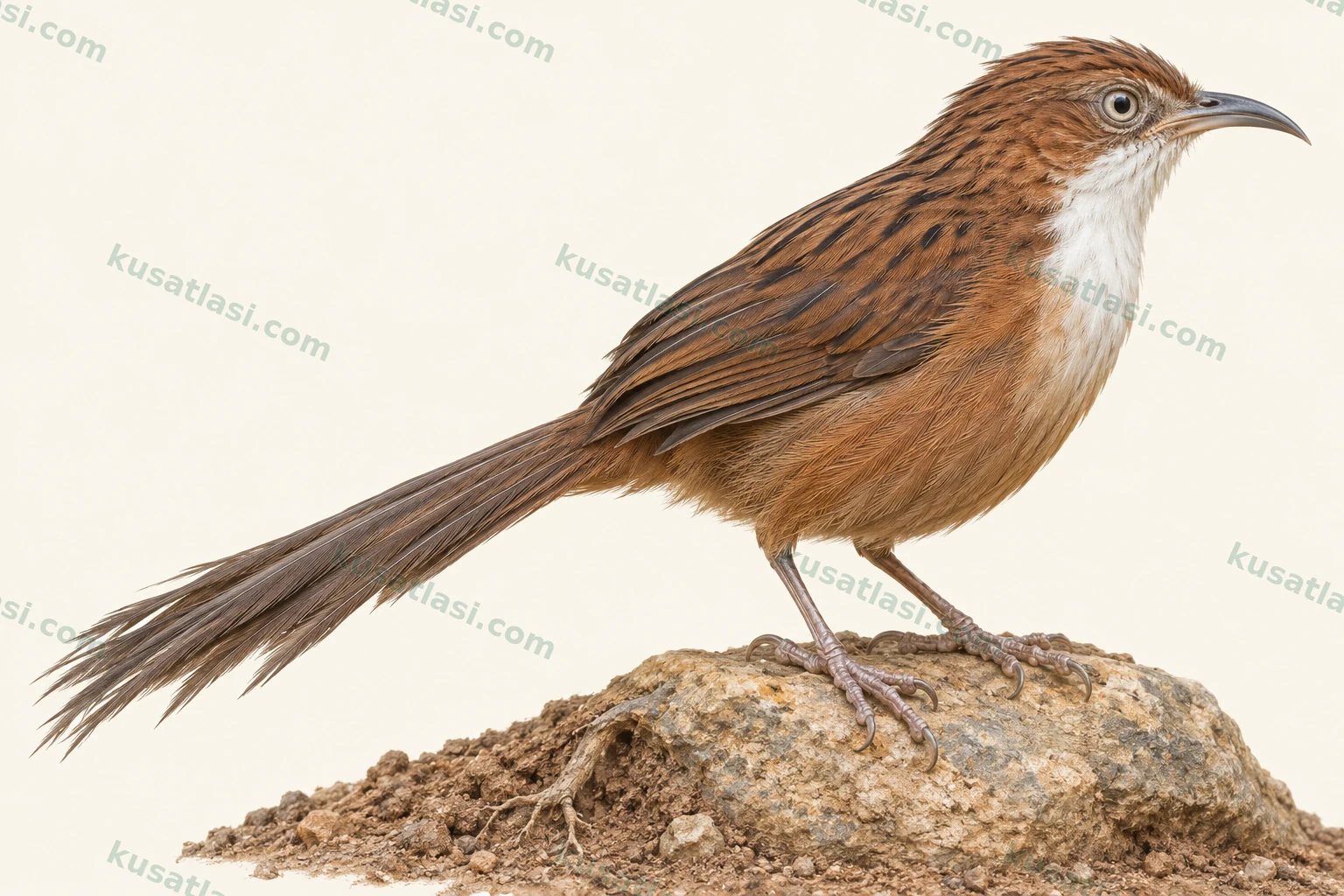 FemaleMale
Adults similar; juvenile key unverified.
Where to look in its natural range?
Scrub, hedges and farmland edges in dry grassy plains.
Resident; older field work reports more pronounced breeding in March–April. A current nationwide monthly breeding calendar was not verified.
January
Data unavailable
February
Data unavailable
March
Myanmar, dated original field note: warm period with more pronounced breeding reported.
April
Myanmar, dated original field note: warm period with more pronounced breeding reported.
May
Data unavailable
June
Data unavailable
July
Data unavailable
August
Data unavailable
September
Data unavailable
October
Data unavailable
November
Data unavailable
December
Data unavailable
Nest, egg and incubation
Grass cup nest; dated original note reports 3–4 dark blue eggs. Incubation and fledging periods unverified.
Thin rolling chatter while feeding together.
Do not play recordings to attract birds; observe quietly, especially near nests.
Species information
Quick identification
White-throated Babbler Argya gularis is a long-tailed bird moving in small groups through Myanmar's dry scrub. Warm chestnut-brown body, bright white throat and breast and a long tail distinguish it together. White-throated Babbler is the English name of the same species.
General appearance and posture
The specialist guide reports dark upperpart streaks and a paler, more rufous belly. The tail is conspicuously long relative to the body. The adult's white breast area differs from birds with only a small pale chin spot.
Males, females and young birds
Adult male and female look similar in the specialist guide. White breast or tail length does not determine sex certainly. A detailed juvenile plumage key was not verified.
Appearance in flight
The long tail forms part of the appearance of birds moving between cover. No species-specific underwing mark was verified. Identification is safer when the perched bird's breast, upperparts and whole body can be compared.
Voice and behaviour
Small groups feeding together give thin rolling chatter. Cornell describes these groups in dry scrub, often near human settlement. Group living does not mean each group contains exactly seven birds.
Similar species
Compared with other Myanmar Argya, assess bright white throat and breast, warm rufous-brown colour and very long tail together. Family resemblance to Rufous Babbler Argya subrufa or Sri Lankan species does not give them the same natural range as this Myanmar bird. Use the local species list and the whole bird's appearance.
World distribution
It is endemic to Myanmar. Current AviList gives dry grassy plains of central and southern Myanmar as its natural area; no subspecies are listed. Burma in older sources means the same country.
Status within its natural range
The global category is Least Concern. Specialist observation records exist from Bagan and the country's dry central region. Occurrence near settlements does not make all urban surfaces suitable or show equal population density everywhere.
Movements
It is classified as resident. No regular migration route beyond the country was verified. Small groups' daily movement among bushes is not termed long-distance migration.
Breeding habitat
It uses scrub, thorn hedges, dense small patches of cover and farmland edges in dry plains. Such cover near settlements provides shelter and nest sites beside open ground.
Nest site
Harington's original observation of 1914 describes a grass cup nest in a bush or bamboo clump; nests in veranda latticework were also reported. Exposed nests may be looser and well-hidden nests firmer. That dated study reports 3–4 dark blue eggs and more pronounced breeding in March–April. Possible breeding at other times was also mentioned; this is not modern monthly monitoring across the country. Incubation and fledging periods were not verified.
Daily use of space
Groups mostly forage on the ground and use edges of dry grass and scrub cover. No universal figure for group size or its daily area was verified.
What does it eat?
Specialist accounts report insects and other small invertebrates. A detailed prey list, seasonal shares or stomach samples representative of the entire range were not found.
How does it forage?
It searches mainly on the ground in small groups. Cornell's description of birds calling while feeding together helps detection. Seeing a feeding group does not show an active nest at the same spot.
Seven sisters are not always seven
The old family name seven-sisters refers to moving in family groups. Harington's observation also uses it. It must not become a counting rule; count the birds actually present separately.
Nest firmness can vary
The original breeding note compares a sparse grass nest in an open bush with a firmer hidden nest. This dated field observation shows nest variation not reducible to a single drawing. A loose nest alone does not mean another species made it.
Old names refer to the same taxon
Chatarrhaea gularis and Turdoides gularis occur in the literature. Current classification uses Argya gularis. IOC's taxonomic update links moving these babblers to Argya with genetic classification research; records are not split into different birds merely because the genus spelling changed.