

World Birds IUCN statusLC · Least ConcernGlobal IUCN category. BirdLife v10 (2025); taxon matching: AviList 2026 / IOC 15.2; checked: 29.10.2026. The list year is not the species assessment date. Source and method · BirdLife OrderPasseriformesPerching birds FamilyLeiothrichidaeLeiothrichidae
White-headed Babbler
Turdoides leucocephala
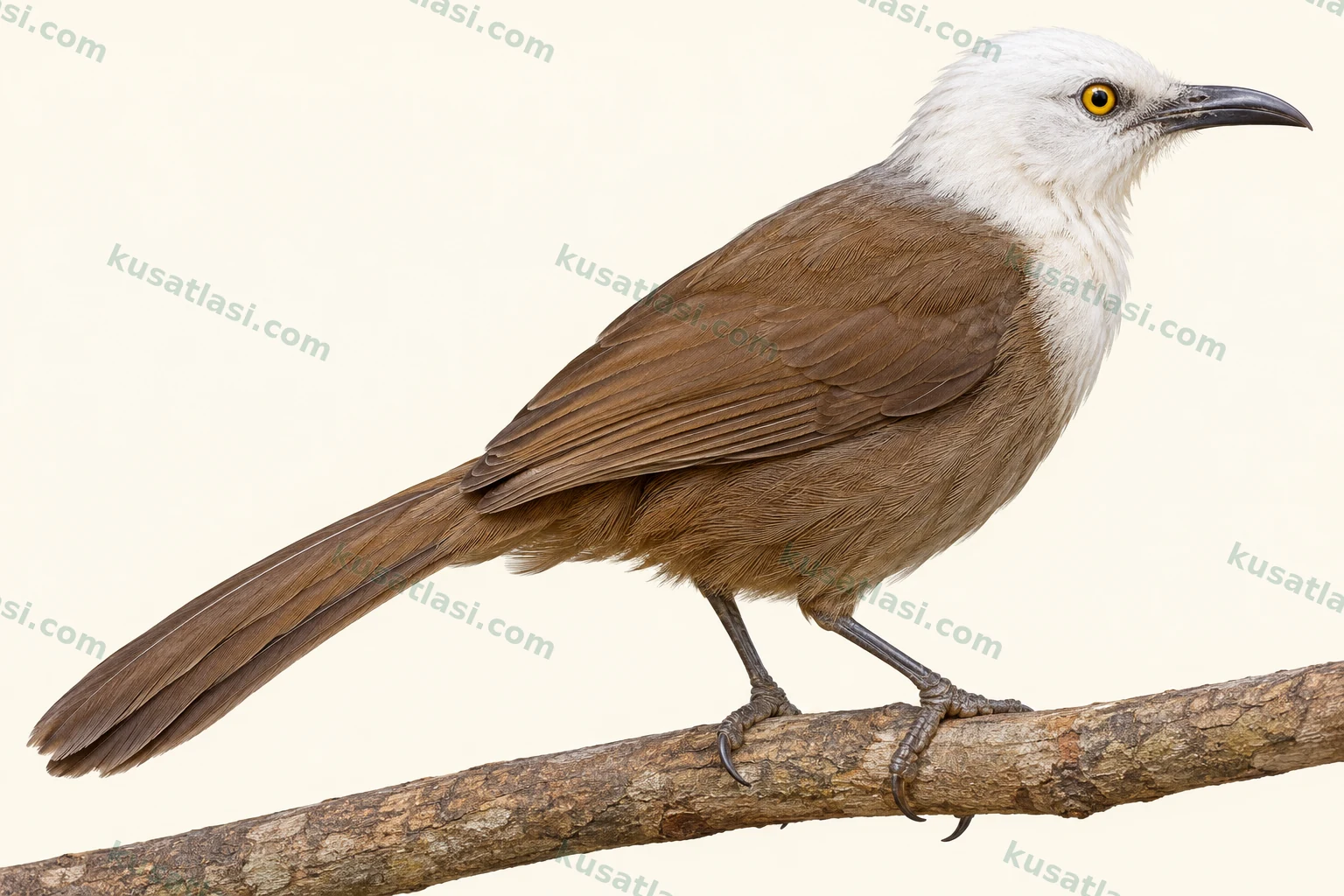
A babbler that lives in groups in northeastern African scrub. Adults have a white head, yellow eye and grey-brown rump.
Biometrics
Length
Male22–25 cm
Female22–25 cm
Shared species value
Wing length
Male10.45 cm
Female10.45 cm
Shared species value
Weight
Male62.5 g
Female62.5 g
Shared species value
White-headed Babbler
Eastern Sudan, Ethiopia and EritreaObservation guide in its natural range
Look for three features together
Do not rely on a single featureWhite in adults, with brown feathers in young birds.
Grey-brown, unlike the white rump of the similar species.
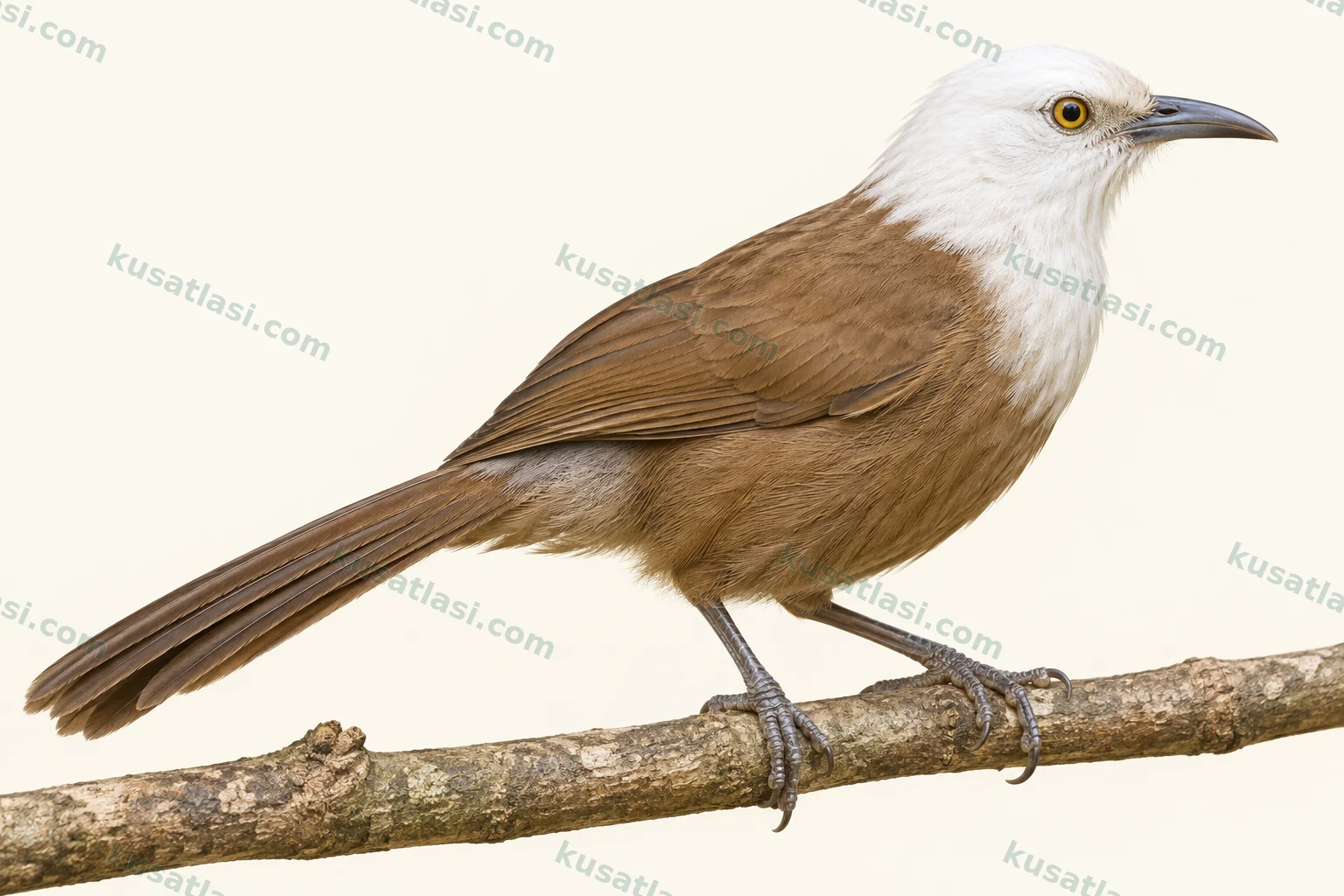
Plumage is similar. The darkness of the colour alone does not establish sex.
Compare male and female
 FemaleMale
Adult males and females have similar plumage. Young birds can have brown heads.
Where to look in its natural range?
Dense scrub and thorny vegetation in dry regions, including suitable areas near water.
Resident status is confirmed. This review did not verify regional egg-laying months for the species.
All months: Resident. A migration route has not been verified. No verified regional date was given for this month. This does not imply local absence.
January
February
March
April
May
June
July
August
September
October
November
December
Nest, egg and incubation
The compilation gives a representative clutch of 3 eggs. Nest structure, incubation duration and age at first flight were not verified. Breeding status in Oromia is coded as presumed.
The group can give harsh, chattering calls together.
Do not play recordings to attract birds; observe quietly, especially near nests.
Species information
Quick identification
White-headed Babbler Turdoides leucocephala is a brown-bodied songbird with a pale head that lives in dry scrub in northeastern Africa. The adult's white crown, cheeks and chin stand out against the earthy brown body. The eye ranges from yellow to orangish yellow. The rump is grey-brown, and is as important to see as the head when separating this bird from another white-headed babbler. The harsh, chattering calls of a group in scrub can attract attention before the birds come into view.
The current English name is White-headed Babbler. Cretzschmar's Babbler in the Cornell account refers to the same taxon. An old museum catalogue used Crateropus leucocephalus. This earlier name does not denote a separate species. Other babblers in India also have English names referring to a white head, so the scientific name must be checked. The bird on this page is native to Sudan, Ethiopia and Eritrea.
General appearance and posture
The back is light earthy brown. The lower back and rump may appear slightly paler, warmer or grey-brown. The small wing coverts resemble the back, whereas the greater coverts and flight feathers are darker brown with paler edges. The tail is brown as well. The old specimen description mentions faint dark crosswise marks in some light. These are not a conspicuous black-and-white tail pattern to look for at a distance.
The white of the head extends to the cheeks and chin. Towards the back of the head, the cheek merges into brown along the side of the neck. Below the white chin, the throat and front of the neck look darker, while the breast looks warmer light brown. The belly, thighs and undertail are pale yellowish brown. Following these colour transitions is more informative than relying on a crown that looks completely white. Shade can make the pale head look grey, and sunlight can strengthen the body's warm tones.
The bill is dark horn-coloured to nearly black. The original historical description gives the feet as dark lead-grey or purplish horn-coloured. These descriptions are read with the lighting, specimen and observation context in mind. They do not establish separate foot colours for adult males and females. Seeing the yellow eye with the pale head helps identify the brown body in scrub.
Males, females and young birds
The 1883 museum catalogue's descriptions of males and females report no conspicuous difference in adult plumage. A darker body alone is insufficient to determine sex. The catalogue notes that a moulting female's new feathers were darker than her old ones. Feather freshness and fading in sunlight can help explain why the same bird appears different shades of brown on different dates.
Young birds have brown heads. Brown juvenile feathers can persist while the head is turning white. A dark-headed bird in the group is therefore not automatically another species. Assess its body, rump and bill along with the other members of the group. A young Brown Babbler is likewise not assigned to this species solely because white-headed birds are nearby. Age assessment needs several visible clues.
A bird that looks adult does not prove it is male by calling. Group calling involves more than one individual. When counting the birds, allow for the same individual appearing on one side of a shrub and re-emerging on the other. If only the head is visible in a photograph, unobserved details of body colour and rump are left open. Keeping that uncertainty helps when comparing young and adult birds later.
Appearance in flight
An open wing may show brown flight feathers with paler inner edges. The historical specimen description gives pale yellowish-buff underwing coverts and light brown feathers near the wing edge. The pale head and brown body can be followed together in a short flight. A wing surface hidden by bushes does not establish a white patch. When the bird perches, check the grey-brown rump again.
Voice and behaviour
Cornell's specialist identification account describes groups usually of a few individuals and harsh, speech-like calls given together. Calls from several locations suggest that more than one bird may be behind the shrub. An exact count requires a view of the whole group. Other babblers nearby can also call together. Seeing the head and rump helps link the voice to the visual identification.
In dense scrub the head may appear through one gap and the body through another. Following all the marks on the same bird helps identification. Group living is not evidence that helpers feed chicks at every nest. The original sources examined did not quantify such care roles for this species, so details of cooperative breeding in other babblers are not transferred here.
Similar species
1. White-rumped Babbler Turdoides leucopygia can look particularly similar in its white-headed geographic forms. The main distinction in Cornell's account of the target species is its white rump compared with the grey-brown rump of White-headed Babbler. Even if the head looks pale, see the base of the tail before relying on a name or general colour resemblance.
2. Brown Babbler Turdoides plebejus may have a pale face and throat, but these do not match the extensively white head of an adult White-headed Babbler. The brown head of young White-headed Babblers makes separation harder. Watch the body, the extent to which the head has turned white and the rump together. Do not identify every bird in a group from the appearance of one adult.
World distribution
The current scientific checklist and review of Ethiopia limit the natural range to eastern Sudan, Ethiopia and Eritrea. The species occurs in dry, scrub-covered parts of northeastern Africa. A record from one country does not mean all its mountains, deserts and farmland regularly support the bird. The historical museum catalogue itself regarded the identity of its Senegambian specimen as needing confirmation, so the record does not extend the natural range to West Africa.
Status within its natural range
The global checklist category is Least Concern. The 2017 scientific review of Oromia treats the species as one of the poorly known birds of the region's northwest, near the southern limit of its range. The older atlas data cited there show only two broad one-degree survey squares. These represent neither two birds nor two nests. The paper explicitly calls for further research. The map should not turn a lack of regional data into an apparently continuous presence across Ethiopia.
Movements
The resident code in the Oromia review denotes year-round occurrence. The lowercase breeding code in the same table means breeding is accepted but is not classified as confirmed evidence of breeding for that region. The calendar preserves this distinction. The sources examined did not provide an annual migration route tracked with dates and distances. Daily movements among bushes are not plotted as such a route, and the distribution of records across months alone does not establish the onset of migration or the month of egg-laying.
Breeding habitat
The specialist account highlights dense shrubs and thorny vegetation in dry regions, especially suitable areas near water. Sheltered clusters of shrubs beside open ground are relevant to concealment and feeding. The Oromia distribution information is based on sparse records at the southern range limit, so it does not make all vegetation in that region breeding habitat. The paper's breeding code is not a detailed account of directly monitored nests.
Nest site
The life-history archive's source-specific table contains a representative clutch of three eggs. Values such as 2.8 and a combined 2.9 from the same archive are averages and do not represent fractional eggs in an individual nest. This review did not verify the nest structure, regional egg-laying months, incubation duration or age at first flight. Development periods from other babblers are not used to fill the gaps.
Daily use of space
Several birds can be seen together in dense scrub. Proximity to water is considered alongside the density of vegetation. The species is not a waterbird feeding on open water. The continuity of the scrub, gaps used by the birds and whether they are seen on the ground or on branches can be recorded separately. Waiting beside an open sightline rather than entering the cover gives a better chance of seeing behaviour without scattering the group.
What it eats
Published global dietary-trait datasets classify this species among invertebrate-feeding birds. This classification describes its general diet and does not come from a stomach or faecal analysis showing the proportions of individual insects. The review found no verified detailed dietary sample for this species broken down by season and region. Fruit, small vertebrates or seeds listed for other babblers are not treated as a measured annual diet for this species.
How it obtains food
When watching the bird in dry scrub, record where it points its bill, what it takes and the surface from which it feeds. If the prey cannot be identified, record only that it took small prey. Being in a group does not mean each bird takes the same food at the same time. One feeding observation at the base of a shrub does not establish that it can feed only on the ground. Keeping the general invertebrate diet distinct from what was seen in a particular observation allows new records to contribute to a more detailed dietary account.
A historical record can contain its own caveat
The 1883 museum catalogue mentions a specimen said to come from West Africa and also calls for verification of the unexpected record. A published name does not mean the author accepted the bird's presence there as certain. The current range account is limited to northeastern Africa. Preserving the historical author's warning prevents an erroneous extension of the range on the map.
The head is not white at every age
The young bird's brown head shows that the white in the species name is not present throughout life. Feathers of both colours may be present as the bird matures. When assessing young birds beside white-headed adults, compare the juvenile appearance with both other group members and similar species. This helps avoid mistaking an age difference for a separate species or a difference between females and males.
Feather age can change the shade of brown
In the original museum examination, the new feathers of a moulting female were found to be darker brown. This observation helps explain why some individuals of the same species look lighter or darker. Dark new feathers do not mean that all dark birds are females. Sunlight, wear and moult are effects to consider independently of sex.
The lowercase regional code matters
The Oromia review uses different codes for confirmed and accepted breeding status. The mark for this species highlights a gap to investigate. Being listed as resident and having a monitored nest represent different levels of evidence. Details like these keep the map and calendar from appearing more precise than their sources.