

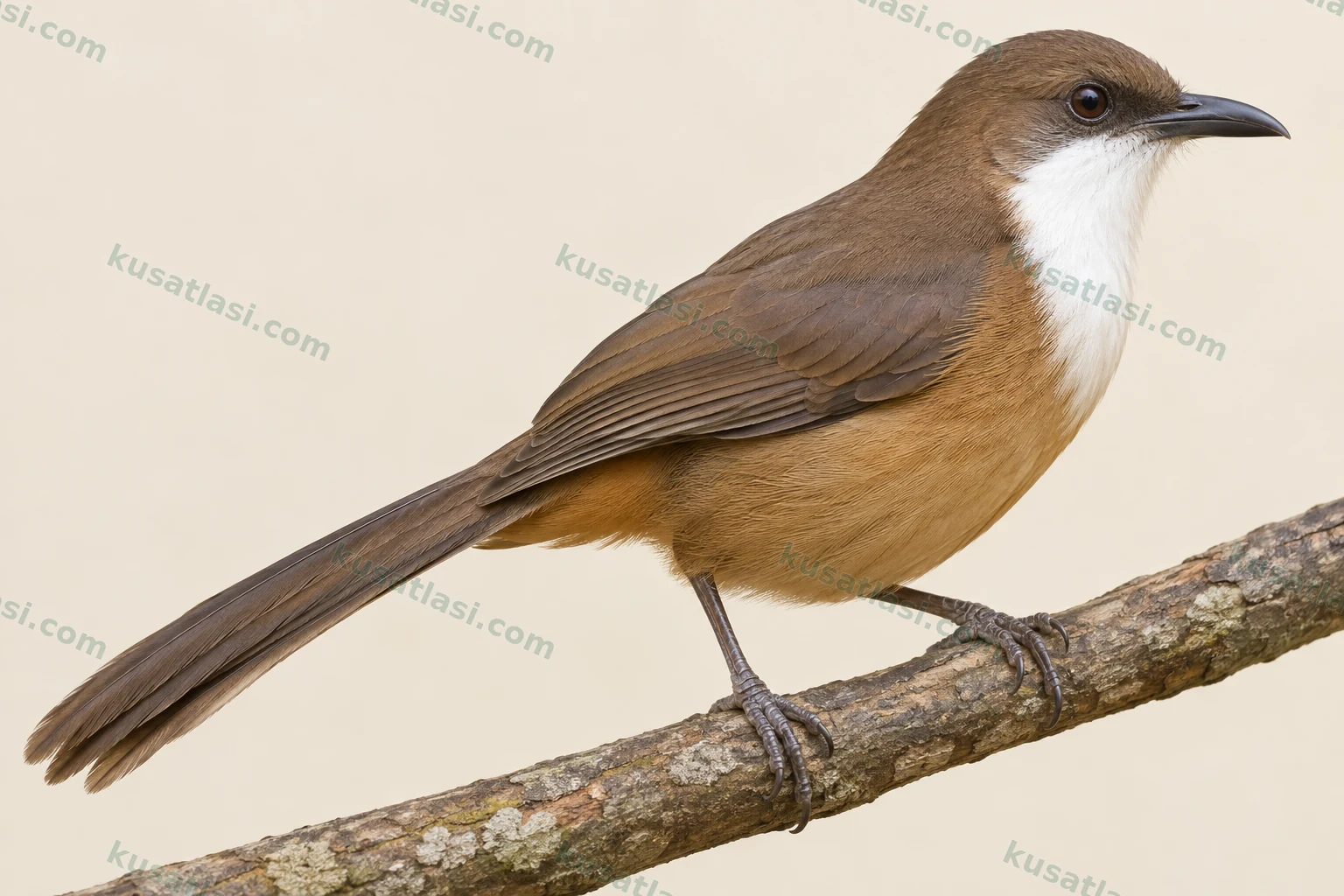
World Birds IUCN statusLC · Least ConcernGlobal IUCN category. BirdLife v10 (2025); taxon matching: AviList 2026 / IOC 15.2; checked: 29.10.2026. The list year is not the species assessment date. Source and method · BirdLife OrderPasseriformesPerching birds FamilyLeiothrichidaeLeiothrichidae
White-throated Laughingthrush
Pterorhinus albogularis
White cheeks and throat, a brown breast band and orangish rufous underparts, with olive-brown upperparts and broad white tips to the outer tail feathers.
Biometrics
Length
Male28–31 cm
Female28–31 cm
Shared species value
Wing length
Male12.6 cm
Female12.6 cm
Shared species value
Weight
Male97–114 g
Female78–105 g
White-throated Laughingthrush
Himalayan belt, southwestern China and northwestern VietnamObservation guide in its natural range
Look for three features together
Do not rely on a single featureIt is white with a brown breast band just below it.
The outer feathers have broad white tips. The central feathers are different.
Young birds have a less distinct breast band. This difference does not identify a female.
Compare male and female
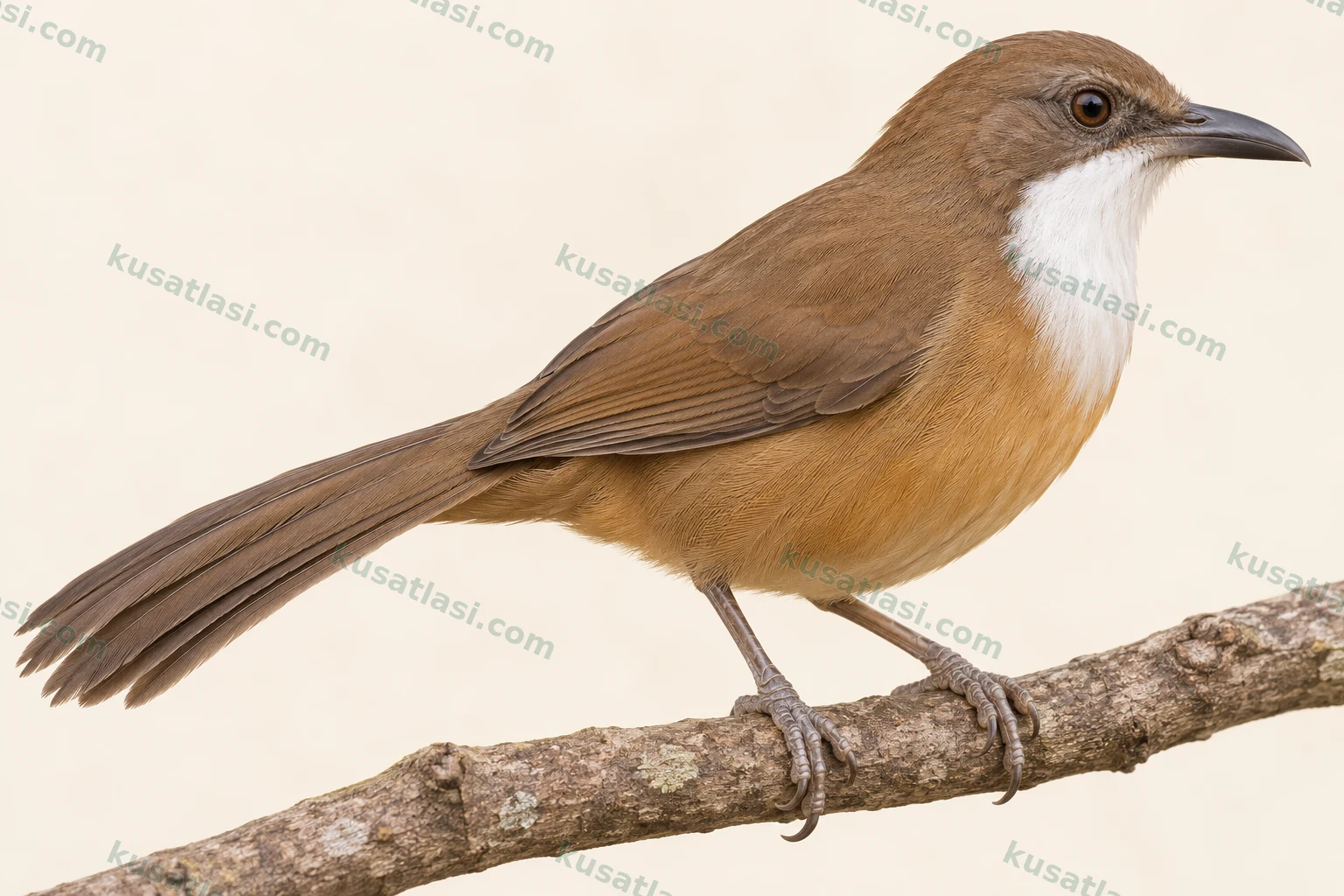 FemaleMale
Adult males and females have similar colour patterns. Young birds have paler feathers and a less distinct breast band.
Where to look in its natural range?
Look in foothill forests, forest edges and dense wooded cover.
The historical Himalayan account reports egg laying from April to June. Observations from Murree date to May and June. The same calendar is not assumed for China and Vietnam.
January
The species is resident. No annual migration route has been verified by tracking individuals. No verified regional date was provided for this month. This does not mean the species is locally absent.
February
The species is resident. No annual migration route has been verified by tracking individuals. No verified regional date was provided for this month. This does not mean the species is locally absent.
March
The species is resident. No annual migration route has been verified by tracking individuals. No verified regional date was provided for this month. This does not mean the species is locally absent.
April
The species is resident. No annual migration route has been verified by tracking individuals. The historical Himalayan field account provides regional egg-laying records.
May
The species is resident. No annual migration route has been verified by tracking individuals. The historical Himalayan field account provides regional egg-laying records. The historical nest records from Murree do not represent the entire range.
June
The species is resident. No annual migration route has been verified by tracking individuals. The historical Himalayan field account provides regional egg-laying records. The historical nest records from Murree do not represent the entire range.
July
The species is resident. No annual migration route has been verified by tracking individuals. No verified regional date was provided for this month. This does not mean the species is locally absent.
August
The species is resident. No annual migration route has been verified by tracking individuals. No verified regional date was provided for this month. This does not mean the species is locally absent.
September
The species is resident. No annual migration route has been verified by tracking individuals. No verified regional date was provided for this month. This does not mean the species is locally absent.
October
The species is resident. No annual migration route has been verified by tracking individuals. No verified regional date was provided for this month. This does not mean the species is locally absent.
November
The species is resident. No annual migration route has been verified by tracking individuals. No verified regional date was provided for this month. This does not mean the species is locally absent.
December
The species is resident. No annual migration route has been verified by tracking individuals. No verified regional date was provided for this month. This does not mean the species is locally absent.
Nest, egg and incubation
The cup is built in a shrub or small tree from grasses, roots, leaves and climbing stems. Clutches usually contain three unspotted blue or greenish blue eggs, with two or four in some records. Incubation duration and the days to first flight have not been verified.
The bird gives loud whistles and a variety of chattering calls.
Do not play recordings to attract birds; observe quietly, especially near nests.
Species information
Quick identification
The White-throated Laughingthrush Pterorhinus albogularis is a forest bird with white cheeks and throat, a brown breast band and orangish rufous underparts. Broad white tips to the outer feathers of the long tail also help identify it. The upperparts are warm olive brown, and the back is not covered in bold lengthwise streaks. A white throat alone is insufficient because other pale-faced laughingthrushes can occur in the same forests.
Its current English name is White-throated Laughingthrush and its scientific name is Pterorhinus albogularis. The older spellings Garrulax albogularis and albigularis are checked against the species account and its synonymy. Breeding durations or measurements from other birds that share the word albogularis are not transferred. The current family is Leiothrichidae. The older broad placement in Timeliidae is not used in place of the present family name.
General appearance and posture
The crown is warm olive brown, continuous with the back. A historical museum description also mentions very faint dark edges to some crown feathers. This does not justify depicting the entire back as distinctly streaked. The forehead and the area extending above the eye can be more orange. Dark feathers running from beside the bill to the eye and below it define the border of the pale cheek and throat.
The cheeks and throat are white. A historical description notes a small dark spot at the base of the chin. This does not mean the whole white throat is black. An olive-brown band on the front of the neck and breast separates the white throat from the orangish rufous areas below. Lowering the head can compress the appearance of the band, but it is not merely a shadow. Several head angles help reveal the actual feather boundary.
The belly and lower body are warm orangish rufous. The museum examination also describes the underwing coverts as pale orangish. This colour does not extend to all the flight feathers. Their greyer brown lower surface is a separate area. Yellowish or reddish light can make the whole bird look warmer. Identification requires the arrangement of the white throat and breast band as well as attention to colour.
The back and folded wing have matching brown tones. The dark ground colour of the flight feathers has olive-brown or greyer outer edges. The tail is olive grey-brown. The central feathers differ in appearance from the outer feathers with broad white tips. When the tail is closed, some white tips can be hidden by overlap. Seeing the tips during movement is more informative than not seeing them on a closed tail.
The historical examination describes a dark horn-coloured bill and pale lead-grey feet. The iris can appear bluish white. Do not confuse the colour inside the eye with the bare skin around it. Such details may be difficult to see reliably in a small or shaded image. Assess the larger feathered areas first, then details such as the bill, eye and feet.
Posture, tail angle and distance also affect apparent size in a photograph.
Males, females and young birds
Adults of both sexes look similar in colour in the museum account. The female is described as possibly smaller, but the two examples do not provide a photographic key for all birds. Do not call a white-throated bird male or a bird with a paler throat female. If sex is unknown from a reliable observation or study, appearance alone does not settle it.
The young bird resembles the adult in its general colour pattern, but is described as paler and fluffier. The breast band is less distinct, and its feathers may have pale bases and brown tips. A faint band in a photograph does not therefore identify a different species or a female. Assess the young bird's head, throat, body and tail together.
Geographical forms are kept separate from age and sex. The current checklist recognises whistleri in the western Himalayas, albogularis in Nepal and Bhutan, and eous extending from China to northwestern Vietnam. Pterorhinus ruficeps in Taiwan is a separate species in the current list. Adding Taiwan data from older broad accounts to the target map would combine different taxa again.
Appearance in flight
The long tail and pale tips of the outer tail feathers can show during short movements. The dark flight feathers and warmer wing coverts are distinct areas. The historical underwing description treats the orangish coverts separately from the grey-brown flight feathers. A poorly resolved flight image is not a basis for adding a new white underwing stripe or a prominent black tip area.
Voice and behaviour
A specialist species account describes loud whistles often coming from cover. In field observations cited by Hume, groups moved about turning over dry leaves and uttering a variety of chattering calls. A noisy group is not necessarily a breeding colony. A silent individual does not count as a different species solely because it is not calling. Match the sound to the bird seen and the habitat.
Similar species
When comparing the White-crested Laughingthrush Garrulax leucolophus, look for its extensive white crown and conspicuous crest. The White-throated Laughingthrush has a brown crown, a white throat and a brown breast band. A single glimpse of a white facial area does not distinguish these two different head patterns.
The White-cheeked Laughingthrush Pterorhinus vassali can look similar because of its white cheek and long, white-tipped tail. Compare its extensive dark face mask and darker throat with the broad white throat of the White-throated Laughingthrush. The viewing angle can make the white cheek look larger. The cheek and throat are separate anatomical areas.
Global range
The natural range includes the Himalayan belt and some mountainous regions of China. The current subspecies account places whistleri in Kashmir, Pakistan and northwestern India, and the nominate subspecies from western Nepal to eastern Bhutan. Eous ranges from Qinghai, southern Shaanxi, southern Sichuan and northern Yunnan in southwestern China to northwestern Vietnam. The place names do not mean that the bird occurs in every forest in each country.
Status within its natural range
Foothill forests and forest edges feature in the specialist account. The Surya-Kunj research institution's account treats it as a resident bird of the Himalayan region. Historical Himalayan nest observations come from particular slopes and elevations. The same breeding month is not applied to every part of the current Chinese or Vietnamese range. The separate Taiwanese species Pterorhinus ruficeps is not included on this map. The general mapped area and evidence from actual observation points are read separately.
Movements and migration
The specialist and published trait accounts examined support resident status. Historical field observations at Mussoorie also describe the bird in all seasons. This does not mean that birds never move within forests or between elevations. No route based on verified tracking of individuals across seasons was found. Do not draw a long migration line linking records from different places. A local group's movement among branches and shrubs is a different event from annual migration.
Breeding habitat
The research institution's account lists broadleaf and mixed forests, secondary woodland and suitable edge vegetation. Historical nest observations describe young trees and shrubs within dense forest. A record in a park does not mean it breeds only in built-up areas. The structure of the cover used is assessed separately.
Nest site
Nests reported by Hume are in shrubs and small trees, in branch forks or on horizontal branches. They vary from deep cups to broad shallow structures and can contain grasses, creeper stems, roots, leaves and moss. There are usually three eggs, with two or four in some records. The eggs are described as glossy blue or greenish blue and unspotted. Incubation duration and time to first flight from the nest have not been verified here.
Daily use of habitat
Groups can move through shrubs and turn dry leaves on the ground. Several birds near a nest do not prove that all are feeding young. Approaching a nest can change calls and behaviour. Old collecting methods are not examples to follow for present-day observation. Do not open the cover or cut branches. Keep a distance that allows the birds to return to natural behaviour.
What does it eat?
The Surya-Kunj research institution's account lists insects and small fruits as food. Published trait classifications of an omnivorous diet with an emphasis on invertebrates can be read alongside that general account. The classification is not a dietary percentage measured in every month of the year. Reports of insects and fruit do not establish particular plant or prey species. Unverified details are not added.
How does it forage?
In Hume's Mussoorie field account, groups turn over dry leaves on the ground. This is a direct record of looking for food beneath the litter. It does not show that every turned leaf yields prey or that all feeding takes place on the ground. Record separately what the bill picks up, the surface searched and any prey actually visible. Swallowing fruit and turning leaves are distinct foraging movements. A crowd around a nest also does not show which bird carries which food.
Nests of one species can look different
The field accounts compiled by Hume include broad shallow nests and deeper cups. Roots and grasses stand out in some nests, while creeper stems over leaves stand out in others. A nest that does not look exactly like another described nest does not automatically belong to a different species. Identification also requires a reliable view of the bird using it.
Three eggs describe the general tendency
The historical account gives three eggs most often but also explicitly records nests with two and, rarely, four. This variation should not be flattened into a claim that every nest always contains three eggs. A visit when two fresh eggs are visible does not always establish that the clutch is complete. The date and condition of the eggs matter alongside the count.
A group and a breeding colony are different
Historical observers did not have the same experience of how close nests were to one another. Hume said that the nests he followed were not clustered, whereas others saw nests close together and groups moving nearby. Regional accounts can differ. Finding a group does not mean the entire species invariably breeds in colonies.
There is a separate band below the white throat
A brown breast band lies between the adult's white throat and orangish belly. It can be less distinct in young birds. Light that makes the throat look yellower is a different effect from the actual feather pattern of the band. Viewing the bird from several head and body angles reduces the risk of being misled by one warm-toned image.
The current genus name does not erase old observations
Actual nest observations published under Garrulax can be used when the taxon is correctly matched. Writing the genus as Pterorhinus does not turn the old records into observations of another bird. In contrast, information on the Taiwan bird subsequently treated as a separate species cannot be retained for the same reason. Synonyms and species splits are considered separately.