

World Birds IUCN statusLC · Least ConcernGlobal IUCN category. BirdLife v10 (2025); taxon matching: AviList 2026 / IOC 15.2; checked: 29.10.2026. The list year is not the species assessment date. Source and method · BirdLife OrderPasseriformesPasserines FamilyTroglodytidaeTroglodytidae
Timberline Wren
Thryorchilus browni
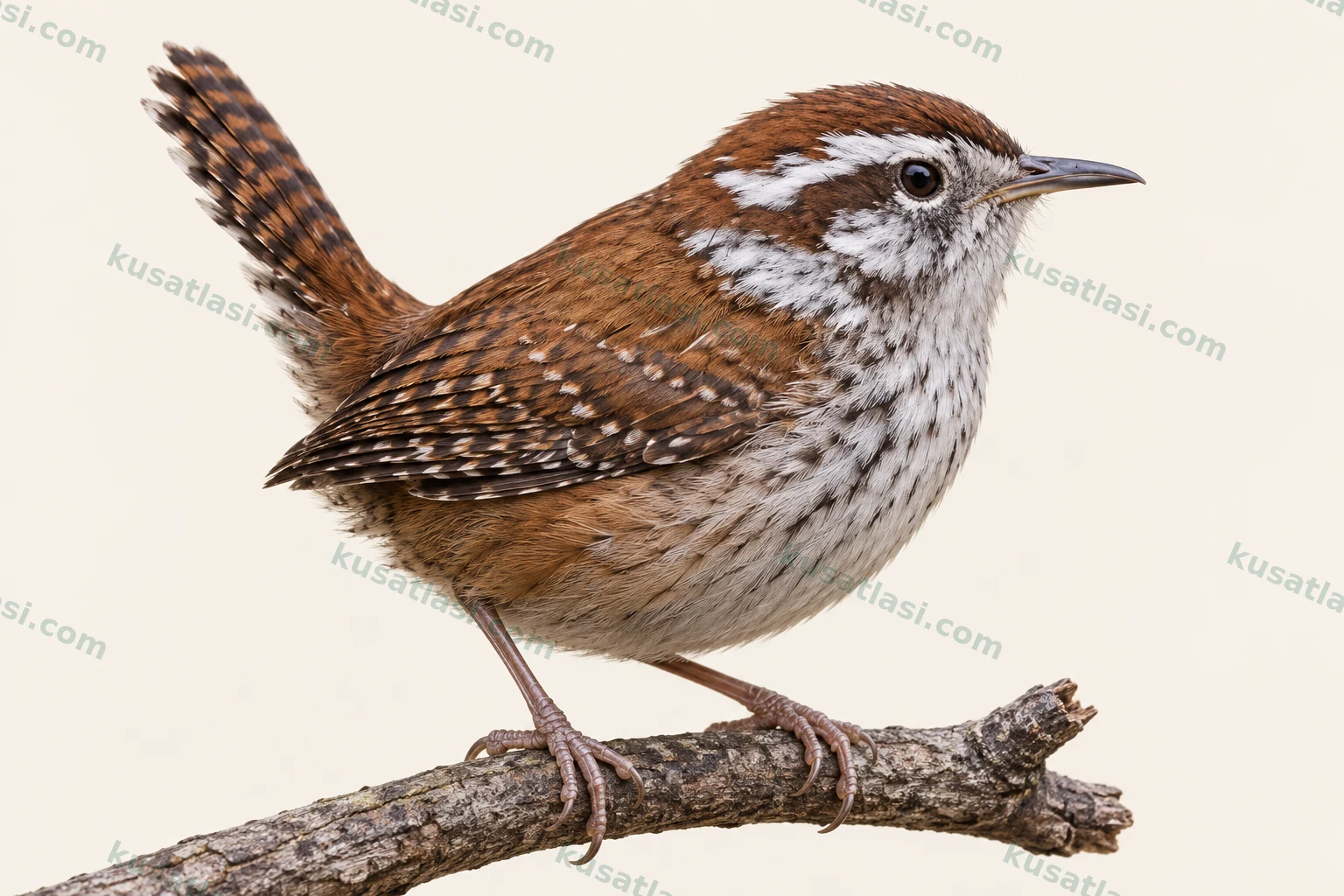
A short-tailed wren of high-mountain scrub; the whitish eyebrow, dark ear area and white folded-wing patch are assessed together.
Biometrics
Length
Male10 cm
Female10 cm
Shared species value
Wing length
Male4.98 cm
Female4.98 cm
Shared species value
Weight
Male14 g
Female14 g
Shared species value
Timberline Wren
High mountains of Costa Rica and western PanamaObservation guide in its natural range
Look for three features together
Do not rely on a single featureWhitish eyebrow and dark brown ear area.
White folded-wing patch; fine dark bars on the short tail.
High-mountain scrub and bamboo of Costa Rica and western Panama.
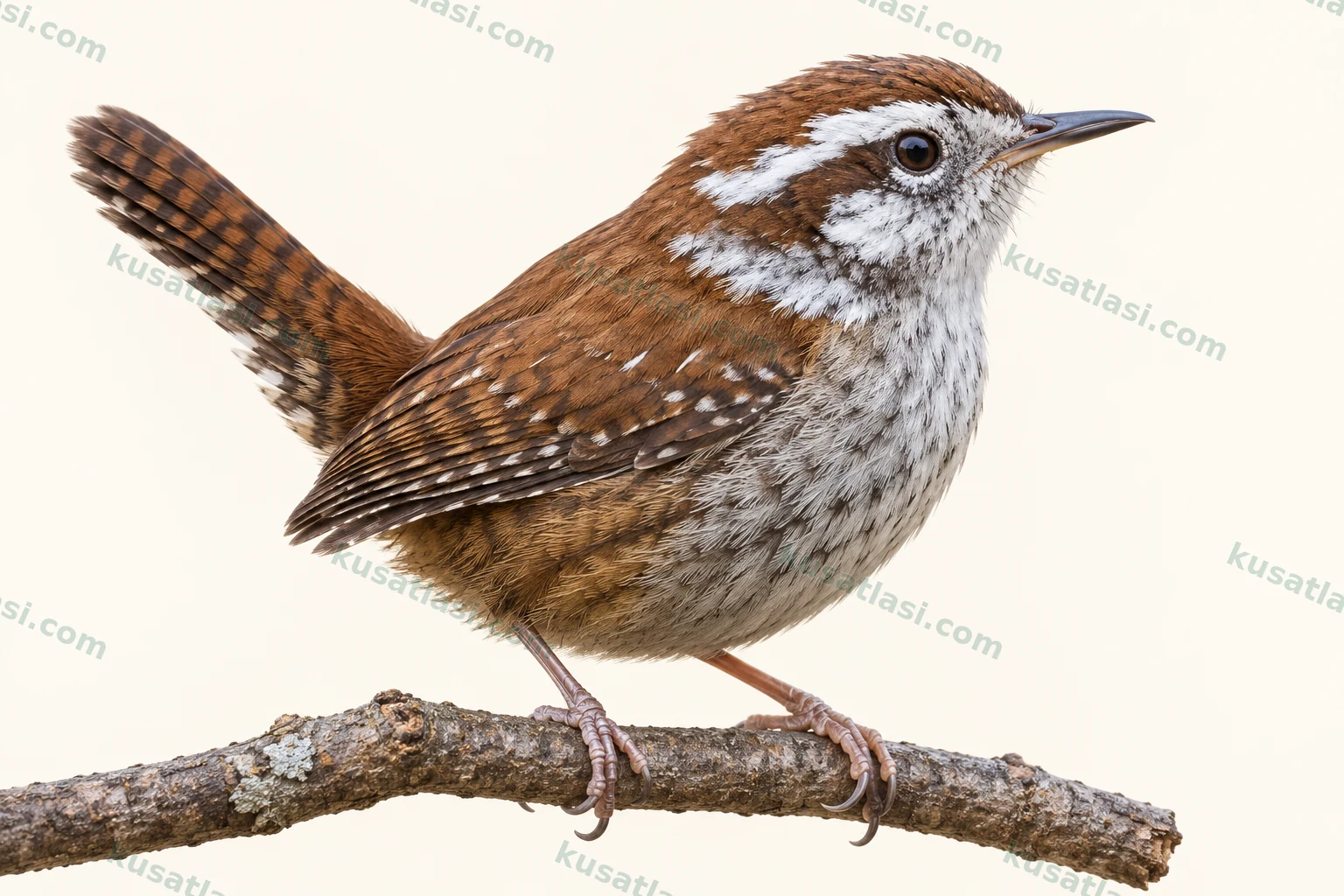
Compare male and female
 FemaleMale
No certain adult field sexing key was verified in this review. Young are reported to have greyer, dark-edged underparts and paler facial markings.
Where to look in its natural range?
Watch protected scrub and bamboo edges at the treeline.
Resident mountain species; April–June is the specialist compilation’s breeding interval, not a precise calendar for every region.
January
Resident; detailed elevational movements have not been verified. No verified regional date specific to this month was provided; this does not mean local absence.
February
Resident; detailed elevational movements have not been verified. No verified regional date specific to this month was provided; this does not mean local absence.
March
Resident; detailed elevational movements have not been verified. No verified regional date specific to this month was provided; this does not mean local absence.
April
Resident; detailed elevational movements have not been verified. Foreign specialist species compilation: The reported breeding period; the source does not give separate dates for every mountain.
May
Resident; detailed elevational movements have not been verified. Foreign specialist species compilation: The reported breeding period; the source does not give separate dates for every mountain.
June
Resident; detailed elevational movements have not been verified. Foreign specialist species compilation: The reported breeding period; the source does not give separate dates for every mountain.
July
Resident; detailed elevational movements have not been verified. No verified regional date specific to this month was provided; this does not mean local absence.
August
Resident; detailed elevational movements have not been verified. No verified regional date specific to this month was provided; this does not mean local absence.
September
Resident; detailed elevational movements have not been verified. No verified regional date specific to this month was provided; this does not mean local absence.
October
Resident; detailed elevational movements have not been verified. No verified regional date specific to this month was provided; this does not mean local absence.
November
Resident; detailed elevational movements have not been verified. No verified regional date specific to this month was provided; this does not mean local absence.
December
Resident; detailed elevational movements have not been verified. No verified regional date specific to this month was provided; this does not mean local absence.
Nest, egg and incubation
The nest is a ball with a side entrance, woven from bamboo leaves, and is usually placed in scrub 1–3 m above ground. Two spotted white eggs are reported; incubation duration and age at first flight were not verified.
Repeated sequences of variable notes and harsh short calls; vocal differences between mountain populations have been measured.
Do not play recordings to attract birds; observe quietly, especially near nests.
Species information
Quick identification
The Timberline Wren Thryorchilus browni is a small wren of dense scrub and bamboo at the treeline in the high mountains of Costa Rica and western Panama. Warm brown upperparts, a conspicuous whitish eyebrow, a dark ear region and pale grey-white underparts are assessed together. The white patch and fine dark markings on the folded wing help identification. Its short rufous-brown tail is barred dark across and may be raised while moving. A brown body or upright tail alone cannot separate other wrens in the same surroundings. Seeing face pattern, folded wing and elevation together is more useful.
“Timberline” does not mean that it spends the whole day on an exposed summit or in one tree species. It moves through dense vegetation between the upper edge of mountain forest, high scrub and bamboo clumps. Hearing it may be easier than seeing the whole bird. The white eyebrow and short tail glimpsed among branches can be the first signs in a brief encounter. If only a voice is heard in vegetation, similar species and regional vocal differences must also be considered. Waiting for the caller to appear is more appropriate than opening the scrub or driving it out.
General appearance and posture
Crown, nape, back and rump are warm brown. The whitish eyebrow contrasts with the dark brown ear area; fine dark edges may occur among the pale cheek feathers. Throat and breast are paler grey-white, the lower belly browner and the lower flanks rufous. White visible on the folded wing does not mean that the entire wing is white. Fine dark crossbars on the tail become clearer in a close view at a suitable angle. The specialist account describes brown eyes and pale brown feet.
Males, females and young birds
Within this review, no reliable field key was verified for determining adult sex with certainty from appearance alone. The basic face, wing and tail pattern first serves to identify the species. Singing may help establish sex in a research context; it does not make every silent bird female. The recorded and captured adult males in the 2018 study were a separate sample. Bill differences within that sample are not a comparison of both sexes throughout the range.
The specialist account describes juveniles as adult-like but greyer and less clean white below. Dark scale-like markings formed by feather edges may be more prominent on breast and belly. Head and front-of-shoulder markings are paler and the rufous flanks weaker. These details may disappear in a single shaded view; an adult's unlit underparts can also look greyer than they are. More than one feather region should be checked when judging age. Exact moult months are not placed on the calendar without verification for this species.
Appearance in flight
Most encounters involve short crossings through dense vegetation or hops along branches. It may use brief wing movements to reach food beneath leaves and branches. A bird moving between bamboo clumps may show a small body, short tail and warm brown upperparts. The important white folded-wing patch may not be equally conspicuous from every flight angle. Requiring a particular white line in every view in flight would therefore be inappropriate.
Genetic differentiation between mountain populations suggests that low passes can limit dispersal; it does not prove that an individual is physically unable to fly farther than a short distance. The gene flow and vocal differences measured in the research are not directly tracked flight distances. Each short scrub crossing should not be interpreted as the maximum movement of the whole species. When a bird moves away over open ground without showing the face, a short brown silhouette alone becomes difficult to identify with certainty.
Voice and behaviour
It repeats sequences of strong, variable notes and also gives harsher short calls. An individual may repeat similar notes in the same order, but different individuals and mountain populations need not share that sequence. The 2018 comparison of four Costa Rican mountain sites found geographical differences in local vocal elements and genetic patterns. Differences were especially marked between Irazú and Talamanca, separated by a lower pass. This does not make each mountain a separate current species: AviList v2026 places the same species in Troglodytes browni; Thryorchilus browni is its former generic combination.
It moves actively through vegetation, climbs branches and probes between leaves and plant litter on the ground. It may also search rock crevices for small prey. Raising and lowering the tail accompanies these short movements. It defends a territory; the researchers report male year-round territorial attachment as an observational note. Learning, local mate choice and cultural change were discussed as possible explanations for vocal differentiation, not causes directly tested experimentally in that study. Plumage, voice and geography are considered together.
Similar species
1. Troglodytes ochraceus may occur in the same mountain belt, generally at lower elevations. Timberline Wren has a whitish eyebrow, paler underparts and a more conspicuous folded-wing white patch and facial markings. The other species' warmer pale brown eyebrow and overall tone should be compared together; elevation alone does not provide a definite separation.
2. The Southern House Wren group Troglodytes musculus is another possibility at lower elevations. Its longer tail, lack of a conspicuous white eyebrow and greyer overall appearance are useful differences. The current scope of older guide records under the broad name Troglodytes aedon must be checked separately. A raised tail alone in dense scrub should not prompt a rushed species name.
World distribution
Its natural range is confined to the high mountains of Costa Rica and western Panama. Specialist and ornithological-organisation accounts include the Irazú area and Talamanca mountains in Costa Rica, and Barú and the western Chiriquí highlands in Panama. The low, warm ground between high areas does not offer the same habitat. The entirety of both countries should therefore not be painted as continuous range. Suitable mountain vegetation is more decisive than a national boundary or a single elevation figure.
Status within its natural range
Its current global category is Least Concern, but its natural range is narrow and its populations fragmented. It may be frequent in some protected Costa Rican highland areas; this does not imply equal abundance throughout the range. The 2018 study found lower genetic diversity in the Irazú sample and discussed possible vulnerability of small isolated populations. Climate-driven loss of high-mountain habitat is considered an anticipated risk, not a current continental extinction rate measured by this study.
Movements
It is classified as resident. Regular long-distance migration has not been verified, and details of elevational movements are also uncertain in the specialist account. In the Costa Rican study, a pass descending to about 1300 m is associated with genetic and vocal differences between two high-mountain populations. Such an association does not show that no individual crosses the pass or that movement between all mountains is zero. Observation points explain the natural mountain range; unverified seasonal routes and distances are not drawn.
Breeding habitat
It uses the edge of mountain forest, dense scrub and bamboo at the treeline. In the high zone where trees thin out, it also lives in areas combining low shrubs and herbaceous cover. Specialist accounts give a main elevation range of about 2800–3600 m, with some records down to 2200 m. These limits are not unchanging thresholds in every valley. The four sites in the 2018 Costa Rican study lie above 2800 m, and bamboo is important in the understorey.
Nest site
According to the specialist account, the nest is a hollow ball with a side entrance, woven largely from bamboo leaves. Fine plant fibres line the inside. It is usually 1–3 m above the ground in scrub or bamboo. Two white eggs with fine pale brown spots are reported. Incubation duration and age at first flight have not been reliably verified; durations are not borrowed from other wrens. The reported April–June breeding period is the scope of the specialist compilation, not an exact calendar for every year.
Daily space use
It searches leaves, slender branches, litter and crevices in dense low vegetation. A low pass between apparently close highland sites may interrupt suitable cover. This structure matters for understanding differentiation between mountain populations. Reaching an exposed summit is not the only way to find the bird; bamboo and scrub at protected mountain-forest edges should be watched. Bamboo is not cut and cover is not opened to locate a nest entrance, and playback is not used to shift the bird's position.
What does it eat?
Its food consists of small invertebrates. The specialist account lists small insects, caterpillars and spiders; flies and beetles are also mentioned in the biological background to the 2018 study. These describe prey diversity, not a menu with identical percentages on every mountain or in every season. Differences in bill length between mountain populations do not directly prove that each eats different insects. The researchers discussed food differences as a possible explanation and explicitly stated that dietary data to test it were lacking.
How does it hunt?
It gleans small prey from leaves within dense vegetation, probing litter, branches and rock crevices. It may climb among branches, make short hops on the ground and use brief wing movements to reach prey beneath leaves. These methods show that it does not feed only on the ground or only in the air. Tiny prey are difficult to identify from a distance; reaching its bill towards a leaf does not by itself show that the bird has eaten a particular insect. Recording the vegetation and searched surface together is a useful observation that does not require altering the site.
A low pass can separate a high-mountain bird
Research comparing Irazú with three Talamanca sites in Costa Rica found larger genetic and vocal differences associated with the low pass between them. For a high-mountain bird, the space between two summits that appear close on a map may not be suitable habitat. This does not prove that individuals never cross the pass; it is a geographical pattern explaining limited gene flow. Vegetation and elevation structure matter more than national boundaries.
Songs are not one fixed sentence
The 2018 study found individual and regional differences in male vocal sequences. Repetition of notes in a particular order does not mean that all birds sing the same sentence. Local vocal elements may be more widely shared; learning and cultural change are among possible explanations. However, the study did not experimentally demonstrate female preference for local song. Vocal similarity and difference are interpreted at a level of evidence distinct from current species identity.
The cause of bill differences remains uncertain
Bill length differed among the mountain populations examined, whereas many other morphological traits differed less. Relationships to food or song production were discussed, but insufficient data were available to verify them. A study can measure a difference without settling its cause. Thus local bill differences are not used as a new sexing key or proof that each population eats different prey.
Bamboo is more than a perch
Dense bamboo cover contributes to daily foraging and nest location. The specialist account describes a side-entrance nest ball woven from bamboo leaves. When the bird's white eyebrow appears briefly among leaves, the vegetation structure can support identification. Yet one bamboo clump does not prove breeding there; nest and young observations are needed separately. Preserving undisturbed cover is more useful than opening it to see the bird.