

World Birds IUCN statusLC · Least ConcernGlobal IUCN. BirdLife v10 (2025); taxon matching AviList 2026 / IOC 15.2; checked: 29.10.2026. The list year is not the species’ assessment date. Source and method · BirdLife OrderPasseriformesPasserines FamilySturnidaeSturnidae
White-crowned Starling
Lamprotornis albicapillus
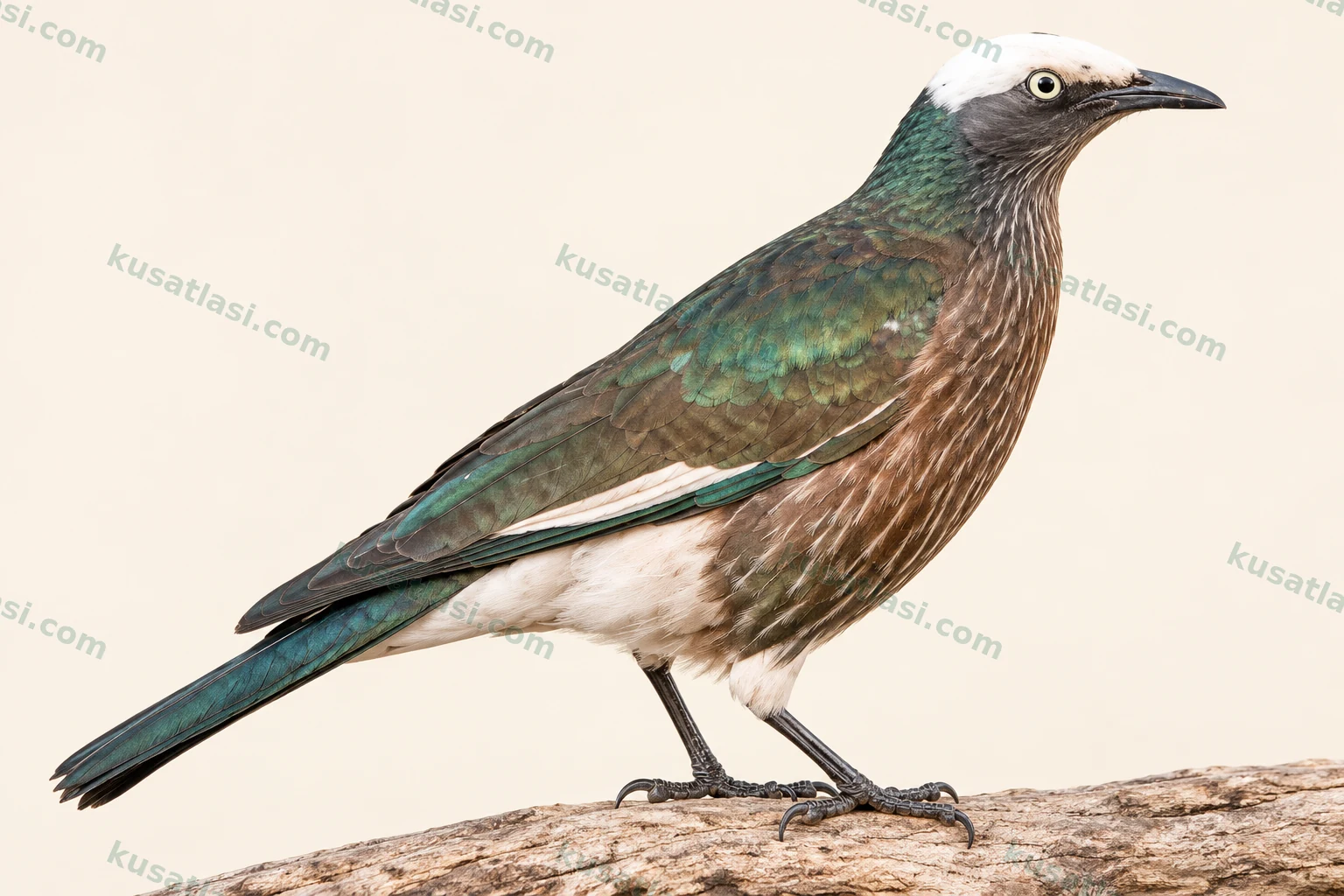
A large starling of open thorn woodland in the Horn of Africa, with a white crown and white wing area.
Biometrics
Length
Male23–27 cm
Female23–27 cm
Shared species value
Wing length
Male15.38 cm
Female15.05 cm
Female wing length is 15.05 cm, recorded as 150.5 mm. It is flattened wing length, not wingspan. Published entry in the biometric compilation of Lislevand et al. (2007), sample size n=4. Locality, season, age and subspecies are not specified in this row; it is not assumed to represent all populations. The compilation generally uses mean values; the original handbook page and calculation of this entry were not independently verified. The existing opposite-sex value is from another source; the two cannot establish a sex difference.
Weight
MaleData unavailable
FemaleData unavailable
White-crowned Starling
Djibouti, Ethiopia, Somalia and northern KenyaObservation guide in its natural range
Look for three features together
Do not rely on a single featureBroad white crown, dark face and pale eye.
A white area visible even when perched and conspicuous in flight.
White streaks on a brown background.
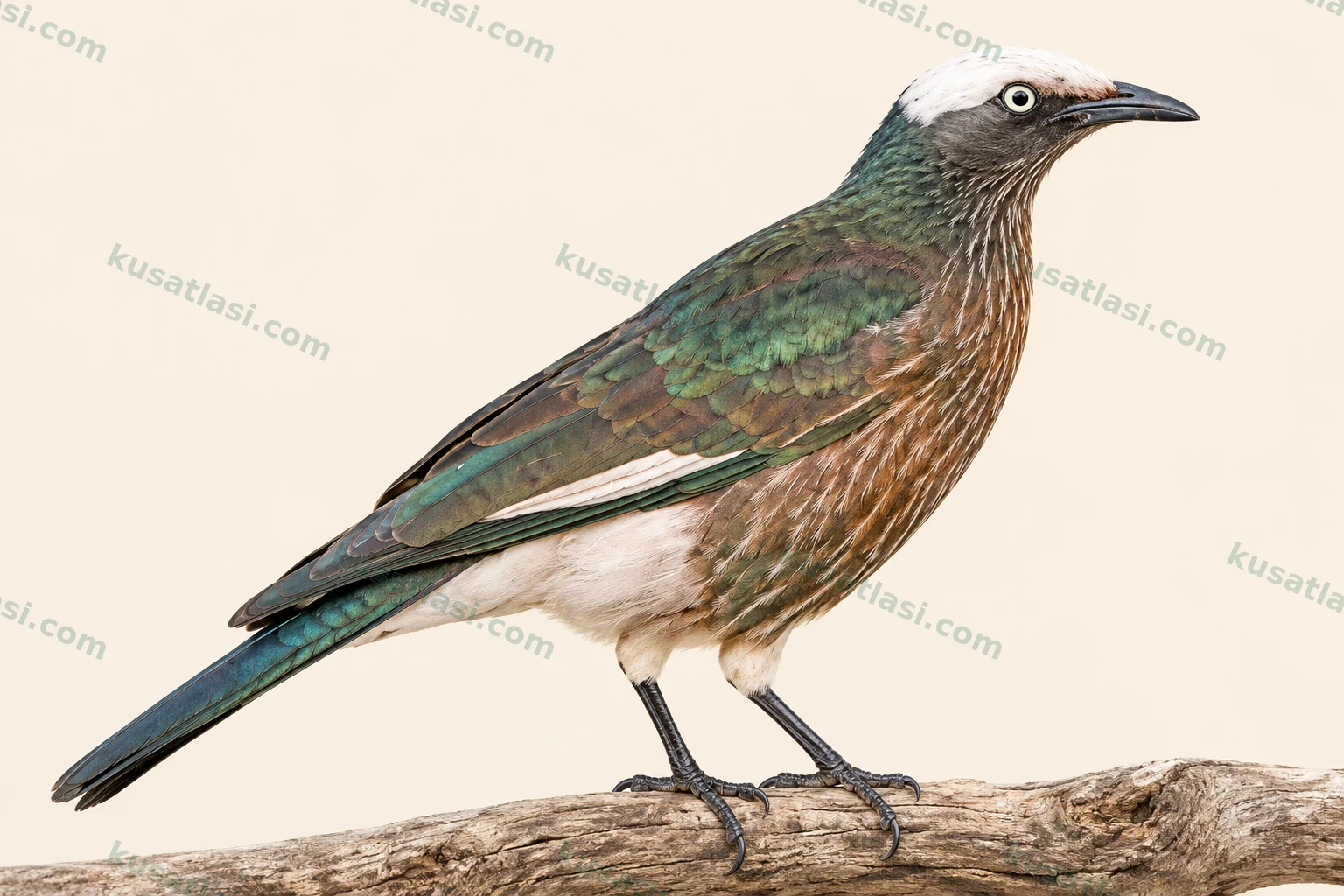
Compare male and female
 FemaleMale
Adult males and females have similar plumage; the white crown is not male-only. The juvenile moult calendar could not be verified.
Where to look in its natural range?
Open acacia savanna, thorn scrub and sparsely vegetated ground around villages.
The species is resident; a verified species-specific monthly egg-laying calendar was not found.
All months: A regular long-distance migration route was not verified. No verified regional date specific to this month was provided; this does not mean local absence.
January
February
March
April
May
June
July
August
September
October
November
December
Nest, egg and incubation
The species is classified as cooperatively breeding. Nest structure, typical clutch size, incubation duration and time to first flight could not be verified.
Its voice includes linked rolling sounds, whistles and thin whining notes.
Do not play recordings to attract birds; observe quietly, especially near nests.
Species information
Quick identification
The White-crowned Starling Lamprotornis albicapillus is a large starling of open thorn woodland in the Horn of Africa. White crown, dark head sides, pale eye and a large white wing area attract attention together. White streaks on the brown underparts complete identification at closer range. Back gloss alone is not decisive: sun, shade and viewing direction alter dark feathers' appearance.
The word meaning forehead in its Turkish name may suggest a tiny white spot. The conspicuous feature is actually extensive white over the top of the head. Wing white may be visible on a perched bird and becomes more striking in flight. Following head, wing and lower body on the same bird is more reliable than identification from one pale patch.
General appearance and posture
It is a relatively strong-built passerine that walks on the ground to find food and occurs in small groups. Search open places such as thorn savanna, scrub and village surroundings. Its white crown may stand out from afar in a tree, whereas wing white and streaked underparts may be easier to see on the ground. The bird's location affects which marks are noticed first.
The white upper head contrasts sharply with the dark face. The broad white wing area is not merely reflected light and can be checked at different angles. There is no need to approach very closely to see the pale streaks on the brown lower body: wait for natural movements to reveal its front and side. White feather brightness does not establish age or sex.
Males, females and young birds
Adult males and females share the overall plumage. The museum study comparing African starlings places this species among those without clear plumage-colour differences between sexes. Describing the white crown as a male-only ornament would be wrong. Neither apparent greater size nor brighter colour establishes a male in the field.
Scientific work requiring sex determination considers the limits of appearance, reliable individual records and the method used. Two birds standing together do not automatically document a male–female pair either.
We could not verify every juvenile moult stage and its months in detail from reliable species-specific sources. Another starling's young eye, bill or crown colours are not transferred here. A pale head, shaded eye or worn feathers alone do not establish age. Determine the taxon first; record age and sex afterwards if enough evidence exists.
Appearance in flight
Wing white is very conspicuous in flight. Its apparent enlargement as the wing spreads continues the mark seen while perched. The white top of the head can also be seen at a suitable angle, but wing white alone does not establish identity when a bird passes from behind without its head visible. Follow its next landing and check crown and lower body again.
A small group moving between feeding sites is daily habitat use. This short flight is not evidence of intercontinental or regular seasonal migration. Taking off from a shrub does not show that it nests there either. Record actual feeding or resting as separate behaviours.
Voice and behaviour
Its voice includes rolling linked sounds, whistles and thin whining notes. Other starlings may call in the flock, so follow the source individual where possible. Linking the voice with white crown, wing area and streaked brown underparts on the same bird strengthens identification. No single short note is claimed to distinguish the species certainly in all circumstances.
It occurs in small groups, sometimes family parties and mixed-species feeding groups. It may stay near livestock herds. Sharing ground with other birds while searching for invertebrates does not place them in the same taxonomic family or mean they obtain all food in the same way. Identify each bird in the group separately.
Similar species
Fischer's Starling Lamprotornis fischeri can be compared in similar open dry country. Look for the White-crowned Starling's broad white crown together with white streaks on brown underparts. Seeing a dark bird walking on the ground is insufficient; the upper head and breast must be well seen.
Superb Starling Lamprotornis superbus is a smaller, brightly coloured starling without the same head pattern as the White-crowned Starling's white crown. They may feed together in Ethiopia. Being in one flock does not merge them; each individual's head, wing and underparts are assessed separately.
Ethiopian Bushcrow Zavattariornis stresemanni is a pale corvid that may share feeding ground in southern Ethiopia. Its pale head can give a similar impression from afar; check the White-crowned Starling's combined dark face, white crown and streaked brown lower body. Searching for invertebrates together does not make their taxa or ranges identical.
Global distribution
Djibouti, Ethiopia, Somalia and northern Kenya in the Horn of Africa form the core natural geography. The species does not occupy their entire surfaces; suitable parts of open, dry thorn woodland matter. Not every starling record in southern Kenya belongs to it. Country limits and the taxon are checked together when comparing different datasets using the same English name.
Status within its natural range
The global category is Least Concern. BirdLife does not give a numerical total population, describing it as common in suitable places but locally distributed. The stable trend assessment is not an exact continent-wide census; it is based on the lack of evidence for substantial decline. Local abundance does not show equal numbers throughout the range.
The original Oromia study records it among the region's resident breeding birds. It also places the nominate form in southern Oromia and horrensis around Awash and the possible southeastern boundary, noting that the boundary between the forms remains incompletely clarified. Crown white is not used to draw a subspecies boundary.
Migration
It is considered resident; no regular long-distance migration route was verified. Movements between daily feeding areas may occur, but each short flight is not a migration journey. Rain-driven changes in food do not justify unsupported monthly border crossings. The map shows suitable natural geography and sampled records, not proof of breeding at every point.
Breeding habitat
Open thorn savanna and acacia woodland, dry scrub and open ground near settlements are principal environments. Sparsely vegetated ground available to small family groups eases foraging. Being recorded as a resident breeder in Oromia does not mean breeding in every local garden. For a bird seen in a village only the observation locality is known; its nest site requires separate verification.
Nest site
Comparative scientific work classifies the species among cooperatively breeding starlings. This social classification does not mean the examined sources fully describe nest structure, typical egg number, incubation duration and time to first flight. Sufficient inspectable species-specific support for these details was not found. Fractional egg values are not substituted for egg counts in real nests; other starlings' durations are not transferred here.
Daily habitat use
During ground foraging it may move between trees, shrubs and open ground. Birds around livestock can be watched from afar without driving animals or directing birds towards food. Using a shady tree alone does not establish that it holds a nest. Where nesting is suspected, observe natural arrivals and departures without disturbing them.
What does it eat?
Small invertebrates and small fruits are among its foods. The original Ethiopian behaviour study describes ground searching for invertebrates and feeding alongside other birds. The ecological compilation classifies it as omnivorous. This general category does not mean that the quantities of plant and animal foods remain the same in every season.
Sufficient information giving each prey group's percentage across the whole range was not found. Many insects at a site do not prove that the bird eats all of them. Standing near a fruit tree is not itself a fruit-feeding record either; watching the actual taking of food strengthens the record.
How does it forage?
It walks over sparsely vegetated ground searching for food. It may be seen near livestock or searching the same surface as other starlings. This does not mean every individual selects the same prey. Seeing head movement, the bill reaching towards the ground and swallowing together can distinguish searching from actual feeding.
The Ethiopian study shows that air temperature may affect feeding and shade use differently among birds at the same site. The result applies to particular observation conditions; it does not establish unlimited tolerance of heat everywhere.
The white crown is not only a male trait
Similar adult plumage was also recorded in a museum comparison of African starling social systems. That study places White-crowned Starling among cooperative breeders without conspicuous sex differences in plumage colour.
Birds at one site responded differently to heat
The Ethiopian study compared White-crowned Starling, Superb Starling and Zavattariornis stresemanni together. White-crowned Starling continued feeding as temperature rose, but shade use increased in all species. This is a difference only under the studied conditions. It does not show survival unaffected at every temperature or safety from climate change.
An old genus name does not mean another bird
Spreo albicapillus may appear in older sources. Checking its taxon match with the current Lamprotornis albicapillus account establishes that the same White-crowned Starling is meant.
More records are not a population census
Birds near settlements and roads may be easier to reach. An area with many map records may therefore simply offer more observation opportunities. BirdLife has not verified a numerical total population. Local abundance and the entire species' number are different kinds of information; sample observations do not yield a continent-wide total. Seeing a small family group does not prove that every bird in the area was counted or every group member breeds.