

World Birds IUCN statusLC · Least ConcernGlobal IUCN category. BirdLife v10 (2025); taxon matching: AviList 2026 / IOC 15.2; checked: 29.10.2026. The list year is not the species assessment date. Source and method · BirdLife OrderPasseriformesPasserines FamilySturnidaeSturnidae
White-billed Starling
Onychognathus albirostris
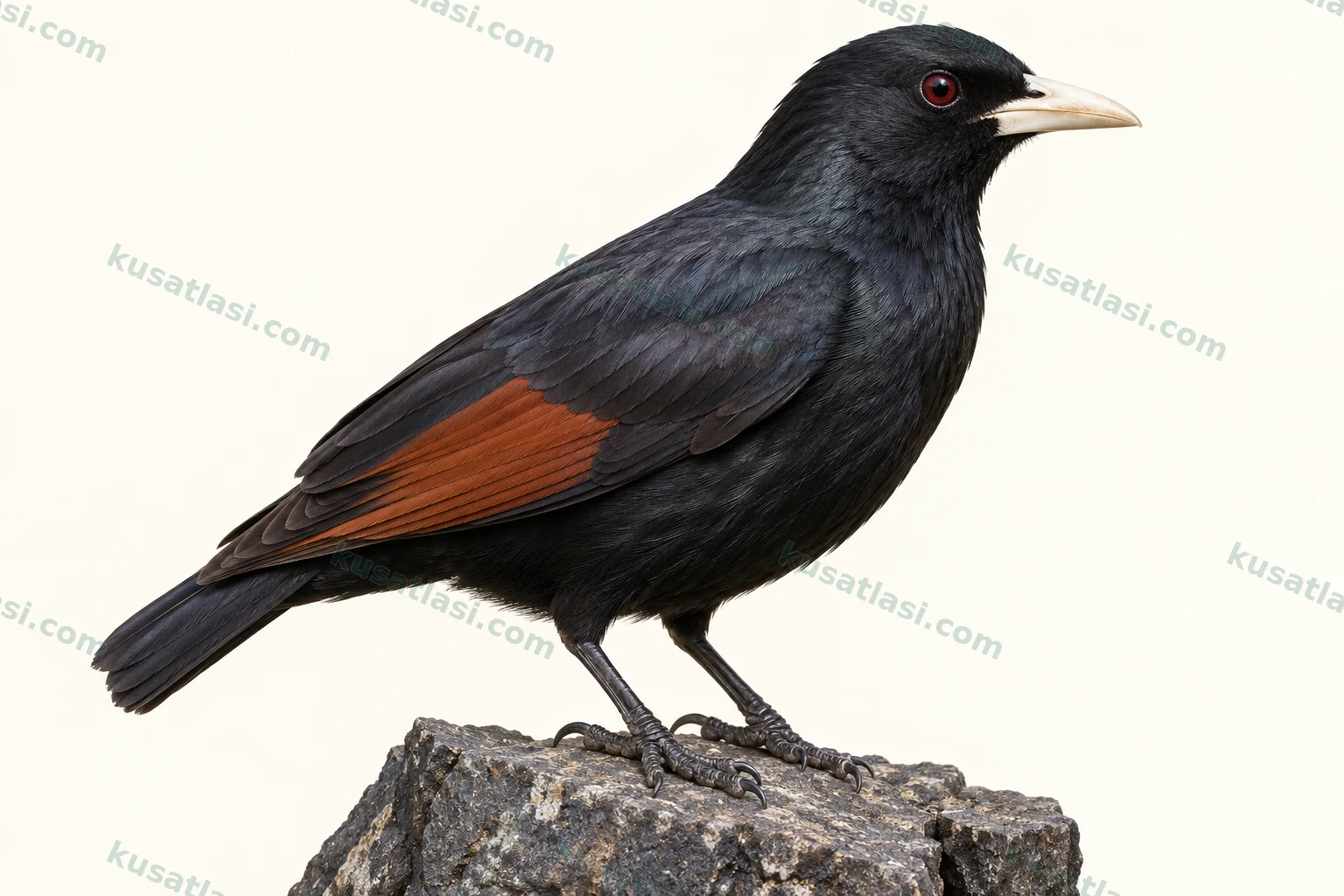
Dark starling of Ethiopian–Eritrean mountains: pale bill, chestnut wing patch and short square tail; the female’s head is grey.
Biometrics
Length
Male25 cm
Female25 cm
Shared species value
Wing length
Male15.71 cm
FemaleData unavailable
Weight
Male137.5 g
Female135 g
Male: 137.5 g. Published entry in the biometric compilation of Lislevand et al. (2007), sample size n=2. Locality, season, age and subspecies are not specified in this row; it is not assumed to represent all populations. The compilation generally uses mean values; the original handbook page and calculation of this entry were not independently verified. The existing opposite-sex value is from another source; the two cannot establish a sex difference.
White-billed Starling
Mountains of Ethiopia and EritreaObservation guide in its natural range
Look for three features together
Do not rely on a single featureSee the pale ivory bill and short, nearly square tail together.
The chestnut patch becomes clearer when spread; it alone does not identify the species.
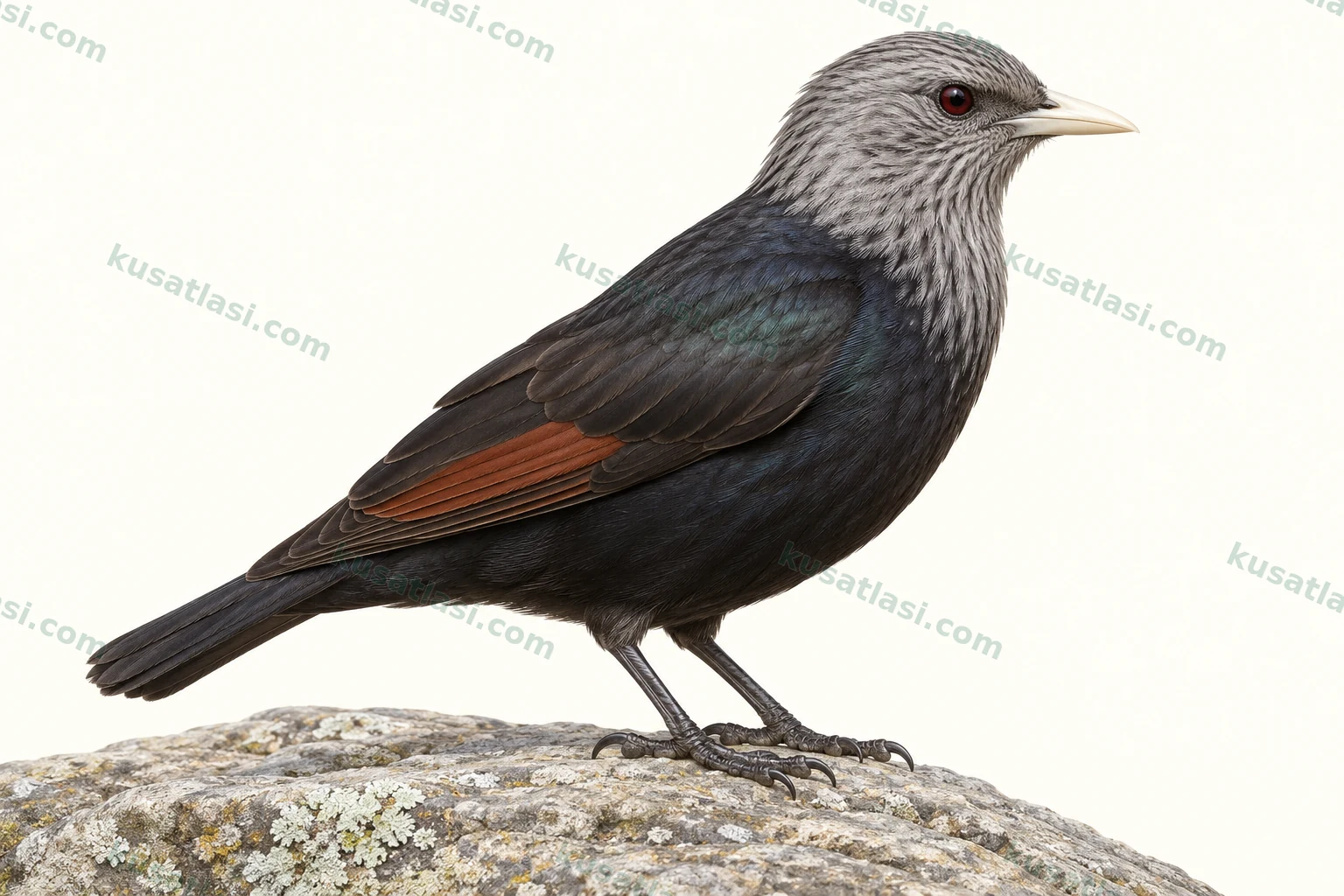
Adult male dark-headed, female pale grey-headed.
Compare male and female
 FemaleMale
Adult male dark-headed, female grey-headed. A detailed independent juvenile key was not found.
Where to look in its natural range?
Rocky slopes and gorges, with surrounding woodland, scrub and fruiting vegetation.
Resident; June Eritrean and October Ankober breeding examples are local, not extended across the range. Resident; local fruit-resource movements are not a migration route.
January
Data unavailable
February
Data unavailable
March
Data unavailable
April
Data unavailable
May
Data unavailable
June
Eritrea: regional guide example of nesting in a rock crevice.
July
Data unavailable
August
Data unavailable
September
Data unavailable
October
Ethiopia: Ankober: regional guide example of nesting in a building.
November
Data unavailable
December
Data unavailable
Nest, egg and incubation
Rock-crevice and some building records exist; typical egg number, incubation and young development durations were not verified here.
Quiet conversational whistles; also check the caller’s pale bill and tail.
Do not play recordings to attract birds; observe quietly, especially near nests.
Species information
Quick identification
The White-billed Starling Onychognathus albirostris is a dark starling of rocky mountains in Ethiopia and Eritrea. Identify the pale ivory bill, dark red eye, broad chestnut wing patch and relatively short, nearly square-ended tail together. The male has a dark head and the female a pale grey head.
When birds naturally turn or spread their wings in a group by a rocky slope or gorge, check how the marks relate. Pale bill and short tail are especially useful. Shade may hide the sex difference on the head; wait for the bird to turn again rather than guessing dark or grey.
General appearance and posture
The dark body can show blue-black reflections in bright light. The pale bill stands out; the regional specialist guide describes it as long-looking and slightly downcurved. The tail does not suggest the very long, distinctly pointed tip of some other red-winged starlings.
Only part of the chestnut may be visible on a closed wing. Its larger appearance in flight does not mean that the same bird has acquired a new colour. Spreading feathers reveals surfaces hidden at rest.
Males, females and young birds
Adult males have dark heads; the female's pale grey head matters. Cornell and the regional guide describe this difference. Assess the grey-headed bird's pale bill and short tail together; do not expect the male's dark head.
No detailed independent key separating young birds from all similar species was verified here. Adult head differences do not age a bird in days. A bill or eye colour not explicitly verified for juveniles is not added merely because other starlings have it.
Appearance in flight
The rusty-chestnut wing patch may look larger and clearer when the wings open. Dark body and short-tail proportions accompany it. A chestnut window alone does not exclude all relatives; where possible check bill and tail again after a natural landing.
No separate flight key distinguishing every feather row above and below the wing was verified. Do not assign an unseen line or patch to the hidden surface. Relate a brief pass to the actual geography and whole appearance. A wing seen on one flock member is not automatically assigned to all. Wait for natural flights without flushing birds.
Voice and behaviour
Cornell describes relatively quiet, conversational whistles. This helps observation, but no detailed syllable key reliably separating every similar species was verified. Where possible see the caller's pale bill and tail too.
Pairs and groups occur in rocky mountains; specialist sources mention flocks of dozens. The regional guide reports feeding on juniper and fig fruits. Gathering in a fruiting tree does not establish it as a nest tree.
Similar species
The Red-winged Starling Onychognathus morio also has dark plumage, a chestnut wing window and male–female head differences. A grey head alone therefore does not identify White-billed Starling. Here check pale bill and short, nearly square tail together; the other species' tail looks more graduated and pointed.
Natural range, bill and tail proportions matter when comparing other mountain red-winged starlings. A relative's breeding or movement data are not transferred because it has the same wing colour. Mistaking a grey female head for another species and combining every dark chestnut-winged bird into one species are both wrong.
Global range
Its natural range is the mountains of Ethiopia and Eritrea, not every plain and open area of both countries. Rocky mountains, gorges and surrounding cover matter. The regional guide lists local observation sites in different Ethiopian highlands. Listing a place does not mean equal use of every rock or settlement there.
Status within its natural range
The current global-list snapshot gives Least Concern. Old regional guide labels do not replace the current category. Flocks can make detection easier locally, but numbers in one fruiting tree are not a mountain-wide census. Rock crevices, vegetation and local food conditions are assessed in observation context. A particular Eritrean breeding record does not prove simultaneous breeding countrywide.
Movements and migration
The specialist data account treats it as resident. Local food movements do not become a regular long-distance route. June Eritrea and October Ankober nesting examples are regional records. Shared arrival, departure or breeding months for the entire range were not verified. Map observations are real record locations, not one flock's year-round tracked journey.
Breeding habitat
Rocky mountains, steep slopes and gorges are core settings, with surrounding woodland, dry forest or scrub possible. The regional guide mentions rocks near waterfalls and highland vegetation. These landscapes include food surroundings as well as bare rock. The bird is not said to occupy one altitude band everywhere.
Nest site
The regional guide reports June nesting in steep rock crevices in Eritrea and October nesting in buildings at Ankober, Ethiopia. Other bird species can occur around the same structure. Reliable typical egg number and total incubation and young development periods were not separately verified. A decimal database egg summary is not an actual clutch count.
Daily habitat use
Rocky resting and nesting places differ from fruiting plants. Entering a rock crevice alone does not show young inside. Do not approach or open the crevice; observe natural visits through the existing view. Building records do not make all urban environments equally suitable.
What does it eat?
The regional specialist guide directly reports fruit, including juniper and fig. An ecological review treats it as an omnivore for which fruit is important. This does not mean one fruit exclusively in every season or a fixed food percentage. Specific plant use keeps its local context.
How does it forage?
Foraging pairs or groups may visit fruit sources. Landing in a tree and actually taking and swallowing fruit are separate observations. Do not guess fig or juniper if the plant cannot be identified. Nor assume every flock member eats the same food simultaneously. Observe existing fruiting vegetation at a natural distance without feeding birds or leaving fruit near nests. One tree's behaviour does not give seasonal food proportions throughout the mountain range.
The female's grey head is a real adult difference
Two head colours in a flock do not automatically mean two species.
Opening the wing enlarges the chestnut area
Some rusty-chestnut feathers may be hidden on a closed wing. Their larger appearance when it opens follows viewing geometry, not a rapid new plumage. Pale bill and short tail help interpret this mark among related starlings.
Breeding records do not collapse into one month
The regional guide gives June Eritrean rock and October Ankober building examples. Preserve dates and places. Colouring both months as continuous breeding in every country exceeds that local evidence. Rock crevice and building are not one nest setting; specify the actual structure.
Fruiting tree and nest crevice are different places
Groups feeding on juniper and fig do not prove these plants support nests. Birds can use different places for different daily needs. Fruit in the bill and care movements at a rock entrance are followed separately. A group flying from tree to rock alone does not prove feeding young.