

World Birds IUCN statusLC · Least ConcernGlobal IUCN category. BirdLife v10 (2025); taxon matching: AviList 2026 / IOC 15.2; checked: 29.10.2026. The list year is not the species assessment date. Source and method · BirdLife OrderPasseriformesPasserines FamilyTurdidaeTurdidae
White-collared Blackbird
Turdus albocinctus
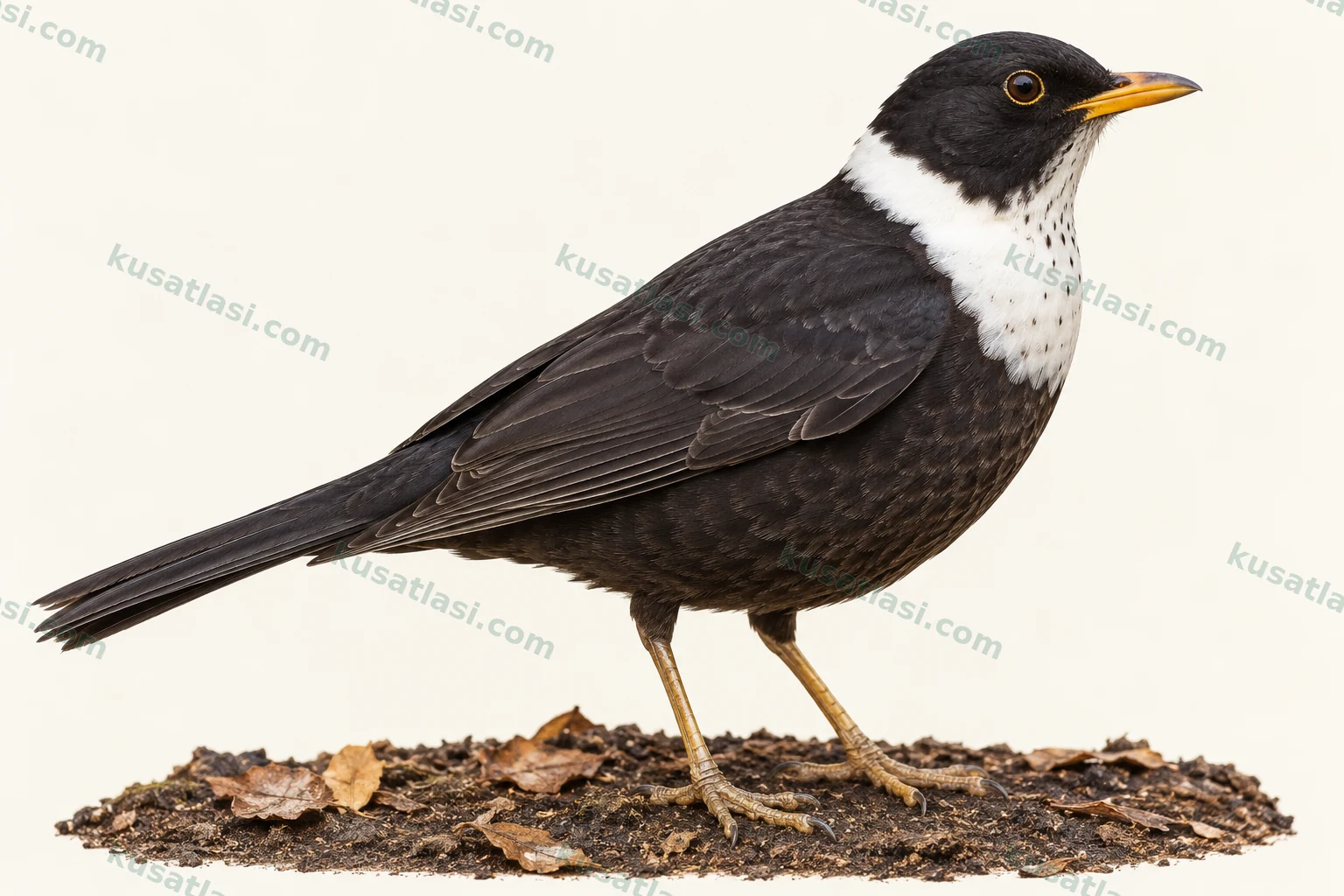
Dark Himalayan thrush. The male is black, the female brown, and the pale collar around the neck stands out.
Biometrics
Length
Male26–28 cm
Female26–28 cm
Shared species value
Wing length
Male13.62 cm
Female13.62 cm
Shared species value
Weight
Male90–92 g
Female103 g
White-collared Blackbird
Himalayas, southeastern Tibet and surrounding areasObservation guide in its natural range
Look for three features together
Do not rely on a single featureCheck how the pale area extends to the sides of the neck and the nape.
Distinguish the collar from a crescent confined to the front of the breast. Check the wings as well.
Compare male and female
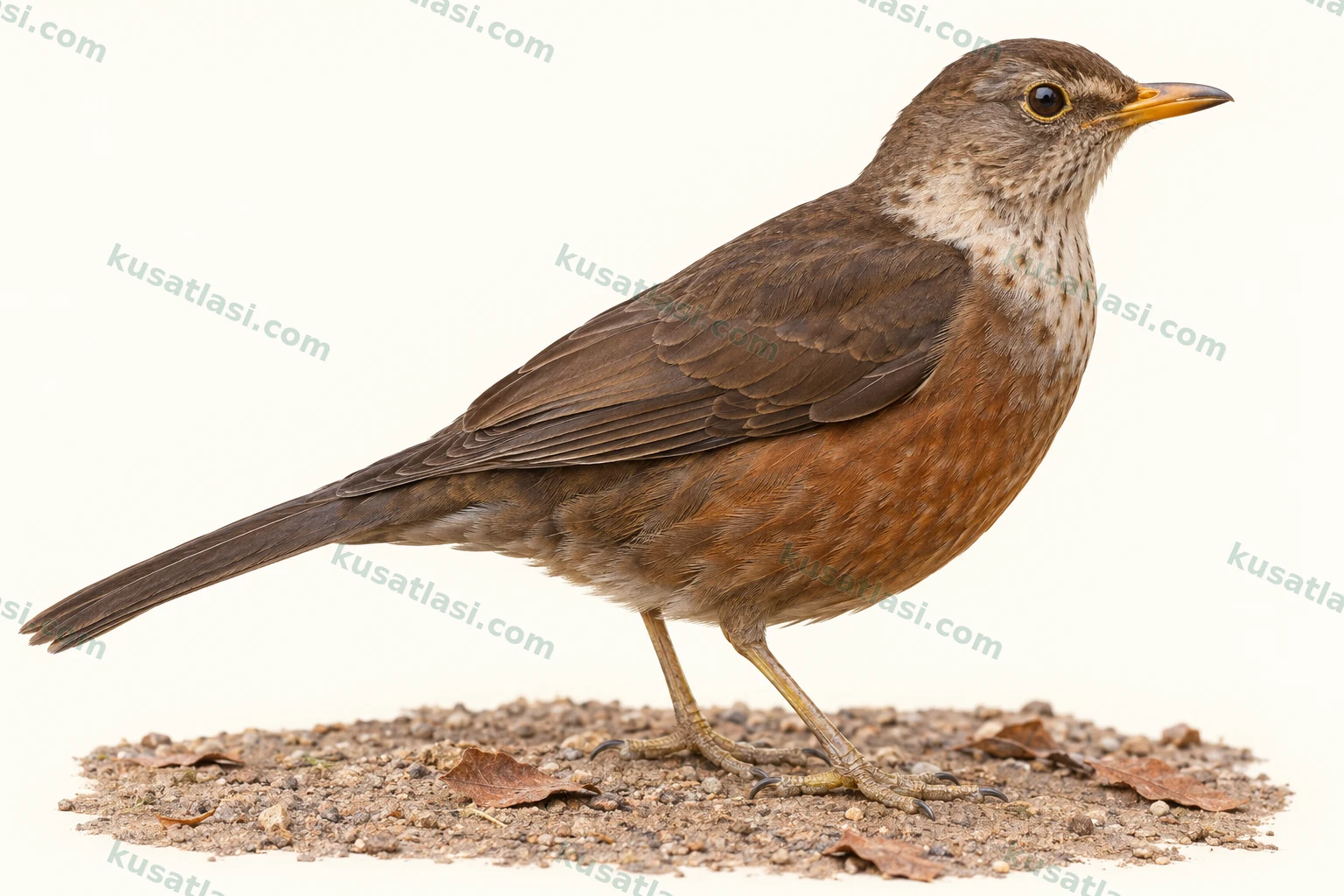 FemaleMale
The male is black and the female brown. Young birds can have pale streaks and dark-tipped feathers.
Where to look in its natural range?
High mountain zone, open woodland and forest edges.
Partial migration linked to elevation. The Himalayan handbook gives May to July as the regional breeding season.
January
Partially migratory, with local movements between elevations. No verified regional date is given for this month. This does not imply local absence.
February
Partially migratory, with local movements between elevations. No verified regional date is given for this month. This does not imply local absence.
March
Partially migratory, with local movements between elevations. No verified regional date is given for this month. This does not imply local absence.
April
Partially migratory, with local movements between elevations. No verified regional date is given for this month. This does not imply local absence.
May
Partially migratory, with local movements between elevations. Regional breeding season in the Himalayan handbook.
June
Partially migratory, with local movements between elevations. Regional breeding season in the Himalayan handbook.
July
Partially migratory, with local movements between elevations. Regional breeding season in the Himalayan handbook.
August
Partially migratory, with local movements between elevations. No verified regional date is given for this month. This does not imply local absence.
September
Partially migratory, with local movements between elevations. No verified regional date is given for this month. This does not imply local absence.
October
Partially migratory, with local movements between elevations. No verified regional date is given for this month. This does not imply local absence.
November
Partially migratory, with local movements between elevations. No verified regional date is given for this month. This does not imply local absence.
December
Partially migratory, with local movements between elevations. No verified regional date is given for this month. This does not imply local absence.
Nest, egg and incubation
The large cup nest is made of moss and plant material. A clutch usually contains three or four eggs. Incubation and young development durations were not verified.
Melodic thrush phrases and shorter, harsh calls. Match the sound to the bird you see.
Do not play recordings to attract birds; observe quietly, especially near nests.
Species information
Quick identification
The White-collared Blackbird Turdus albocinctus is one of the larger, darker thrushes of the Himalayan region. The most useful mark on an adult male is the conspicuous pale collar between the black head and body. Check the sides and back of the neck as well as the front. The female is browner, and her collar may look less brightly white than the male's. Consider the pale collar on the dark bird together with the wing and underparts.
Similar dark thrushes can have a pale crescent on the breast. This is a different shape from a pale marking that extends around the neck. Part of the collar may be hidden when the bird draws its head close to its body. The position of the pale area is easier to judge when the bird turns its head in a natural posture. A single front-facing photograph may not show the complete collar if the nape is hidden.
General appearance and posture
It has the familiar posture of a thrush. The same bird can look different while foraging on the ground and while perched in a tree to sing. The dark head and body make the white collar stand out. A yellowish bill can contrast with the dark face, but similar thrushes can also have pale bills. Bill colour helps when used alongside the collar.
Cornell's account notes ground foraging in open high mountain areas, upper montane forest and gardens. Searching only in the canopy of closed forest can cause you to miss the species. A dark bird among trees and one in a meadow at the forest edge may be using different parts of the same habitat mosaic. A garden sighting does not show that the bird adapts to every kind of dense urban development. Consider nearby tree cover and natural food sources as well.
Males, females and young birds
The male looks predominantly black. The pale collar strongly contrasts with the head and body and can look grey in shade. Small dark marks or dull tones in the collar do not by themselves point to another species. Check the rest of the body, the wings and the tail on the same individual. An overexposed white area in a photograph can make the collar look wider than it really is.
The female is predominantly dark brown. Her collar can look off-white, greyish or a warmer pale shade. Its position around the neck remains important. A female's brown colouring alone does not establish her age. The deep black appearance in the male plate should not be required when identifying a female. Daylight can bring out reddish tones in the brown, so avoid treating one shade as a fixed dividing line between the sexes.
A Himalayan handbook describes young birds with warm pale streaks on the head and upperparts and dark-tipped feathers below. This young plumage may differ from the even, clean colours of the adult plate. During moult, different areas need not acquire adult colour at the same time. If age or sex cannot be established reliably, record the species alone. Consider a collar that is not yet fully distinct together with the head and body pattern.
Appearance in flight
The combination of a dark body, tail and wings with a pale neck area can help in flight. The bird's direction, distance and a wing passing in front of the head can hide the collar. Do not identify a flying dark thrush solely by apparent size. Once it lands, a view of the nape and sides of the neck can complement the brief view in flight. Extending or drawing in the head changes the apparent shape of the collar.
The flight direction of a bird moving from a tree to a meadow does not show its seasonal route. Nor can a single flight photograph show that the bird uses a different elevation in winter. To understand seasonal movements, look for dated records with locations. Keep flight appearance separate from the route travelled.
Voice and behaviour
The song is described as melodic thrush phrases with pauses between them. The specialist account also mentions shorter, harsh calls. A general resemblance to another thrush's song by ear is insufficient. If you record the bird while it is making the sound, you can match the voice to the appearance. Singing at dawn does not mean the bird is absent at other hours. Listen for calls and song as distinct behaviours.
A study on the Tibetan Plateau found that food and parental contributions could differ between the first and second nesting attempts of the same season. The male and female should not be assumed to have fixed duties throughout the season. The study describes the local pairs and conditions. The same number of nesting attempts and the same share of parental care cannot be assumed across the Himalayas. Seeing two adults together does not establish the location of a nest or the number of eggs.
Similar species
Turdus boulboul is an important comparison in the same mountain environment. Adults can look dark, but they have conspicuous pale areas on the wings. The main mark in albocinctus is the collar. Keep a pale wing patch distinct from a pale area around the neck. In a mixed group, check the position of markings on each bird rather than treating all dark thrushes as one species.
Turdus torquatus can look similar in photographs because of its pale breast crescent. Distinguish a crescent at the front of the breast from a collar extending to the sides and back of the neck, and check the natural range as well. Both species have dark males and brown females, but their markings differ. The wing edges, bill and head also help in comparison. Similar Turkish or English names are not grounds for combining records.
Global range
The natural range extends from the Himalayan region of northern India to southeastern Tibet, southwestern China and northwestern Myanmar. Nepal and Bhutan are also part of the species' range in this mountain system. National borders do not show how often the bird occurs at each elevation. Encounters depend on the season and on where open high ground meets tree cover.
Status within its natural range
In the breeding season it can be seen in the high mountains and around the upper forest belt. Some individuals descend to lower foothills in winter, but movements differ by region. A 2026 study of 2024 observations in the Gyirong Valley reported that the species concentrated in the middle elevation belt in winter. In that study the belt was 3,100–3,400 m. This figure describes the study area and does not set winter limits for the whole Himalayas.
Movements and migration
The species is considered partially migratory and makes movements linked to elevation. This does not mean that every bird follows a long route between continents. Seasonal changes in elevation can occur within the same mountain system, with patterns varying locally. The map shows the natural mountain setting and approximate verified records without routes connecting the points. A winter record does not show that the bird breeds there, and a summer sighting alone does not confirm a nearby nest.
Breeding habitat
The bird uses high mountain meadows, the upper forest belt, open woodland and gardens connected to these habitats. Consider montane forest with trees such as oaks and rhododendrons together with feeding areas at the forest edge. A bird feeding in a meadow need not have a nest in the middle of the open grassland.
Nest site
A Himalayan handbook describes a large cup nest of moss, grass, rootlets and leaves. It can be on a thick branch or in a fork, sometimes in a tree cavity or at the base of a mossy stump. The regional breeding season is May to July, and a typical clutch contains three or four eggs. Reliable durations for incubation and young development were not verified. Figures for another thrush are not used for this species.
Daily use of habitat
Ground food and resources in trees and shrubs can be part of the same daily habitat. Seasonal movements make it important to protect both higher zones and places used in winter. Following the bird to find its nest or opening a mossy stump disturbs the natural cover. If adults are seen carrying food, avoid waiting near the nest.
What does it eat?
It eats invertebrates and fruit. In the Tibet study, food brought to chicks in the first nesting attempt was animal matter. Small fruits were also used during the warmer, wetter second attempt. This does not show that every individual eats the same foods all year. Distinguish a food item brought to a chick from one eaten by an adult. A sighting of a bird eating fruit does not establish that its diet consists entirely of fruit.
How does it forage?
Cornell's account describes ground foraging. The specialist account also mentions the use of trees and shrubs. A bird dipping its head in a meadow does not catch prey every time. Seeing food in the bill gives a more reliable record than estimating dietary percentages. The seasonal difference in Tibet shows how food sources can vary with place and time. It should not be assumed to occur on the same dates throughout the mountain system. An observation made with artificial food should not be treated as evidence of natural food choice.
Care changes within a season
In the Tibet study, brood size, condition and parental contributions differed between first and second nesting attempts. Food abundance was part of the authors' explanation, but it was not established as the sole cause of every difference. A fixed list of duties for male and female would miss this flexibility within a season.
Migration does not always take birds far
A mountain bird's winter distribution can change without the bird travelling many kilometres to another country. The concentration at middle elevations in Gyirong is one regional example. Results from a single valley do not show that every bird in the Himalayas behaves the same way. A date and an elevation tell us more than a point on a map alone.
Telling a collar from a crescent
Two dark thrushes with pale breast markings may look alike. For albocinctus, check whether the pale area extends along the sides of the neck to the nape. When the bird leans forward with its head lowered, an apparently incomplete collar does not mean the pattern has disappeared. Comparing the position of the marks can be more useful than trying to judge an exact shade. Assess the female's paler collar in the same anatomical position.