

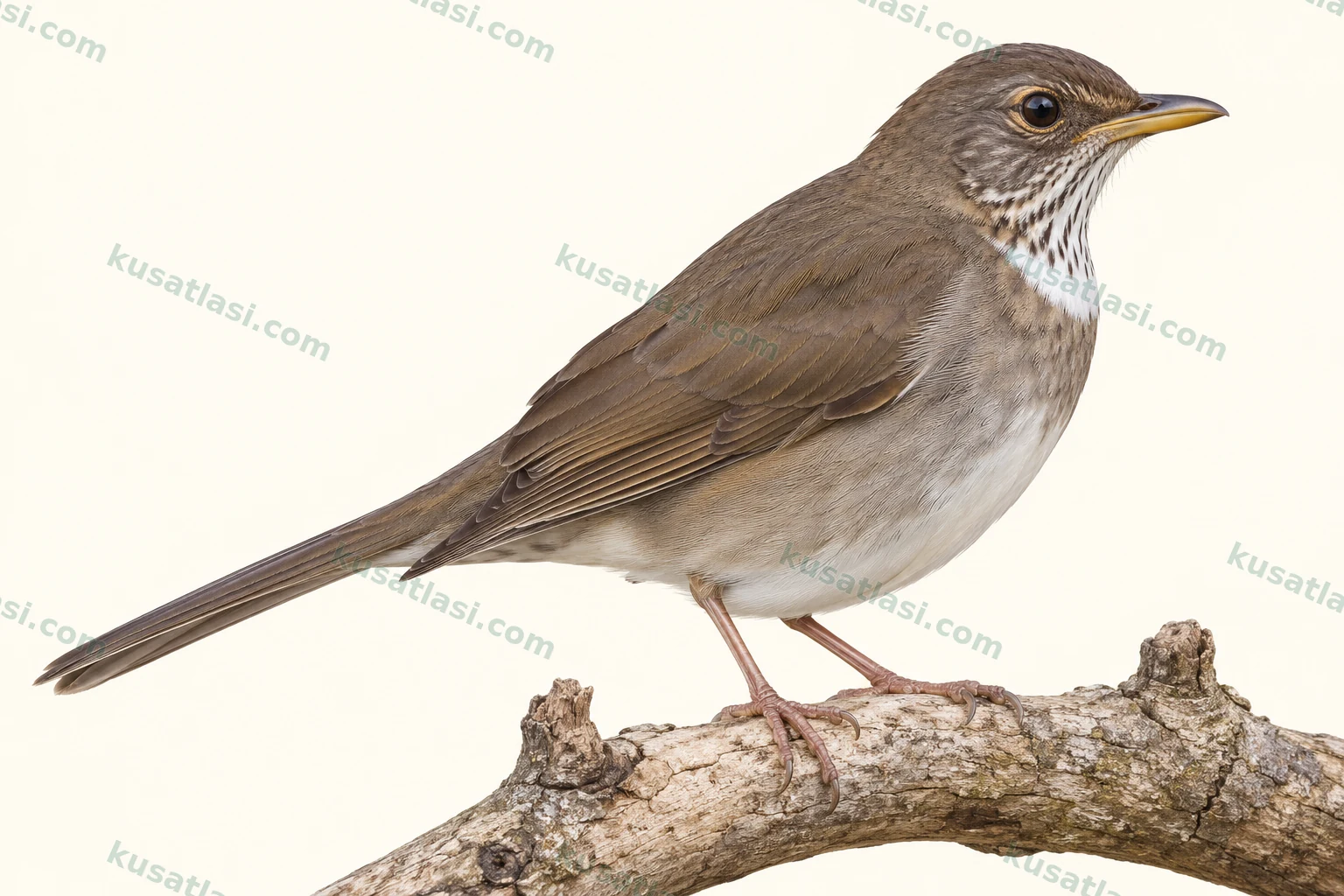
World Birds IUCN statusLC · Least ConcernGlobal IUCN category. BirdLife v10 (2025); taxon matching: AviList 2026 / IOC 15.2; checked: 29.10.2026. The list year is not the species assessment date. Source and method · BirdLife OrderPasseriformesPasserines FamilyTurdidaeTurdidae
White-throated Thrush
Turdus assimilis
Thrush of Mexico and Central America with a white front-neck crescent; regional plumage and bill–leg colours vary.
Biometrics
Length
Male20–24 cm
Female20–24 cm
Shared species value
Wing length
Male12.05 cm
Female12.05 cm
Shared species value
Weight
Male62–66 g
Female72–74 g
White-throated Thrush
Mexico and Central AmericaObservation guide in its natural range
Look for three features together
Do not rely on a single featureThe white front-neck crescent may not be clearly visible in every posture.
Grey-brown and blacker populations are not read as sex differences.
Wooded slopes and some farmland retaining trees and cover.
Compare male and female
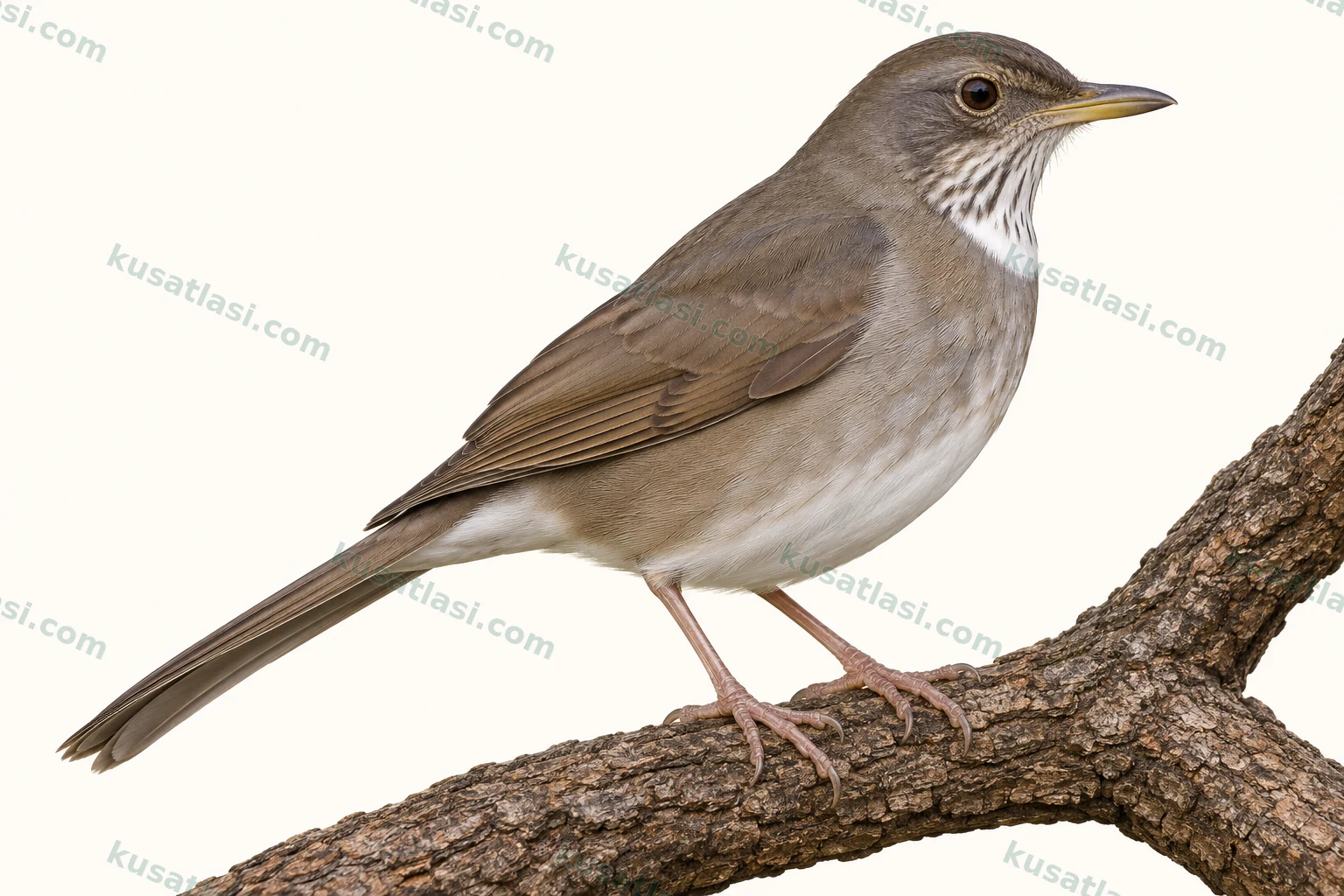 FemaleMale
Adult sexes are similar; regional plumage variation is not a sex difference. Young may be more spotted.
Where to look in its natural range?
Wooded foothills and highlands, fruiting trees and suitably covered forest edges.
Generally resident; some descend in winter. Costa Rican breeding examples are local. Resident with local elevation movements.
January
Data unavailable
February
Data unavailable
March
Las Alturas, southern Costa Rica: nesting period in the study; not extended across the entire range.
April
Las Alturas, southern Costa Rica: nesting period in the study; not extended across the entire range.
May
Las Alturas, southern Costa Rica: nesting period in the study; not extended across the entire range.
June
Las Alturas, southern Costa Rica: nesting period in the study; not extended across the entire range.
July
Las Alturas, southern Costa Rica: nesting period in the study; not extended across the entire range.
August
Las Alturas, southern Costa Rica: nesting period in the study; not extended across the entire range.
September
Data unavailable
October
Data unavailable
November
Data unavailable
December
Data unavailable
Nest, egg and incubation
Cup nest of fibres, roots and moss, strengthened with mud. Specialist account: 2–3 eggs; the compilation’s 12.5 incubation days are not a universal definitive duration.
Fluent thrush song and shorter alarm calls; match them to the bird’s neck and head marks.
Do not play recordings to attract birds; observe quietly, especially near nests.
Species information
Quick identification
The White-throated Thrush Turdus assimilis inhabits wooded Mexico and Central America. The white crescent across the front of the neck is useful but not always exposed. Assess dark upperparts, paler underparts and white below the head together. Regional colour variation is marked: grey-brown and blacker birds may represent different geographic forms of one species.
North of the Isthmus of Tehuantepec and in southern highlands, birds can be dull grey-brown with pale greenish-yellow bill and pinkish legs. On Atlantic-facing slopes south of the isthmus they are darker, leaden-blackish, with yellow bill, eye surround and legs. Sex alone does not explain this difference.
General appearance and posture
It has a medium-sized thrush body, straight-looking bill and relatively long tail. The white throat may have dark streaks; a clearer pale crescent across the front neck marks the boundary between breast and head. Underpart tone, upperpart darkness and bill colour vary with geography.
Leaves or the bird's own breast feathers may hide the crescent on a resting forest bird. Side views help assess bill and tail proportions; a more frontal view helps reveal the neck crescent. Failure to see white does not necessarily make it another species.
Males, females and young birds
Adult sexes look similar; no simple colour key reliably sexes every sighting. Grey-brown and blackish regional forms are not allocated to the sexes. Both members of an adult pair commonly look alike.
Young may show pale brown-cinnamon spotting above and a more spotted underside. Assess this age pattern separately from the adult neck mark. A newly fledged bird is not expected to behave fully like an adult. In a southern Costa Rican tracking study, young mostly stayed motionless near the ground in the first week and flew more in later weeks. This local observation is not a day-by-day age chart for every individual.
A youngster on the ground is not necessarily abandoned. Observe adult care from a distance without blocking parents by approaching. Consider spotted plumage, care relationships and natural movement together. Even the tracked young could not be sexed in the study; confidently sexing one from a photograph exceeds that evidence.
Appearance in flight
One white patch in flight does not provide as complete an identification key as the resting neck crescent. Thrush shape and tail proportions may show across a clearing; check head, bill and throat at the next natural landing. A dark forest background can make underparts appear too pale, while backlighting can make the whole bird look uniform.
Flight ability is not complete at fledging. In the study, initial ground dwelling and later branch use were separate stages. Short flights are not long-distance migration. Trying to flush a low youngster for a photograph can disrupt this period. Record adult and young movements separately.
Voice and behaviour
The specialist account describes fluent thrush-like song and shorter alarm calls. A forest bird may be heard first; match voice to its regional head and neck marks. A single short call is not a certain key against every similar thrush.
Fruiting trees, forest edges and agricultural landscapes with suitable tree cover matter. Southern Costa Rican research documented birds actually feeding and breeding in farmland, not merely commuting to large forest. Trees still matter: a bird in an opening is assessed with surrounding fruiting trees and forest patches in the same observation context.
Similar species
It can occur with Clay-colored Thrush Turdus grayi. Not every brown thrush is the same species; check the white front-neck crescent, throat pattern and regional bill–leg colours. Inclusion in one study does not allow nesting success or behaviour results to be exchanged between species.
Dagua Thrush Turdus daguae is separate in the current list. Older accounts and measurements under Turdus assimilis may extend into South America. That former scope is not automatically added to the map of this Mexican–Central American bird.
Global range
Its natural range runs from Mexico through Central America to Panama. Northwestern Mexican highlands, eastern slopes and southern mountain forests do not share one geographic appearance. The current list includes regional populations in Honduras, El Salvador, Guatemala, Nicaragua, Costa Rica and Panama, including Coiba Island. Entire countries are not continuous suitable habitat.
Status within its natural range
The global-list snapshot gives Least Concern, not security for every local forest or equal abundance everywhere. Costa Rican studies consider farmland breeding alongside the value of remaining trees and forest fragments. A pair among coffee plants does not make tree cover unnecessary. South American records under an old broad concept may belong to Dagua Thrush.
Movements and migration
Generally resident, with some birds descending in winter. This elevation movement is not simultaneous intercontinental migration across the range. Costa Rican fledglings' movement towards nearby forest is also local post-breeding development. Joining map points does not prove one individual's journey; no route is drawn without verified tracking.
Breeding habitat
Wooded slopes and foothills are major settings. It also breeds in farmland retaining trees and forest patches. Research in Coto Brus, southern Costa Rica, examined coffee, pasture and forest surroundings together. This does not make all open farmland equally suitable; actual vegetation structure matters.
Nest site
The large cup uses fibrous grass, roots and moss, held together with mud. The research recorded supports including trees, coffee plants, banks and ground. The specialist account gives 2–3 eggs. A compilation's 12.5-day incubation summary is neither separate sex values nor an invariant regional duration; it is not presented as one definitive day count when sample context is unclear.
Daily habitat use
Nest support, fruiting tree and cover hiding young may differ. A farmland nest does not mean all young development occurs in the open. Watch natural visits from existing paths rather than approaching. Do not touch low, concealed youngsters; allow adult care.
What does it eat?
It uses fruits and invertebrates. Fruit was important in southern Costa Rican fieldwork, which recorded figs, Cecropia and other fruiting plants. This local result does not mean fruit exclusively in every month. Neither name nor thrush shape gives fixed food proportions; actual swallowing and prey taking must be observed.
How does it forage?
It searches fruiting branches and suitable cover and may use ground leaf litter for invertebrates. Landing and actually eating fruit differ. Do not guess an unidentifiable fruit plant. Movement between neighbouring trees may be daily foraging. Preserving surrounding cover gives more habitat than leaving just one fruit branch. Do not feed birds for observation; watch natural feeding.
Two regional appearances of one species
Grey-brown and blackish plumages are real geographic variation, interpreted with bill and leg colours. Without a photograph's locality, treating darkness as sex difference misleads. Tehuantepec geography changes the meaning of colour diagnosis.
Leaving the nest does not finish development
Tracking 53 young in southern Costa Rica showed the importance of moving into forest cover after fledging. Early ground dwelling, increased flight and independent foraging followed one another. This does not show that a low youngster necessarily needs rescue; observe without disrupting natural care.
Nest cover relates to local success
A four-year Costa Rican nest study associated concealment and support position with nest losses. This concerns one study area, not the same guaranteed outcome in every nest throughout the range. Coffee or pasture labels alone do not explain small-scale vegetation around a nest.
An old scientific name may cover different taxa
The same scientific name in an old compilation does not automatically match specimens to today's species limits. Separate treatment of Dagua Thrush matters here.
A Panamanian record is not assigned to both taxa from the country name alone. Actual identity and locality determine how a record under the old broad name is interpreted.