

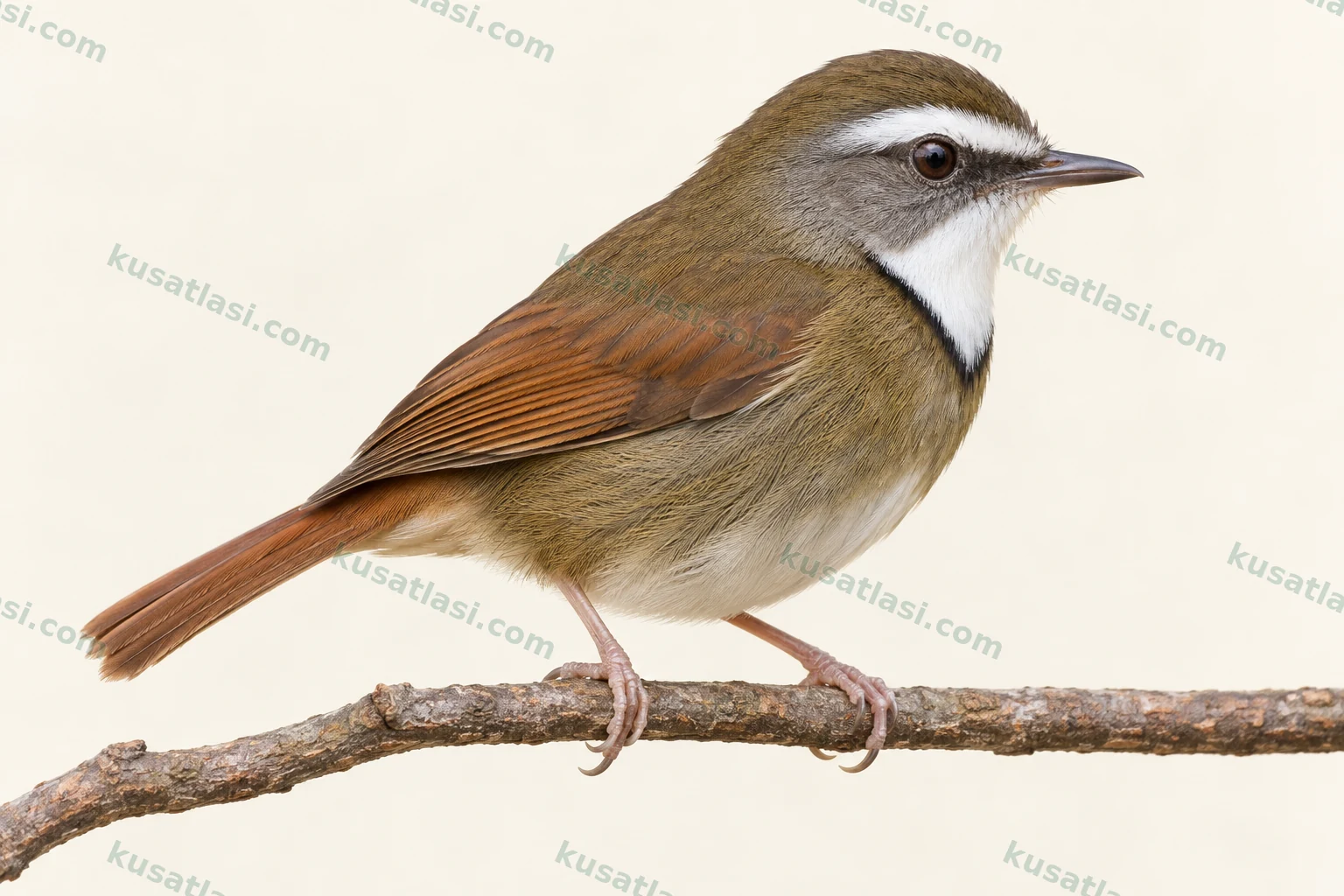
World Birds IUCN statusLC · Least ConcernGlobal IUCN category. BirdLife v10 (2025); taxon matching: AviList 2026 / IOC 15.2; checked: 29.10.2026. The list year is not the species assessment date. Source and method · BirdLife OrderPasseriformesPasserines FamilyMuscicapidaeMuscicapidae
White-gorgeted Flycatcher
Anthipes monileger
Identify the triangular white throat by its dark border together with the grey head, pale eyebrow and warm brown wings and tail.
Biometrics
Length
Male11–13 cm
Female11–13 cm
Shared species value
Wing length
Male6.15 cm
Female6.15 cm
Shared species value
Weight
Male12.2 g
Female13.4 g
White-gorgeted Flycatcher
Himalayan region and forests of northern and central IndochinaObservation guide in its natural range
Look for three features together
Do not rely on a single featureCheck the dark border of the triangular white patch.
Compare the grey head and pale eyebrow with the wing and tail tones.
Watch natural openings in dense undergrowth and thick streamside vegetation.
Compare male and female
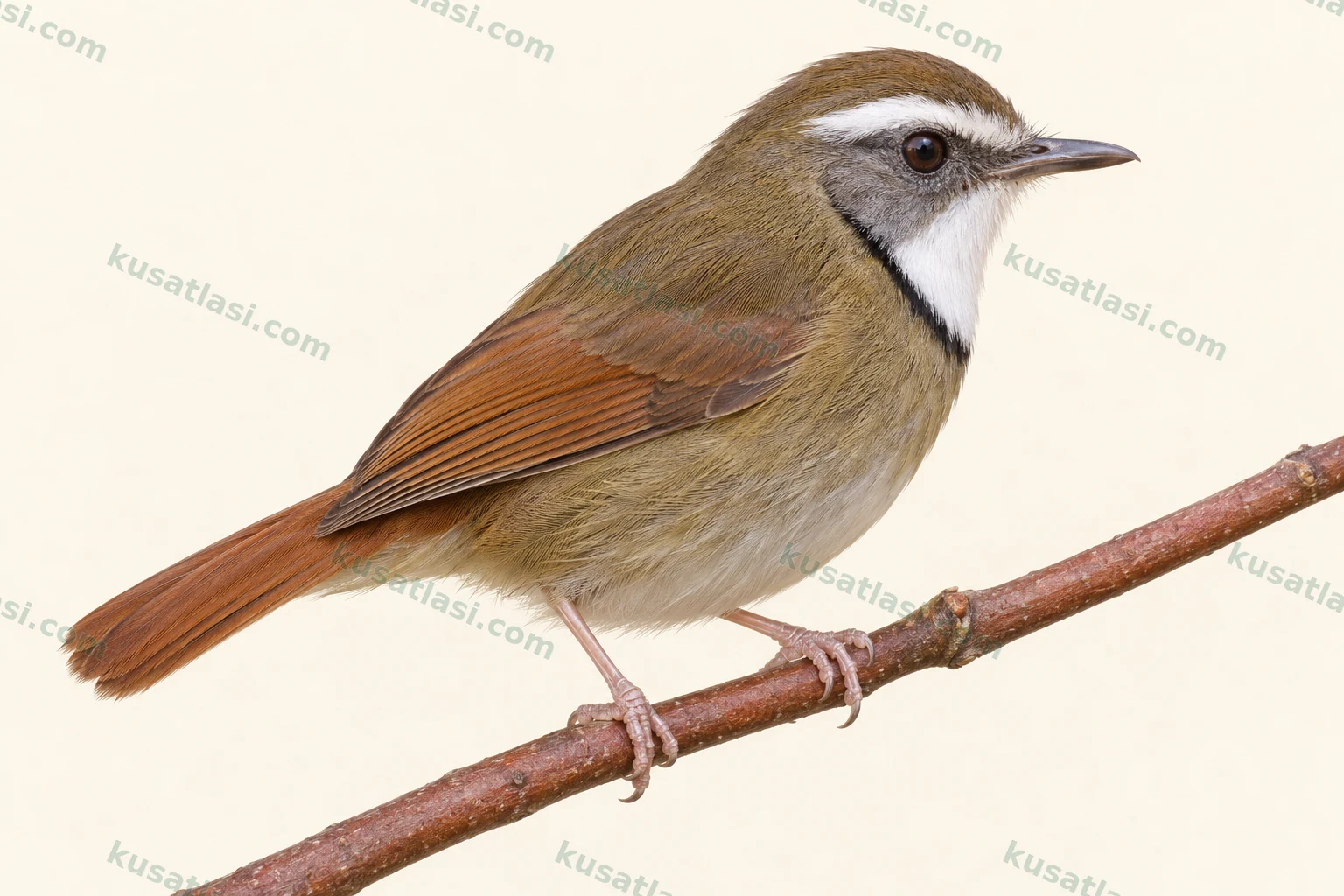 FemaleMale
Reliable field marks for sex and juvenile age were not verified. Do not use the size of the throat patch alone.
Where to look in its natural range?
Watch low branches beside densely vegetated streams without opening the cover.
Generally resident, with possible local movements related to elevation. Exact breeding months were not verified.
All months: The breeding calendar was not verified. No verified regional date was given for any month. This does not imply local absence.
January
February
March
April
May
June
July
August
September
October
November
December
Nest, egg and incubation
A life-history compilation gives four eggs. Nest structure, incubation duration and the length of the nestling period were not verified.
A detailed species-specific note sequence was not verified for this account. Check short sounds alongside appearance.
Do not play recordings to attract birds. Observe quietly, especially near nests.
Species information
Quick identification
The White-gorgeted Flycatcher Anthipes monileger is a small bird of forests from the Himalayas to Southeast Asia. Look for the dark border around the triangular white throat patch, the grey head, pale eyebrow and warm brown wings and tail together. The shape of the white throat matters. A small pale spot under the bill is insufficient. Check the lower edge of the patch and the colour of the head again when the bird faces you or turns to the side.
Older sources may use the name Ficedula monileger. Confirm that the name refers to the same current taxon before interpreting the old account, and do not transfer the appearance or behaviour of other Ficedula species. The current genus is Anthipes. A similar white throat is no reason to combine records of different species.
General appearance and posture
The white throat is the first feature to stand out against the brown body. The grey head and pale eyebrow put the throat patch in context. Compare the warm reddish-brown wings and tail with the cooler appearance of the head. Forest light can make the body look reddish or dull, without indicating a distinct colour form. The white patch can look larger in an overexposed photograph, which makes it useful to check the dark border.
Look in dense undergrowth in the lower levels of the forest. Steep slopes, valleys and thick streamside vegetation can make this bird harder to see than flycatchers that perch in the open. If only the tail and back are visible, wait for a view of the breast and face. Small size and brown plumage alone are insufficient. Imagining the full outline of a white patch hidden by leaves can lead to a mistaken identification.
Males, females and young birds
A reliable field key for separating males and females by plumage was not verified for this account. The size of the white throat patch, the reddish tone of the wing and an overall paler appearance do not individually determine sex. Different photographs of the same bird can give the impression of two sexes. Two birds seen together are not labelled individually as male and female simply because they appear to be a pair.
Detailed plumage changes and dependable age marks for young birds were not sufficiently verified either. Do not identify a pale, fluffed-up bird as young on appearance alone. Record food-begging, interactions with parents and care separately if observed. Leave the age open if these details are unavailable. Juvenile spotting described in another flycatcher does not resolve the gap for this species.
Appearance in flight
The white throat and pale eyebrow may be visible only briefly during short movements through cover. The warm brown tail seen from behind does not identify the bird by itself. Once the bird perches again, check its face and head and the dark border of its throat patch. Crossing a clearing is different from long-distance travel. The direction of a flight can be recorded, but one movement does not establish a migration route.
This account could not verify a distinct mark on the upper or lower wing that identifies the species on its own. Do not fill in white wing markings that were not seen or invent a wingspan. Leave the identification tentative when details of the perched bird cannot be added to the flight observation.
Voice and behaviour
The bird is usually seen alone and sometimes in pairs. It stays quietly in cover and is easily overlooked. To attribute a sound near a stream to this bird, see the individual making it or compare the sound with a reliable recording. A detailed species-specific sequence of notes was not verified for this account. A mnemonic for another flycatcher does not apply here, and a brief sound unsupported by appearance is insufficient for firm identification.
Original field research in northern Myanmar recorded the species in association with forest. Its presence on the species list does not establish a nest or definite breeding record in that study. Few records of a quiet bird do not automatically mean it is very scarce there. Survey methods and the timing of visits matter. Waiting for the bird to move naturally gives more reliable information than opening dense cover or repeatedly playing recordings.
Similar species
1. A white throat alone does not separate it from Anthipes solitaris. Compare head and eyebrow colour, the dark border of the throat patch, warm wing and tail tones and natural range. Check separately which habitats each species occurs in. An older broad use of a genus or species name must not combine two current taxa on one map.
2. Females and young of small Ficedula species can look similar at first because they are brown. Look for the triangular throat patch together with the grey head and pale eyebrow in the White-gorgeted Flycatcher. Small size, a brown back or perching on a low branch alone is insufficient. Do not infer head markings hidden by foliage.
3. Posture and colour can be misleading in similarly sized forest robins and birds of scrub. Record which area is white, the warm colour of the tail and the appearance of the bill separately. A single emergence from a shrub does not confirm distinguishing features that were not seen. Compare an uncertain photograph with all plausible species before assigning a reliable name.
World distribution
Its native range extends from the central and eastern Himalayas through the northeastern Indian subcontinent to northern and central Indochina. The current checklist distinguishes geographic subspecies. One colour description does not account for all records from the Himalayas, Myanmar and Indochina. Forests in Nepal, Bhutan, northeastern India, southern China and neighbouring parts of Southeast Asia are considered within this broad range. Its native range does not cover every part of those countries.
Status in the natural range
A study combining surveys around Putao, Myanmar, in 2015–2017 with additional field observations lists this species among the forest records. A record in a low-abundance category is not a precise population estimate. The methods, places covered and survey effort define the scope of the findings. Foothill forests, densely vegetated streamsides and local undergrowth give more precise habitat information than a country name on a map.
Migration
The species is considered generally resident, with movements related to elevation in some settings. No verified long-distance route or sequence of countries was found. A lower-elevation winter record does not mean that every bird follows the same route. The calendar leaves undocumented breeding months unmarked. Approximate observation points show that the bird was present. The date of a record alone does not prove that it nested or migrated there.
Breeding habitat
Suitable habitats include dense undergrowth in foothill and moist forests, thick secondary growth and areas with bamboo. The specialist account highlights streamside vegetation and deep valleys. These settings describe where the bird is seen. They do not establish nesting in every such place. The structure of the low cover is as important as the presence of tall trees.
Nest site
The life-history compilation by Myhrvold and colleagues lists a clutch of four eggs. This does not establish the same clutch size for every region. Nest structure, incubation duration and the time the young spend in the nest were not sufficiently verified for the species as currently defined. A nest described under an earlier genus name is not used unless the taxon match is clear. Incubation periods of 12–14 days given for other flycatchers are not transferred to this species.
Daily habitat use
The bird can stay hidden in the low, dense layers of the forest, so watch natural openings in the vegetation. Parting streamside plants to force the bird into view can disturb its feeding and shelter. Waiting in one place lets the bird reappear within the same cover. Do not assume that a perch is the branch where its nest is located.
What does it eat?
Published ecological datasets classify this species among birds that feed on small invertebrates. This classification does not mean that every prey group or its daily share has been measured. A detailed prey list and seasonal diet proportions were not verified for this species. A list of insects eaten by another forest flycatcher is not transferred here. Small prey seen in the bill can be recorded as an invertebrate if it cannot be identified more precisely.
How does it forage?
Watch the bird forage naturally within dense undergrowth. A movement towards a branch or leaf does not reveal which insect group its prey belongs to. Capture, swallowing and carrying food to another bird are distinct behaviours. A brief flight does not establish the whole sequence. Movements prompted by artificial food placed on the ground or a branch do not show the proportions of the natural diet. Brief observation without disturbing the cover or drawing the bird out helps document its feeding more accurately.
An older genus name does not mean a different bird
Ficedula monileger appears in older sources. Following molecular studies, current lists use Anthipes. The change does not make every old Ficedula account applicable to this bird. Check the species name and the scope of the source together. Historical records can be used when matched with the correct taxon, but the entire range of the former group is not transferred to the new map.
Brown plumage can obscure relationships
An original taxonomic publication on Niltavinae places this species in a group in which many members have blue plumage. The lack of this blue appearance in Anthipes illustrates the difficulty of inferring relationships from colour alone. The possibility that blue plumage was lost is an evolutionary interpretation. It is not a colour observed directly in ancestral individuals. Genetic relationships and field marks answer different questions.
A forest record is not a breeding record
The Putao study’s species list records forest habitat and the observation method together. The record supports the species’ presence there, but does not by itself provide evidence of eggs, young or a nest. Few records in one survey do not establish the species’ numbers throughout its native range. Keeping the survey’s months, methods and locations in view helps prevent an unwarranted generalisation of a regional finding.