

World Birds IUCN statusLC · Least ConcernGlobal IUCN category. BirdLife v10 (2025); taxon matching: AviList 2026 / IOC 15.2; checked: 29.10.2026. The list year is not the species assessment date. Source and method · BirdLife OrderPasseriformesPerching birds FamilyMuscicapidaeMuscicapidae
Snowy-crowned Robin-Chat
Cossypha niveicapilla
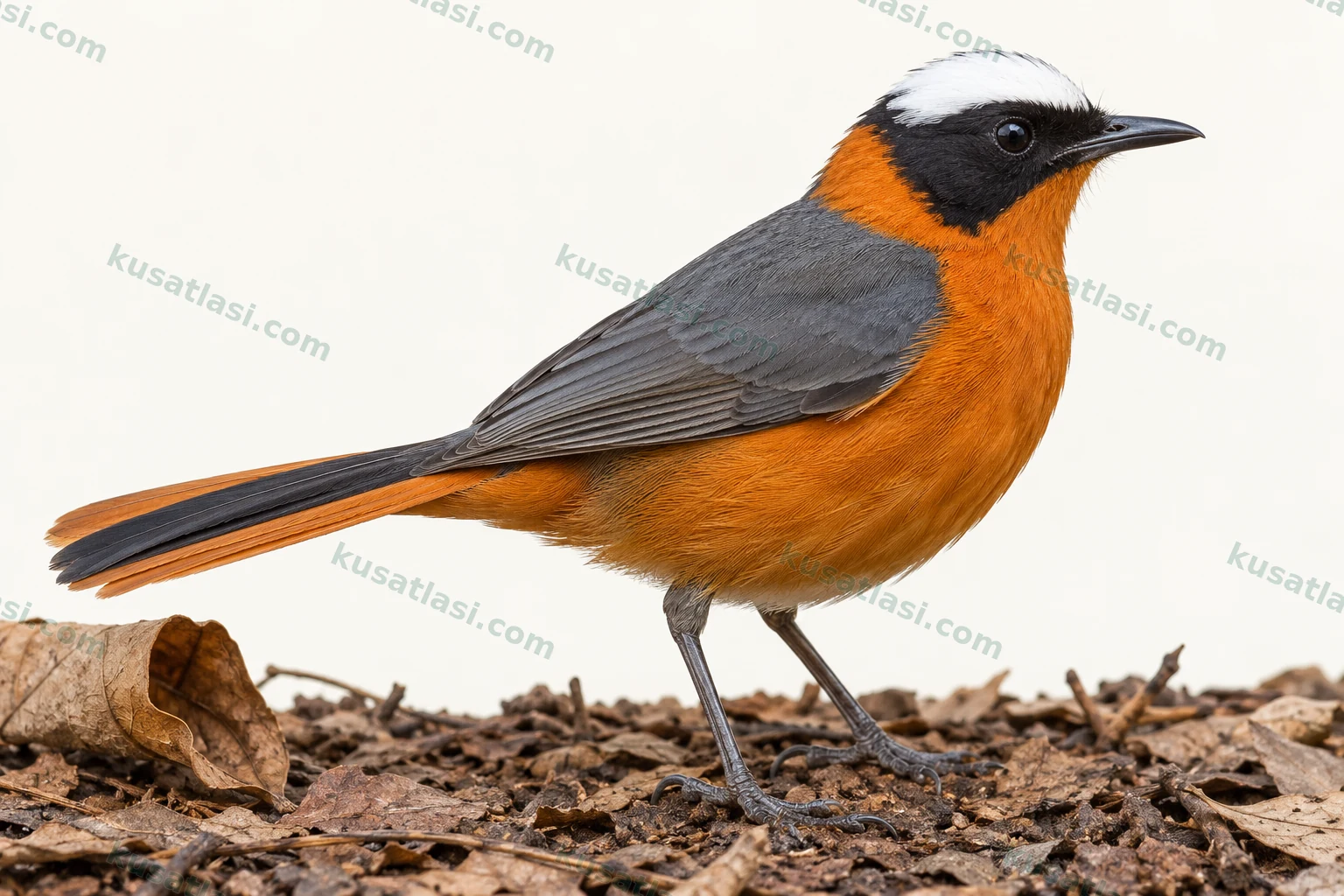
An African robin-chat with a white crown, black face and orange chin. Adult males and females look alike.
Biometrics
Length
Male20–22 cm
Female20–22 cm
Shared species value
Wing length
Male9.78 cm
Female9.78 cm
Shared species value
Weight
MaleData unavailable
Female33.8 g
Snowy-crowned Robin-Chat
West and Central Africa, western Ethiopia and the Lake Victoria regionObservation guide in its natural range
Look for three features together
Do not rely on a single featureWhite crown and black face.
Orange chin and orange band at the sides of the neck.
Dark centre and orange sides. Back colour varies geographically.
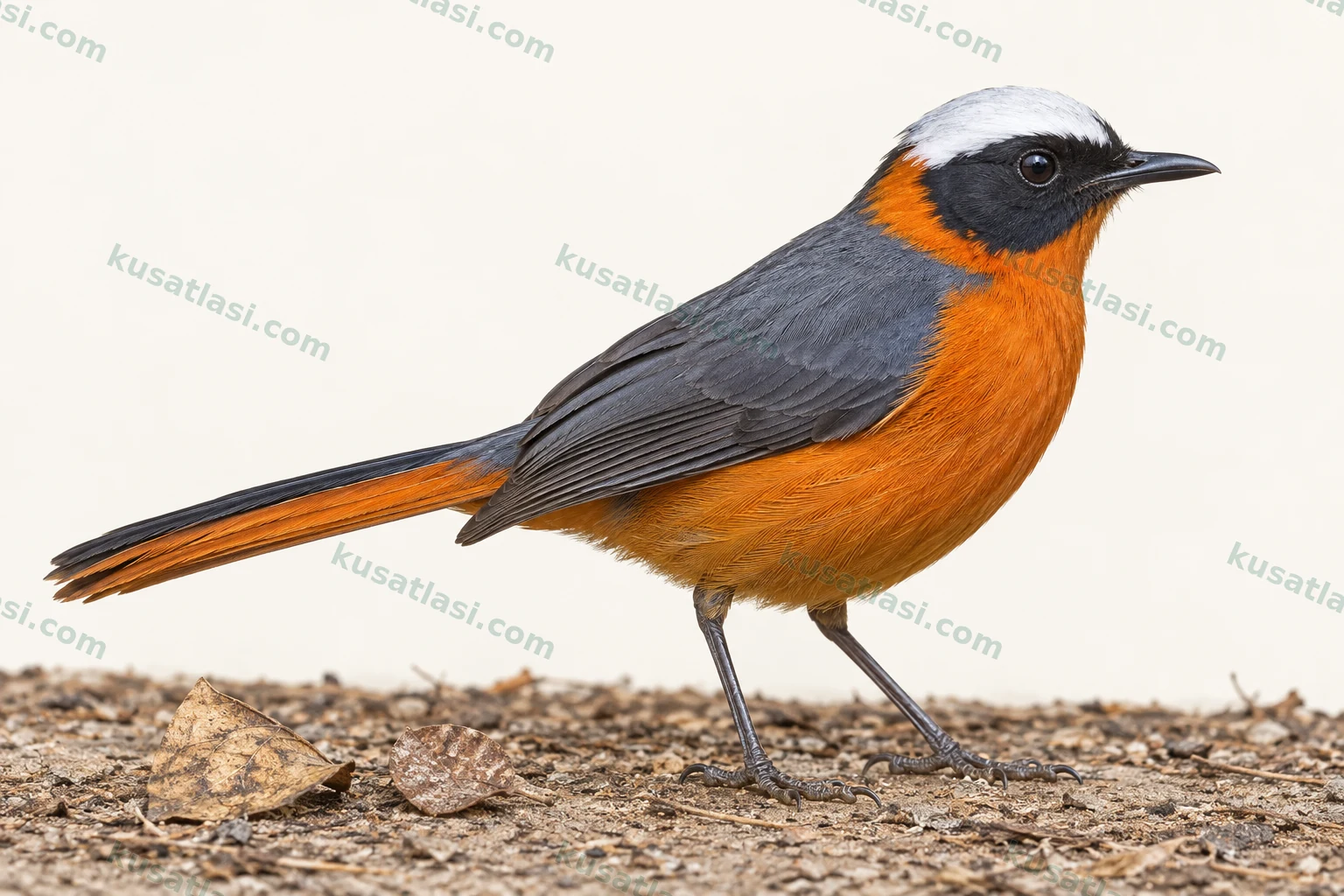
Compare male and female
 FemaleMale
Adult males and females look alike. A grey or black back can reflect geographic variation.
Where to look in its natural range?
Woodland with dense undergrowth, riverine forest, scrub and suitable gardens.
The 2017–2019 Nigeria–Benin study recorded incubation signs in June and young birds in June and December. These are not laying dates.
January
Resident, with regional evidence of breeding. No verified regional date was specified for this month. This does not imply local absence.
February
Resident, with regional evidence of breeding. No verified regional date was specified for this month. This does not imply local absence.
March
Resident, with regional evidence of breeding. No verified regional date was specified for this month. This does not imply local absence.
April
Resident, with regional evidence of breeding. No verified regional date was specified for this month. This does not imply local absence.
May
Resident, with regional evidence of breeding. No verified regional date was specified for this month. This does not imply local absence.
June
Resident, with regional evidence of breeding. The 2017–2019 Nigeria–Benin measurements study reported incubation signs in an adult. This is not a direct egg-laying date. The same study recorded birds identified by age as young. These records do not establish laying months.
July
Resident, with regional evidence of breeding. No verified regional date was specified for this month. This does not imply local absence.
August
Resident, with regional evidence of breeding. No verified regional date was specified for this month. This does not imply local absence.
September
Resident, with regional evidence of breeding. No verified regional date was specified for this month. This does not imply local absence.
October
Resident, with regional evidence of breeding. No verified regional date was specified for this month. This does not imply local absence.
November
Resident, with regional evidence of breeding. No verified regional date was specified for this month. This does not imply local absence.
December
Resident, with regional evidence of breeding. The same study recorded birds identified by age as young. These records do not establish laying months.
Nest, egg and incubation
The nest is a well-hidden shallow cup. The specialist institutional account gives 2–3 eggs and about two weeks of incubation. The age at first flight in the wild was not verified.
Variable, melodic whistles that may include sounds resembling other birds.
Do not play recordings to attract birds; observe quietly, especially near nests.
Species information
Quick identification
Snowy-crowned Robin-Chat Cossypha niveicapilla is recognised by its white crown, black face and warm orange underparts. Its chin is orange, and orange along the sides of the neck is visible behind the black face. The tail has a dark centre and orange sides. To distinguish it from other white-crowned robin-chats, check the chin and sides of the neck in particular. Regional variation from grey to black on the back is not in itself a difference between males and females.
The English name is Snowy-crowned Robin-Chat, while some institutions use Snowy-headed Robin Chat. Both refer to Cossypha niveicapilla. The larger White-crowned Robin-Chat Cossypha albicapillus is a separate species. The similar references to white in their names do not justify mixing their measurements or nesting information. This page describes the bird whose natural range extends from West and Central Africa south of the Sahara to suitable areas farther east.
General appearance and posture
The white area on the top of the head contrasts with the dark forehead and face. The back is slate-grey in some regions and nearly black in others. The wing is dark, with bluish-grey edges on some feathers. The rump and upper tail coverts are orange-rufous. The dark central pair of tail feathers and the orange lateral feathers give the tail pale-looking sides. If the tail opens briefly and closes again, a single frame may not show the complete colour pattern.
The catalogue's adult female melanonota specimen is described in detail, including the orange band over the cheeks, sides of the neck and around the nape. Dark bases to the white crown feathers can produce small dark marks on the crown in some specimens. This small detail does not by itself reproduce the head pattern of the larger similar species. The chin colour and the orange sides of the neck are assessed together. The breast and belly are orange-rufous, and the bill and eye are dark.
When the bird emerges from scrub, the slender body and prominent tail support the identification. Light or dark backs, posture and fluffed feathers can affect the impression of size in the same photograph.
Males, females and young birds
Adult males and females have similar plumage. A specialist avicultural account gives personal comparisons suggesting that females can be slimmer or slightly paler below. The same author says these clues are unreliable without direct comparison. A pale bird in a photograph is therefore not assigned to the female sex with certainty. The Nigeria–Benin measurements study also reported the adults of this species in a group of undetermined sex.
When assessing young birds, check whether the adult crown and face pattern is fully developed. The sources examined did not verify every juvenile stage with a detailed key to sex, so individual juvenile feather colours do not establish sex. Records of young in the scientific study concern birds aged by the researchers. Standing beside a parent in a field observation does not by itself show when a bird left the nest or how many days old it is.
The name melanonota can appear as a separate species in old catalogues, while later checklists include it within Cossypha niveicapilla. Darker birds around Lake Victoria are not taken to be male simply because of their dark backs. Geographic variation is distinguished from variation between the sexes. Recording the locality helps later assessment of whether the back colour is regional or an effect of light.
Appearance in flight
During a short flight between bushes, the dark wing, warm lower body and orange-sided tail may be visible. In the historical description of a melanonota specimen, the underwing coverts are orange as well. This detail is not replaced by a broad white underwing patch assumed visible in every flight. The white crown may disappear in a brief view. When the bird perches again, check it together with the chin, neck band and tail.
Voice and behaviour
The song may include highly variable sequences of whistles and sounds resembling other birds. An individual hidden in the forest understory may be detected by its voice before its colours can be seen. Because the sound may imitate another species, seeing the bird giving it strengthens identification. Two different songs from one robin-chat are not automatically counted as two birds or two species.
The original ecological account from Gabon describes pairs holding territories and occurring locally in dense riverside scrub and disturbed riverine forest with climbing plants. That local observation does not establish the same density across Africa. Pair living in the specialist institutional account should be distinguished from the large flocks of babblers. A short encounter with one bird does not prove that another is absent nearby.
Similar species
1. White-crowned Robin-Chat Cossypha albicapillus is larger, with a black face mask extending to the chin. Some geographical forms have dark marks on the white crown. On the target species, look for both the orange chin and the orange band on the sides of the neck. The white crown alone does not distinguish the two.
2. White-headed Robin-Chat Cossypha heinrichi is larger and has a more extensively pale head. It occurs in northwestern Angola and the adjacent Democratic Republic of the Congo. The black face, orange chin and tail pattern of Snowy-crowned Robin-Chat are interpreted in its own geographical context. Similar common names do not change the identity of a record in a distant region.
World distribution
The natural range extends from suitable scrub and woodland in West Africa through Central Africa to western Ethiopia and the Lake Victoria region. Regional birds occur south to northern Angola and northwestern Tanzania. The current taxonomy portal distinguishes geographical forms within this broad range. Country boundaries do not imply continuous occupancy. The distribution of dense understory helps determine where to look within the broad area shown on the map.
Status within its natural range
The global category is Least Concern. Local habitat use can differ. An original study in northeastern Gabon found the bird locally regular in villages at Makokou and along the Ivindo, but did not record it at the primary forest site studied. This result does not show that the species avoids primary forest everywhere in Africa. Birds measured in small regenerating forest fragments in Nigeria and Benin show that suitable vegetation affected by people can be used locally.
Movements
The Oromia scientific review codes the species as resident with confirmed breeding. The Gabon account also considers local residency likely. The sources examined give no annual migration route with tracked dates and distances that applies across the range. Daily movement along scrub and rivers is not drawn as intercontinental migration. Months of sample records on the map do not substitute for a laying calendar. Regional signs of breeding are explained separately.
Breeding habitat
Woodland with dense undergrowth, forest edges, riverine forest and suitable gardens are places to look for the species. Dense cover lets the bird stay hidden on the ground or on low branches. The West African measurements study found local breeding signs in regenerating forest fragments. Seeing a bird in a garden does not make all bare, frequently cleared gardens equivalent nesting habitat.
Nest site
The specialist institutional account reports a well-hidden shallow cup made of dry grass, moss, leaves and fine twigs. It gives a typical clutch of 2–3 eggs and incubation of about two weeks. Both parents care for the chicks. The account does not provide a detailed sample of wild nests for that duration. The four eggs and 12–13 days to hatching in the avicultural record refer to one pair in human care and are not the standard for wild nests. A verified age at first flight in the wild was not found.
Daily use of space
Views may be brief in riverside bushes and beneath climbing plants. Waiting for the bird to return to the same opening is preferable to parting the cover to look for a nest. Seeing an adult with breeding signs and finding a nest are different records. The Nigeria–Benin study reported signs of incubation in June separately from young birds in June and December. These months are not treated as one laying season for the continent.
What it eats
Invertebrates make up an important part of the diet, and the specialist institutional account also includes fruit. A global trait dataset classifies the species as predominantly invertebrate-feeding. This general classification does not imply that fruit is never eaten or that one proportion holds all year. The review did not verify detailed dietary proportions in wild birds by region and season.
How it obtains food
Feeding can be observed around the understory and leaf litter. The avicultural account notes that the birds turned leaves over with their bills and could catch flying insects that entered the enclosure. This shows flexibility in finding prey. The food list under human care does not replace the wild diet. If food in the bill can be identified, record it. If only a small fragment is visible, leave the species of prey open. Seeing the same bird on the ground once and on a branch another time helps document the different feeding surfaces separately.
Two white-crowned species have different chin colours
When comparing it with White-crowned Robin-Chat, the chin and sides of the neck are more informative than the names. The orange chin and orange neck band distinguish Snowy-crowned Robin-Chat from the larger lookalike with a black chin. The details can disappear when a branch hides the head or a photograph is overexposed. Waiting for a clearer view gives a stronger identification than assigning a colour to a chin that was not seen.
A record of a young bird is not a laying date
The West African study recorded adult signs of incubation and young birds in separate columns. Finding a young bird in June or December does not show that eggs were laid that day. The researchers also kept adult measurements separate from young birds. Preserving both the age and the month of a record keeps the calendar from appearing more precise than the study.
A dark back alone does not determine sex
Cornell's account notes that back colour varies regionally from grey to black. The specialist aviculturist also found that sex was hard to determine by appearance in the birds under their care. A difference in darkness should first be assessed in relation to light, feather condition and regional appearance. A colour difference does not provide enough evidence for a new field key to sex.
Song can reveal a bird in cover
Whistles and variable sound sequences help locate the bird in dense understory. Parts resembling other birds make it important to check the source of the sound. Seeing the bird and matching the sound to that individual is more informative than merely hearing a similar sound nearby. The direction, time and bush where the bird is hiding can be noted carefully together.