

World Birds IUCN statusLC · Least ConcernGlobal IUCN category. BirdLife v10 (2025); taxon matching: AviList 2026 / IOC 15.2; checked: 29.10.2026. The list year is not the species assessment date. Source and method · BirdLife OrderPasseriformesPerching birds FamilyMuscicapidaeMuscicapidae
White-throated Robin-Chat
Dessonornis humeralis
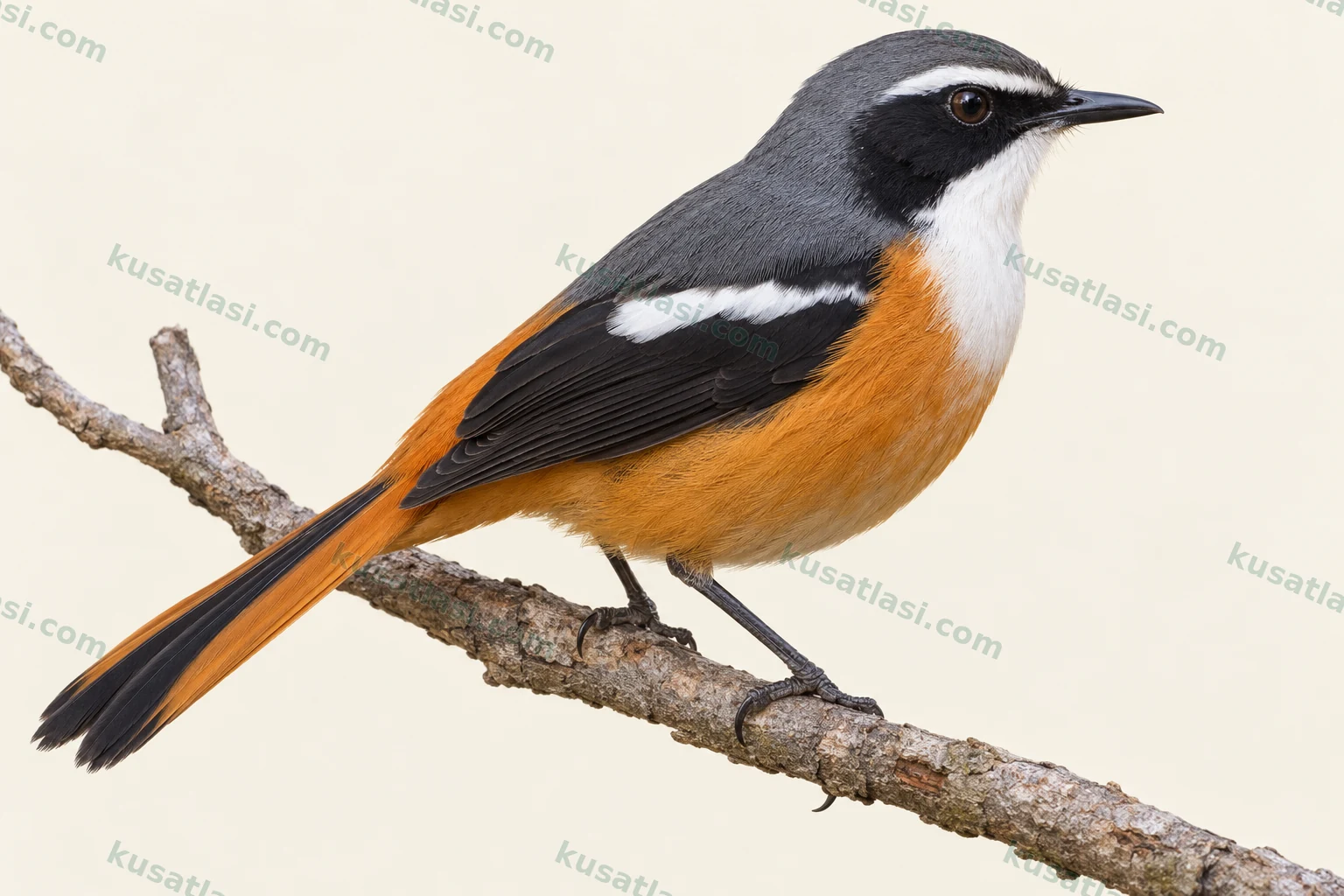
Look for the white eyebrow, throat and breast, dark upperparts and orange on the tail and lower belly in dense scrub.
Biometrics
Length
Male17–18 cm
Female17–18 cm
Shared species value
Wing length
Male7.54 cm
Female7.54 cm
Shared species value
Weight
Male20.2–26 g
Female17–28 g
White-throated Robin-Chat
Dense scrub and woodland in southeastern AfricaObservation guide in its natural range
Look for three features together
Do not rely on a single featureLook for the white eyebrow above the dark face and the white throat together.
Compare the transition from the white breast to the orange area below.
Look for the orange and dark tip, preferably when the tail opens.
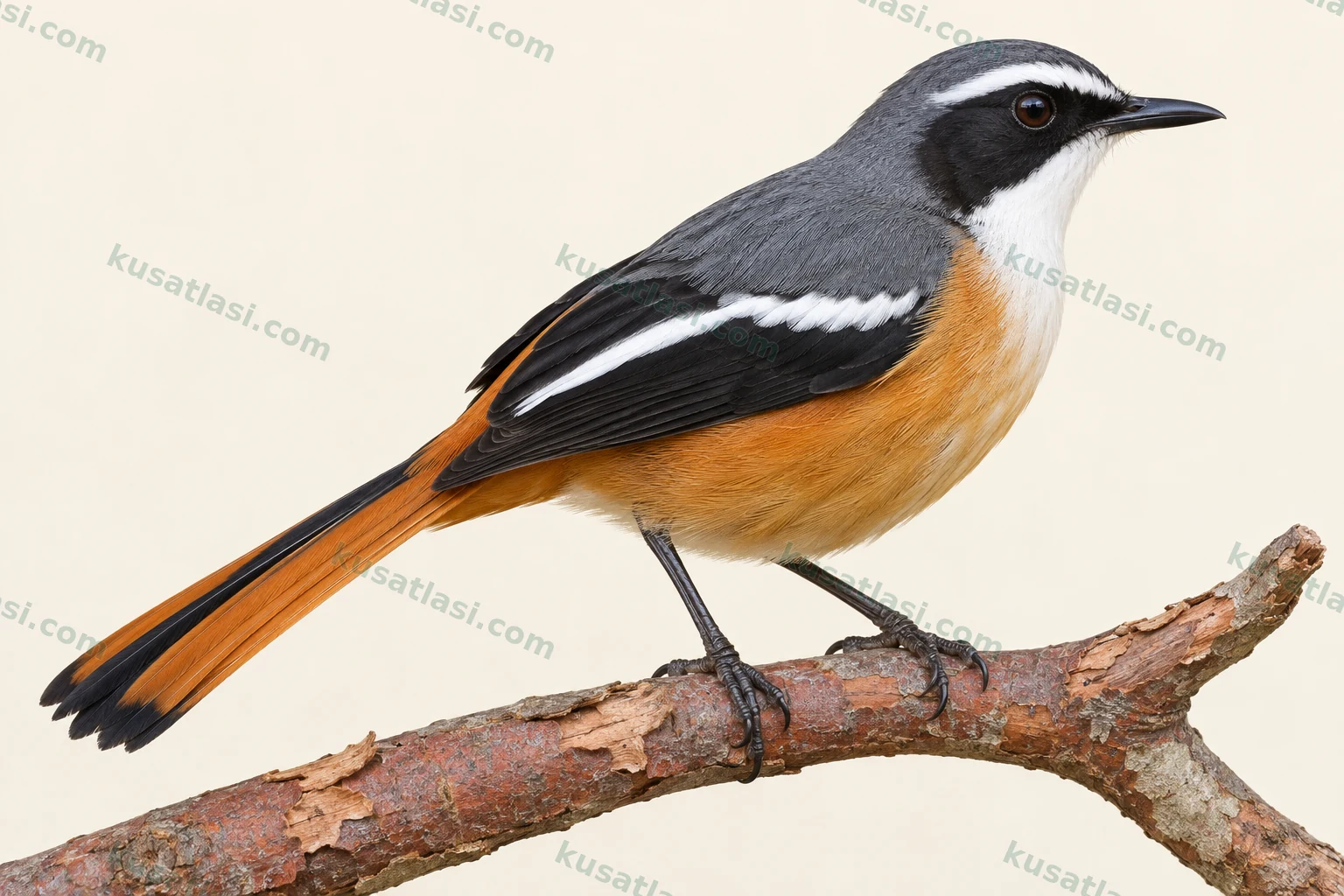
Compare male and female
 FemaleMale
Young birds are dull and brownish. There is no verified visual key to sex that works for all adults. Brightness alone is insufficient.
Where to look in its natural range?
Watch quietly along covered edges of dry watercourses and look for birds foraging in leaf litter.
The species is resident. The breeding months represent verified laying records from the southern African atlas region.
January
The species is resident. Regional egg laying is recorded from September to January, mainly in October and November. Egg laying in the South African region.
February
The species is resident. Regional egg laying is recorded from September to January, mainly in October and November. No verified regional date is given for this month. That does not imply local absence.
March
The species is resident. Regional egg laying is recorded from September to January, mainly in October and November. No verified regional date is given for this month. That does not imply local absence.
April
The species is resident. Regional egg laying is recorded from September to January, mainly in October and November. No verified regional date is given for this month. That does not imply local absence.
May
The species is resident. Regional egg laying is recorded from September to January, mainly in October and November. No verified regional date is given for this month. That does not imply local absence.
June
The species is resident. Regional egg laying is recorded from September to January, mainly in October and November. No verified regional date is given for this month. That does not imply local absence.
July
The species is resident. Regional egg laying is recorded from September to January, mainly in October and November. No verified regional date is given for this month. That does not imply local absence.
August
The species is resident. Regional egg laying is recorded from September to January, mainly in October and November. No verified regional date is given for this month. That does not imply local absence.
September
The species is resident. Regional egg laying is recorded from September to January, mainly in October and November. Egg laying in the South African region.
October
The species is resident. Regional egg laying is recorded from September to January, mainly in October and November. Egg laying in the South African region. Months of most concentrated egg laying.
November
The species is resident. Regional egg laying is recorded from September to January, mainly in October and November. Egg laying in the South African region. Months of most concentrated egg laying.
December
The species is resident. Regional egg laying is recorded from September to January, mainly in October and November. Egg laying in the South African region.
Nest, egg and incubation
The hidden cup nest lies on or near the ground and holds 2–3 eggs. Incubation lasts about 14–15 days and the young spend 13–14 days in the nest. Care continues afterwards.
The song has rich twitters, whistles and imitations of other birds. The contact call is a simpler, thin whistle.
Do not play recordings to attract birds; observe quietly, especially near nests.
Species information
Quick identification
The White-throated Robin-Chat Dessonornis humeralis is a small passerine of dense scrub in southern Africa. The adult has a conspicuous white eyebrow on its dark head and white on the throat and breast, with orange areas farther down. The upperparts are sooty dark, and the tail has orange and dark terminal areas. Look at the head, breast and tail together. A fleeting orange patch in dense cover does not identify the species on its own.
When the bird comes to the edge of cover, note the position of the white eyebrow above the eye and the white extending from throat to breast. The pattern may become clearer when the tail opens. In deep shade the orange can look brown and the sooty upperparts more uniformly black. The bird does not always come out onto an exposed branch. Wait quietly in front of the thicket where the sound came from rather than trying to drive the bird out.
General appearance and posture
A rounded body, slender bill and prominent tail are its basic proportions. In good light the white eyebrow contrasts with the dark face. The boundary between the white front and the orange farther down can look broader or narrower depending on posture. Tilting the head forward can hide part of the throat. The pale area looks larger when the bird fluffs its breast feathers. These changes in appearance do not make a different plumage pattern.
It moves through leaves while feeding on the ground. A low branch or shrub can offer a clearer side view of the tail pattern. The bird may fan its tail while singing or when agitated. Fanning the tail does not necessarily indicate courtship. The same bird may hold its body at different angles on the ground, on a slender branch or in dense cover. Preserving the cover it uses matters more than forcing a clear view for identification.
Males, females and young birds
For adults, start with the arrangement of the white eyebrow and front and the orange tail and belly. This review did not verify a single reliable visual key to sex for all individuals. A brighter or larger-looking bird, or one that sits more in the open, should not automatically be called male. In particular, a difference in darkness between two photographs taken in different light in cover cannot be used to determine sex.
Young birds look duller and browner than adults with their clean black, white and orange pattern. Do not expect every adult mark to be equally strong in the early stages. A parent feeding the young can help establish age, but birds simply being near one another does not prove family relationships. The detailed stages of juvenile moult are not assigned to exact days or months here. If age is unclear, do not force the record into an adult or young category.
Appearance in flight
The dark body and orange tail areas can show briefly on short flights between thickets. The bird may disappear immediately into cover again. Confirm the colours seen in flight with the head and breast pattern of a perched bird. From the front the pale foreparts stand out, and from behind the dark back is more prominent. When the tail is closed, overlapping feathers can hide part of the pattern.
When feeding, it sometimes makes a short dash at a flying insect. That differs from the flight of swallows that hunt continuously in the air. A move between nearby shrubs or a hunting sally is not evidence of migration. The species is generally resident, with local dispersal reported after breeding. A first sighting in a thicket does not mean that the bird came from a distant country merely because it had not been seen there before.
Voice and behaviour
It has a rich, varied song of twitters and whistles and can incorporate sounds from other birds. The contact call is described as a simpler, thin whistle. Because it mimics, each sound heard does not necessarily indicate a different species nearby. See the singing bird and link the sound to it. Recognising part of the sound reduces the risk of attributing the whole mimicked song to a different bird.
It usually feeds alone or in pairs in dense cover. It turns leaves on the ground to find small prey and also goes into shrubs and trees. The regional atlas suggests that birds being less vocal while caring for young and later while moulting may contribute to a decline in records. A month with fewer reports does not necessarily mean the birds have left. Song frequency, time spent in cover and observation effort all affect the chance of detecting them.
Similar species
1. The Cape Robin-Chat Dessonornis caffer is a close relative that may occur in the same habitat. For the White-throated Robin-Chat, examine the greater extent of white on the throat and breast together with the arrangement of orange on the underparts. A similar eyebrow or a glimpse of orange in the tail is not enough to distinguish them. If cover hides the foreparts, leave the identification open.
2. The Southern Boubou Laniarius ferrugineus is a species the regional atlas singles out as a source of confusion. A brief glimpse of cinnamon flanks can mislead. Compare body proportions, bill shape, the eyebrow and breast pattern, and the tail together. Similar pale and dark areas alone do not suffice.
3. Brown young of other ground-dwelling birds can be confused with individuals that have not yet acquired clear adult markings. Look for additional evidence, such as direct feeding by a parent, head shape and tail structure. Do not make a firm identification by imagining adult marks that you cannot see.
Global range
The species is native to the southern part of Africa, occurring in suitable habitats in Zimbabwe, southern Mozambique, southeastern Botswana and northeastern South Africa. Eswatini is also within its natural range. The regional atlas distinguishes the harder-ground woodland of eastern Botswana from the sandy Kalahari. A list of countries does not mean that the whole of each country is one suitable habitat.
Status within its natural range
Dense scrub in hot, dry valleys and cover along dry watercourses are important. High reporting rates in a broad atlas region of eastern Zimbabwe do not imply that the bird is common at all higher elevations there. The atlas associates the pattern particularly with low valleys. It can also settle in wooded gardens and around farms. One visit to a garden does not establish use of every town or open space in the region.
Movements and migration
The species is generally resident. Local dispersal after breeding is reported and may particularly involve young birds. It is not described as regular intercontinental migration. Lower reporting in midsummer in the southern African atlas may reflect birds staying in cover while tending young and becoming quieter during moult. Fewer records alone are not evidence of migration. The calendar shows the breeding months in their regional context. No line is drawn on the map for a long migration route, sequence of directions or distance that has not been verified.
Breeding habitat
The bird uses acacia and broadleaf woodland with dense undergrowth, thorn scrub, the edges of dry watercourses and some sand forest edges. It can also occur on the inner edges of coastal dune forest and in gardens with cover. Breeding depends on low vegetation where it can hide rather than on open grassland. Different patches of cover in the same region may not be used equally often.
Nest site
The open cup is made of dry leaves, grass and fine twigs, with finer plant material inside. It is usually on or near the ground on a sheltered support such as a hollow in a stump or the base of a climber. It can also use a human-made support such as an old container. The usual clutch is 2–3 eggs. The female incubates for about 14–15 days, and the young leave the nest after about 13–14 days. Both parents feed them. The young may remain dependent for about another 6–7 weeks.
Daily use of habitat
It searches for prey in leaf litter and moves into low branches and shrubs. Opening the cover to see a ground nest exposes it and can interrupt an adult’s approach. Do not stand in the feeding route or catch a young bird that has left the nest. Leaving the nest does not mean parental care has ended.
What does it eat?
It mainly eats insects and other small invertebrates, and also takes fruit and small vertebrates. The specialist regional account lists beetles, ants, termites, moths, caterpillars and crickets, as well as spiders. Local fruiting shrubs contribute to the diet. This variety does not mean that every prey group is taken equally often or that fruit is the main food in every season.
How does it hunt?
It mostly moves through leaf litter on the ground to expose small prey. Turning leaves is an important part of the behaviour that can be observed. It also searches shrubs and trees and sometimes makes a brief dash at a flying insect. It can move into dense cover after a capture. Clearing leaf litter for a better view changes the natural foraging environment. Record only the prey group you can actually see and do not assign a definite species name to a small piece in the bill.
A quiet month does not mean an empty site
The southern African atlas takes account of care of young and moult when interpreting lower reporting rates in midsummer. A bird that stays in cover and sings less is harder to notice. Monthly reporting does not therefore match the actual number of individuals at the same site exactly. Consider suitable habitat, time spent listening and seasonal behaviour before concluding that the bird is absent.
Leaving the nest is not the end of development
The young leave the nest after about 13–14 days. That does not mean they can feed themselves immediately. The specialist regional account says parental care can continue for about another 6–7 weeks. A young bird sitting beneath a thicket should therefore not be presumed abandoned. Watching an adult return to feed it after the observer steps back is a better way to see whether care continues.
Who is singing when the song contains mimicry?
This bird can incorporate other birds’ sounds, which can complicate a quick count by ear. Several different sounds do not necessarily come from several different birds. When the singer can be seen, match the sounds to that individual. The simple contact whistle and the varied song have different functions and are treated separately.
The old and current names refer to the same bird
Older atlases and accounts based on Roberts use Cossypha humeralis. Current lists accept Dessonornis humeralis. Cornell’s taxonomic account says genetic studies support recognising this group as a separate genus. The name change does not make the bird in the older source a different species. Read that source by matching its name to the current taxon. Irania gutturalis, with a similar English name, is a different bird.