

World Birds IUCN statusLC · Least ConcernGlobal IUCN category. BirdLife v10 (2025); taxon matching: AviList 2026 / IOC 15.2; checked: 29.10.2026. The list year is not the species assessment date. Source and method · BirdLife OrderPasseriformesPerching birds FamilyMuscicapidaeMuscicapidae
White-throated Redstart
Phoenicurus schisticeps
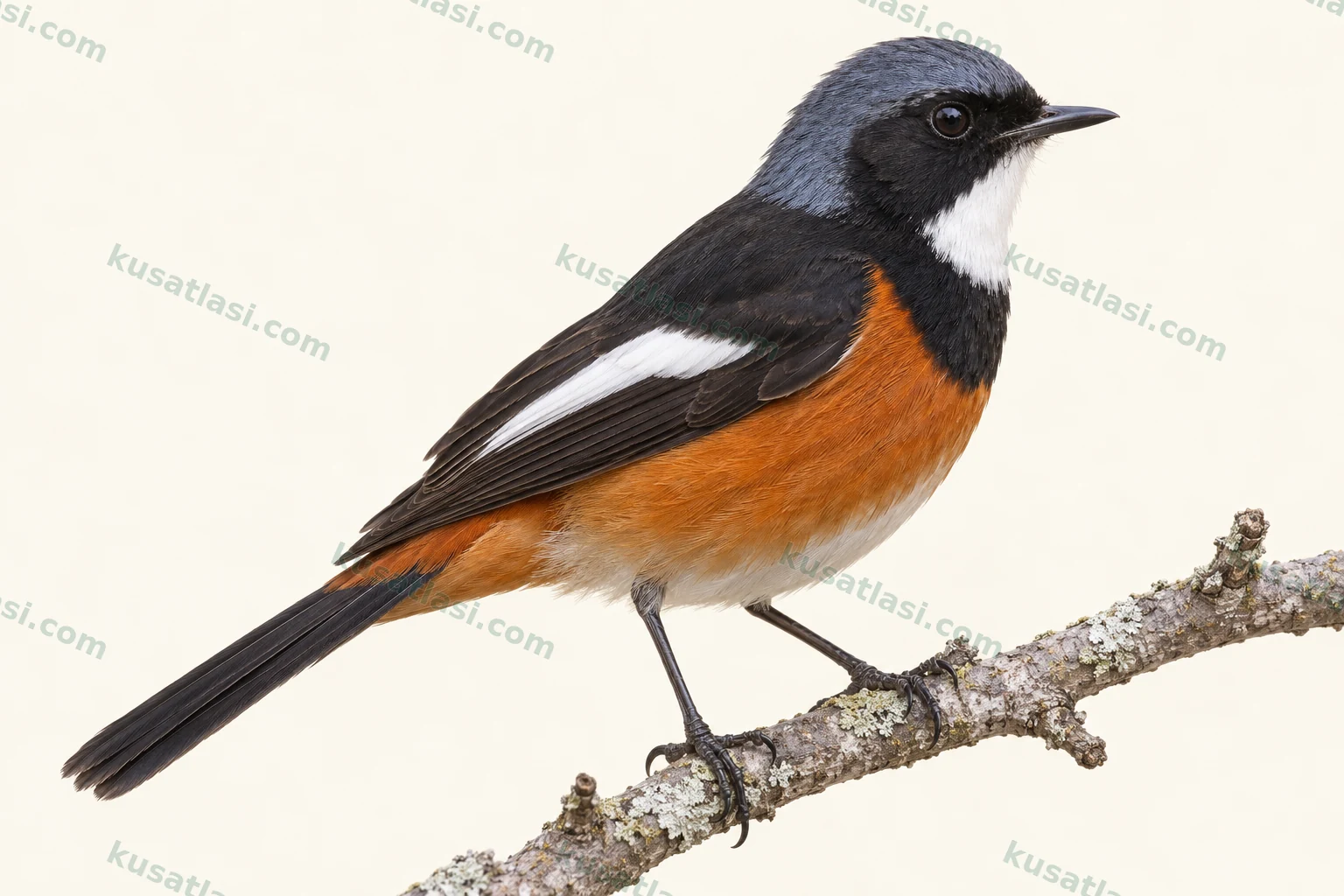
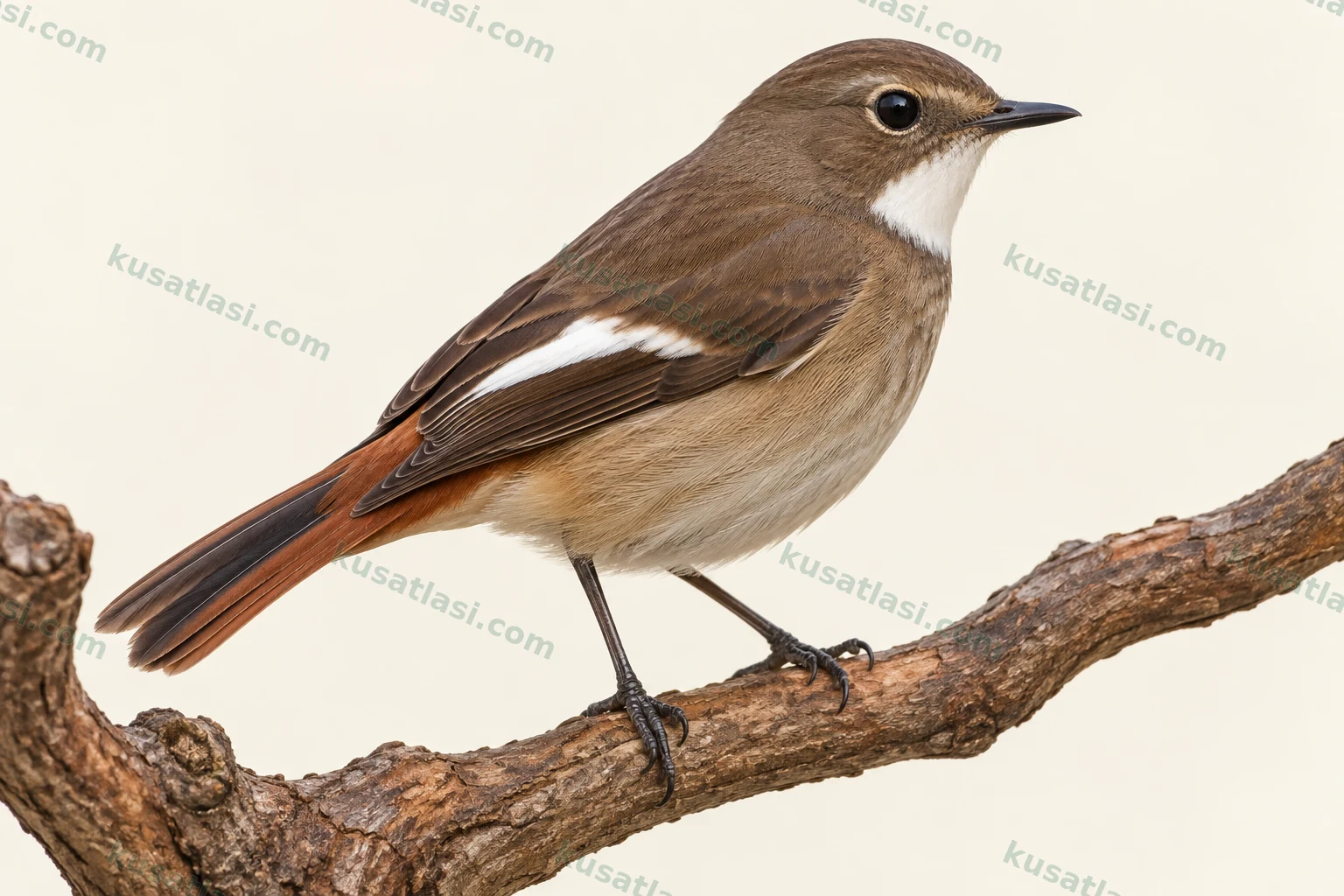
Adults of both sexes have a pale throat and long white wing patch. The male has a bluish crown and chestnut underparts. The female is brown.
Biometrics
Length
Male15 cm
Female15 cm
Shared species value
Wing length
Male8.06 cm
Female8.06 cm
Shared species value
Weight
MaleData unavailable
Female17.7 g
White-throated Redstart
Mountain habitats of the Himalayas, Tibetan Plateau and ChinaObservation guide in its natural range
Look for three features together
Do not rely on a single featureExamine the white centre together with the dark sides.
Look at the shape of the long white area on the folded wing.
Compare the male’s bluish head with the female’s brown body and pale area around the eye.
Compare male and female
 FemaleMale
The male has a dark face, bluish crown and chestnut underparts. The female is brown with a pale eye surround. Young birds are more spotted and their pale areas are less developed.
Where to look in its natural range?
Watch short hunting flights in mountain scrub and the throat and wing pattern of birds perched on bushes.
Some birds are resident and others move locally between elevations. The breeding example is from Tibet.
January
Regional example: Breeding in Tibet is reported from mid-May to August. There is no confirmed common migration calendar. No verified regional date is given for this month. That does not imply local absence.
February
Regional example: Breeding in Tibet is reported from mid-May to August. There is no confirmed common migration calendar. No verified regional date is given for this month. That does not imply local absence.
March
Regional example: Breeding in Tibet is reported from mid-May to August. There is no confirmed common migration calendar. No verified regional date is given for this month. That does not imply local absence.
April
Regional example: Breeding in Tibet is reported from mid-May to August. There is no confirmed common migration calendar. No verified regional date is given for this month. That does not imply local absence.
May
Regional example: Breeding in Tibet is reported from mid-May to August. There is no confirmed common migration calendar. Breeding period reported for Tibet.
June
Regional example: Breeding in Tibet is reported from mid-May to August. There is no confirmed common migration calendar. Breeding period reported for Tibet.
July
Regional example: Breeding in Tibet is reported from mid-May to August. There is no confirmed common migration calendar. Breeding period reported for Tibet.
August
Regional example: Breeding in Tibet is reported from mid-May to August. There is no confirmed common migration calendar. Breeding period reported for Tibet.
September
Regional example: Breeding in Tibet is reported from mid-May to August. There is no confirmed common migration calendar. No verified regional date is given for this month. That does not imply local absence.
October
Regional example: Breeding in Tibet is reported from mid-May to August. There is no confirmed common migration calendar. No verified regional date is given for this month. That does not imply local absence.
November
Regional example: Breeding in Tibet is reported from mid-May to August. There is no confirmed common migration calendar. No verified regional date is given for this month. That does not imply local absence.
December
Regional example: Breeding in Tibet is reported from mid-May to August. There is no confirmed common migration calendar. No verified regional date is given for this month. That does not imply local absence.
Nest, egg and incubation
A cup nest made from plant material in a cavity and 3–4 eggs are reported. Incubation duration and time spent in the nest by the young have not been verified.
Listen for short whistles and trills. The harsher crackling call is sometimes preceded by a long thin sound.
Do not play recordings to attract birds; observe quietly, especially near nests.
Species information
Quick identification
The White-throated Redstart Phoenicurus schisticeps is a small passerine of mountainous parts of the Himalayas and China. In adults, look for the white area on the throat together with the long white patch on the folded wing. The male has a dark face and back, a bluish-grey crown and chestnut-orange underparts and rump. The female is browner but can still be recognised by the pale throat, conspicuous white wing patch and pale area around the eye.
When the bird pauses on a shrub, look first for the white in the centre of the throat and then for the pale patch along the wing. In the male, the sides of the throat and the chin are dark, framing the white patch. The patch does not mean the entire throat is white. The female’s throat white can be duller. If a branch hides part of the head or wing, do not assume the unseen feature is absent. Wait for the bird to turn naturally.
General appearance and posture
A slender bill, small body and prominent tail are characteristic redstart proportions. In the male, the crown and nape are bluish grey and the face and upper back black. A large white patch runs lengthwise along the folded wing. Chestnut is prominent on the rump and underparts, while the lower belly becomes white. Distinguish the dark centre of the tail from the chestnut rump. In a view from behind, the rump colour can overshadow the rest of the body pattern.
The female has dark brown upperparts and paler, greyish-brown underparts. The pale eye-ring helps in a side view. The white wing patch remains visible despite the brown body. The closed tail looks brown, and the reddish bases of the outer feathers are not equally visible in every posture. Distinguish a wing edge that looks bright in the light from a patch of genuinely white feathers. Seeing the same bird from different angles helps.
A long-looking tail in a photograph does not mean the bird has a larger body.
Males, females and young birds
Adult males and females differ clearly in plumage. The male shows a strong contrast between the bluish crown, black face and back and orange-chestnut underparts. The female is browner and paler below. Look for a pale throat and long white wing patch in both sexes. A single orange area does not establish that a bird is male. The female’s rump also has chestnut.
Young birds resemble females but look more spotted. They can have pale brown spots on the upperparts, and the white patches on throat and wing may look less developed than in adults. Warm pale tips to the wing coverts also contribute to the age-related appearance. Do not force a young bird’s pattern to match all the marks of an adult female. If the details cannot be seen, record the features that support identification and leave age open. Warm feather edges on a male in winter are not automatically a sign of youth.
Appearance in flight
The bird can make short flights from a shrub or low perch to catch insects. The shape of the white patch changes as the wing opens and closes. The long mark on the folded wing does not remain a single line in flight. The reddish rump may be visible as the bird flies away. That colour alone is insufficient, since other local redstarts also have reddish tails or rumps.
Separate short hunting sallies, local movements along valleys and seasonal changes in elevation. A flight from one shrub to another does not show migration. Some birds in the mountains may move lower in winter, but not all move to the same elevation on the same date. For identification, check the centre of the throat and the wing pattern again once the bird lands. There is no need to interrupt hunting by playing recordings or clearing around perches.
Voice and behaviour
The song consists of short whistles and trilling sounds. Harsher, crackling sounds may be heard in alarm or as calls, sometimes preceded by a prolonged thin sound. Echoes on a mountain slope can give a misleading impression of distance. Do not pinpoint an unseen bird solely from the loudness of its voice. Song and alarm calls also serve different functions.
It is usually alone or in pairs, and small groups may be seen during seasonal movements. It moves through shrubs and low trees looking for prey and makes short hunting sallies from a perch. In winter it also searches fruiting shrubs. Its shyness and habit of hiding among vegetation can make observation difficult. Repeated visits to one fruiting bush do not mean it feeds only on that plant. While watching a perch, also note when the bird moves to other nearby feeding sites.
Similar species
1. Female Daurian Redstarts Phoenicurus auroreus also have a white wing patch. In the White-throated Redstart, consider the shape of the long wing patch, pale throat and area around the eye together. One white wing spot alone does not separate the species. In males, compare the head and throat pattern as well.
2. When comparing the Blue-fronted Redstart Phoenicurus frontalis and Blue-capped Redstart Phoenicurus coeruleocephala, do not rely on a bluish head alone. Look for the white centre of the White-throated Redstart’s throat together with its long white wing patch. Do not assume any feature that cannot be seen on a similar local bird.
3. Young redstarts can look alike with their spotted brown plumage. The development of the throat and wing patterns, body proportions and any direct observation of feeding by an adult provide more evidence. An uncertain bird in juvenile plumage should not be identified definitively merely because it was seen at a suitable elevation.
Global range
The natural range includes the central and eastern Himalayas, the Tibetan Plateau and mountainous parts of China. Suitable areas extending east from Nepal are connected with Bhutan and mountainous northeastern India. Specialist accounts in China mention eastern Tibet, northwestern Yunnan, southeastern Qinghai and adjacent mountains. Naming a large region does not imply suitable habitat throughout it.
Status within its natural range
Dense scrub below the treeline, open coniferous woodland and streamside areas are important. A specialist guide to China describes breeding habitat mainly at 2,400–4,200 metres. Other regional accounts include higher examples. These figures are not combined into a single exact upper limit. It may be uncommon in parts of Nepal and more frequently seen in suitable parts of Tibet and China. Local reporting frequency is not the population density of the whole species.
Movements and migration
Some birds are resident and others make local or elevational movements. Some descend to nearby valleys. Winter habitats can include similar scrub, at elevations as low as 1,400 metres. The dates of autumn and spring movements vary by region. A month of return reported for Tibet is not a common calendar for all of China or the Himalayas. Map records show approximate observation areas and do not trace an exact route or a boundary that changes by month.
Breeding habitat
The species uses mountain scrub, open forest and areas near the treeline. Cover formed by plants such as dwarf oaks, junipers and rhododendrons provides places to find prey and shelter. Regrowing woodland or dry scrub slopes can also be used in some areas. Proximity to streams is often reported, but it does not mean every bird hunts directly over water.
Nest site
A specialist review describes a cup nest in a tree hole, earthen bank or rock cavity. The nest is made with materials such as moss, grass, fine twigs and leaves. The lining can contain finer fibres, roots, feathers or hair. The reported clutch size is 3–4 eggs. The breeding season given for Tibet is from mid-May to August, while observations of young in Nepal are reported in June–July. These are not a common calendar for the entire range. Incubation duration and time until the young leave the nest have not been adequately verified.
Daily use of habitat
The bird moves among shrubs and low perches. Insects matter in the warmer period and fruiting plants in winter. Do not insert a hand, light or camera into a nest cavity. Observing without blocking an adult’s route to hunt or feed the young gives a better understanding of the small areas the bird uses.
What does it eat?
It eats insects and plant food. In spring and summer it takes small insects. In winter it also uses berries from shrubs and small seeds. A specialist review gives sea buckthorn and small junipers as examples of plants providing fruit. This does not imply that the bird takes the same amount of food wherever these plants grow or that it eats a single fruit throughout winter. Season and local food availability matter.
How does it forage?
It can catch airborne prey in a brief pursuit from a perch and also searches among shrubs. In winter it looks for fruit still on the plants. The same bird may be seen hunting insects and collecting fruit at different times. A fruit in the bill does not show an exclusively plant diet, and an insect does not show an exclusively insect diet. Record the hunting sally, perch and food that can be seen separately. Do not create feeding sites with bait or by altering vegetation.
A reddish rump does not make the whole tail reddish
In the male, the chestnut rump lies alongside the dark tail. On a fast pass from behind, only that bright patch may catch the eye. This does not mean all the tail feathers are the same colour. When the bird lands, examine the centre of the tail and the bases of its outer feathers separately. The colour of one body region should not be assigned to another during identification.
In the mountains, seasons vary with elevation
The species makes local movements to lower areas in winter. The elevations given for breeding and winter habitats in the guide to China show that the bird does not remain at the same level every day of the year. They do not establish a route that all individuals follow through the same valley on the same date. One higher winter record does not refute the general movement pattern, since some individuals may stay resident.
Local evidence of breeding
The breeding season from mid-May to August in Tibet and observations of young in June–July in Nepal concern different events and regions. The month when a young bird is seen is not the day an egg was laid. The regional calendar notes are kept separate, and unknown incubation and nestling durations are not taken from another redstart. Close relationship within a genus does not establish equal development times.