

World Birds IUCN statusLC · Least ConcernGlobal IUCN category. BirdLife v10 (2025); taxon matching: AviList 2026 / IOC 15.2; checked: 29.10.2026. The list year is not the species assessment date. Source and method · BirdLife OrderPasseriformesPasserines FamilyMuscicapidaeMuscicapidae
White-throated Rock Thrush
Monticola gularis
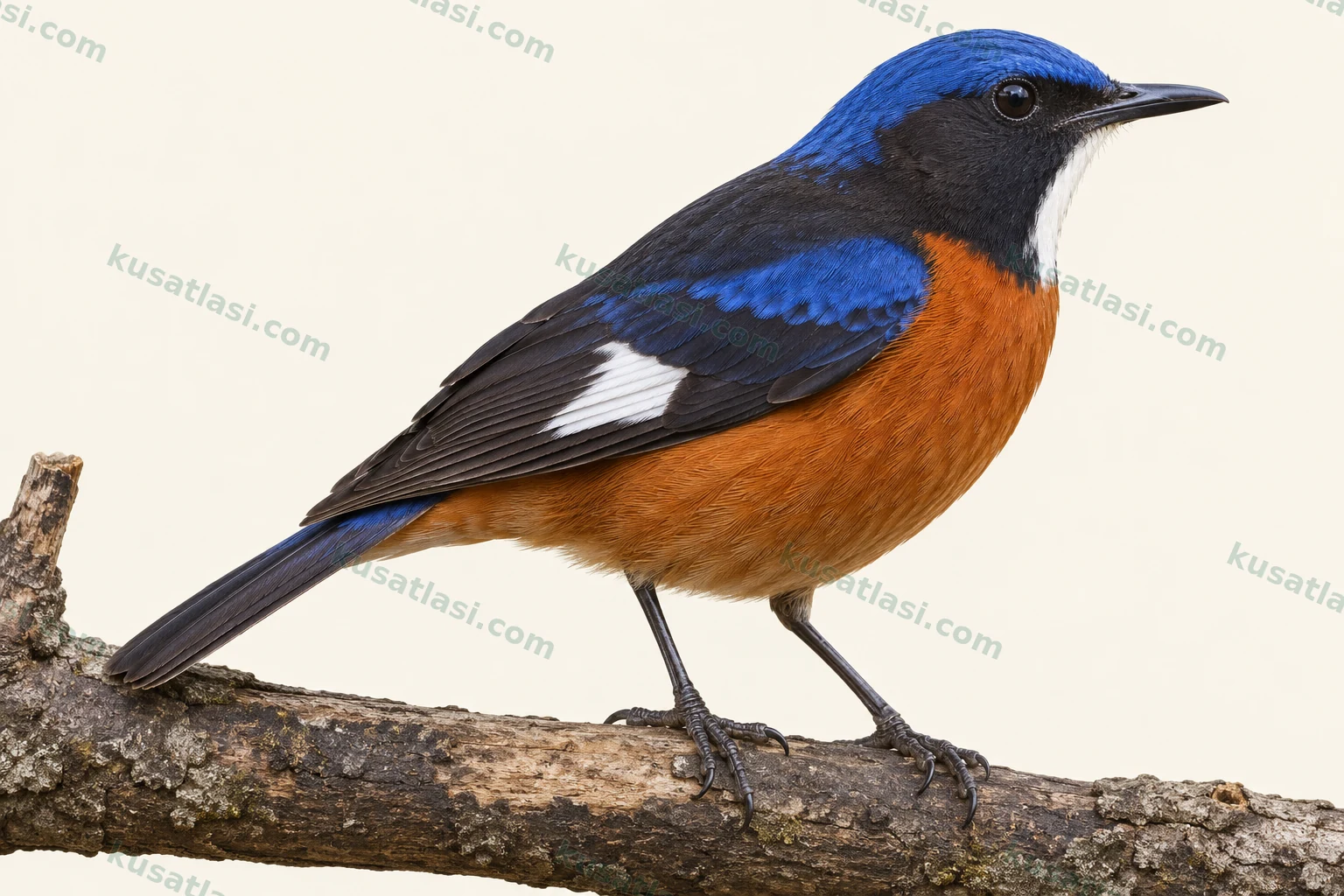
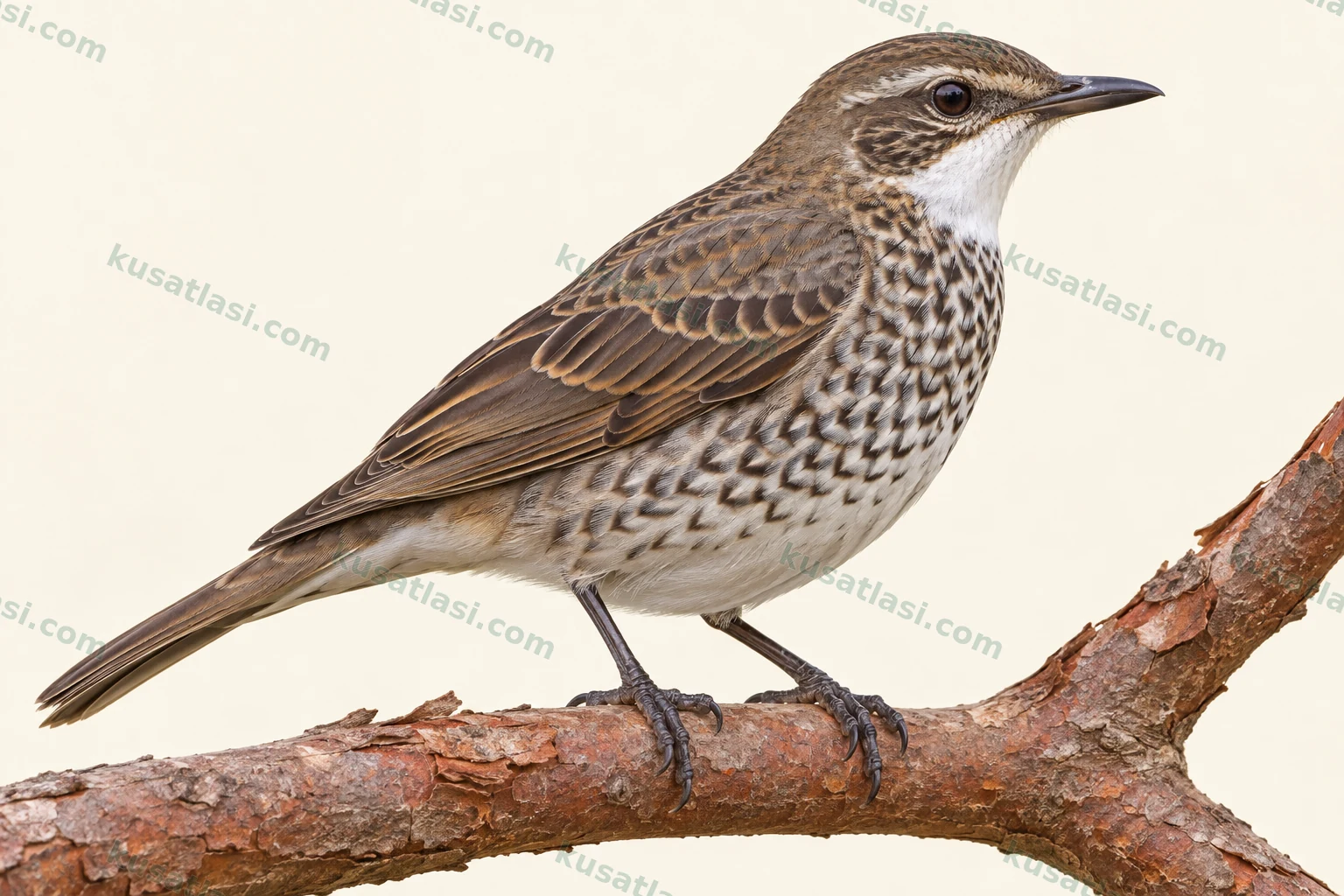
The male has a blue crown, orange underparts and a white wing patch. The female is brown with a scaled pattern.
Biometrics
Length
Male16–19 cm
Female16–19 cm
Shared species value
Wing length
Male9.7 cm
Female9.7 cm
Shared species value
Weight
MaleData unavailable
Female34–40 g
White-throated Rock Thrush
Breeding habitats in northeastern Asia and wintering habitats in southern China and Southeast AsiaObservation guide in its natural range
Look for three features together
Do not rely on a single featureLook for the blue crown, white wing patch and orange body together.
Examine scaling on the back and breast together with the lines on the face.
Compare male and female
 FemaleMale
The adult male has a blue crown and orange underparts. The female is brown and scaled. A scaled juvenile appearance does not establish sex.
Where to look in its natural range?
Watch forest shrubs, natural ground and the edges of quiet paths.
Breeding takes place from May to July in northeastern Asia. The birds winter in woodland farther south.
January
This calendar illustrates the northern breeding season. Exact migration dates are not shown. No verified regional date was given for this month. This does not imply local absence.
February
This calendar illustrates the northern breeding season. Exact migration dates are not shown. No verified regional date was given for this month. This does not imply local absence.
March
This calendar illustrates the northern breeding season. Exact migration dates are not shown. No verified regional date was given for this month. This does not imply local absence.
April
This calendar illustrates the northern breeding season. Exact migration dates are not shown. No verified regional date was given for this month. This does not imply local absence.
May
This calendar illustrates the northern breeding season. Exact migration dates are not shown. Breeding season in northeastern Asia.
June
This calendar illustrates the northern breeding season. Exact migration dates are not shown. Breeding season in northeastern Asia.
July
This calendar illustrates the northern breeding season. Exact migration dates are not shown. Breeding season in northeastern Asia.
August
This calendar illustrates the northern breeding season. Exact migration dates are not shown. No verified regional date was given for this month. This does not imply local absence.
September
This calendar illustrates the northern breeding season. Exact migration dates are not shown. No verified regional date was given for this month. This does not imply local absence.
October
This calendar illustrates the northern breeding season. Exact migration dates are not shown. No verified regional date was given for this month. This does not imply local absence.
November
This calendar illustrates the northern breeding season. Exact migration dates are not shown. No verified regional date was given for this month. This does not imply local absence.
December
This calendar illustrates the northern breeding season. Exact migration dates are not shown. No verified regional date was given for this month. This does not imply local absence.
Nest, egg and incubation
A cup nest of plant material is placed in a rock or tree cavity or among roots on a slope. A specialist account gives 4–8 eggs. It is unclear how widely that range represents typical clutch size. Incubation duration and the time young spend in the nest were not verified.
A fine sharp call and short tick-like notes. The song consists of repeated short whistled phrases.
Do not play recordings to attract birds. Observe quietly, especially near nests.
Species information
Quick identification
The White-throated Rock Thrush Monticola gularis is a migratory rock thrush of East Asian forests. In the male, the blue crown, orange underparts and white patch on the dark wing stand out together. The white throat patch that gives the species its name is small. It can be hard to see from a distance or when the bird lowers its head. The female is brown, with conspicuous scaling on the upperparts and breast. Looking only for a white throat can cause observers to miss the female in particular.
First look at the overall body pattern, then check the head and wing. A male seen from the side may show the wing patch clearly while concealing the white throat. From the front the reverse can occur. Failure to see the small white throat patch does not by itself rule out a male whose other features fit. Not every bird with a blue head and orange body is this species. Compare the wing, rump and face with those of other rock thrushes that may occur in the same area during migration.
General appearance and posture
This small forest bird looks full-bodied and short-necked. It can stay hidden in low shrubs, and the male may move to a more exposed perch to sing. In tree shade, the upperparts can look more uniformly dark than they are. To judge the colours, wait for the bird to turn naturally towards a lit edge rather than relying on one dark frame. How the posture affects the visibility of the body pattern is also part of identification.
In adult males the blue area on top of the head extends to the nape. The dark face and wings and the orange breast surround the blue. Pale edges on the upperpart feathers can be more apparent in non-breeding plumage. As the feathers wear, the same bird can look more cleanly patterned. This change is neither proof of a different species nor a definite age mark.
Males, females and young birds
Adult males and females have different basic plumage. The male shows a blue crown, prominent white wing patch and warm orange underparts. The white on the throat is restricted to the centre. The folded wing can cover parts of the back and rump. Do not confuse the pattern on the open wing with parts of the body hidden beneath the folded wing. The white wing patch and white throat patch are in different anatomical areas.
The female has dark scales on the brown back and whitish underparts. Examine the pale and dark lines of the face together. A pale area around the eye does not imply a broad, conspicuous pale crescent behind it. The Cornell account specifically notes that such a crescent is absent. Young birds can resemble females and be more strongly patterned. A first-winter male may resemble a non-breeding adult. Do not label every bird with a scaled breast as female or young. Check all the feather areas together.
Appearance in flight
The male’s white wing patch can stand out during a short movement. The wing angle affects how much of the orange body is visible. If the neck and throat are seen only briefly in flight, do not draw a firm conclusion about the shape of the white patch. When the bird lands again, compare the location of the wing patch, the blue on top of the head and the colour of the underparts.
The female’s overall brown appearance in flight is not distinctive by itself. Distant flight views that do not reveal the scaling or facial lines are generally insufficient for species-level identification. The species is migratory, but not every short flight is a migratory movement.
Voice and behaviour
A fine, sharp sound and short, tick-like notes have been reported. The song can consist of short, varied whistled phrases that repeat. A male singing from an exposed branch is easier to detect. At other times the bird can remain in low cover. Seeing the branch from which the song comes helps link the sound to the individual in view. Do not combine the notes of different birds sitting near each other into one long song.
The Hong Kong account describes the general call but notes that vocalisations have not been reported locally. That distinction does not mean the species is silent or vocalises equally often everywhere. A bird searching for food can be seen on the forest floor or by a path. A brief appearance in the open does not mean it spends all day there. Leave space for the bird to return to dense cover rather than following it to flush it repeatedly into the open.
Similar species
The Blue-capped Rock Thrush Monticola cinclorhyncha can show similar colours, particularly in the male. Check the White-throated Rock Thrush for the small central white throat patch, the wing patch and the body pattern together. A blue head alone is insufficient. Compare the facial lines and breast scaling of similar brown females carefully. Do not assume that an unseen mark is present or absent.
When comparing the bird with other rock thrushes such as Monticola rufiventris and Monticola solitarius, view the breast, back and wing pattern from the same angle. Do not rely on a single view of orange underparts. If the view is brief or the plumage looks like that of a female or young bird, recording it as a rock thrush without specifying the species can be appropriate. Then consider the image, call, season and natural range together. Older regional records cannot supply missing details of the individual’s appearance.
World distribution
It breeds in southeastern Siberia, northeastern China and the Korean region. In winter it moves to southern China and mainland Southeast Asia. Wooded hills in the north and winter woodland in the south serve different purposes in different seasons. A broad natural range on the map does not imply that it uses the entire area continuously or with equal frequency. Suitable forest patches matter.
Status in the natural range
The bird is difficult to see in many places. Around Shanghai it is recorded as a migrant along the coast and can be less frequent in urban parks inland. Hong Kong records are based on small numbers of birds in some winters. In Singapore it is treated as a rare visitor, and records are expected to undergo review by an expert committee. These distinct regional patterns do not amount to a claim that it is common everywhere.
Migration
It breeds in the north and winters farther south. The East Asian coast forms part of its passage habitat. The general distribution cannot establish where a particular bird stops or which forest patch it visits next. The seasonal guide describes northern breeding and southern wintering without giving a daily movement schedule for every bird. Shanghai’s autumn records illustrate passage. A single record at one site does not prove that a resident population occurs there throughout the year or that the bird bred there.
Breeding habitat
It breeds in wooded, sometimes rocky hills of northeastern Asia. Areas where trees and shrubs grow together are important. The name “rock thrush” does not imply that it lives only on bare rocks. Consider forest edges, openings and surrounding dense cover together. A male singing from an exposed branch does not establish that the nest is on that branch.
Nest site
A specialist account describes a cup nest of plant material in a tree or rock cavity, sometimes among roots on a slope. It gives a range of 4–8 eggs. Other compilations give lower summary values, so this range is not presented as a definite typical clutch for all populations. Incubation duration and the time young spend in the nest were not verified. Do not open the nest cavity or remove young birds for a photograph.
Daily habitat use
In winter the bird can be seen foraging on the forest floor in woodland and regenerating cover. Quiet path edges can offer good views. Its presence by a busy road does not mean it consistently chooses to be near people. Preserve the routes between open feeding areas and vegetation it can use for cover. Watching from one place without blocking the bird in low shrubs makes it easier to see its natural movements.
What does it eat?
Its diet consists largely of invertebrates. The specialist account cites stomach contents from China that included insects and spiders. Those samples do not show that the proportions are the same in every season. Describing the bird as insectivorous does not mean it eats only one group of insects. The size and shape of visible prey can be noted, but small unidentifiable items should not be assigned a definite species name.
How does it forage?
It has been reported foraging on the forest floor and along paths and quiet roads. It may pause to inspect movement on the ground. An observer can see what it picks up only from a suitable angle. A brief spell on the ground does not show that it catches all prey the same way. When following a bird entering and leaving scrub, note where it lands and the height at which it searches separately. Foraging and carrying nesting material can look alike. The bird’s next movement can help distinguish them. Preserve natural ground and cover instead of putting out artificial food.
The name comes from a small throat patch
The first features to stand out on the male are the blue head and orange body. The white patch that gives the bird its name is small and is not visible from every angle. A species name does not necessarily describe its most visible feature. When the white patch disappears as the bird turns its head, the pattern has not changed. Seeing the same individual from several angles helps with identification.
The female is patterned too
The female’s brown appearance is neither colourless nor uniform. The scales on the back and breast and the lines on the face form a detailed pattern when seen closely. The absence of a blue crown and bright orange body does not make the female a different species. Similar young rock thrushes can also have scaling. One feature on the breast does not determine age and sex.
Regional records describe different stages
Shanghai is a passage area, Hong Kong has winter records and Singapore evaluates rare visits. Finding the same species in these three places does not mean it follows the same annual cycle in all three. The date and the bird’s behaviour matter when documenting a record. A rare record should not on its own be used to draw a breeding boundary.
The context of the numbers matters
The specialist account giving egg numbers and the summary values from a broad life-history compilation can differ. An egg count from one nest, a summary from multiple samples and a broad range are different kinds of information.