

World Birds IUCN statusLC · Least ConcernGlobal IUCN category. BirdLife v10 (2025); taxon matching: AviList 2026 / IOC 15.2; checked: 29.10.2026. The list year is not the species assessment date. Source and method · BirdLife OrderPasseriformesPasserines FamilyCinclidaeCinclidae
White-capped Dipper
Cinclus leucocephalus
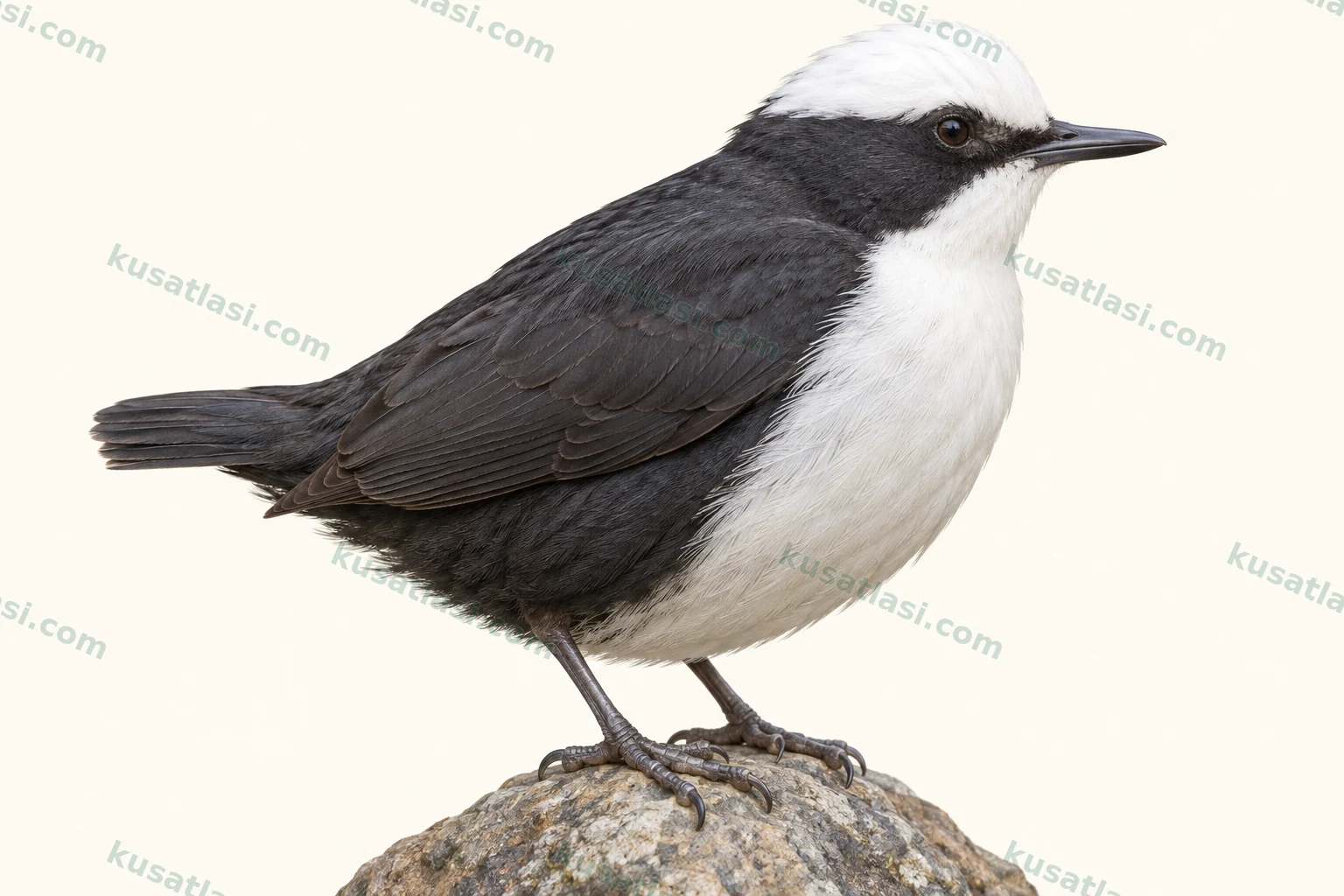
A dipper of fast Andean streams, combining a white crown and dark face with a plump, short-tailed body.
Biometrics
Length
Male15–17 cm
Female15–17 cm
Shared species value
Wing length
Male8.56 cm
Female8.56 cm
Shared species value
Weight
Male44 g
Female43.9 g
White-capped Dipper
The Venezuela–Bolivia Andes and northern Colombia’s Santa Marta mountainsObservation guide in its natural range
Look for three features together
Do not rely on a single featureA dark face separates the white crown from the pale throat.
Short tail; the amount of white on the back and underparts varies geographically.
Forages in fast rocky streams; white areas show in brief wing openings.
Compare male and female
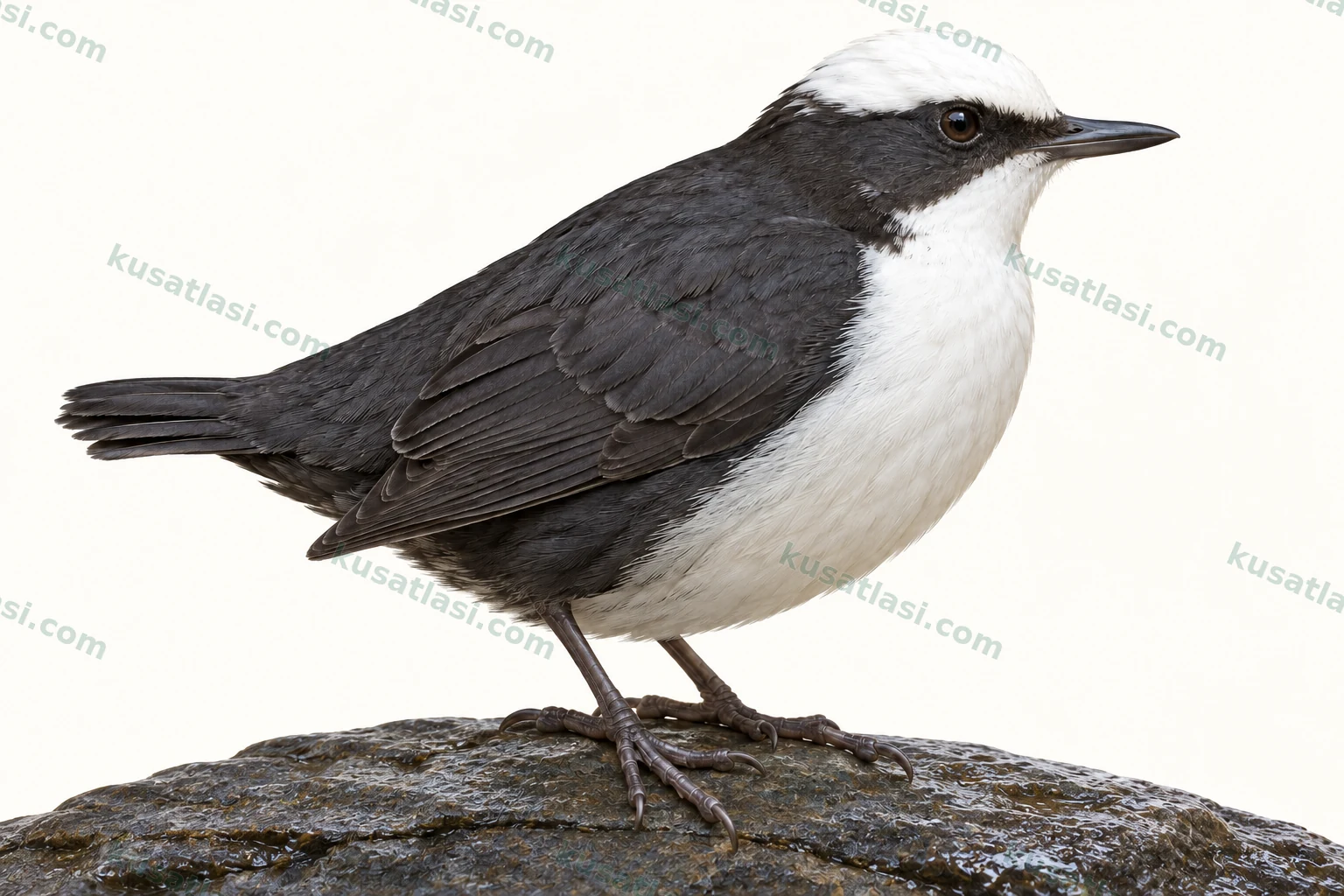 FemaleMale
Adult males and females have similar plumage. Geographic differences in the amount of white on the back and body are not sex differences.
Where to look in its natural range?
Rocky mountain streams, bank walls and hollows sheltered from floods.
The calendar shows only original regional nest records, not one breeding season for the entire Andes.
January
Generally resident; a shared long-distance migration route was not verified. No verified regional date specific to this month was provided; this does not imply local absence.
February
Generally resident; a shared long-distance migration route was not verified. No verified regional date specific to this month was provided; this does not imply local absence.
March
Generally resident; a shared long-distance migration route was not verified. No verified regional date specific to this month was provided; this does not imply local absence.
April
Generally resident; a shared long-distance migration route was not verified. No verified regional date specific to this month was provided; this does not imply local absence.
May
Generally resident; a shared long-distance migration route was not verified. No verified regional date specific to this month was provided; this does not imply local absence.
June
Generally resident; a shared long-distance migration route was not verified. No verified regional date specific to this month was provided; this does not imply local absence.
July
Generally resident; a shared long-distance migration route was not verified. Ecuador, Río Guajalito: 1998–1999 activity and chick records around the same nest area.
August
Generally resident; a shared long-distance migration route was not verified. Ecuador, Río Guajalito: 1998–1999 activity and chick records around the same nest area.
September
Generally resident; a shared long-distance migration route was not verified. Ecuador, Yanayacu: original dated nest records at different stages. Peru, San Pedro / Cusco: 2009–2010 active nests; two nests were destroyed by floods.
October
Generally resident; a shared long-distance migration route was not verified. Ecuador, Yanayacu: original dated nest records at different stages. Peru, San Pedro / Cusco: 2009–2010 active nests; two nests were destroyed by floods.
November
Generally resident; a shared long-distance migration route was not verified. No verified regional date specific to this month was provided; this does not imply local absence.
December
Generally resident; a shared long-distance migration route was not verified. Ecuador, Yanayacu: original dated nest records at different stages. Peru, San Pedro / Cusco: 2009–2010 active nests; two nests were destroyed by floods.
Nest, egg and incubation
The nest is mossy, with a side entrance and dry bamboo leaves in the inner cup, in a rock hollow beside water. Usually two white eggs; a one-egg record also exists. Full incubation duration was not found. A Peruvian chick was monitored for 21 days; 25 ± 2 days is an estimate of the total nestling period, not an exact directly observed duration.
A sharp, high call, especially in flight; a longer musical song.
Do not play recordings to attract birds; observe quietly, especially near nests.
Species information
Quick identification
White-capped Dipper Cinclus leucocephalus is a bird of fast-flowing streams in the Andean mountains from Venezuela to Bolivia. Its plump body, short tail and white crown stand out first. A dark facial area separates the white crown from the pale throat. The amount of white elsewhere varies geographically; identical white bellies and dark backs should not be expected in every individual.
Watch the head, tail and body shape together when a bird stands on a stream rock. Reflected water light can make dark feathers look paler. Rather than one pale patch, assess the white crown and dark face pattern, short tail and use of rocky streams. The absence of another dipper over most of its natural range makes identification easier, but streamside presence alone is not species identity.
General appearance and posture
In the nominate form of Peru and Bolivia, the upperparts are dark brownish-black, the throat pale and the belly and flanks dark. Pale feathers on crown and nape may carry fine dark markings. The more northerly form leuconotus has a white patch in the middle of the back and more extensive white below. Rivularis around Santa Marta in northern Colombia is paler grey in appearance. These differences are not assigned to male and female labels.
The bill is black, the eye brown and the feet greyish. The tail looks short against the plump body. Standing on a waterside rock, short walks among rocks and flights to another rock may all be observed. Looking large in a photograph is not a sex measurement: proximity, posture and lens angle can alter apparent size.
Males, females and young birds
Adult males and females have similar plumage. Sex is not reliably determined at a distance from the amount of white or shade of dark areas alone. In particular, calling a white-backed bird female and a dark-backed one male when comparing geographic forms is wrong. Geographic variation within a taxon and sex differences are separate matters.
The pale head of a young bird may have stronger dark streaks; streaking on the breast and pale edges to dark feathers may be visible. Pale feather edges on the wing may create a pattern unlike an adult's. A newly departed nestling and a more developed young bird need not look identical. A single feather edge does not yield an exact age in days.
Original nest monitoring in Peru recorded feather development, darkening of the bill and the appearance of dark head markings in one chick. This is a development record for a particular individual, not an unchanging photographic calendar for all chicks at other elevations or of different geographic forms. Instead of approaching a nest to estimate age, watch the parents' natural feeding movements from a distance.
Appearance in flight
Flights along streams reveal a plump, short-tailed body. The pale crown often stands out against the dark body. When the wing opens, a white area in the inner flight feathers appears; this is a different identification point from the white on the head. Assessing a brief open-wing view and a perched bird's folded wing as the same pattern can mislead.
In Peru, foraging birds were directly observed sometimes opening their wings for a few seconds, showing the white area and then putting their heads into the water. This movement need not initiate flight. Nor should every wing opening be called courtship. Its function was not established by the study; association with foraging alone does not prove that the movement flushes prey.
Voice and behaviour
The call is short, sharp and high-pitched, and may be heard particularly in flight. Expert accounts also describe a longer musical song. The sharp call must be considered alongside the sound of running water: following the source along the stream may help when the bird is unseen, but failing to hear it through the noise does not establish absence.
It may occur alone or in pairs. In the original Peruvian observation, individuals flew along the stream and used particular rocky feeding sites in succession. This local daily movement pattern is not a species-wide territory size defined in kilometres. Two individuals on the same flight line cannot be declared members of the same pair merely from their direction.
It is not assumed to behave like other dippers that submerge the whole body while foraging. Reaching the head into water from rocks and moving in shallow water are better documented for this species. Young birds slipping from rocks into flowing water were also observed in Peru. An accidental fall is not evidence of regular diving to obtain food.
Similar species
South American forms of Sayornis nigricans may also occur beside fast rocky streams. Their heads are dark, tails project more conspicuously and white may show on wing edges. The White-capped Dipper's white crown, plump body and short tail form a separate combination. White on the wing alone or standing beside water does not distinguish these birds.
The main confusion is mistaking the species' own geographic forms for separate species or sexes. The northern white-backed appearance with extensive pale underparts differs from the darker-bodied Peru–Bolivia appearance. Forcing them into one fixed colour template without knowing a photograph's locality is inappropriate. Young birds' streaked heads and breasts are also assessed separately from the adult description.
World distribution
It follows Andean streams from western Venezuela and Colombia through Ecuador and Peru to Bolivia. Northern Colombia's Santa Marta mountains hold a separately considered geographic form. This distribution does not include every South American river. Occurrence along a mountain chain does not mean every intervening valley or all high plateaus are suitable habitat.
Status within its natural range
The current global category is Least Concern. Its dependence on rocky streams makes local water and bank conditions important to protect. An account from Ecuador's Río Guajalito reports a pair using the same nest area for two years before disappearing. An oil spill and trout introduction were discussed as possible causes; one local event does not provide a decline rate for the entire population.
Original nest and behaviour studies come from different elevations in Peru and Ecuador. Conducting one study at a particular elevation does not establish an absolute lower or upper boundary elsewhere. The map restricts its existing estimate and licensed sample records to the verified Andean geography; not every coloured cell is certain breeding habitat or continuously occupied.
Movements
The species is generally considered resident. Some expert accounts regard non-breeding changes in elevation as possible, but a common seasonal route for every individual has not been verified. A short flight along a stream may be daily foraging; describing it as migration between mountains would be wrong. No monthly route or regular intercontinental migration line is added without supporting tracking data.
Breeding habitat
Fast mountain streams with rocky banks are the basic environment. The Peruvian nest study took place at San Pedro station in the Manu area of Cusco, at about 1,450 metres elevation. Ecuadorian nests were found in humid montane forest and in more disturbed secondary vegetation. Beyond surrounding trees, stream flow, rock walls and shelters matter too.
Nest site
The nest is an enclosed, side-entrance structure beside water in a rock crevice or sheltered hollow. Moss forms the exterior and dry bamboo leaves line the inner cup; a mud base was also recorded in Peruvian examples. Two white eggs are generally reported, though a one-egg nest was observed in Ecuador. Full incubation duration was not verified. A chick was monitored for 21 days in Peru, but as exact hatching and nest-departure dates were unknown, the total nestling period was estimated at 25 ± 2 days.
Daily space use
Rocks in and beside streams provide feeding and resting sites. Bank vegetation may also be used for foraging. Rising water can affect nests: floods destroyed two in Peru. Approaching an active nest entrance may interrupt the bird's narrow route along the stream. Observe from the bank at a safe distance; do not enter the current to follow the bird.
What does it eat?
Aquatic invertebrates are the main foods; it may also take small terrestrial animals along the bank. Insects and green plant fragments were reported in a chick-feeding record from Peru. Five stomach samples in another Peruvian study contained small stones, plant material and remains of various small organisms. These do not show annual food proportions throughout the range. Stones should not be listed as nutritious prey, nor should plant fragments given to a chick be used to infer a mainly plant-based diet.
How does it forage?
It walks among rocks, explores shallow water and takes food by reaching its head into water from a rock. The usual underwater swimming of other dippers is not assumed for this species. Brief wing openings revealing white wing areas were seen during foraging; possible functions in exposing prey or balance remain unconfirmed.
Capture method matters when interpreting stomach samples. The original study discusses the possibility that food had been digested while a bird waited in a net. Few insect remains in a sample do not prove it ate no insects that day. Direct feeding observations and material remaining in a sample are complementary but different evidence.
The white wing area is not seen only in flight
Direct field observations in Peru's Cajamarca region recorded birds foraging among rocks briefly opening their wings and showing the white area. The movement can be seen and recorded; its function has not been explained with equal certainty. Flushing prey or balancing on slippery rocks are possibilities requiring research. Separating an observed movement from its cause illustrates a basic distinction in behavioural science.
The nest roof and inner cup are not made of identical material
A detailed examination of Ecuadorian nests described the mossy enclosed exterior separately from the tightly leaf-lined inner cup. Dry bamboo leaves need not cover every inner wall: they concentrate in the lower part containing the eggs. Other birds can build similar moss nests, so shape alone does not identify the species reliably. The adult using it must be seen.
Monitoring time is not the full development period
In the Peruvian study, incubation behaviour at one nest was followed for 14 days before a flood destroyed it before hatching. That number cannot be used as the full incubation period. Following one chick for 21 days likewise does not mean exact hatching and nest-departure dates were known. The researchers' estimate of total duration must be given separately from directly observed days.
Members of one family can use water differently
A feather study of dippers compared breast feathers of five species. Repelling a water droplet and resisting water entry into feathers under pressure cannot be treated as the same property. The White-capped Dipper's frequent use of head-reaching into water to feed shows why a single diving account for the entire family would be incomplete.