

World Birds IUCN statusLC · Least ConcernGlobal IUCN category. BirdLife v10 (2025); taxon matching: AviList 2026 / IOC 15.2; checked: 29.10.2026. The list year is not the species assessment date. Source and method · BirdLife OrderPasseriformesPasserines FamilyDicaeidaeDicaeidae
Pale-billed Flowerpecker
Dicaeum erythrorhynchos
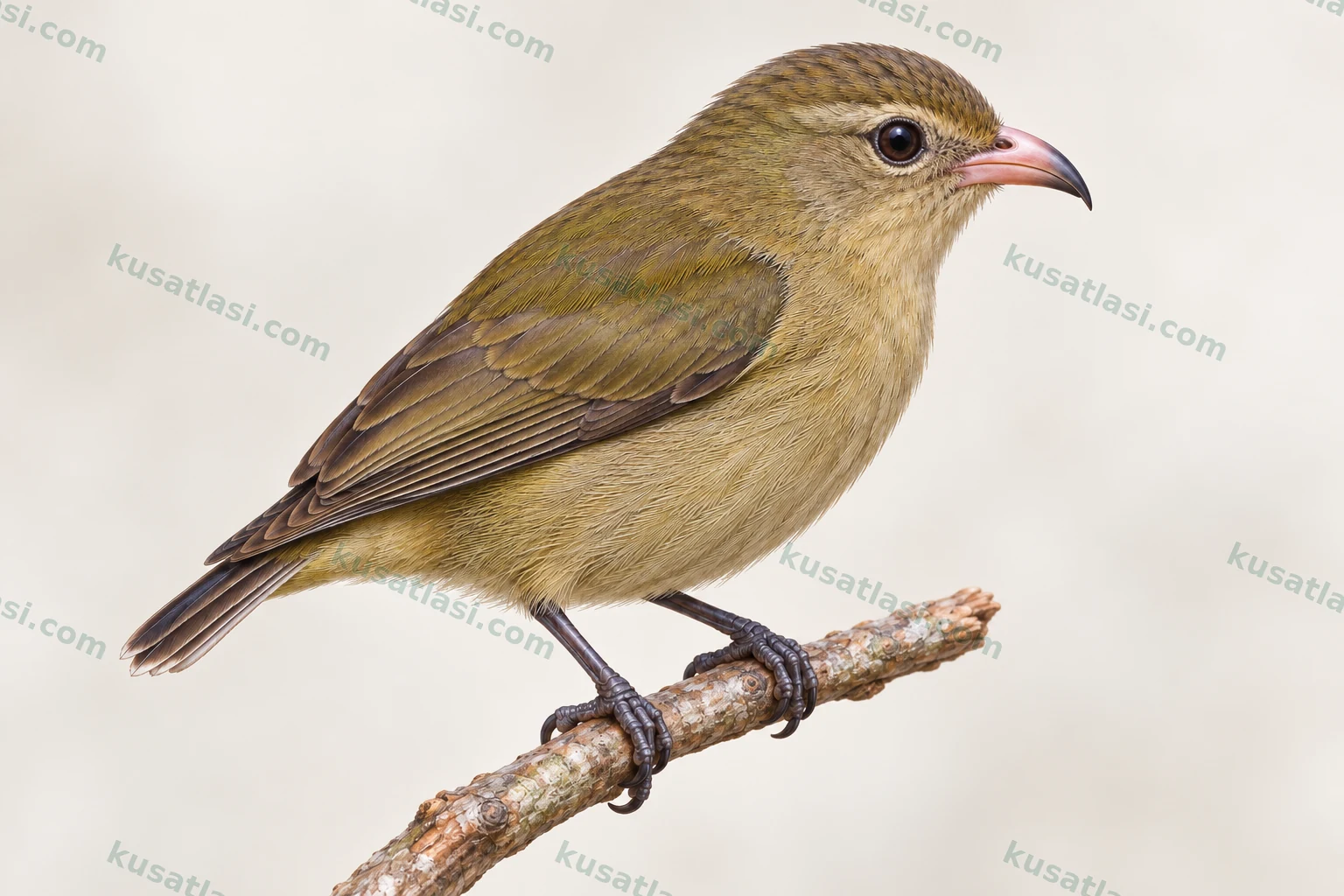
See the bill together with the plain head and pale underparts.
Biometrics
Length
Male8 cm
Female8 cm
Shared species value
Wing length
Male4.84 cm
Female4.84 cm
Shared species value
Weight
Male4–8 g
Female4–8 g
Shared species value
Pale-billed Flowerpecker
Indian subcontinent and western Myanmar; including Sri LankaObservation guide in its natural range
Look for three features together
Do not rely on a single featureSee the bill together with the plain head and pale underparts.
Watch mistletoe clumps and fruit-bearing branches in gardens.
One sound or an unclear flight view does not identify it conclusively.
Compare male and female
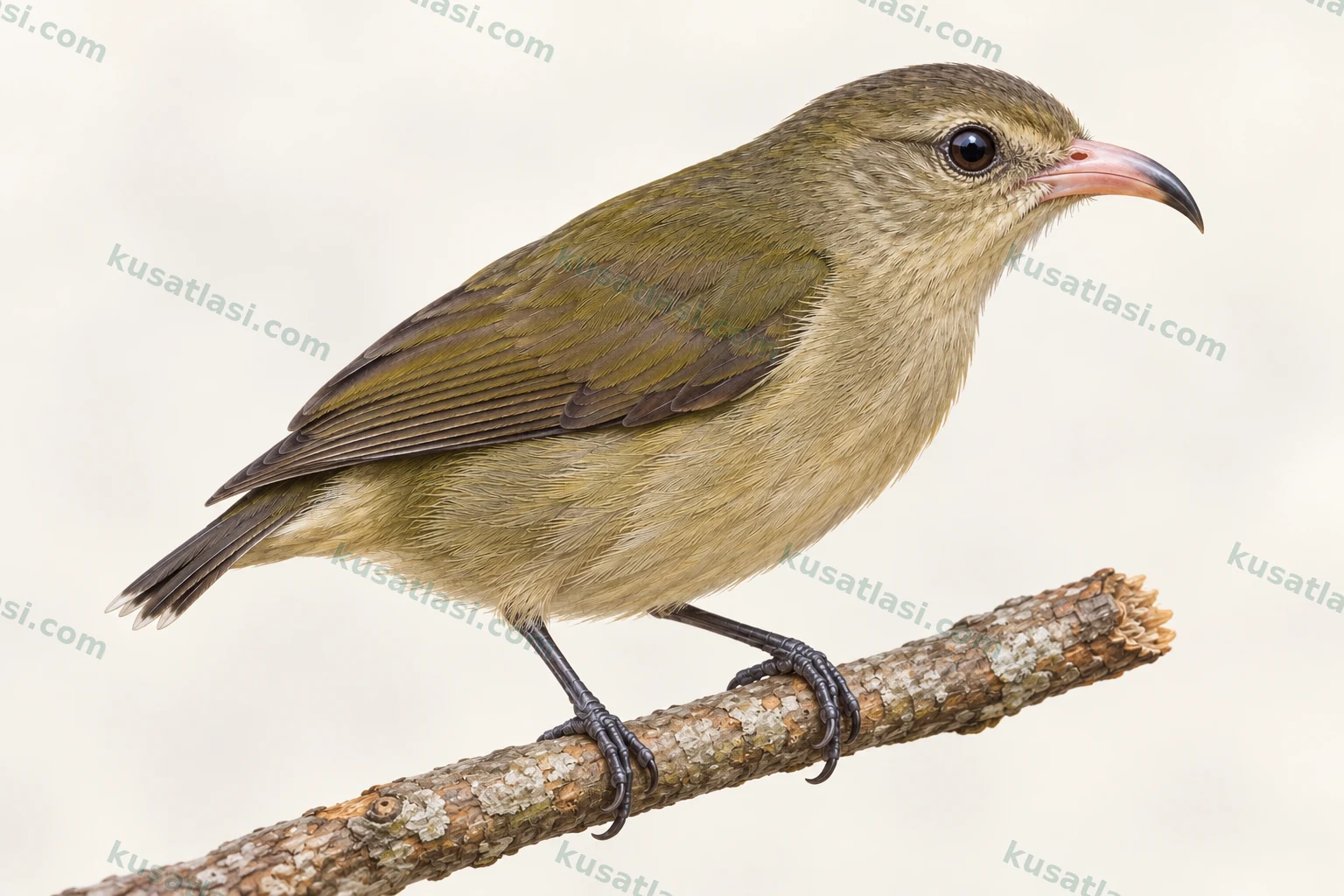 FemaleMale
Watch mistletoe clumps and fruit-bearing branches in gardens.
Where to look in its natural range?
In wooded areas and fruiting gardens, look for the pale curved bill; compare the short calls with similar species.
The species is generally resident. The sources checked do not give verified monthly breeding and movement boundaries across the entire range; a local flower-visiting period is not a general breeding calendar.
All months: Monthly data unverified.
January
February
March
April
May
June
July
August
September
October
November
December
Nest, egg and incubation
Specialist handbook: a pouch nest attached to a branch, with a side entrance; 2–3 white, unmarked eggs. Incubation and nestling periods were not verified; incubation by both sexes is described only as possible.
Rapid short repeated calls and a high-pitched trilling song. Short calls may recall similar species; seeing the bill of a silent bird matters.
Do not play recordings to attract birds; observe quietly, especially near nests.
Species information
Quick identification
The Pale-billed Flowerpecker is a very small passerine of South Asian trees and fruiting gardens. It has plain olive-brown upperparts and greyish-white or slightly dingy underparts. Identification particularly requires seeing the short, curved, pale flesh-pink bill. Do not look for a showy red back or a conspicuous breast patch. A small body glimpsed among leaves is insufficient to separate similar flowerpeckers with certainty. Cornell specifically stresses seeing the bill of a silent bird where similar species occur.
General appearance and posture
Plain olive-brown upperparts and pale, unshowy underparts make up the overall appearance. Greyish-white or dingy olive shades below may look different under varying light; the colour impression from one frame is not identification by itself. No bold head pattern is expected. The bill area looks pale pinkish, close to flesh colour; depicting every part as equally bright pink or expecting a crimson bill from its name is incorrect. The specialist handbook describes the upper mandible as pale horn-brown, with the gape and most of the lower mandible flesh-pink.
Cornell emphasises the bill’s curved, full shape in distinguishing this small, plain bird. This does not mean separating it from another species by bill thickness alone. For example, the Thick-billed Flowerpecker’s bill may not look very thick in every view; its throat and underpart streaks also need assessment. In this bird, record the head, bill and unpatterned underparts together. If a leaf or fruit conceals the bill, that view does not confirm its colour.
Mistletoe clumps, fruiting trees and leafy upper tree parts are suitable places to observe it. The bird may appear briefly, then move to another branch or tree. Constant movement does not mean that the food taken with every peck can be seen. Approaching a fruit, actually swallowing fruit and reaching towards a flower are recorded as different behaviours. A garden sighting does not imply that it consumes every food people provide.
Males, females and young birds
The specialist ornithological account describes males and females as similar in appearance. Pale-billed birds are not all labelled male, nor greyer ones female. Shared figures therefore appear for both sexes on the cards. This is not a claim that all males and females have the same length or weight; it reflects the sources’ shared values. Nor is the nominate subspecies’ mean weight generalised into an unvarying weight for every individual, including Sri Lankan birds.
The handbook describes nominate juveniles as adult-like but greyer above and below. Their bill is recorded as orange-yellow and the mouth interior bright orange. These details were not transferred from juveniles of other flowerpeckers. Even so, a single bill shade changed by distant lighting does not determine age conclusively. Whole plumage and observation conditions are considered together; age remains open where detail is insufficient. Not every age detail of the nominate is transferred without evidence to Sri Lanka’s ceylonense subspecies.
Appearance in flight
The species appears as a small, plain silhouette on short flights between trees. Cornell describes it as often noticed in flight by its rapid short calls. These can recall Nilgiri and Plain Flowerpeckers; a call heard in flight does not automatically confirm a bird whose bill was unseen. No independent flight key reliably distinguishing the species by upperwing or underwing pattern alone was verified. A clearer view of bill and body can be awaited.
Four specimens were recorded as from India, and one as having an unknown country.
Voice and behaviour
Short, rapidly repeated calls may be heard in flight and during feeding movements. The song includes a thin, high-pitched trilling series. Similar species’ short calls can sound alike, so a single syllable is not relied upon. Examine the natural sound sequence, bill view and region together. A short flight call and a longer song series are different vocal types; specify which was heard.
In the Eastern Ghats scientific study, the bird was observed taking nectar from Woodfordia floribunda flowers while approaching from a branch, with bill and forehead contacting the flower’s reproductive structures. The researcher assessed this in relation to pollination. A flower visit is different from claiming equal pollination success in every plant. Retain the study’s location and period; one study does not establish the proportions of all the bird’s foods.
Similar species
1. The Nilgiri Flowerpecker, Dicaeum concolor, is similarly small and plain. The specialist handbook notes its dark bill and pale eyebrow in comparison. Other populations covered in older broad species accounts must not be confused with species treated separately today. This bird’s pale bill must be seen well; similarity of calls alone does not complete the separation.
2. The Plain Flowerpecker, Dicaeum minullum, may look similar with olive-brown upperparts and pale underparts. Cornell describes its unmarked face and thin call sequences. Where the species occur together, seeing a silent bird’s bill and obtaining a suitable record of its natural song matter; an unclear photograph of a small bird is not completed with a definite name.
3. The Thick-billed Flowerpecker, currently Pachyglossa agilis, appears as Dicaeum agile in older sources. Assess streaked throat, pale undertail and conspicuous underpart streaking in some subspecies together. Bill thickness may not be obvious in every view. Its nesting, diet or measurement account is not transferred to this bird.
Global range
The Pale-billed Flowerpecker’s natural range is in and around the Indian subcontinent: current taxonomy includes India, Sri Lanka, southern Nepal, Bhutan, Bangladesh and western Myanmar. It is not restricted to India. The nominate erythrorhynchos is recognised on the mainland and ceylonense in Sri Lanka. Their ranges are not merged with those of the similar Nilgiri or Plain Flowerpeckers. Taxonomic identity is kept separate from older combined species accounts.
Status within its natural range
The global conservation category is Least Concern. This does not prove that every local tree, garden or population shares the same conditions. The species may occur in wooded areas, open forests, fruiting gardens and around some settlements. Cornell excludes very dry, extremely wet or very high environments from its general description; this qualitative account establishes no exact elevation limit or rainfall threshold. A garden with fruiting trees may be a suitable observation site, but a sighting is not automatically breeding evidence.
Seasonal movements
The species is generally considered resident; no regular intercontinental migration route was verified. Moving between food-bearing trees is not the same as long seasonal migration. The sources examined do not provide a detailed monthly movement calendar for the entire range. No definite country crossings or routes in kilometres are therefore drawn. Local flowering and fruit use are kept distinct from a claim that all birds move in the same direction on the same dates.
Breeding habitat
Open areas with trees and forest and garden surroundings are among the environments where the species feeds and may nest. Its association with tree-growing plants such as mistletoe and with fruiting branches matters. A sighting in a city garden does not make tree cover unimportant. Nor is the elevation of a scientific study where it visited a flower the limit of its entire breeding range.
Nest site
The specialist handbook describes a small pouch woven onto a branch among leaves, with a side entrance. It gives a height of about 3–12 metres and 2–3 white, unmarked eggs; an observation from Manbhum in Bihar stated that three eggs were more frequent than two. This local detail is not turned into one clutch size for every population. Incubation duration was undetermined in the source itself, and the nestling period could not be verified either.
Daily habitat use
Watch leafy tree parts and branches bearing food. The specialist account states that male and female take part in nest building and feeding young; both incubating is only described as possible, so is not made certain. Observers can watch natural visits without opening nests, approaching the branch or calling birds out with playback.
What does it eat?
Fruit and flower nectar form the basis of the feeding account. The specialist ornithological account describes the association with mistletoe berries, while Cornell mentions its interest in Muntingia calabura fruit. The handbook says chicks receive substantial amounts of peeled mistletoe berries; this is compiled specialist knowledge, not a new controlled nestling-feeding experiment. The Eastern Ghats study directly recorded it taking Woodfordia floribunda nectar. That does not show an identical nectar proportion in every season.
How does it feed?
The bird moves among fruiting and flowering branches. The Woodfordia study observed it perching and reaching to flowers for nectar, with bill and forehead touching reproductive structures. Movement among different shrubs is interpreted in the context of pollination. The same study has no visit record for this species in its fruit and seed columns; findings for other birds listed as seed dispersers are not transferred here. A peck seen at a distance does not prove food identity or daily quantity.
Details of a flower visit
Raju’s 2005 paper is based on a Woodfordia floribunda study in the Eastern Ghats during 2003–2004. The Pale-billed Flowerpecker was among the regular nectar visitors. The table gives 52 visits for the species during one full day’s observation of ten selected flowering branches. This does not mean 52 different birds, the whole species’ daily consumption or 52 percent of its food. Visit frequency at the study site is evaluated with its sampling method.
Pollination and seed transport are different
Bill and forehead contact with the flower was recorded during nectar collecting. The paper also examines birds dispersing seeds from fruits, but those results concern mynas and bulbuls. The flowerpecker’s fruit columns contain dashes. Thus, seed dispersal in the paper’s title does not prove that this bird dispersed Woodfordia seeds. Feeding and plant relationships are kept specific to bird and plant.
An unknown duration in a pouch nest
A flowering branch may be revisited by the same individual or by another bird. Without distinguishing individuals separately, the study’s visit count is not converted into a bird count.