

World Birds IUCN statusLC · Least ConcernGlobal IUCN category. BirdLife v10 (2025); taxon matching: AviList 2026 / IOC 15.2; checked: 29.10.2026. The list year is not the species assessment date. Source and method · BirdLife OrderPasseriformesPasserines FamilyNectariniidaeNectariniidae
White-flanked Sunbird
Aethopyga eximia
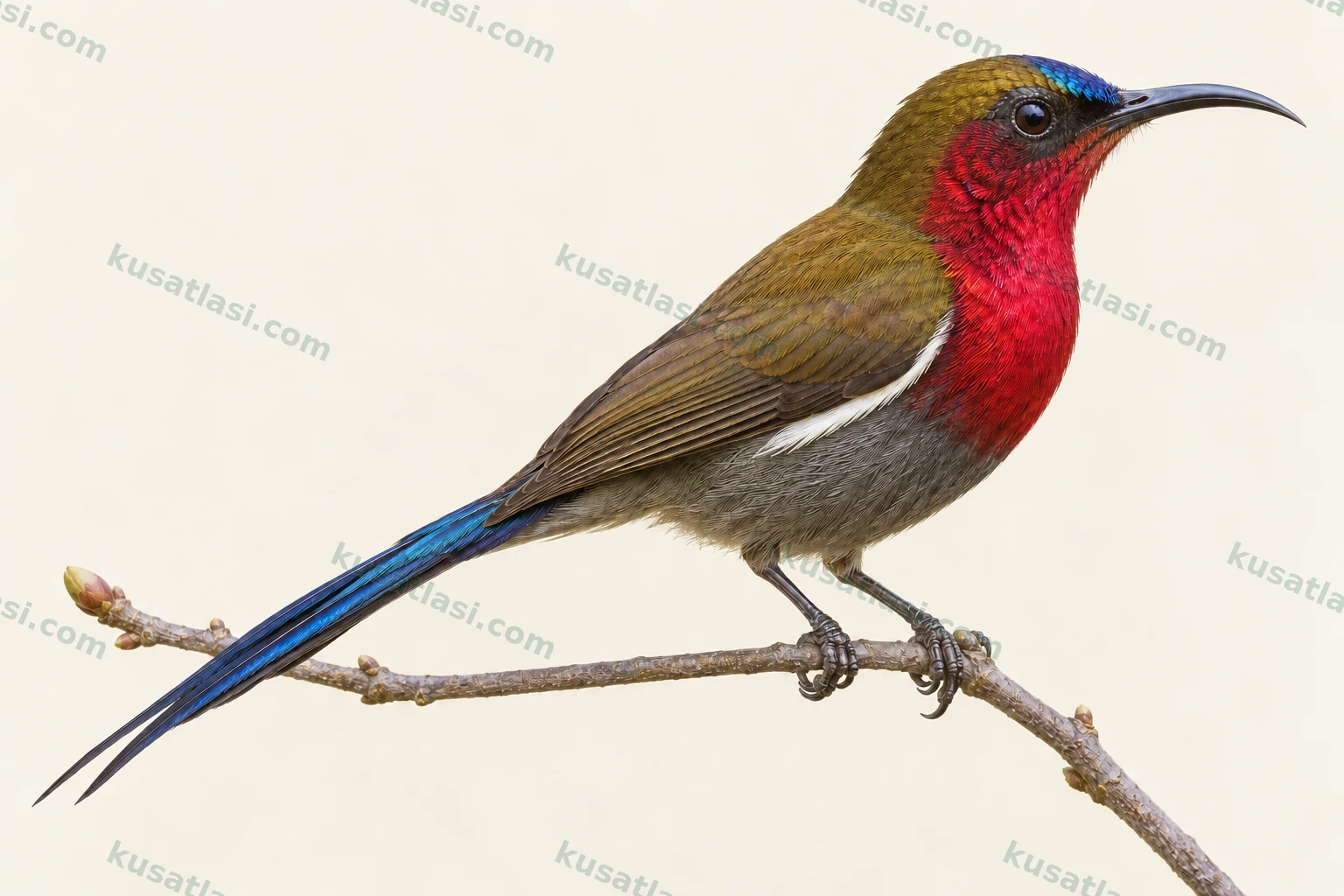
A sunbird of Java's mountains. The male has a red throat and breast, dark belly and glossy forehead. Both sexes show a pale side stripe.
Biometrics
Length
Male13 cm
Female13 cm
Shared species value
Wing length
Male5.33 cm
Female5.33 cm
Shared species value
Weight
MaleData unavailable
FemaleData unavailable
White-flanked Sunbird
Java, IndonesiaObservation guide in its natural range
Look for three features together
Do not rely on a single featureCheck the contrast between the red breast and dark belly.
Assess the pale stripe together with the back, head and tail.
Compare male and female
 FemaleMale
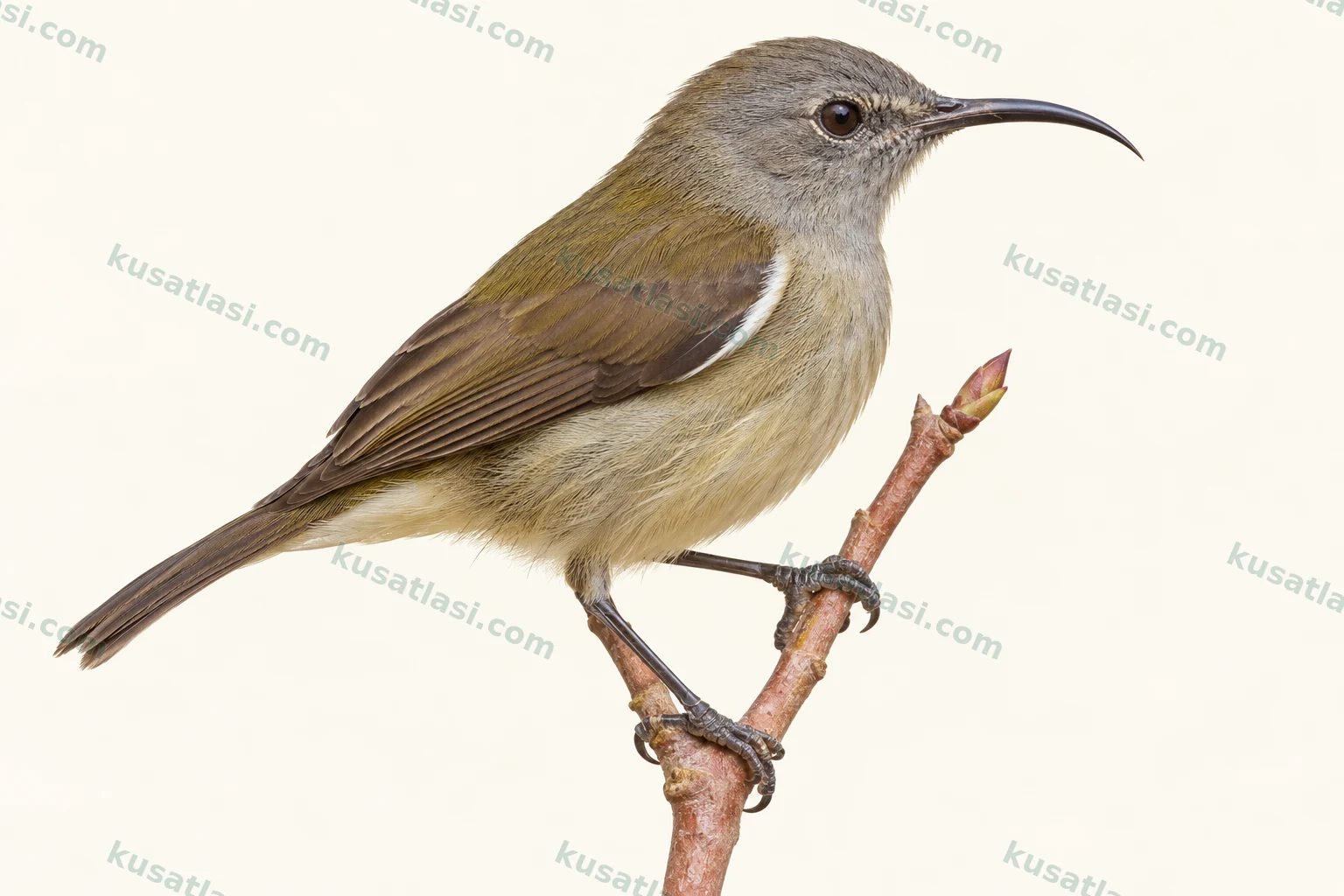
The bright male has a long tail. The female has a grey head, pale belly and brown tail. No definitive key for young birds was verified.
Where to look in its natural range?
Mountain forest, forest edges and high-elevation scrub.
Resident on Java. Exact monthly egg-laying limits for the species were not verified.
All months: Resident. Exact monthly breeding limits are unknown. No verified regional date is given for this month, which does not imply local absence.
January
February
March
April
May
June
July
August
September
October
November
December
Nest, egg and incubation
Older observations describe a nest made with soft moss and a plant lining. Clutch size, incubation duration and the duration of young development were not verified.
Short series of calls, ringing repetitions and a sound that drops rapidly in pitch.
Do not play recordings to attract birds; observe quietly, especially near nests.
Species information
Quick identification
The White-flanked Sunbird Aethopyga eximia is a small sunbird of Java's highlands. In the adult male, look for a rose-red throat and breast, a dark smoky-grey belly, a bright blue tail and a blue-green sheen on the forehead. The back is olive-brown. The female looks plainer, with a grey head, a light buff belly and a brown tail. A white stripe along the side of the body is a useful additional mark in adults of both sexes.
The red does not cover the male's entire underside. Look for the boundary between the red breast and the darker belly. The glossy patch on the head also changes with the viewing angle. A forehead lit from the front can look very different from one in shade. For identification, consider where the red lies, the colour of the belly, the tail and the side stripe together with the sheen. The island where the bird occurs naturally is a useful starting point when ruling out similar sunbirds.
General appearance and posture
The slender bill and small body stand out when the bird is around flowers. The tail is a prominent part of the male's outline. In the female, the grey head contrasts with the warmer olive-brown back. A branch or wing can hide the side stripe. When the bird turns its head, the bill may also look shorter in a photograph. An apparent length from one angle is not a measurement.
Look below the canopy as well. Cornell's account notes that the bird also actively searches for food in the lower forest layers. A bird waiting on a flowering branch looks different from one moving rapidly inside the forest. Red flowers nearby can affect how you perceive the colour of the breast. Distinguish a photograph's overall colour balance from the plumage colour and, if possible, look at the same area again in different light. The sheen on the head does not have a single fixed colour like a painted surface.
Males, females and young birds
The male's red throat and breast and dark belly form a striking adult pattern. The bright, shield-like forehead patch and blue tail complete it. The olive-brown back shows that the sheen on the head does not extend over the whole upper side. If you see only the head, wait until you can check the rest of the pattern before making a firm identification. In shade, the red area can look almost dark brown.
The female's grey head, pale belly and brown tail distinguish her from the brighter male. The white side stripe occurs in both sexes. Many plain-looking sunbirds have a grey head, so check the head colour, back, underparts, side stripe and tail on the same individual. A pale-looking bird is not necessarily a female. Distance, lighting and feather condition can all affect the view.
No reliable species-specific guide to appearance at each juvenile age was verified. A female-like bird cannot therefore be assumed to be a juvenile, and the age at which a male acquires its colours should not be assumed. The adult plates provide clear views for comparison. A moulting bird, however, can be missing tail feathers or show uneven patches of colour. Stronger evidence would be needed to treat these as signs of a new geographic form or species. Record species, sex and age separately and leave uncertain fields open.
Appearance in flight
The male's long tail can stand out on a short flight between branches. A distant, long-tailed outline without a view of the breast or head does not establish the identification. A passing female with a plainer tail is harder to identify this way. Once the bird lands, a view of the side stripe, head colour and underparts can complement the brief view in flight. Moving from one flower to another branch does not show seasonal migration.
A momentary position in front of a flower does not establish how the bird feeds throughout the day. You can record its direction of flight and the plant it lands on, but one flight does not give a fixed daily route. If only the tail catches the light in a dark setting, leave the identification open until you have a clear enough view for comparison.
Voice and behaviour
Cornell's species account describes short sequences of calls, more ringing repetitions and a sound that drops rapidly in pitch. A written imitation in Turkish cannot convey every detail of an actual recording. If other birds are on the same branch, try to see which one makes the sound. Matching the sound to the bird can help you notice the plainer female near a bright male. Hearing a call alone does not establish sex or breeding condition.
In East Java in January 2013, a female was reported carrying pieces of a fern leaf. She flew away with the piece and returned, but the nest was not seen. The authors interpreted the behaviour as possible collection of nesting material. They did not report a completed nest or egg laying. Seeing the material on the branch and seeing where it was placed are separate observations. Do not enter dense cover to follow the bird or expose a possible nest site.
Similar species
Aethopyga mystacalis also occurs on Java and should be considered in local comparisons. Being a sunbird or having a patch of red is insufficient. For eximia, check the red throat and breast, dark grey belly, sheen on the forehead and side stripe on the same individual. A key to the bright male should not be applied to a female. Sunbirds in the same flowering tree need not all belong to the same species.
Red or glossy males of other Aethopyga species can look similar in photographs. Their natural ranges do not always overlap with Java. Verify the scientific name and where the photograph was taken before comparing colours. Aethopyga christinae is a different species.
Global range
The species is endemic to Java, Indonesia. It inhabits mountain forest and scrub. The island does not offer the same habitat throughout. Low coastal towns differ markedly from high forest belts. The current taxonomic account identifies Java's mountain habitats and scrub as the species' natural setting. A photo or sighting from another island should be added to the range only after the taxon and the circumstances of the record have been verified.
Status within its natural range
The bird can be encountered from foothill forest to low scrub above the treeline. Voous's historical specimens came from Mount Slamat and Mount Lawoe. On Lawoe, the species was seen in both primary and secondary forest. These historical observations do not tell us the current population size or show that the bird is equally abundant across Java. A sighting on a forest edge with flowering plants does not demonstrate that the species can adapt to the complete removal of extensive forest.
Movements and migration
The species accounts reviewed classify it as resident. No regular seasonal route between Java and other islands was verified. Local movement as flowering changes is insufficient to draw a long arrow between records. The map shows the Java area and approximate verified records. National borders do not mark the limits of habitat. Records at different elevations also do not show which route an individual took on any given day.
Breeding habitat
Its natural habitat includes mountain forest, forest edges and low scrub above the treeline. It can also be seen in the lower layers of the forest. A single flowering tree does not define breeding habitat. The sites used for feeding and nesting should not be assumed to be the same. Java's different mountains cannot be reduced to a single fixed elevation.
Nest site
Based on older nest observations, the 2014 Kukila review describes a nest made with soft, pale green moss and a soft plant lining. In January 2013 a female was seen carrying a piece of fern, but a nest could not be confirmed. A typical clutch size and reliable durations for incubation and young development could not be verified for this account. Values for another sunbird are not used here.
Daily use of habitat
Consider both flower resources and forest layers when looking for the bird. The Merapi study recorded the plants it visited, but that does not show that it stayed in one tree all day. If you see a bird carrying nesting material, do not follow it into cover and pull the vegetation aside. Cutting flowers or ferns to improve the view disturbs the natural setting the bird uses.
What does it eat?
In a university study on the southern slopes of Merapi, this species visited food sources on Erythrina variegata, Calliandra calothyrsus, Schima wallichii and Spathodea campanulata. The list describes the plants used in that study. It does not show that the bird depends on these four plants throughout Java. The shares of nectar and other foods in its overall diet were not verified. A visit to a flower does not always show what the bird took from it.
How does it forage?
It actively searches for food among flowers and leafy branches, including below the forest canopy. Record the arrival at a plant, the spot the bill is directed towards and the food actually taken as separate observations. Activity at certain hours in the Merapi study does not establish a daily timetable for the whole year. Two sunbirds beside each other may use the same flowers at different rates. Shaking a branch or putting artificial food in front of the bill prevents you from assessing natural feeding behaviour.
The sheen changes with the viewing angle
The blue-green forehead patch and blue tail of the male look different as the direction of the light changes. Instead of applying a fixed colour sample to every photograph, check where the colours are on the bird. The sheen seen together with the rose-red breast and dark belly makes for a more reliable comparison than a single blue spot. Assess the female's plainer appearance separately.
Carrying material is different from a nest record
The female carrying fern pieces around Ijen in January 2013 was observed directly. Because the nest was not seen, collecting material for a nest remains a possible explanation. Marking the month in which one bird carried material as the egg-laying month for the whole species would lose this distinction. Evaluate records of nests, eggs and young on their own evidence.
The same flowers, different use
The sunbirds studied at Merapi did not use the same list of plants in the same ways. Visits by eximia to several plants show the diversity of local food sources. The particular place and period studied do not provide dietary percentages for all of Java. Verifying the bird's identity as well as the plant visited makes such observations more informative. A count of birds on a day with abundant flowers does not directly indicate the annual population size.