

World Birds IUCN statusVU · VulnerableGlobal IUCN category. BirdLife v10 (2025); taxon matching: AviList 2026 / IOC 15.2; checked: 29.10.2026. The list year is not the species assessment date. Source and method · BirdLife OrderPasseriformesPasserines FamilyPasseridaePasseridae
Abd al-Kuri Sparrow
Passer hemileucus
Assess them together with the male’s small throat patch and pale wing line.
Biometrics
Length
Male13–14 cm
Female13–14 cm
Shared species value
Wing length
Male6.95 cm
Female6.95 cm
Shared species value
Weight
Male20–25 g
Female20–25 g
Shared species value
Abd al-Kuri Sparrow
Abd al-Kuri IslandObservation guide in its natural range
Look for three features together
Do not rely on a single featureAssess them together with the male’s small throat patch and pale wing line.
Examine the pale face and pale eyebrow together; age matters too.
Rocky, scrub-covered slopes and the surroundings of some villages.
Compare male and female
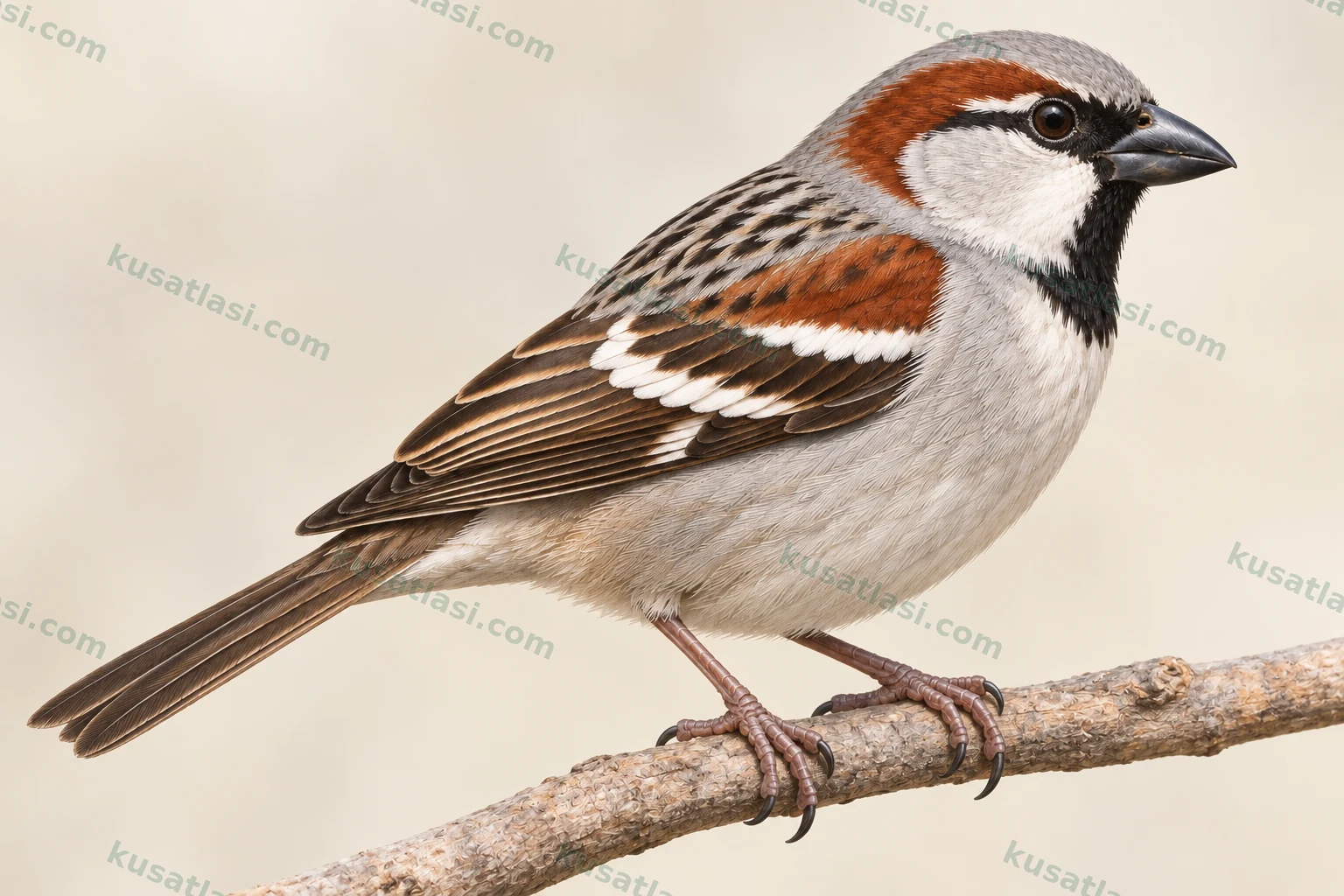
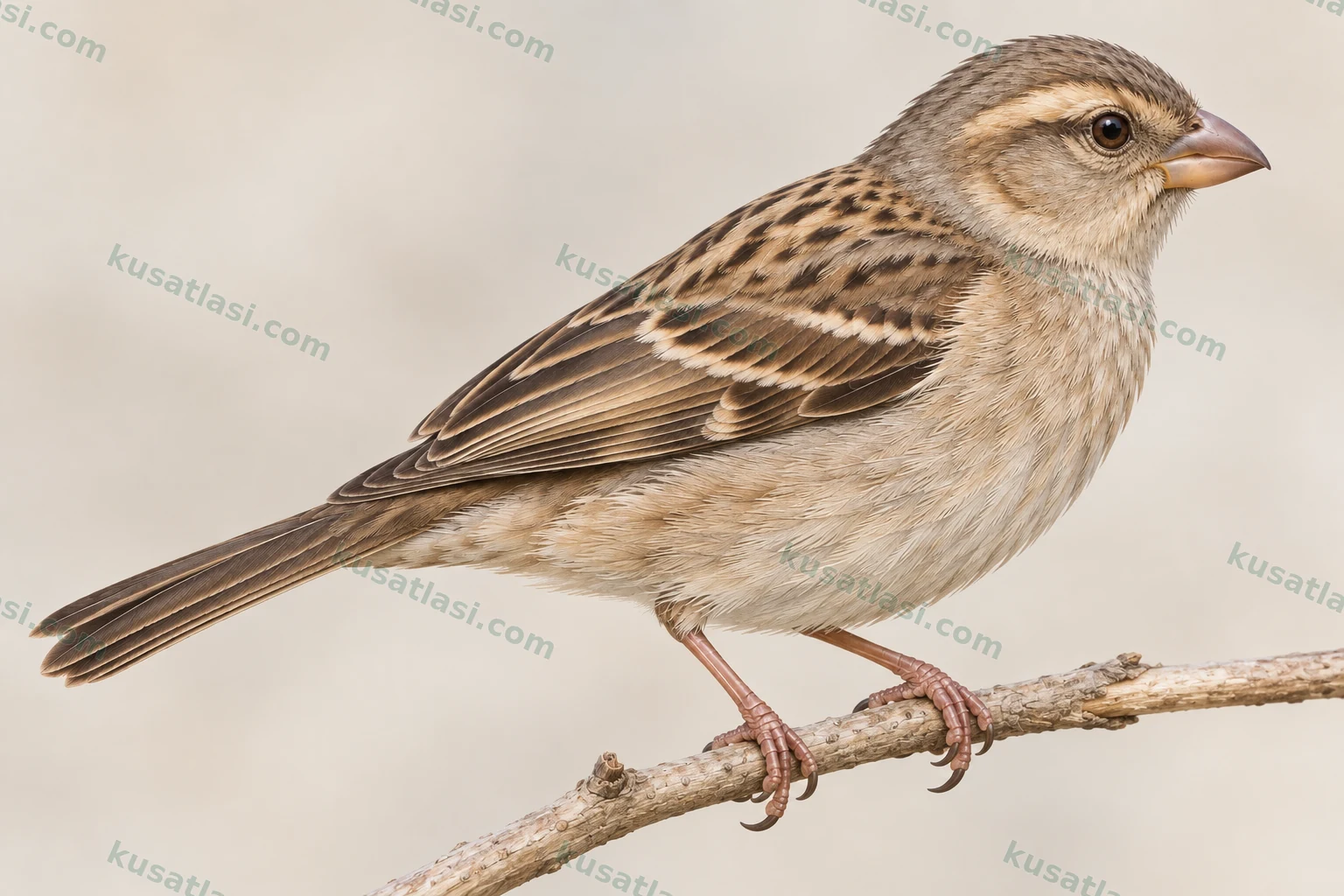 FemaleMale
Examine the pale face and pale eyebrow together; age matters too.
Where to look in its natural range?
Watch dry, rocky, scrub-covered slopes and village surroundings. Examine the head, throat, back and pale wing line together without frightening the bird.
The species is resident. The specialist species account gives November–April as the breeding period; primary sources contain a record of a young bird in late March. Breeding evidence is not equally strong for every month.
All months: Monthly data unverified.
January
February
March
April
May
June
July
August
September
October
November
December
Nest, egg and incubation
The specialist species account associates breeding with November–April, reporting dry-grass nests in cavities in rocks, structures or trees, sometimes among thorny branches, and 2–5 eggs, most often 3. The evidence for these details is a specialist species account; the primary papers examined do not provide species-specific incubation and fledging periods established through continuous monitoring. There is a record of a young bird in late March, but this single record does not determine the entire calendar. Watch from a distance without blocking nest entrances or frightening the parents.
Cornell’s species account describes short sparrow-like chirps and calls repeated in a slow sequence. No criterion allowing definitive separation from similar Passer species by sound alone was verified. A real bird recording whose identity and licence have been separately checked has not yet been added.
Do not play recordings to attract birds; observe quietly, especially near nests.
Species information
Quick identification
The Abd al-Kuri Sparrow is a small, pale sparrow endemic to Abd al-Kuri Island in Yemen’s Socotra archipelago. Its scientific name is Passer hemileucus. The crown, nape and rump are greyish; the back has dark streaks on a brown ground. Assess the male’s small black throat patch together with its pale cheeks and almost white underparts. The conspicuous pale line on the folded wing is formed by the white tips of the coverts. A single black patch or the island’s name alone is insufficient for identification; sex, plumage condition and the place where the bird was seen also matter.
General appearance and posture
The body is small and compact, and the short bill has a thick base suited to holding seeds. It lacks a hooked tip that would give the head and bill the appearance of a large bird of prey. In the male, chestnut and black areas around the face contrast with the pale cheeks; the back streaks are clearer from above. The pale underparts are useful in comparison with its close relative, the Socotra Sparrow. However, white may look grey in shade, and very bright sunlight may wash out dark areas; seeing the different colour areas in the same light provides a more reliable comparison.
Kirwan’s examination of museum specimens found the dark back streaks to be narrower and less dark than in the Socotra Sparrow. This does not mean that the back is entirely unstreaked. The conspicuous white tips of the male’s median wing coverts are also part of the comparison. The pale wing line seen from the side and the underside of the wing are not the same anatomical area. As the bird’s posture may conceal some feathers, a feature that cannot be seen must not be assumed absent.
Males, females and young birds
The adult male is distinguished by its black throat patch and more pronounced chestnut tones. The black on the throat does not form a bib extending over all the underparts; the pale breast and belly remain conspicuous. The female lacks the male’s black throat patch. Her face is paler, and the pale eyebrow is particularly distinct behind the eye. The underparts are very pale; slight warm tones may appear on the breast and flanks. Rather than identifying a female simply as “smaller than the male”, examine the face, throat and upperpart pattern together.
A young bird photographed in late March is direct evidence of breeding on the island. However, this single date does not define the entire breeding season or the appearance of young birds at every developmental stage. The scientific sources examined do not provide a complete identification key for young birds. Consequently, not every individual without a black throat patch can be identified with certainty as an adult female. Age assessment requires feather development, behaviour and reliable comparative images, rather than the paleness of one colour alone.
Appearance in flight
In flight, the small sparrow silhouette, pale underparts and dark flight feathers may be noticeable; details of the head and throat disappear as distance increases. For identification, it is more useful to recheck the head pattern and the back and wing markings when the bird perches. The pale wing line of a perched bird need not appear as an unbroken band of the same size when the wing is fully spread. Flight direction, light and the condition of the coverts affect its visibility.
Folded-wing length was taken with a ruler using a specified measurement method in the museum study. It is inappropriate to calculate wingspan from these values or convert the apparent width seen in flight into centimetres. As no source-verified feature was found that conclusively separates it from the Socotra Sparrow on the basis of a single pale flash in flight, identification is completed using several features seen on the ground or when perched.
Voice and behaviour
Cornell’s species account describes short, sparrow-like chirps repeated in a slow sequence. This vocal description alone does not conclusively distinguish it from other Passer species. Kirwan’s 2008 study specifically noted the lack of vocal data; that gap at the time must not be interpreted as meaning that no vocal description exists today. This section on the bird’s natural call describes behavioural information provided by the source.
The species occurs both in scrub on dry rocky slopes and around some settlements. Early researchers’ observations of shy birds away from settlements and later records around villages are different observations. They are not interchangeable and do not, by themselves, prove that behaviour has changed over time. Failing to find the bird in one part of a small island does not demonstrate its absence from the entire island; repeated observations that also record habitat are more meaningful.
Species that may be confused
The Socotra Sparrow Passer insularis is a close relative; sparrow records from Socotra, Samha and Darsa are not automatically records of the Abd al-Kuri Sparrow. Museum comparisons found the Socotra Sparrow to have greyer underparts, a more extensive male throat patch, darker back streaks and less conspicuous pale feather tips on the wing. In the Abd al-Kuri Sparrow, the very pale underparts, smaller male throat patch and conspicuous white tips of the wing coverts are useful together. As season and individual variation may alter the throat patch, this patch alone is not used. Since older sources may have treated the two taxa as one species, the photograph’s location and the taxon to which the text refers are checked separately.
World distribution
The species’ verified natural range is restricted to Abd al-Kuri Island. The island belongs to Yemen and lies in the western part of the Socotra archipelago, in the sea between the Horn of Africa and Socotra’s main island. “Socotra archipelago” does not mean that the same sparrow occurs on all its islands. The closely related Passer insularis on Socotra, Samha and Darsa and Passer hemileucus on Abd al-Kuri are separate taxa. Although the country is Yemen, colouring the whole Yemeni mainland would misrepresent the species’ natural range.
Status within its natural range
Records within the island include rocky, scrub-covered slopes and village surroundings. Porter and Suleiman’s 2013 publication reports an estimate of about 400 pairs, stating that most birds were in or near villages. This figure is not presented as a current census result. A historical estimate from a restricted range and the present state of the population are separate questions. The species is listed as VU, Vulnerable; that category alone does not mean that the same number of individuals is lost every year or that a group seen in one village represents the entire population.
Migration journey
The specialist species account describes it as resident. No regular migration route between islands or continents was verified in the sources examined. Short movements between food and cover within the island are not described as long-distance seasonal migration. A photograph’s country label, especially when an illustration or old museum plate is involved, may not provide evidence of the natural locality where the bird was photographed. Before a new range record is accepted, the date, island, identification and nature of the record are examined together.
Breeding habitat
Dry rocky slopes, sparse scrub and the surroundings of some villages are the species’ known habitats. Historical researchers reported birds on shrub-covered slopes scattered with limestone blocks. Later island surveys also recorded an association with settlements. These observations do not show that the species depends exclusively on buildings or no longer inhabits natural slopes; protecting both habitats matters.
Nest site
The specialist species account associates the dry-grass nest with rock crevices and cavities in structures or trees; it also describes more openly placed nests among thorny branches. The same account gives a clutch of 2–5 eggs, most often 3. These are details reported by the species account; because no continuously monitored incubation period was found in the primary field studies examined, a period from another sparrow is not added. Observe without approaching nests or blocking their entrances.
Daily space use
Birds using open ground to feed may move into shrubs or onto other perches to rest. Their occurrence in a village does not prove that every feeding site is supplied by people. Recording ground feeding, the vegetation used and safe perches together improves understanding of habitat requirements on the small island.
What does it eat?
The specialist species account states that food consists mainly of grass seeds and the seeds of small plants. The sources examined contained no detailed dietary-proportion study repeated across seasons for this species. It would therefore be inappropriate to transfer another sparrow’s nestling diet, proportion of insects eaten or preferred seed list directly to this bird. The thick-based bill fits the appearance of a seed-holding sparrow; it does not, by itself, explain the full variety of foods.
How does it forage?
The bird selects and picks up small food items from the ground with its bill. Records from scrub-covered slopes and settlement surroundings suggest that feeding is not confined to one setting; not every record is a direct feeding observation. Nor does a group’s presence beside a rubbish tip or village reveal what is being eaten. If a food item is actually seen being taken into the bill, that event can be recorded. Physiological claims about the amount of water obtained from food, or that the bird never drinks, are not presented as established facts without verified species-specific measurements.
One archipelago can hold two different sparrows
The Abd al-Kuri Sparrow was long treated as the same species as the Socotra Sparrow. Kirwan’s 2008 museum study demonstrated plumage and measurement differences, and a 2010 genetic study also reported differences in two mitochondrial genes. Similar-looking birds on a group of islands do not necessarily all belong to the same taxon. The genetic study also states that the timing and route of the first arrival on the islands cannot be explained conclusively without sampling all close relatives.
Villages and natural slopes both matter
Early expeditions recorded the birds on scrub-covered slopes; later observations also found them around villages. Retaining the place and date of observations prevents the two extreme generalisations that “this species always stays away from people” or “it lives only in villages”. Different historical records alone do not demonstrate a change in habitat preference over time.
A small island carries a large conservation responsibility
A range restricted to one island makes monitoring subpopulations and habitats in different places valuable. Seeing many birds in one village does not prove that the species is secure across the whole island. Current numbers must be established through new, dated research with a defined method.
It also matters which slopes and village surroundings an island-wide census covers. A historical estimate alone does not measure increases or decreases in later years; results from different dates are compared together with their methods.