

World Birds IUCN statusLC · Least ConcernGlobal IUCN category. BirdLife v10 (2025); taxon matching: AviList 2026 / IOC 15.2; checked: 29.10.2026. The list year is not the species assessment date. Source and method · BirdLife OrderPasseriformesPerching birds FamilyPloceidaePloceidae
White-headed Buffalo Weaver
Dinemellia dinemelli
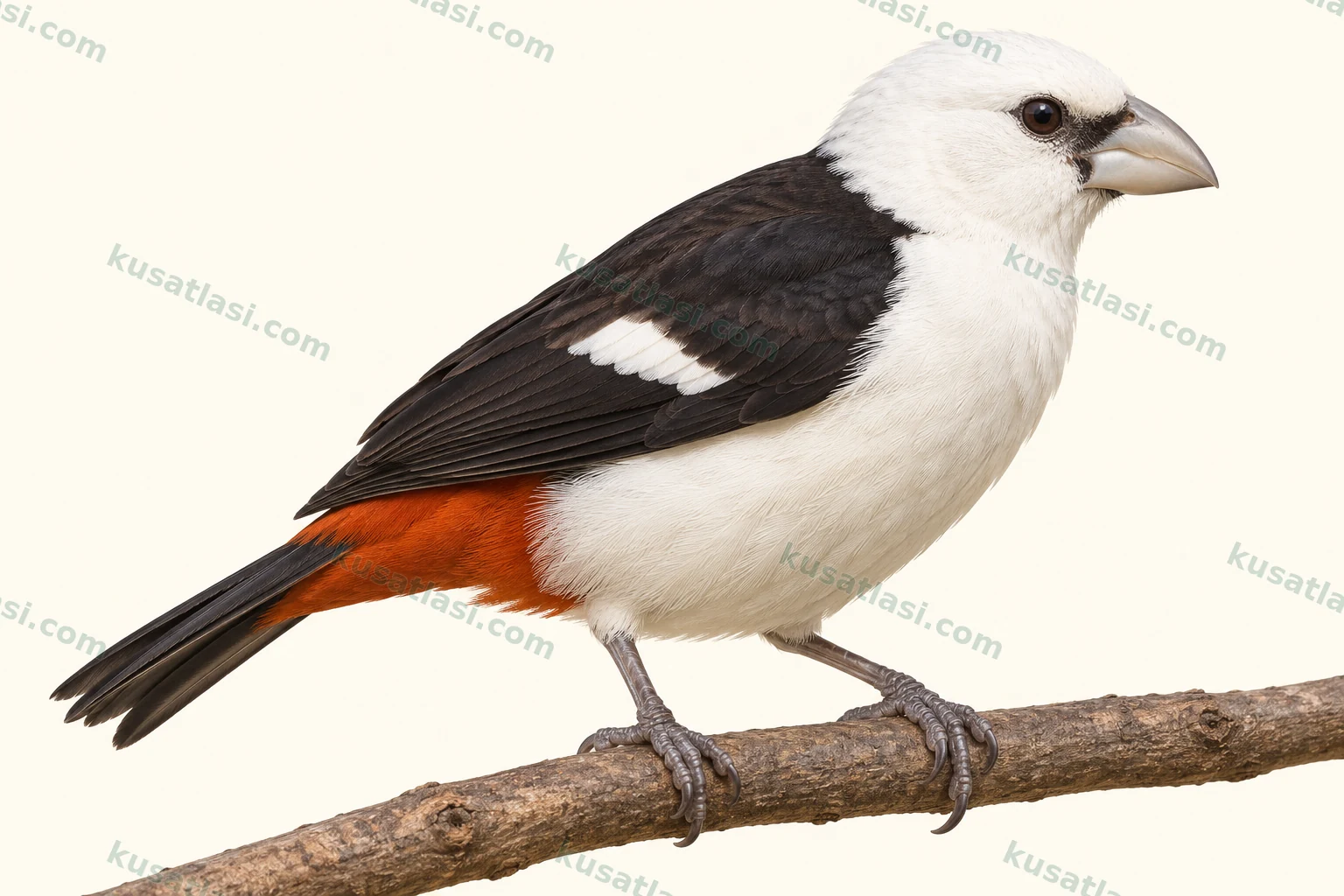
A social weaver of East Africa’s dry thorn woodland, recognised by its white head, dark wings and rufous-orange area around the tail.
Biometrics
Length
Male18 cm
Female18 cm
Shared species value
Wing length
Male11.71 cm
Female11.71 cm
Shared species value
Weight
Male71 g
Female57–80 g
White-headed Buffalo Weaver
South Sudan–Ethiopia–Somalia, Kenya, northeastern Uganda and TanzaniaObservation guide in its natural range
Look for three features together
Do not rely on a single featureAdults have a white head, dark skin around the eye and a strong, conical bill.
Pale underparts and dark upperparts; rufous-orange rump and undertail.
A conspicuous white area in flight; similar plumage in adult males and females.
Compare male and female
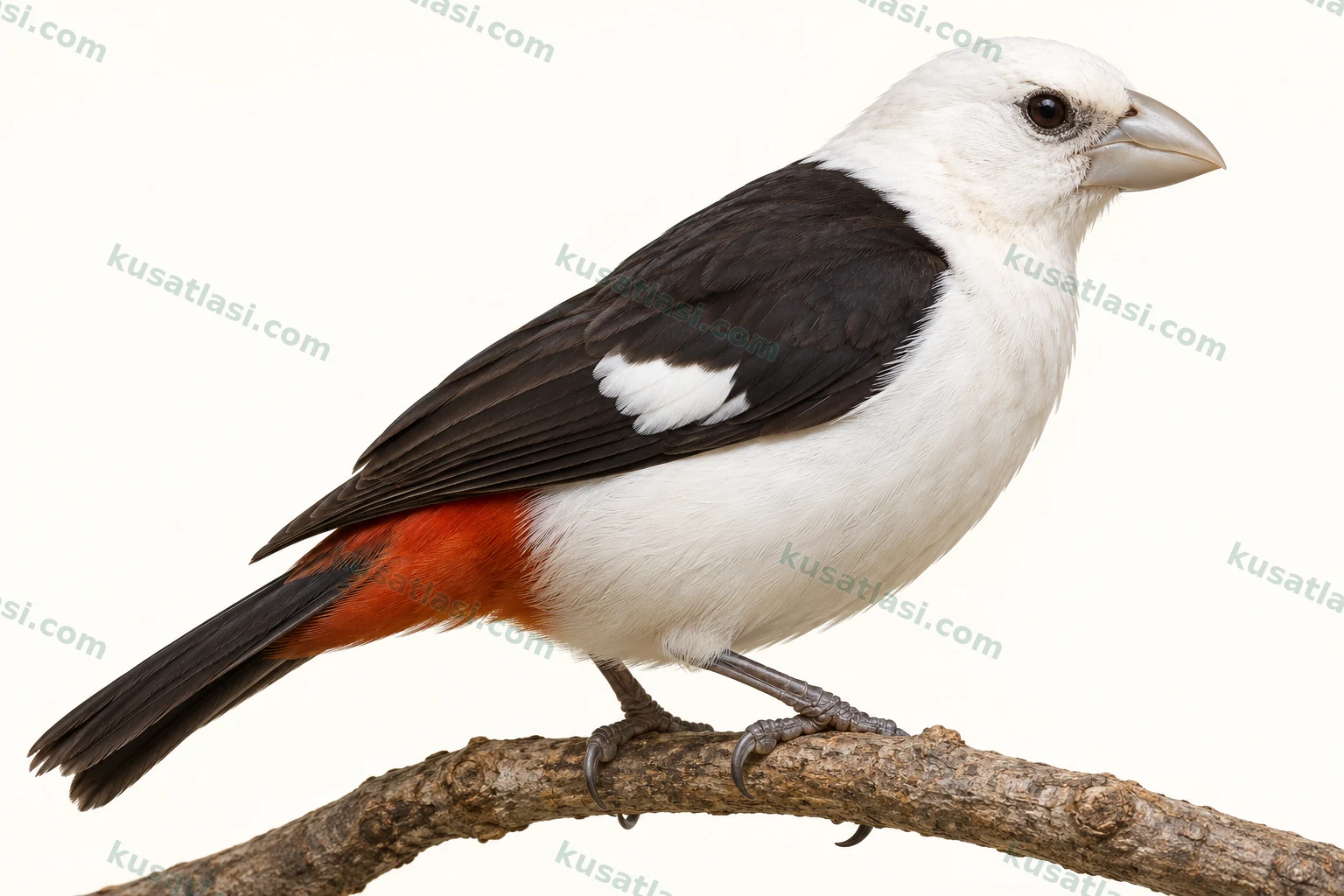 FemaleMale
Adult males and females have similar plumage. The browner upperparts of northern birds and blacker upperparts of southern birds are geographic variation.
Where to look in its natural range?
Dry thorn scrub, acacia woodland and openings where the birds can forage.
The calendar shows the original Tigray nest record. Breeding in other regions varies with rainfall conditions.
January
Generally resident, with local movements related to food. No verified regional date specific to this month was given; this does not mean local absence.
February
Generally resident, with local movements related to food. No verified regional date specific to this month was given; this does not mean local absence.
March
Generally resident, with local movements related to food. No verified regional date specific to this month was given; this does not mean local absence.
April
Generally resident, with local movements related to food. No verified regional date specific to this month was given; this does not mean local absence.
May
Generally resident, with local movements related to food. No verified regional date specific to this month was given; this does not mean local absence.
June
Generally resident, with local movements related to food. No verified regional date specific to this month was given; this does not mean local absence.
July
Generally resident, with local movements related to food. No verified regional date specific to this month was given; this does not mean local absence.
August
Generally resident, with local movements related to food. No verified regional date specific to this month was given; this does not mean local absence.
September
Generally resident, with local movements related to food. No verified regional date specific to this month was given; this does not mean local absence.
October
Generally resident, with local movements related to food. No verified regional date specific to this month was given; this does not mean local absence.
November
Generally resident, with local movements related to food. No verified regional date specific to this month was given; this does not mean local absence.
December
Generally resident, with local movements related to food. Ethiopia, Hada Alga and Baso / southern Tigray: 12 December 2018: recorded with nests in the original research.
Nest, egg and incubation
Both partners build an enclosed oval nest with a soft interior, thorny outer covering and short entrance opening downwards. Specialist accounts report 3–5 eggs; the female incubates for 11–14 days, and both partners feed the young. Sources and conditions of care differ for the time of leaving the nest.
Calls are high, squeaky whistles, with collective calling sequences in groups.
Do not play recordings to attract birds; observe quietly, especially near nests.
Species information
Quick identification
The White-headed Buffalo Weaver Dinemellia dinemelli is a heavily built weaver of East Africa’s dry, thorny woodland. In adults, the white head and pale underparts stand out against the dark wings and back. The rump and undertail feathers are rufous-orange. A white area in the wing is exposed when the bird flies. This combination of colours on a plump body helps identification at a distance.
When examining a group feeding on the ground, look first at the whole head, then at the rear of the body. It is normal for the white head to look cream in shade; do not decide from the brightness of a photograph alone. Check the head, rump and wing pattern on the same individual. Different colours belonging to starlings in a mixed flock must not be combined into the weaver’s own plumage pattern.
General appearance and posture
The bill is thick, strong and conical. In adults, the eye is dark, and the narrow bare area around it and the area extending towards the bill are black. The feet are greyish. The white head and body may have faint cream or warm-toned shading. Whether the upperparts look dark brown or almost black is assessed together with geographic form and lighting.
The northern form dinemelli has a browner back; the southern form boehmi has blacker upperparts. Both retain the white head and rufous-orange rump. Fine pale edges to some wing feathers form limited lines on the folded wing. These lines are not the same mark as the broader white wing area seen in flight.
The bird may feed on the ground, perch on thorny branches and move nimbly through foliage. A single posture does not describe a whole day’s activity: a group feeding on the ground may later move into nearby trees. The large bill and plump body help distinguish the weaver’s shape even when it is with starlings.
Males, females and young birds
Adult males and females have similar plumage. The shade of white on the head, brightness of the rufous-orange area or blackness of the back is not a reliable sex criterion on its own. In particular, the northern and southern forms must not be mistaken for male and female appearances. Watching the tasks performed by adults in the same flock does not provide certain sex identification from plumage either.
Young birds resemble adults, but the orange around the tail may be paler; the bill looks horn-coloured rather than dark as in adults. The soft feeding-related gape at the edge of a newly fledged chick’s bill may be conspicuous. Age is assessed from these signs together; a single pale feather does not reveal an exact age in days.
A small-looking individual in a feeding group must not automatically be assumed female. Distance, a bent posture, immaturity and fluffed feathers change apparent size. A young bird begging near a nest may move differently from a foraging adult. Both parents have been documented feeding the young; the similar plumage of adults is consistent with this observation.
Appearance in flight
The white area within the dark wing becomes conspicuous in flight. The white head and pale underparts may be seen together with the rufous-orange feathers at the rear of the body. If only the white in the wing is noticed during a brief, fast passage, waiting for the bird to perch and checking the head and rump again strengthens identification.
Wing spreading does not accompany movement alone. Specialist accounts report that the male spreads his wings during courtship to display coloured and white areas. A bird opening its wings on a branch must not be treated as a view of flight through the air. When watching a display, also record the presence of the other bird and whether the movement is repeated.
Voice and behaviour
Calls are high, whistling and sometimes squeaky. Several birds in a group may call; such collective calling attracts attention before the birds are seen. Specialist accounts also describe longer, nasal and varied short sequences. A written rendering of a sound is not equivalent to a recording; watch the bird producing it to relate species and behaviour.
This is a social bird: small groups forage and may share their surroundings with other species. Taking insects disturbed by African buffalo explains the word buffalo in its English name. That relationship does not mean a buffalo will be present at every sighting. A group can also feed independently on the ground and in shrubs.
Pairs may breed alone or in small nesting colonies. Both partners build the nest. Adults other than the parents have been observed feeding young in captivity; that record does not prove a regular cooperative breeding system throughout the wild range. A feeding group, a nesting colony and the carers of the same young must be watched separately.
Similar species
The White-browed Sparrow-Weaver Plocepasser mahali has a pale eyebrow, not an entirely white head. Its brown head and back with pale underparts differ from the white head and orange rump of the White-headed Buffalo Weaver. Because both can occur in the same thorny woodland, it is important to check the details on the same individual.
The Red-billed Buffalo Weaver Bubalornis niger can also build large nests in thorn trees. Cornell’s species account highlights the adult male’s dark plumage and red bill; females and young are paler, with streaked underparts. Dinemellia dinemelli has a distinct combination of white head, white underparts and orange around the tail. A large nest or proximity to buffalo alone does not separate these species.
World distribution
It occurs in East Africa’s dry woodland and scrub belt. Its general range extends from the vicinity of South Sudan through Ethiopia and Somalia to Kenya, northeastern Uganda and Tanzania. Northern dinemelli and southern boehmi are geographic forms of the same recognised species. Listing countries does not mean their entire areas are suitable or continually occupied by this bird.
Status within its natural range
Its global category is Least Concern. Local density should be considered together with thorny woody vegetation and food conditions. Original research in southern Tigray, Ethiopia, reported new records and active nests from the dry hills around Hada Alga and Baso. Those records have meaning within their own dates and localities; they do not show that all Ethiopia is a breeding area at the same time.
Nests in that study were found in surroundings covered by acacias and other thorny plants, beside roads and near settlements. A record near a settlement does not establish that development always benefits the bird. Current map estimates and licensed sample records are restricted to the East African geography supported by the sources. An estimated grid cell is not a confirmed active nest.
Migration and movements
The species is generally resident; local movements linked to food conditions are reported. Seeing it in the same surroundings across seasons does not mean every individual continuously uses the same tree. A flock flying between feeding sites may be engaged in daily activity. Without verified tracking data, no long-distance migration route, monthly itinerary or shared starting and ending points for the entire population are drawn.
Breeding habitat
Dry or semiarid savanna, thorn scrub and open acacia woodland are its main surroundings. Nesting requires woody support, with open foraging areas nearby. The original Tigray record described nests in Vachellia tortilis and Vachellia etbaica, 2–6 metres above the ground. That local range is not a fixed nest height throughout the distribution.
Nest site
The nest is a large, enclosed oval structure made of plant material. Hard, thorny twigs are added around the soft interior; the short entrance passage opens downwards. Both partners work on construction. Specialist accounts report 3–5 marked eggs and incubation by the female for 11–14 days. Both parents feed the young. Sources give different times for leaving the nest: a captive record of 14 days and a specialist account of about three weeks are not combined into one certain wild duration supported by the same level of evidence.
Daily use of space
The ground used for foraging, resting places in trees and the nest surroundings are used together. Several structures in one tree do not show that all contain eggs simultaneously. Standing in front of an entrance may block a parent’s arrival. Watch activity from a distance without changing the birds’ own comings and goings; do not open the thorny outer covering to inspect the interior.
What does it eat?
Its food includes insects, seeds and fruits. Specialist species accounts specifically mention beetles and caterpillars among the insects. The strong, conical bill also suits feeding on seeds. These different foods cannot be assigned numerical shares as though they were eaten in the same proportions every day of the year; local resources and observation methods have an influence.
How does it find food?
It mainly forages on the ground or among thorny plants close to it. Small groups and mixed bird assemblages are seen; it may also climb onto branches to take fruit. Using small prey disturbed by large herbivores is a documented feeding method. Birds around a buffalo must not all be counted as the same species or as individuals eating the same prey.
Feeding on the ground and food carried to a nest can be recorded separately. Parents bring insects and small seeds to the young. A strong bill does not indicate a bird that eats only seeds; the same bill processes different foods. Without disturbing the feeding group, watch whether the bird actually takes the material.
A thorny shell and a soft interior
The nest exterior and the egg chamber differ in structure. Soft plant materials are gathered inside, while hard, thorny twigs are added around them. The name weaver does not mean all species produce tight weaving by the same technique; the structure this bird makes by pressing materials together differs from the weaving of some other weavers. The outside shape does not reveal the number of eggs inside.
It may house another bird
H. Dieter Oschadleus’s scientific review of 2022 states that the African Pygmy Falcon in East Africa particularly uses this species’ nests. A separate falcon population in South Africa is associated with another weaver. Describing the falcon’s whole range through one nest provider would therefore be incomplete. Seeing the nest structure does not establish which bird is inside at that moment.
A new record is not a newly established population
The Tigray study published the first regional records for Hada Alga and Baso. Documenting birds with nests in December 2018 does not mean they first lived in the area at that date. The scope of earlier studies and gaps in observation also affect the date of the first published record. Comparable older and newer data are needed to conclude that the range has expanded over time.
A flock is not a set of carers for the same young
White-headed Buffalo Weavers may forage socially and form small nesting colonies. The captive observation of helper feeding is separately valuable, but the behaviour cannot be said to occur regularly in all wild populations. Counting adults perched in the same tree and watching which birds give food to particular young provide different kinds of information. Separate observations reveal different parts of social life.