

World Birds IUCN statusLC · Least ConcernGlobal IUCN. BirdLife v10 (2025); taxon matching AviList 2026 / IOC 15.2; checked: 29.10.2026. The list year is not the species’ assessment date. Source and method · BirdLife OrderPasseriformesSongbirds FamilyEstrildidaeEstrildidae
White-breasted Nigrita
Nigrita fusconotus
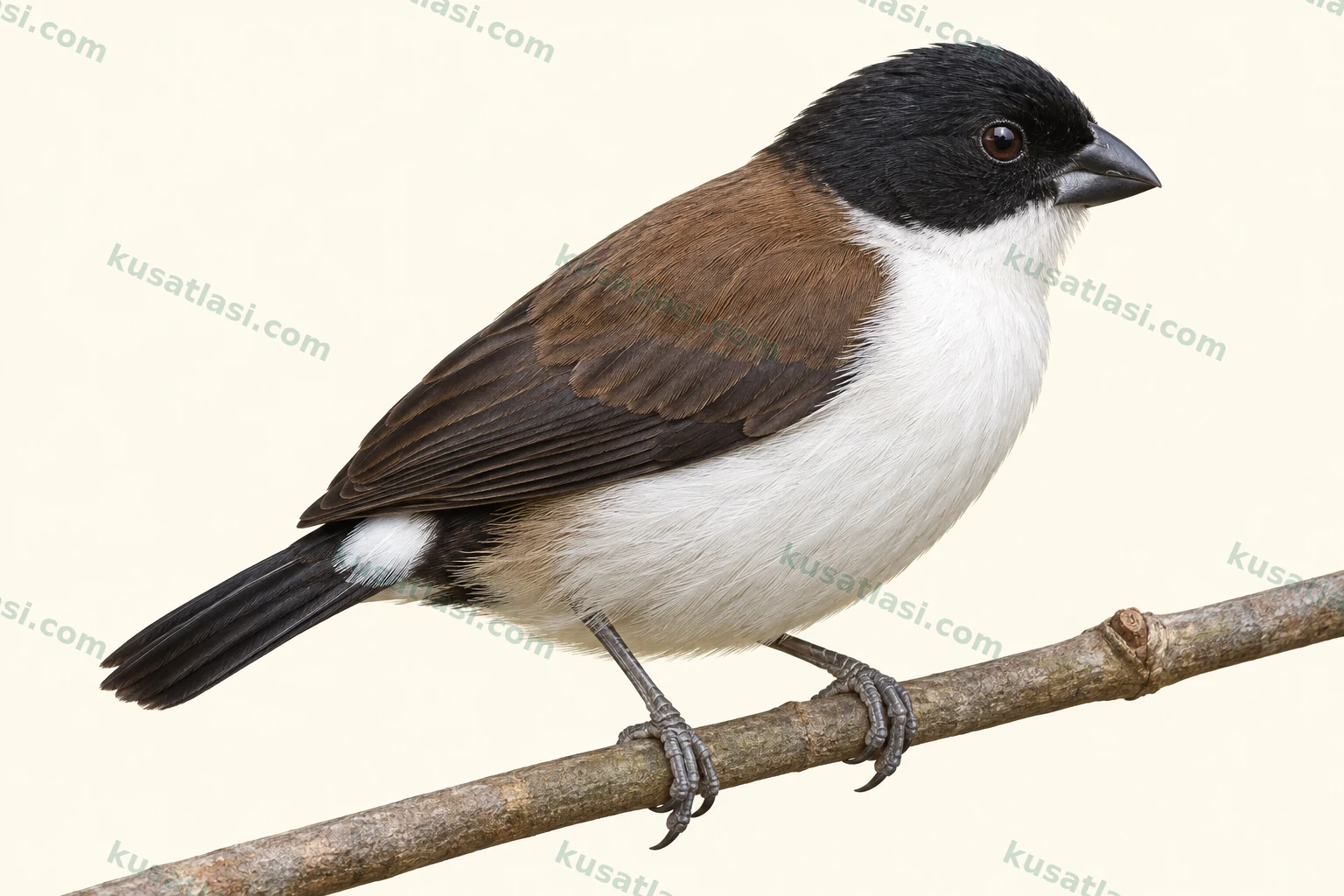
Small African forest bird with black crown, brown back and pale underparts.
Biometrics
Length
Male10–12 cm
Female10–12 cm
Shared species value
Wing length
Male5.26 cm
Female5.26 cm
Shared species value
Weight
Male8.5 g
Female9.5 g
Male: 8.5 g. Published entry in the biometric compilation of Lislevand et al. (2007), sample size n=4. Locality, season, age and subspecies are not specified in this row; it is not assumed to represent all populations. The compilation generally uses mean values; the original handbook page and calculation of this entry were not independently verified. The existing opposite-sex value is from another source; the two cannot establish a sex difference.
White-breasted Nigrita
West and Central African humid forest beltObservation guide in its natural range
Look for three features together
Do not rely on a single featureBlack.
Brown back and pale underparts.
Whistle sequences or long, high-pitched descending notes.
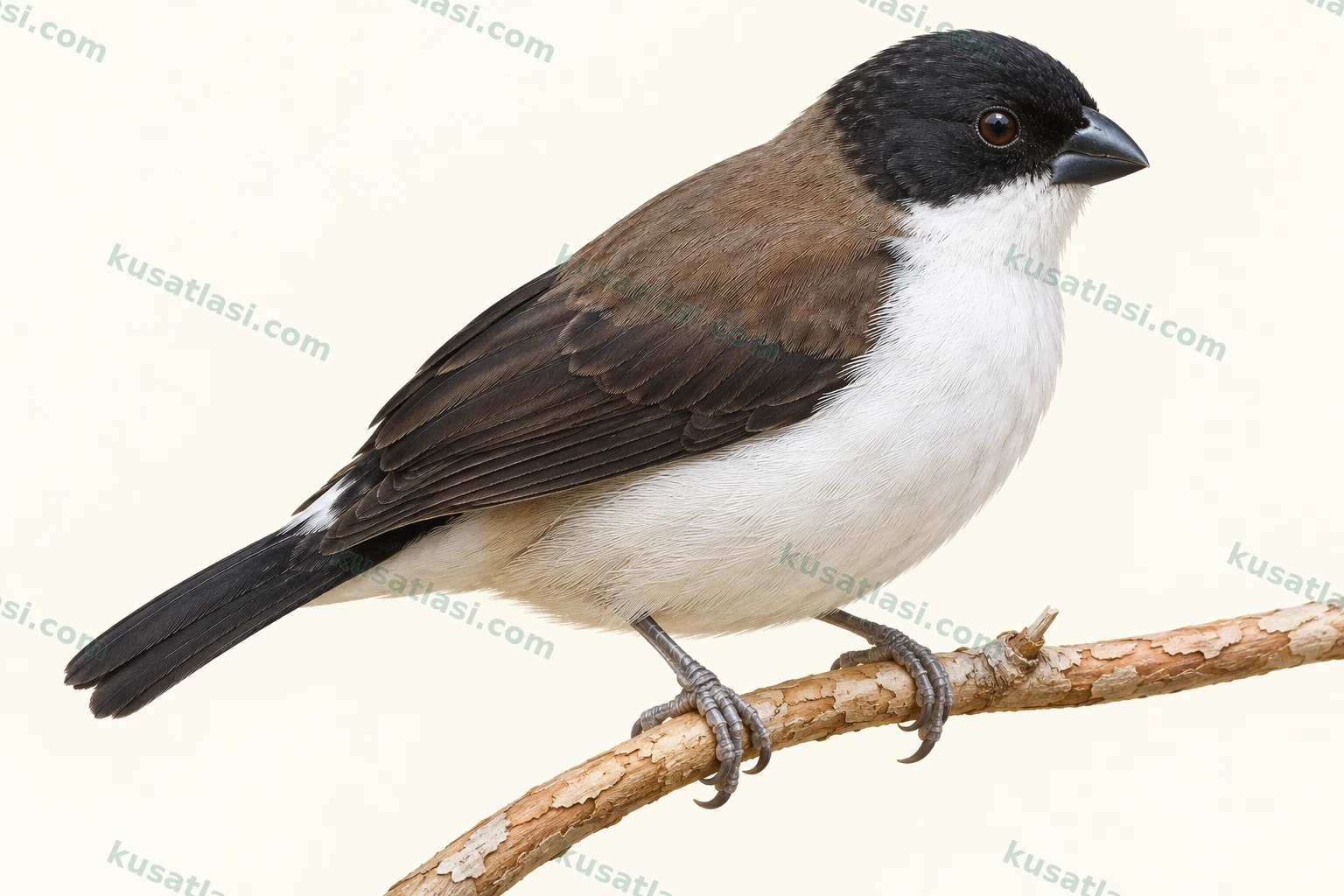
Compare male and female
 FemaleMale
A detailed field key to the sexes and young by external appearance was not found.
Where to look in its natural range?
Canopy of humid forest and its edges.
Resident; a regional breeding calendar has not been verified.
All months: Data unavailable
January
February
March
April
May
June
July
August
September
October
November
December
Nest, egg and incubation
Nest, actual clutch size and developmental periods were not found.
Rising and falling whistles and long, thin descending notes.
Do not play recordings to attract birds; observe quietly, especially near nests.
Species information
Quick identification
The White-breasted Nigrita Nigrita fusconotus is a small, pale-underparted songbird of humid African forests. Its black crown and brown back contrast with the pale breast and belly. White-breasted Nigrita is the current English name; older publications also use White-breasted Negrofinch.
General appearance and posture
It is a small nigrita with an unusual colour pattern.
Males, females and young birds
The reliable open sources examined did not provide a detailed field key to the sexes by external appearance or to juvenile stages. Slight differences in the shade of the pale breast or brown back do not allow certain sex identification.
Appearance in flight
It moves in the canopy. Short flights between leaves may reveal the pale underparts; a small dark silhouette alone is insufficient for identification. The absence of red feathers helps in comparison with similar waxbills.
Voice and behaviour
It is usually found in pairs or small groups in the upper layers of humid forest interiors and edges. One song is a mournful series of whistles rising and falling, while another is a long, descending series of high-pitched notes. These different sequences should not be reduced to a single syllable without detailed examination of recordings.
Similar species
It may superficially resemble some small waxbills; consider together the nigrita's lack of red feathers, black crown and brown back. Compare the crown and entire underparts with Grey-headed Nigrita Nigrita canicapillus. Poor views in the canopy may allow identification only to family or genus.
Global distribution
Of the two currently recognised subspecies, uropygialis extends from southeastern Guinea and the vicinity of Liberia to southern Ghana and southwestern Nigeria. fusconotus ranges from southeastern Nigeria through Cameroon, Gabon and Angola, east to western Kenya, and also occurs on Bioko Island. The humid forest belt is its main geographical setting.
Status within its natural range
The global category is Least Concern. The original species list in the Lokutu rapid assessment, Democratic Republic of the Congo, reports three encounters at forest edges near Mosite and Lokomete. This is a local inventory result, not a measure of density throughout the Congo.
Migration
The expert synthesis treats it as resident. A regular long-distance migration route has not been verified. Records at forest edges on different dates do not justify drawing migration lines between recording points.
Breeding habitat
It occurs in humid forest and forest edges at low and middle elevations. Pairs or small groups may be sought in the canopy. Local forest-edge records in the Congo do not mean that it avoids dense forest interiors.
Nest site
Nest site and structure, typical clutch size, incubation period and time to fledging have not been sufficiently verified. Figures such as 4.2–4.5 in ecological compilations are means or compiled values, not actual numbers of eggs laid in a single nest. Nest details or breeding calendars of other Nigrita species have not been transferred here.
Daily space use
It moves around leaves and branches in the canopy. Song may reveal a bird hidden in the high foliage. Reliable information on daily area size or division of roles among group members was not found.
What does it eat?
Ecological sources classify the species among birds feeding mainly on invertebrates; at a broader dietary level it may be described as omnivorous. Species-specific proportions of seeds and fruit have not been verified, so a purely seed-based diet should not be assigned merely because its family includes seed-eaters.
How does it feed?
It searches for food around the upper vegetation. The sources examined do not describe exact prey groups or the proportions of capture techniques sufficiently. Another nigrita's detailed food list should not be presented as direct stomach contents of this species.
Two different song sequences
The Cornell species account describes rising and falling whistles separately from a longer, high-pitched descending sequence. This vocal variety matters when the bird is hidden among canopy leaves.
A local forest-edge inventory
The Lokutu assessment in the Democratic Republic of the Congo reports three encounters at the forest edges of two nearby places. This documents presence at particular sites; it does not calculate breeding success, the number of individuals or the population of the whole country.