
World Birds
Field identification plates
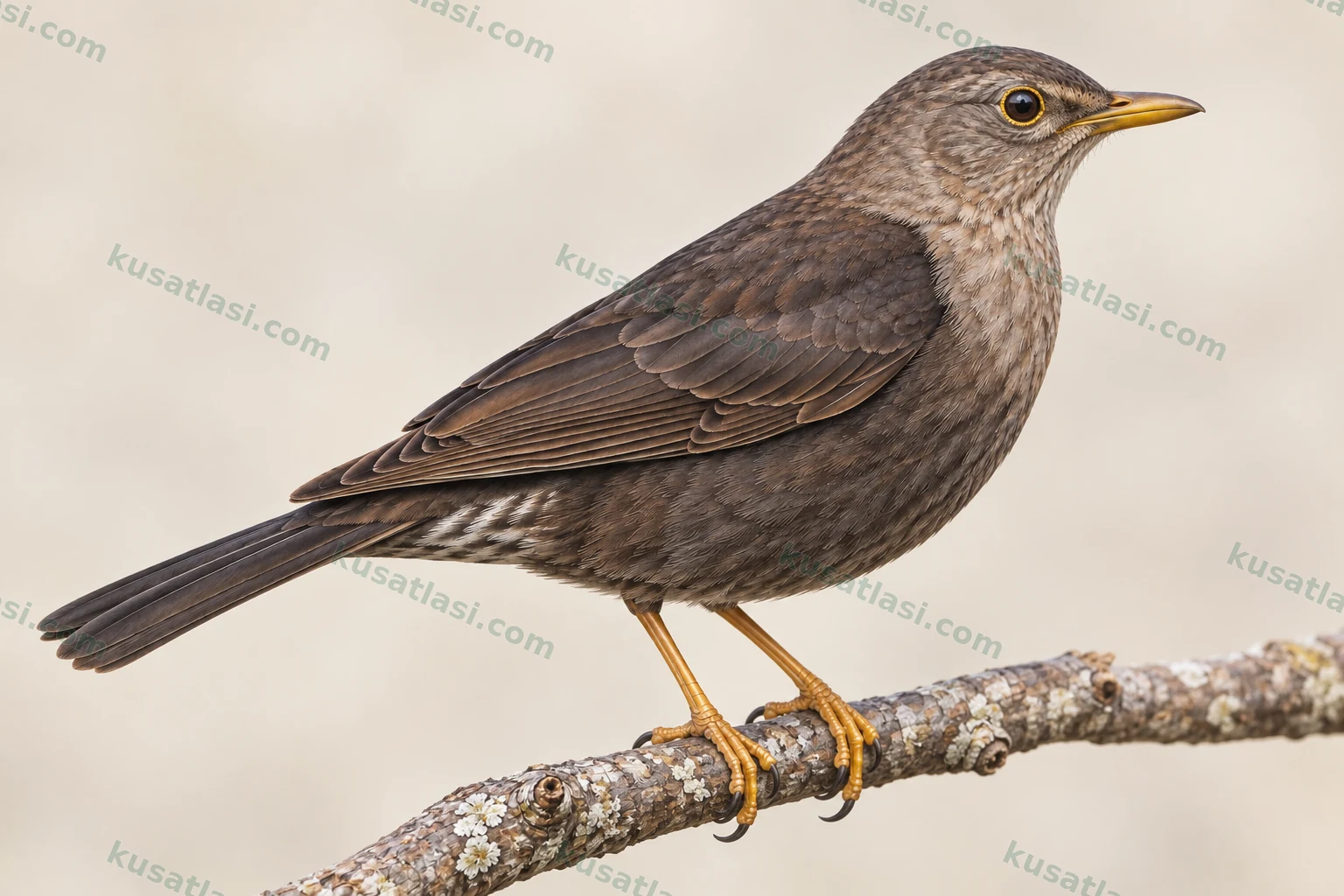
Swipe left or right between the two adult plates.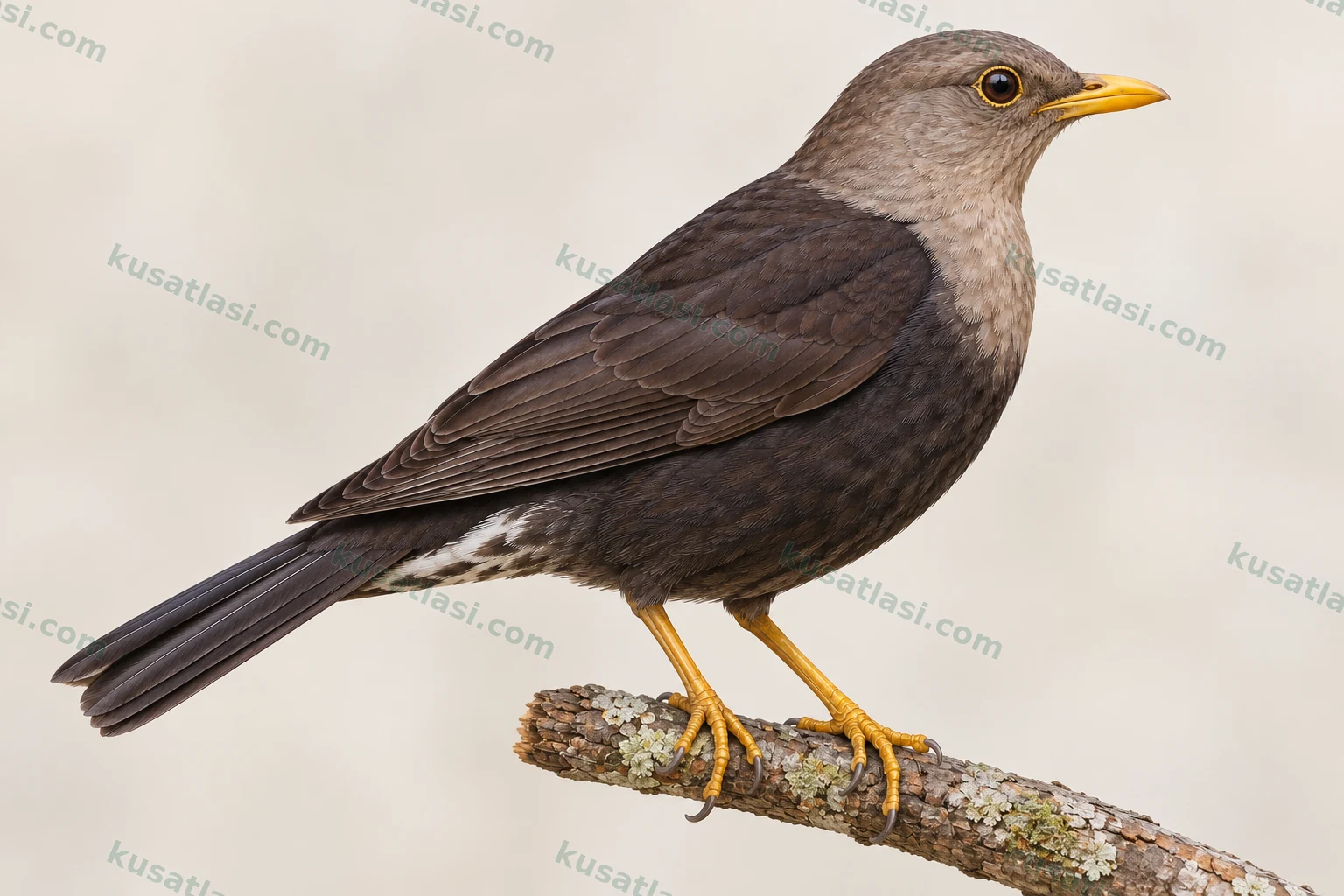
Turdidae
Tasman Sea Island Thrush
Turdus poliocephalus
The current narrow species comprises only the Norfolk and Lord Howe forms; both are extinct.
- Order
- Passeriformes
- IUCN status
- Source-taxon assessmentGlobal IUCN. BirdLife v10 (2025); taxon matching: AviList 2026 / IOC 15.2; checked 29 October 2026. Checklist year is not the species assessment date. Source and method
At a glance
- Two historical islands
The current narrow species comprises only the Norfolk and Lord Howe forms; both are extinct.
- Two different appearances
Compare Norfolk’s ash-grey head and Lord Howe’s chestnut and vinous tones with the sources.
- Check the label
The former broad Island Thrush name also included living species on other islands.
Biometrics
Length
- Male
- 22.9 cm
- Female
- 22.9 cm
Wingspan
- Male
- Data unavailable
- Female
- Data unavailable
Weight
- Male
- Data unavailable
- Female
- Data unavailable
Length: Shared species value The length is the value in the official NSW species account for T. p. vinitinctus, which lived only on Lord Howe Island. The source does not distinguish sexes; it cannot be used as the measurement of the Norfolk Island subspecies.
World distribution
Tasman Sea Island Thrush
Customise map layers
Observation points
Preparing globe…
Monthly record count
Bars show record counts in this sample, not bird abundance or a breeding calendar. They are affected by recording and observation effort.
Rotate the globe and compare layers. Coloured areas are not exact observation or nest locations.
The source does not provide verified monthly range boundaries. All areas are shown; the month slider and monthly playback are therefore disabled.
- Jan
- Apr
- Jul
- Oct
- Dec
Generalised data and method
Base map: Natural Earth · Public domain
Open central bibliography ↗Calendar
Both island forms are extinct; there is no current monthly sighting calendar.
All months: Monthly data unverified.
January
February
March
April
May
June
July
August
September
October
November
December
Habitat
Norfolk and Lord Howe islands, Tasman Sea (historical)
Show only the historical records of Norfolk and Lord Howe; no current live-observation points exist.
Sound
Historical accounts liken Norfolk’s song to a blackbird’s; Lord Howe’s is described as more monotonous. These are not verified recordings.
Do not play recordings to attract birds; observe quietly, especially near nests.
Breeding
Historical accounts report a cup nest in tree forks 2–5 m high and two–four eggs on Norfolk; a cup near the ground and usually two, rarely three eggs on Lord Howe. Verified incubation days were not found.
Compare
Compare male and female
Compare Norfolk’s ash-grey head and Lord Howe’s chestnut and vinous tones with the sources.
Species information
Quick Identification
The name Island Thrush formerly covered many island thrushes across the Indo-Pacific. The current, narrowly defined Turdus poliocephalus on this page comprises two now-extinct forms from Norfolk and Lord Howe islands in the Tasman Sea. The Norfolk bird is recorded as Turdus poliocephalus poliocephalus and the Lord Howe bird as T. p. vinitinctus. No living individual is expected. For any photograph, specimen or old observation note encountered today, its island and date are identification conditions as important as colour. Birds of the former broad group living on Christmas Island, in the Philippines or in New Guinea cannot count as living records of this narrow species.
The Norfolk form was described with an ash-grey head, dark body, yellow bill and yellow legs. The Lord Howe form differed in its more chestnut and wine-tinted underparts.
Overall Appearance and Posture
John Gould's historical illustration and account of the Norfolk bird emphasize the pale ash-grey head and dark body. Taylor reports that the adult Norfolk bird had a yellow bill and legs, and that the female could look slightly duller and smaller than the male. The greyness of the head may appear different in different light; old pictures, preserved skins and live observations are not the same colour source. A colour difference in a single worn specimen is not a universal sexing key for the species. Details of perching posture also come from limited historical observations; no new verification in a living population is possible.
In the Lord Howe form the upperparts were recorded as dark chestnut, the underparts more vinous chestnut and the head dark grey. The bill is bright yellow. Reducing the two island forms to a simple darker–paler ranking would mislead; storage conditions of different specimens and pigments in old plates can alter the tone. The name Merula vinitincta, given to the Lord Howe bird by Gould in 1855, refers to the wine colour. Later taxonomy treated it as a close relative of the Norfolk form. A 2023 genomic study assessed the two island lineages together, and current lists have split the former broad assemblage into different species. A historical “T. poliocephalus” label therefore cannot safely be assigned to today's narrow species without island information.
Males, Females and Young Birds
Gould wrote that the Norfolk female did not show as marked a male–female difference as the Eurasian Blackbird. Taylor reports that the female could be slightly smaller and duller.
Historical expert accounts also describe the two sexes of the Lord Howe bird as similar in appearance. Young birds may have had plumage details differing from adults; however, the primary and expert sources examined do not provide a reliable, comprehensive field key for young birds verified by island. Young Eurasian Blackbirds, which arrived on Norfolk later and still survive there, can look paler-headed. Taylor reports that this similarity could confuse old observations and that hybridization was only a hypothesis; we do not present it as a proven cause of extinction. Identifying an undated photograph of a young bird as this species from head tone alone is unsound.
Appearance in Flight
No single reliably verified distinguishing feature of the spread upperwing or underwing was found for the two island forms. Preserved skins usually show the folded wing; a drawn flight pose does not measure a living bird's actual movement. Definite identification in flight is therefore not promised. Even if a dark body or yellow bill was noticed during a short flight, neither alone separates the Norfolk bird from other dark thrushes on the island. Lord Howe's vinous underparts can be described in a perched bird or a specimen in the hand; claiming they would be equally clear from every flight angle would be incorrect.
If an old observation note mentions flight, locality, date and the head-and-bill features seen on that same individual are read together; no contemporary flight tour is produced for historical birds.
Voice and Behaviour
Taylor's compilation reports that the Norfolk song was likened to that of the Eurasian Blackbird. Lord Howe's song was also described as similar but more monotonous, and its alarm call as two sharp beats. These are verbal accounts of sounds heard by people in the past, not a quality-controlled series of recordings reliably separating the two island forms. A bird sound posted online today under “island thrush” may often belong to another still-living species of the former broad group. Linking such a recording as the voice of this extinct narrow species would be wrong.
The Norfolk bird was described as descending to the ground and turning leaves, often alone and seemingly relatively accustomed to people. The Lord Howe bird also fed on the forest floor, with some birds reportedly gathering in the evening. These behaviours are not a measured time budget for all birds on both islands in every season. Gould's old note about the bird's decline is read as testimony observing human pressure at that time. McAllan and colleagues assess the link between rats landing on Lord Howe in 1918 and extinction by reviewing island records. Norfolk's loss is not reduced to a single cause.
Confusable Species
1. Eurasian Blackbird Turdus merula is a living thrush established on Norfolk. Dark adults may look similar at first, but date, island, the actual state of the ash-grey head and the specimen's provenance must be examined together. Colour alone is not definite evidence for a pale-headed young blackbird.
2. Song Thrush Turdus philomelos is another Turdus bird occurring on Norfolk. Its spotted underparts are generally different; even so, an old, distant description of song alone cannot establish a record of this species.
3. Christmas Island Thrush Turdus erythropleurus may be confused in records because of its name within the former broad T. poliocephalus. The Christmas Island bird is not a living representative of the current narrow Tasman Sea species; the year the scientific label was written and the island record must always be checked.
World Distribution
The current narrow Turdus poliocephalus includes only two forms that lived on Norfolk and Lord Howe islands in the Tasman Sea and is now extinct. Avibase's current taxon account lists Norfolk's poliocephalus and Lord Howe's vinitinctus separately. Reeve and colleagues' genomic research places these two island forms in a particular branch of the former broad group.
Status in Its Natural Range
Old atlases may show a large patch extending from the Philippines to other Pacific islands; that patch is not the distribution of the current narrow species. The Christmas Island bird is now a separate species too. Only the two historical islands should be marked on the map, without colouring the intervening sea as habitat or implying that current observation points exist.
Norfolk and Lord Howe records show historical presence; they cannot be presented as current live-observation areas. A last confirmed record and a museum specimen do not alone determine the boundaries of the islands' former bird communities or the day of extinction.
Migration Journey
No reliable record was found showing regular seasonal migration between the Norfolk and Lord Howe forms. Reeve and colleagues' explanation of evolutionary island colonization in the old group does not mean a living individual flies that route each year. The settlement history of lineages arising on separate islands over time and a bird's seasonal movements are different questions. Human transport of Norfolk birds to Lord Howe in 1925 and 1935 is not natural migration; Taylor reports that both introduction attempts failed.
Breeding Habitat
The Norfolk form was recorded as a forest bird and also entered gardens near settlements on the island. The Lord Howe form was associated with more secluded wooded slopes, especially the north of the island and the vicinity of Mount Lidgbird. This distinction does not mean it occurred at equal density in all an island's forests. Historical observations record only fragments of use before extinction; another thrush seen on either island today is not evidence of the former species' habitat use. Forest clearance and rats introduced to the islands matter in both islands' histories, but their effects did not happen in the same year or in the same way.
Nest Site
Taylor's expert compilation reports that on Norfolk a deep cup nest made of grass, leaves, fibres, moss and lichens was placed in tree forks about 2–5 m high. Two to four eggs are reported for Norfolk. On Lord Howe a large cup nest of palm leaves, grass and similar material was placed on or just above the ground; usually two, rarely three eggs were reported. These numbers are historical records of different island forms, not a single whole-species average. The female is reported to incubate; a verified number of incubation days specific to the two islands was not found.
Daily Habitat Use
For both forms, foraging among litter on the forest floor was described. Historical records mention leaf-turning by the Norfolk bird and the Lord Howe bird sometimes being tame enough to approach quietly. These observations cannot be repeated today. Seeing a Norfolk individual in a garden does not make it a permanently open-country bird. The report of evening gatherings on Lord Howe does not cover all microhabitats used by day either. Compressing the behaviours of both forms into a single habitat sentence without a date and island overstates the resolution of the available evidence.
What Does It Eat?
Taylor reports that the Norfolk form ate small invertebrates such as insects, worms and snails, as well as seeds and fallen fruit. Small invertebrates, seeds and fruit are reported for the Lord Howe form too. These food groups fit the general behaviour seen on the two islands, but diet proportions in grams have not been measured for every season in each. Mentioning “worms” in a historical record does not determine the prey species or its present-day population on the island. Transferring detailed diets of the old broad group on Christmas Island and other Pacific islands to these two extinct forms would be unsound. Eating fallen fruit does not mean every fruit in high trees was used.
How Does It Forage?
Norfolk observers wrote that the bird came to the ground and turned fallen leaves. It may thereby have reached concealed small invertebrates; we do not turn an event reporting prey taken from beneath a leaf into a claim that every leaf-turn caught prey. Historical accounts describe the Lord Howe bird probing leaves on the forest floor for small creatures. Both forms could find fallen fruit and seeds in the same ground layer. The proportions of feeding in bushes or high branches are unknown, so they cannot be narrowly labelled ground-only foragers. Other thrushes turning leaves on those same islands today do not remeasure the extinct birds' feeding frequency.
One Name, Changing Species Limits
For a long time Turdus poliocephalus was the shared name of dozens of forms on different islands. Reeve and colleagues compared genomic samples of the former assemblage in 2023; subsequent major lists split it into many species. In current Avibase and Cornell lists the Norfolk and Lord Howe forms belong to the same narrow Tasman Sea species, while the former Christmas Island subspecies belongs to a different species. The occurrence of the same Latin name in an old publication does not prove that its geography and numbers belong to the current narrow species. When scientific data are transferred, publication year, subspecies and the island where the specimen was collected must be read together.
Two Islands, Two Appearances
Lord Howe's historical name vinitinctus refers to this vinous colour.
Different Timelines of Disappearance
The Australian Museum gives the last reliable sighting of the Lord Howe form as 1913 and of the Norfolk form as 1975. McAllan and colleagues assess the role of black rats landing on Lord Howe in 1918 in the extinction of island birds. A last sighting date is not the exact day the last bird died; it is only the latest verified record available. Forest loss, human pressure, rats and possible interactions with blackbirds on Norfolk appear in historical writings; no exact percentage can be assigned to each one's contribution.
Differences in Nest Sites
Although the two forms belong to the same narrow species, the nest accounts compiled by Taylor differ: a relatively high cup in tree forks on Norfolk and a cup of palm material near the ground on Lord Howe. Two–four eggs are reported for Norfolk, usually two and rarely three for Lord Howe. This difference alone does not establish a genetic species boundary; historical observation effort and local vegetation must also be considered. Verified island data on the number of incubation days were not found. Because no new nest observations can be made for an extinct species, keeping the context of old records clear is especially important.