

World Birds IUCN statusLC · Least ConcernGlobal IUCN category. BirdLife v10 (2025); taxon matching: AviList 2026 / IOC 15.2; checked: 29.10.2026. The list year is not the species assessment date. Source and method · BirdLife OrderColumbiformesPigeons and doves FamilyColumbidaeColumbidae
Bruce's Green Pigeon
Treron waalia
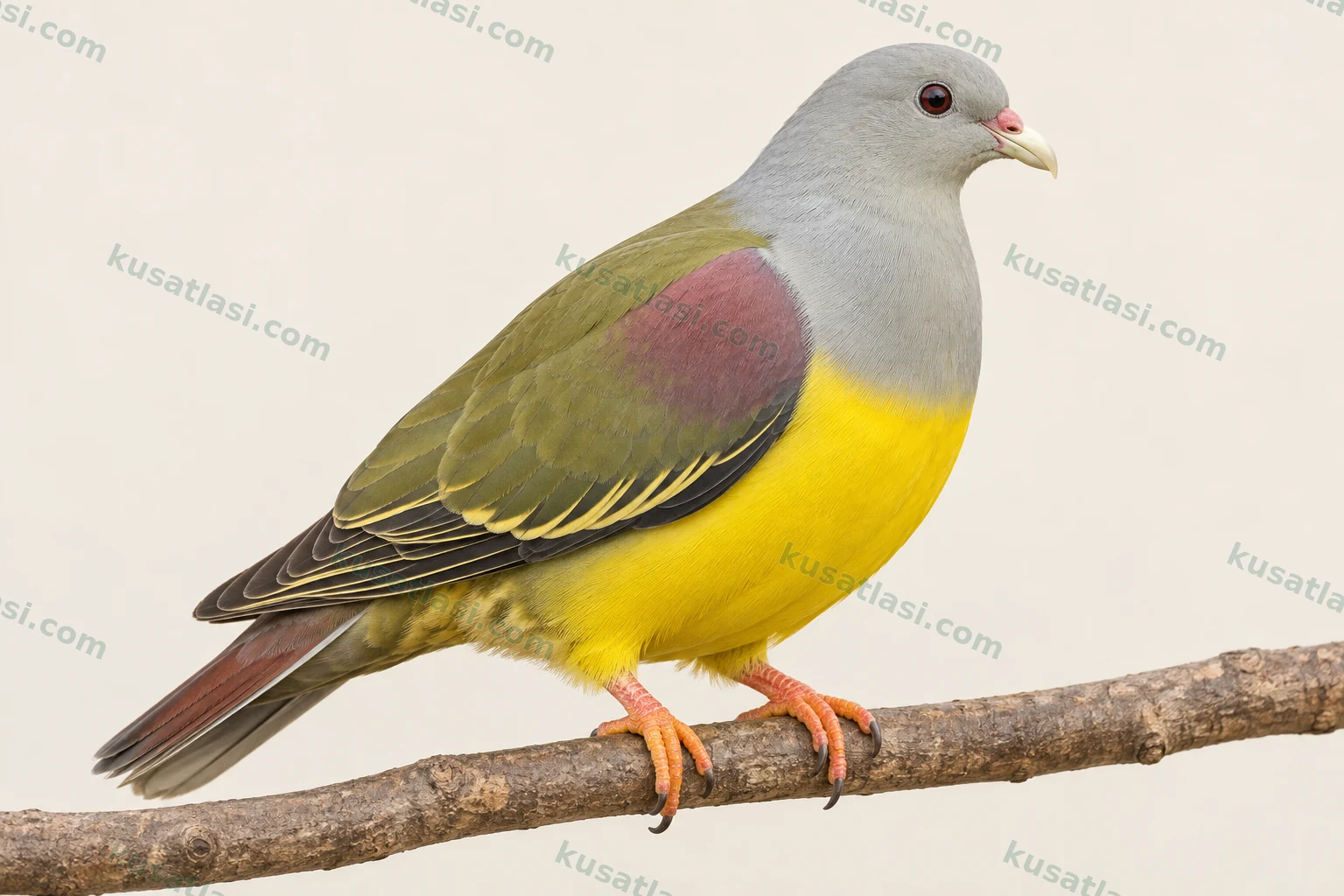
Pale grey-green head, olive-green upperparts, purplish shoulder patch and bright yellow belly; mixed fruit-feeding groups with Treron calvus may occur.
Biometrics
Length
Male28–30 cm
Female28–30 cm
Shared species value
Wing length
Male17.94 cm
Female17.94 cm
Shared species value
Weight
Male241–268 g
Female241–268 g
Shared species value
Bruce's Green Pigeon
Sub-Saharan savanna belt, southwestern Arabia and SocotraObservation guide in its natural range
Look for three features together
Do not rely on a single featureDistinctly yellow belly; the flanks are greener.
Purplish shoulder patch and yellow line along dark feathers.
Treron waalia / Bruce's Green Pigeon; Treron calvus is a separate species.
Compare male and female
 FemaleMale
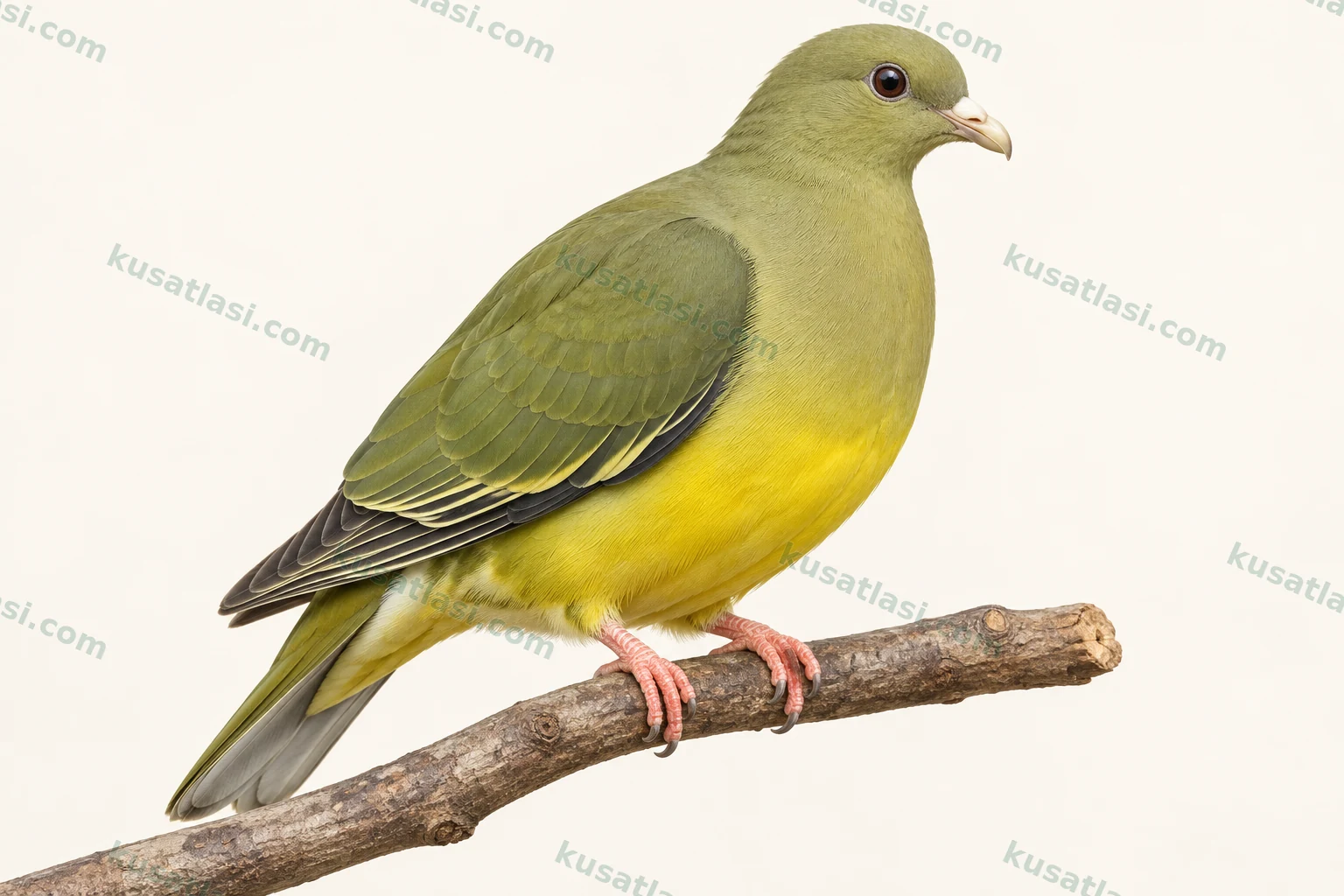
Adult sexes are very similar; the female’s generally duller appearance is not a reliable sexing key. A young bird’s greyer tone and less developed purple shoulder patch are assessed together.
Where to look in its natural range?
Watch the upper branches of fruiting trees.
Breeding months differ regionally; resident birds may move following fruit and water resources.
January
Mainly resident, with regional movements following food and changes in elevation. Gambia: The specialist compilation reports a breeding period. Ethiopia: A regional breeding period; it is not generalised to other countries. Socotra: Breeding records of the island population.
February
Mainly resident, with regional movements following food and changes in elevation. Gambia: The specialist compilation reports a breeding period. Ethiopia: A regional breeding period; it is not generalised to other countries. Socotra: Breeding records of the island population.
March
Mainly resident, with regional movements following food and changes in elevation. Gambia: The specialist compilation reports a breeding period. Ethiopia: A regional breeding period; it is not generalised to other countries.
April
Mainly resident, with regional movements following food and changes in elevation. Gambia: The specialist compilation reports a breeding period. Ethiopia: A regional breeding period; it is not generalised to other countries. Southwestern Arabia: A regional egg-laying period.
May
Mainly resident, with regional movements following food and changes in elevation. Ethiopia: A regional breeding period; it is not generalised to other countries. Southwestern Arabia: A regional egg-laying period.
June
Mainly resident, with regional movements following food and changes in elevation. Southwestern Arabia: A regional egg-laying period.
July
Mainly resident, with regional movements following food and changes in elevation. No verified regional date specific to this month was provided; this does not mean local absence.
August
Mainly resident, with regional movements following food and changes in elevation. No verified regional date specific to this month was provided; this does not mean local absence.
September
Mainly resident, with regional movements following food and changes in elevation. No verified regional date specific to this month was provided; this does not mean local absence.
October
Mainly resident, with regional movements following food and changes in elevation. No verified regional date specific to this month was provided; this does not mean local absence.
November
Mainly resident, with regional movements following food and changes in elevation. Ethiopia: A regional breeding period; it is not generalised to other countries.
December
Mainly resident, with regional movements following food and changes in elevation. Gambia: The specialist compilation reports a breeding period. Ethiopia: A regional breeding period; it is not generalised to other countries.
Nest, egg and incubation
The nest is a thin twig platform on a tree branch, with 1–2 white eggs; incubation duration and age at first flight were not reliably verified.
The vocal sequence may include a crackling-like opening, fine whistles and low short final notes; match it to the actual bird.
Do not play recordings to attract birds; observe quietly, especially near nests.
Species information
Quick identification
Treron waalia, registered here under the Turkish name Afrika Yeşil Güvercini, is a fruit pigeon recognised by its olive-green body, yellow belly and purplish shoulder patch on the folded wing. Its head and neck look paler and greyer-green than the darker green parts of the body. The yellow wing line and the tail's light-and-dark pattern add identification clues from a suitable angle. A green back alone is insufficient for a bird among the leaves of a fruiting tree; the yellow underparts should also be seen.
Its current English name is Bruce's Green Pigeon. African Green Pigeon is the English name of Treron calvus; the two are not combined merely because the Turkish heading suggests a similar name. The record on this page is Treron waalia. The current taxonomic account treats it as a species without recognised subspecies. Breeding durations of different African green pigeons cannot be substituted for one another simply because they belong to the same genus.
General appearance and posture
Head, neck and upper breast are pale grey-green. The back and much of the wing form a more olive-green whole. The purple-grey patch on the folded wing and the yellow edges of dark feathers may stand out against the green body among leaves. The strong yellow below the body completes the appearance, while the flanks are greener. Colouring the entire underparts the same bright yellow would erase real differences between regions of the plumage.
Seen from above, the tail has grey and greenish tones, with darker areas towards the tips of the outer feathers. From below, a dark section and pale terminal band may be visible. The long undertail-coverts are reddish brown with pale tips. These are not the tail feathers themselves. Seeing the long lower coverts on a perched bird does not mean that its entire tail is rufous.
The bill is pale grey and the bare area at its base may be purplish; the feet have yellow-orange tones. Reddish detail around the eye and the colour of the eye itself are assessed separately. If these colours cannot be resolved in a small photograph, identification continues with body and wing pattern. Reflections from bright green leaves may make the head look greener than it is. Comparing colours in the same light and in more than one posture is more reliable.
Males, females and young birds
Adult males and females look very similar. Specialist accounts note that females may generally look slightly smaller and duller, but this tendency is not a reliable key for sexing a photograph. A male in tree shade may also look duller. A purple shoulder patch that looks small in one view may be partly covered by feathers or affected by the bird's angle.
Young birds have a greyer overall appearance and a less developed purple shoulder patch. Even so, age is not assigned without seeing the whole plumage, head and underparts. A purple patch hidden behind leaves on a folded wing does not make an adult a young bird. Behaviours supporting the presence of young in a group, such as begging, can be recorded separately; they are not automatically attributed to every pale individual.
Body proportions and the yellow belly may be more useful for species identification than small differences in brightness. The apparent size of two birds seen at close range can be compared.
Appearance in flight
A flying bird shows a pigeon shape, dark wings and a patterned tail. The underwing looks dark grey; the perched bird's yellow belly must not be confused with an entirely yellow wing. A pale terminal band separates from the dark part of the tail at a suitable angle. Because the purple shoulder patch may remain concealed on a fast-passing bird, failure to see it alone does not rule out the species.
A bird leaving a fruiting tree for another tree may appear in a short flight. Seeing the body and underparts again after it perches supports identification. A distant green pigeon silhouette alone cannot establish which of the region's Treron species it is. Watching natural arrivals and departures is more appropriate than approaching a tree to flush a bird.
Voice and behaviour
The specialist species account describes a sequence with several parts: a crackling-like opening, finer melodic whistles, low sounds and short final notes. Separate single calls may also be heard. A written description is not an exact recording. Because several species can occupy the same tree at once, the sound must also be matched to the bird producing it.
Groups may form in fruiting trees, and a temporary abundance of fruit may bring many birds together. Specialist accounts also report mixed groups with Treron calvus in some areas. Feeding in the same tree does not mean that all individuals are the same species. Yellow belly, pale head tone and wing pattern are checked separately on each bird. Where birds are hunted, shy behaviour can affect visibility and group size.
Similar species
Treron calvus is the main comparison because of its similar green appearance and use of fruiting trees. The conspicuously yellow belly, head and neck tone and wing details of Treron waalia are considered together. Sharing a fruit tree or having “green pigeon” in an English name does not equate the species. The scientific name is checked rather than replacing the bird with another suggested by the Turkish heading.
Natural distribution matters when comparing other green pigeons. Asian Treron species are not routine possibilities for every Sahel record merely because they are yellow or green. Good identification combines the bird's whole appearance, fruiting-tree habitat, country and closely related species that could actually occur there. No certain colour is assigned to underparts invisible in a photograph.
World distribution
The species occupies the savanna and woodland belt south of the Sahara, extending from western Africa along the Sahel towards Sudan, Ethiopia and the Horn of Africa. The current specialist account also includes populations around Uganda and Kenya in eastern Africa. Southwestern Arabia and Socotra form parts of its natural range outside Africa. This country-level summary does not imply equal use of every desert or closed forest. The distribution of fruiting trees and suitable woodland patches matters.
Status within its natural range
Its current global category is Least Concern. Frequent sightings around fruiting trees in some places do not establish equal abundance throughout the range. Specialist accounts report hunting pressure; local tree loss and diminishing food resources are also considered in the habitat context. Protected stock in the European breeding project and the global wild population are different things. The project's own stock figures must not be presented as a count of wild birds.
Seasonal movements
Though mainly resident, it may make local or regional movements following water and fruit supplies. The specialist compilation describes northward movement in Mali during the rainy season and seasonal changes in elevation in Arabia. These regional reports do not show that every individual follows the same route. An increase at a fruiting tree is not, on its own, evidence of long-distance migration either. No unverified intercontinental route is drawn on the map; observation points remain distinct from the natural-range model.
Breeding habitat
It uses savanna woodland, riverside tree belts, valleys and oases. Village or urban surroundings containing fruiting trees may also provide suitable feeding sites. This does not mean that the entire life cycle takes place in built-up land. Figs of the genus Ficus are important resources; dependence on a single fig species is not asserted without verification. Tree-cover structure and fruiting periods provide more detail than the size of a green area on a map alone.
Nest site
The specialist compilation describes a thin platform of twigs on a tree branch or among dense branches. The female lays 1–2 white eggs. Use of acacias in the Sahel and palms on Socotra is reported; one tree preference is not generalised across the entire range. Incubation duration and age at first flight were not reliably verified in this research. Numbers of days for related pigeons are not evidence for this species; nest structure and duration data remain separate.
Daily habitat use
Most feeding takes place in the upper parts of trees. Birds may descend to drink; the specialist account also reports taking sand. Waiting near a fruiting tree allows their movements between branches to be watched. Repeated approaches to a nest tree or shaking its branches are avoided. A place with abundant fruit at one time may not hold the same number of birds later; daily records gain meaning alongside the plant's fruiting condition.
What does it eat?
Fruit is the main food, particularly figs. The specialist species account also reports some podocarp and jujube fruits. This list does not mean that the same plants occur everywhere or that only one fruit is eaten. The European specialist project likewise cautions against an old generalisation that the bird depends almost entirely on a single fig species. Natural fruit consumption and fruit rations prepared in human care are separate contexts.
How does it find food?
It moves along fruiting branches and takes fruit with its bill. Concealment in foliage may prevent a calling bird from being seen immediately. A large gathering in one tree may reflect that day's fruit abundance; it is not used to calculate the population density of the entire woodland. The plant providing the fruit can be added to the observation if it is identified confidently. Swallowing a fruit does not alone prove that its seeds always remain viable and are dispersed; that requires separate research.
English names distinguish two green pigeons
This record's Treron waalia corresponds to Bruce's Green Pigeon; African Green Pigeon is Treron calvus. A name suggested by the Turkish heading is no substitute for checking scientific identity. The two species may share a fruiting tree, adding to the confusion. If yellow underparts, head tone and wing details are checked on each individual, a resemblance between names does not govern visual identification.
A fruiting tree can be a temporary meeting place
Bird numbers in one tree may rise as fruit ripens; when the fruit is finished, the birds may move elsewhere. This agrees with the species following fruit resources, but not every gathering is long-distance migration. Recording tree species, fruit condition, date and observation duration together helps distinguish temporary abundance from prolonged site use. A crowded day is not presented as the average for the entire year.
Dependence on one fig species is not retained as a generalisation
The importance of figs does not mean the bird can eat only one Ficus species. The specialist breeding and conservation project explicitly stresses this distinction. Fruits used in the wild may vary with place and season. For conservation, considering continuity of natural woodland and trees fruiting at different times offers a broader habitat approach than protecting a single food tree alone.
Breeding months differ geographically
The specialist account reports December–April for Gambia, November–May for Ethiopia and April–June for southwestern Arabia. Combining these into one continental breeding season conceals regional differences. Socotra's January–February records belong to a separate island context too. Seeing a bird in a fruiting tree in one place is not evidence that eggs or young occupy that tree that month.