

World Birds IUCN statusLC · Least ConcernGlobal IUCN category. BirdLife v10 (2025); taxon matching: AviList 2026 / IOC 15.2; checked: 29.10.2026. The list year is not the species assessment date. Source and method · BirdLife OrderFalconiformesFalcons and caracaras FamilyFalconidaeFalconidae
African Hobby
Falco cuvierii
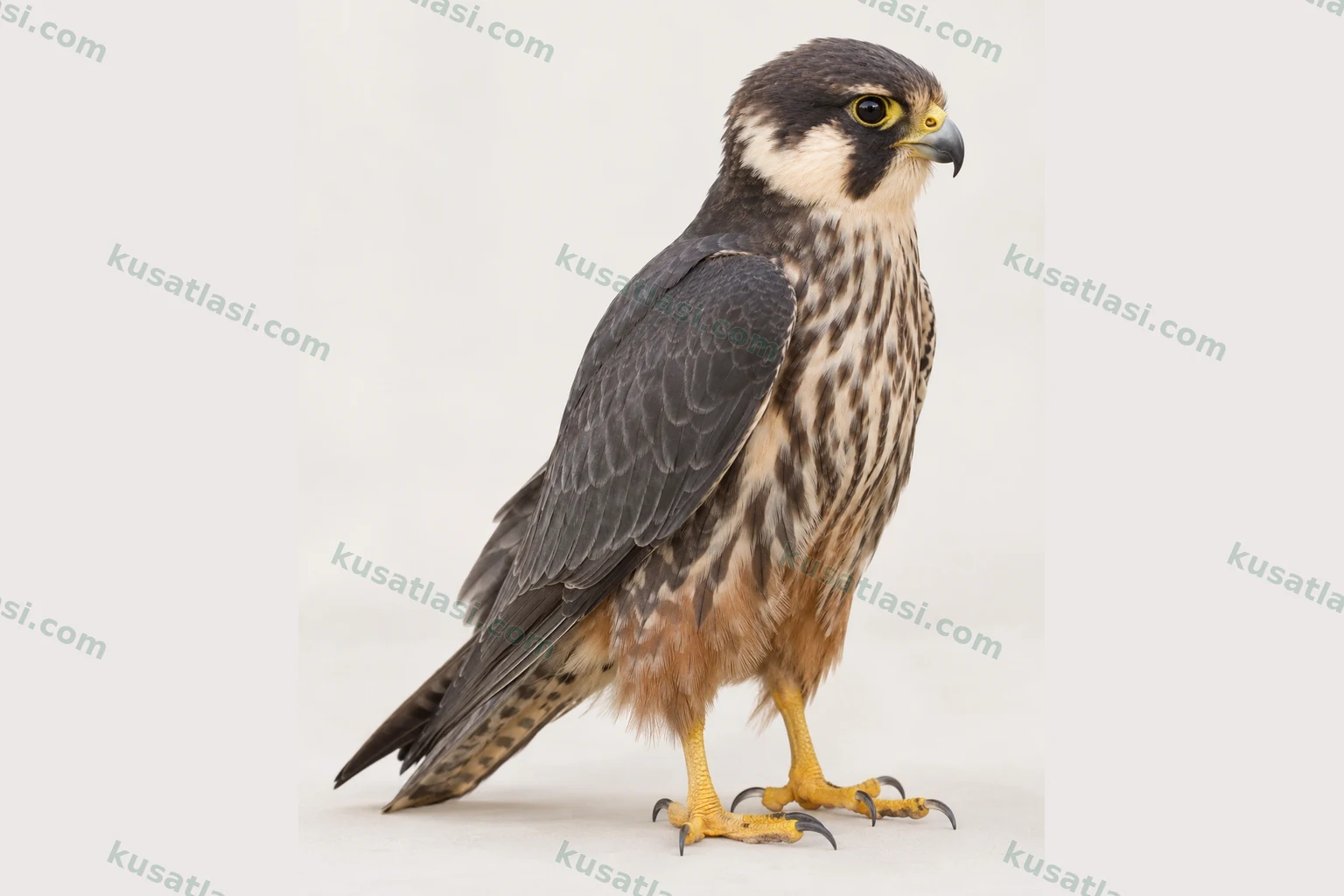
It is a pointed-winged falcon recognised by its dark head, blue-grey back and rufous underparts. Throat, breast and tail are assessed together with age and lighting conditions.
Biometrics
Length
Male26–31 cm
Female26–31 cm
Shared species value
Wingspan
Male60–73 cm
Female60–73 cm
Shared species value
Weight
Male125–178 g
Female186–224 g
African Hobby
Scattered wooded savanna and forest-edge habitats of sub-Saharan AfricaObservation guide in its natural range
Look for three features together
Do not rely on a single featureThis differs from the Eurasian Hobby’s pale, streaked breast; colour is not used alone in warm light.
Young birds are more clearly streaked below, but streaks alone do not identify the species.
This is assessed together with the pointed wings and the proportions of the head and tail.
Compare male and female
 FemaleMale
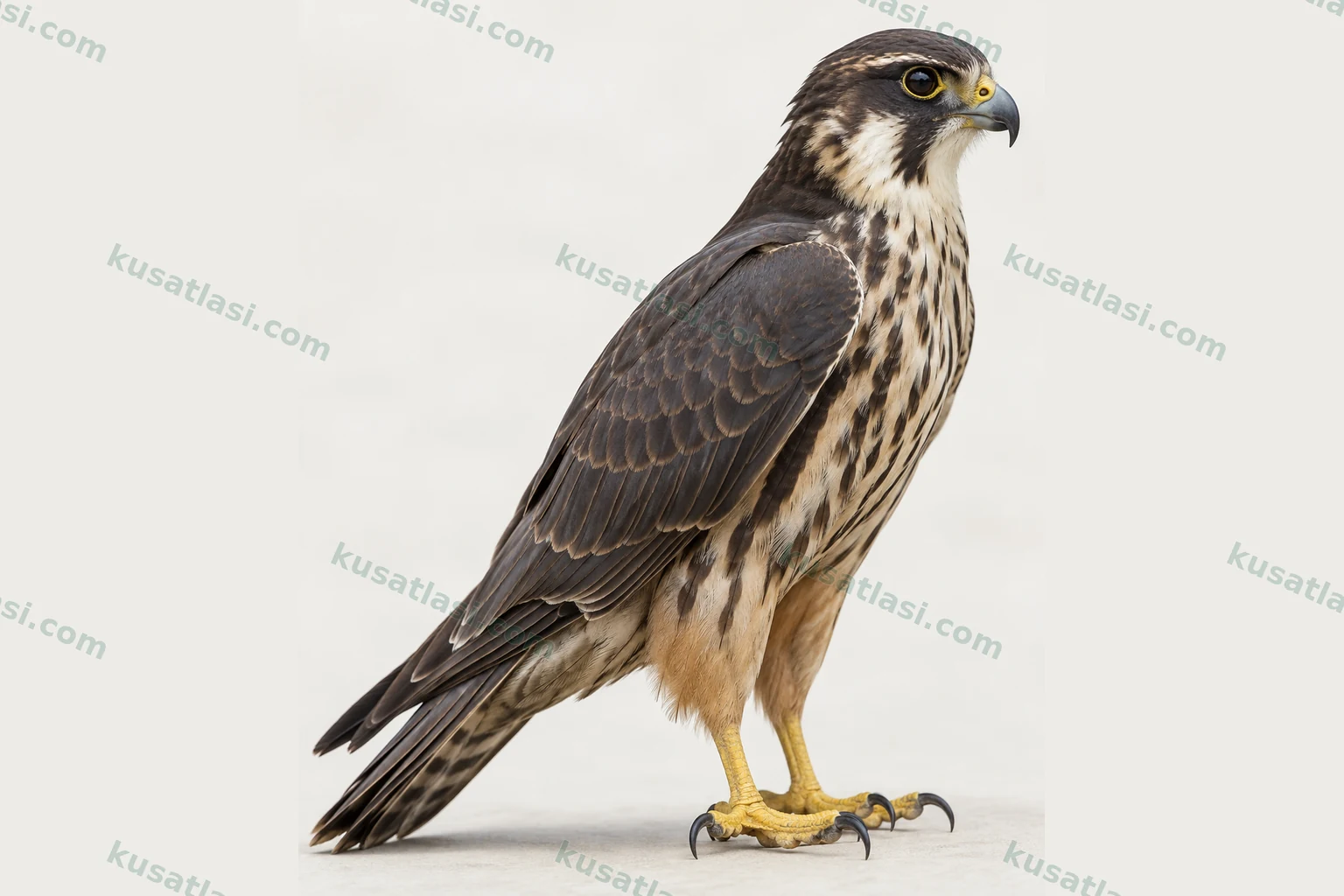
A single bird’s colour or apparent size at a distance is not considered a reliable sexing key. Young birds have broad underpart streaks.
Where to look in its natural range?
From existing viewpoints watch wooded clearings and water, especially early and late in the day. Do not approach nest trees.
In the southern African atlas, most records fall in September–April. The regional egg-laying example is September–November; the same season or an exact migration route is not assumed for other African regions.
January
In the southern African regional example, this month is within September–April, when the atlas reports most records. The precise location of non-breeding grounds was not verified.
February
In the southern African regional example, this month is within September–April, when the atlas reports most records. The precise location of non-breeding grounds was not verified.
March
In the southern African regional example, this month is within September–April, when the atlas reports most records. The precise location of non-breeding grounds was not verified.
April
In the southern African regional example, this month is within September–April, when the atlas reports most records. The precise location of non-breeding grounds was not verified.
May
In the southern African regional example, this month is outside the region’s main reporting period; this does not mean continent-wide absence. The precise location of non-breeding grounds was not verified.
June
In the southern African regional example, this month is outside the region’s main reporting period; this does not mean continent-wide absence. The precise location of non-breeding grounds was not verified.
July
In the southern African regional example, this month is outside the region’s main reporting period; this does not mean continent-wide absence. The precise location of non-breeding grounds was not verified.
August
In the southern African regional example, this month is outside the region’s main reporting period; this does not mean continent-wide absence. The precise location of non-breeding grounds was not verified.
September
In the southern African regional example, this month is within September–April, when the atlas reports most records. It is also within the regional egg-laying period. The precise location of non-breeding grounds was not verified.
October
In the southern African regional example, this month is within September–April, when the atlas reports most records. It is also within the regional egg-laying period. The precise location of non-breeding grounds was not verified.
November
In the southern African regional example, this month is within September–April, when the atlas reports most records. It is also within the regional egg-laying period. The precise location of non-breeding grounds was not verified.
December
In the southern African regional example, this month is within September–April, when the atlas reports most records. The precise location of non-breeding grounds was not verified.
Nest, egg and incubation
It may use other birds’ old stick nests high in trees. The southern African account reports two–four eggs in September–November, about 30 days of incubation and 30 days in the nest. The female feeds the young with food brought by the male. Nest departure is distinguished from complete food independence; no additional care days are invented.
The specialist description reports short kve-like and sharper kiik-like calls. An approximate written rendering alone identifies neither species nor sex.
Do not play recordings to attract birds; observe quietly, especially near nests.
Species information
Quick Identification
The African Hobby, Falco cuvierii, is an agile falcon with a dark head, blue-grey back and rufous-brown underparts. In adults, warm colour extending from throat down the body helps comparison. Underpart streaks may be weak or absent in adults but broader and clearer in young. Long pointed wings and fast flight stand out, without any single movement determining the species. Try to see head, throat, breast and tail on the same individual.
Sharing African hunting grounds with Eurasian Hobby, Falco subbuteo, complicates identification. A dark back and rufous patch at a distance do not separate them. Check whether rufous is restricted to part of the lower body or also covers throat and breast. Note light direction, since sunset can warm white feathers too. When colours are unclear, record wing shape, tail proportions and visible patterns; uncertainty must not be forced into certainty.
General Appearance and Posture
Adults combine dark upperparts and warm underparts. The near-black head may contrast with the blue-grey back. From the front, rufous throat and breast help; from behind, dark head and wings matter more. Folded perched wings do not show their full long pointed flight shape. Perched and flight marks cannot all be sought from the same angle. A hidden breast mark may be unseen because of posture rather than truly absent.
A falcon before a tree and another at a different distance may look similar in size. Closing the wings during a beat may also suggest short wings. Several successive views give more than one frame. Considering colour, proportions and age together reduces hasty single-feature decisions.
Males, Females and Young Birds
This source search did not verify a separate colour key for confidently sexing a freely seen individual. An apparently small bird in a photograph is not assumed to be male, nor a large one female. Shadow, puffed feathers and distance change appearance. Even two birds together do not alone establish their sexes. Food delivery is not a substitute sex label without prolonged observation and individual tracking.
Young have broad dark underpart streaks, unlike the adult's plainer rufous breast. Such a difference is expected, but many falcons have streaked young, so it alone does not identify a juvenile African Hobby. Head, throat tone, tail and flight are needed too. Data assigning transitional appearance to an exact calendar age were not verified; no precise month-age is inferred from a photograph. Lighting and angle must also be separated from age differences.
Appearance in Flight
It may hunt in open air with direct, fast, powerful flight. Pointed wing tips, a tail momentarily lost in turns and rapid direction changes hamper distant detail. Searching only the highest sky misses hunting airspace near woodland edges, clearings and water. Another fast falcon in that space is not thereby this species.
A good underside view may separate its rufous body from the Eurasian Hobby's paler streaked breast. Against Taita Falcon, Falco fasciinucha, warm throat colour and longer tail help. A shaded throat may conceal that difference. Recheck head and breast if it perches. Duration, direction and actually seen supporting marks make a better record than a name plus “flew fast”.
Voice and Behaviour
The specialist description reports short “kve” and sharper “kiik”-like calls. These are approximate Turkish renderings, not exact pitch, timing or repetition. Similar falcons can sound alike; a brief unseen call alone does not identify it.
It may be conspicuous hunting at dawn and late afternoon. The southern African atlas notes that late activity and fast flight can make it overlooked, not absent at all other times. It may gather with other falcons and raptors at flying termites. Do not assign every bird in such a group to one species. Feeding together proves neither a shared nest nor year-round association.
Similar Species
1. Eurasian Hobby, Falco subbuteo, is an important comparison because of pointed wings and aerial hunting. Adults have a pale dark-streaked breast, distinct from rufous lower belly and feathered upper legs. Check the African Hobby's more extensive rufous across throat and breast. Warm evening light prevents using colour alone.
2. Taita Falcon, Falco fasciinucha, may resemble it through dark upperparts and rufous below. A more compact shape, shorter tail, white throat and two rufous nape patches in good views help. Compare the African Hobby's rufous throat and longer tail at the same angle; being near rocks does not alone make it Taita Falcon.
Global Distribution
The African Hobby is scattered through suitable tropical and subtropical sub-Saharan Africa. West African forest–savanna transitions, suitable eastern wooded areas and some southern wooded savannas provide regional examples. The southern account describes Zimbabwe, central Mozambique, northern Botswana and Namibia's Caprivi; isolated records farther south or in arid areas are not equally continuous range. A continental map is not a map of local population abundance.
March 2005 fieldwork in Ghana's Bui National Park recorded it at several points and described two hunting behaviours. This supports that date and setting, not continuous breeding throughout the park or current population size. Map observations follow the same principle. A range model's colour does not put a nest at every coloured place; model, record sample and written native range remain distinct.
Status in Türkiye
No regular natural range or breeding population was verified in Türkiye during this review. “Hobby” in the name does not make it the same as Türkiye's Falco subbuteo; information from that page is not copied here. A claimed Turkish record cannot become an Africa-linked migration line without date, identification and origin assessment.
Migration
Most southern African atlas records fall in September–April, supporting interpretation as a summer visitor there. Roberts likewise gives arrival around September and departure in April, without locating precise non-breeding grounds. This regional seasonality does not give all African populations the same route and months. Possible northern non-breeding areas are not a verified country sequence. No invented starting point, journey length or definite continental arrow was drawn; the calendar states its region.
Breeding Habitat
It may use wooded savanna, tropical woodland, forest–savanna edges and other settings with open hunting airspace. Southern accounts emphasise palm savanna and broadleaf woodland. Occurrence in settlements or worked land does not make every town tree a nesting site. Tall perch and nest trees must be considered with open airspace for prey capture. A bird over open grass does not prove nearby tree cover unused.
Nest Site
It may occupy other birds' old stick nests high in trees. Regional sources mention eagle, kite, crow and cormorant examples, not one sole nest builder. Southern laying is September–November. Roberts reports two–four eggs, about 30 days incubation mainly by the female and about 30 days in the nest. A life-history compilation also gives 30 days incubation and 30 to fledging; it is not a new independent field measurement.
Departure is not full feeding independence; no exact further care period is supplied here. Do not climb or cut branches to expose an old nest for photographs. Blocking a food-carrying bird is not a method of studying development. Watch from afar without obstructing entries and exits.
Daily Space Use
It may leave a perch to pursue aerial prey, with hunting in clearings, near water and treetops. Include early and late hours rather than assessing only midday. Note date, time, vegetation and the open hunting space separately. A few encounters do not calculate home-range size, density or nest number; hunting presence and an egg-containing nest are different evidence.
What Does It Eat?
Flying insects are important, with small birds and bats also recorded. Southern accounts give winged termites, swallows, small seed-eating birds and small pigeons as examples. This list does not imply that every individual chooses the same foods in the same order, or that non-insect prey are restricted to a certain month. Seeing one food group does not measure a day's or year's diet percentage.
Dowsett-Lemaire and Dowsett's Bui National Park notes saw one individual carrying a small bird and another catching insects in its talons. These are concrete local examples of dietary variety. The carried bird was not identified, so it is not completed here as a swallow or weaver. Nor does the insect-catcher prove an insect-only day. Event observations and general diet accounts have different evidence scopes.
How Does It Hunt?
It can pursue and catch prey rapidly in the air, sometimes low or in openings near treetops. At mass termite flights, several falcons may share the resource. Identify each species separately; co-occurrence does not establish cooperative planning or a breeding partnership. Distinguish a successful capture from an unsuccessful chase.
If capture is not actually seen, a direction change is not written as a catch. Prey in bill or talons may show size and shape, but unclear images do not yield an exact prey name. No measured verified maximum hunting speed was found in this search. Another falcon's record or a wing-shape estimate is not borrowed to describe agility.
Other Birds' Old Nests
A raptor on a nest does not prove it built it. African Hobbies may use old stick nests. The atlas mentions eagles and kites in Zimbabwe, and regional accounts other builders. An old nest does not prove breeding by this hobby that year. Use, eggs and young are separate evidence levels; flushing the bird to inspect inside is unnecessary.
Hunting Together at Termite Flights
A brief abundant resource can gather different species. The atlas reports African Hobbies feeding with Eurasian Hobbies and other raptors at termites. Species identification remains necessary; recheck head and throat of a rufous bird within the group. Feeding together is not proof of a permanent flock or shared nesting site, only behaviour during concentrated prey availability.
Seldom Seen Versus Scarce
The southern atlas discusses late activity, fast flight and confusion with similar falcons as recording influences. Not seeing the bird during a short visit does not prove that a site is unsuitable. Many hunters one evening do not establish permanently high abundance either. Time, duration, light and diagnostic marks improve comparison. Atlas reporting rate is not a direct complete population census.