

World Birds IUCN statusLC · Least ConcernGlobal IUCN. BirdLife v10 (2025); taxon matching AviList 2026 / IOC 15.2; checked: 29.10.2026. The list year is not the species’ assessment date. Source and method · BirdLife OrderPasseriformesPerching birds FamilyPipridaePipridae
White-collared Manakin
Manacus candei
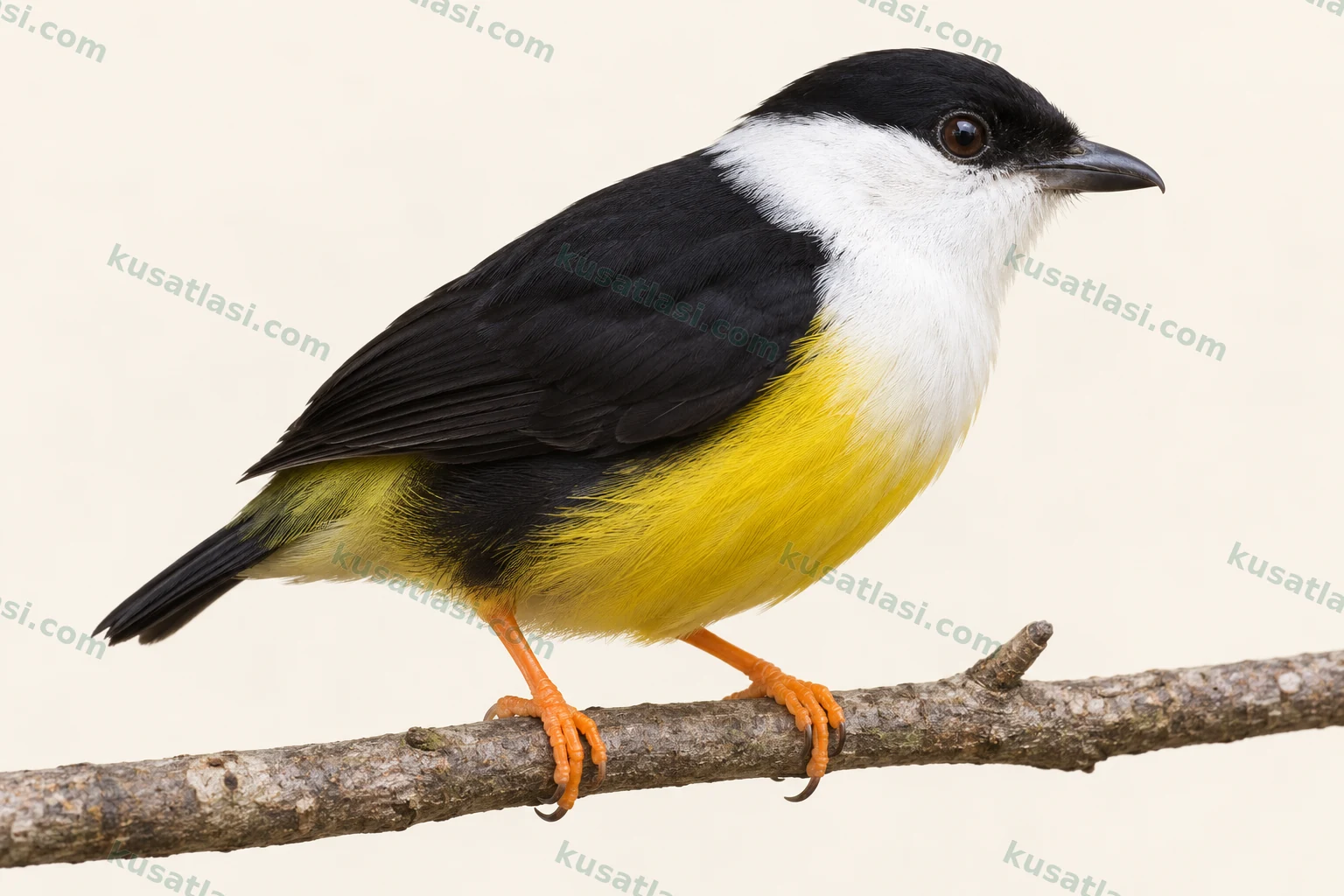
Male: black crown and wings, white neck and yellow belly; females and young can be greenish.
Biometrics
Length
Male11–12 cm
Female11–12 cm
Shared species value
Wing length
Male5.57 cm
Female5.57 cm
Shared species value
Weight
Male18–18.8 g
Female20.9 g
White-collared Manakin
Southern Mexico and the humid lowlands of Central AmericaObservation guide in its natural range
Look for three features together
Do not rely on a single featureLook for the black-and-white pattern together with the yellow belly.
Green alone does not distinguish a female from a young male.
Compare male and female
 FemaleMale
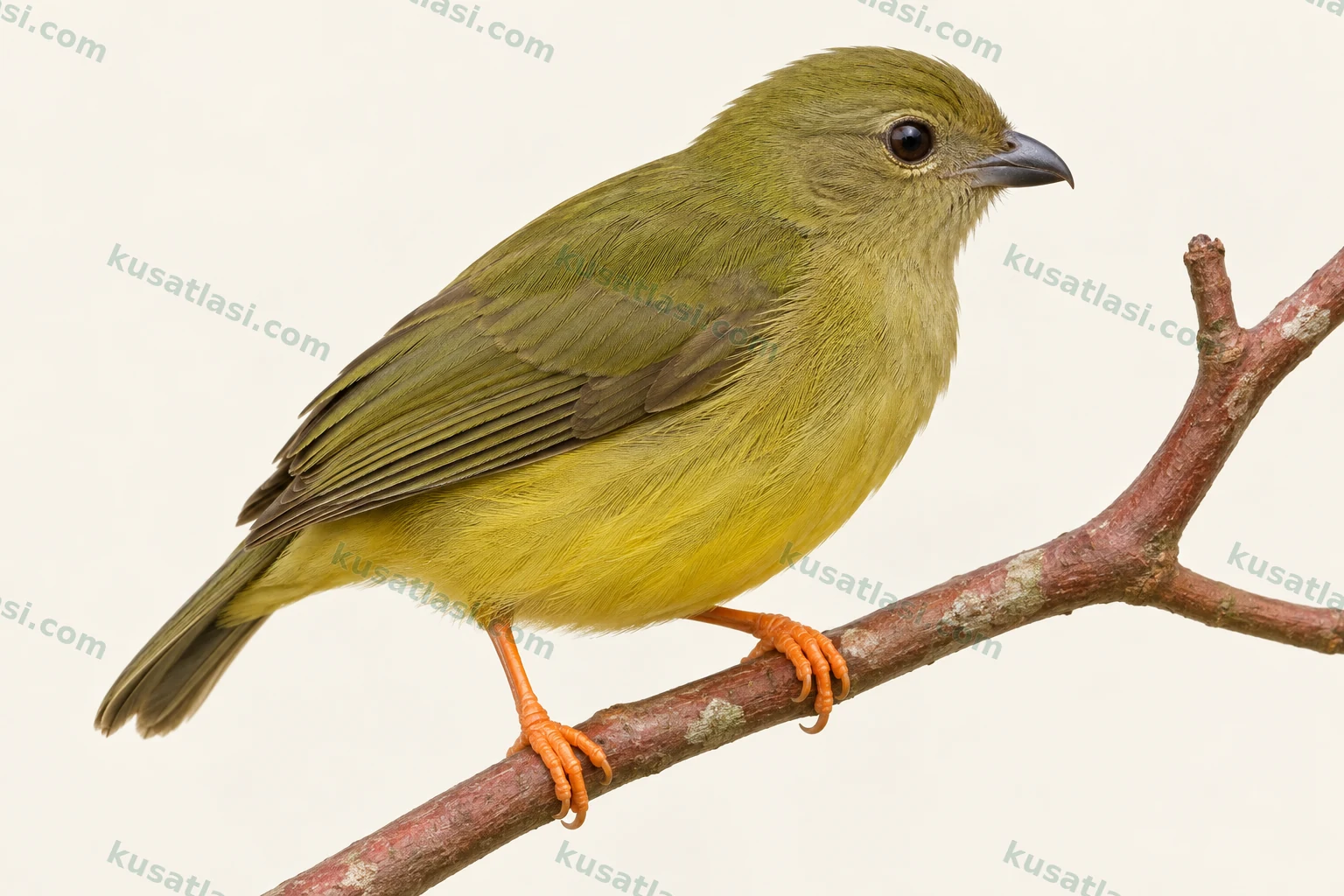
The distinctive adult male looks different; a green bird may be a female or a young male.
Where to look in its natural range?
Moist forest edges, dense secondary vegetation and fruiting plants.
Resident. The breeding example in the calendar comes from the northeastern Costa Rica study.
January
Resident; feeding movements are not a migration route. No verified regional date specific to this month was given; this does not imply local absence.
February
Resident; feeding movements are not a migration route. No verified regional date specific to this month was given; this does not imply local absence.
March
Resident; feeding movements are not a migration route. Breeding period in the northeastern Costa Rica study.
April
Resident; feeding movements are not a migration route. Breeding period in the northeastern Costa Rica study.
May
Resident; feeding movements are not a migration route. Breeding period in the northeastern Costa Rica study.
June
Resident; feeding movements are not a migration route. Breeding period in the northeastern Costa Rica study.
July
Resident; feeding movements are not a migration route. Breeding period in the northeastern Costa Rica study.
August
Resident; feeding movements are not a migration route. Breeding period in the northeastern Costa Rica study.
September
Resident; feeding movements are not a migration route. Breeding period in the northeastern Costa Rica study.
October
Resident; feeding movements are not a migration route. Breeding period in the northeastern Costa Rica study.
November
Resident; feeding movements are not a migration route. Breeding period in the northeastern Costa Rica study.
December
Resident; feeding movements are not a migration route. No verified regional date specific to this month was given; this does not imply local absence.
Nest, egg and incubation
An open cup built by the female in a branch fork; usually two eggs. A general incubation or nestling development period specific to this species was not verified.
Snaps, buzzes and whistle-like sounds; some snaps result from wing movements.
Do not play recordings to attract birds; observe quietly, especially near nests.
Species information
Quick identification
The White-collared Manakin Manacus candei is a small, plump bird of the moist lowland forests of Central America. The adult male combines a black crown and wings with a white throat and upper back and a yellow belly. Its tail looks short. The female lacks this striking black-and-white contrast; her greenish body and yellow belly are more easily confused with those of other small forest birds. The male's useful white-neck marking therefore cannot be applied to the female.
Check that a pale area really is feather colour. A patch of forest light can make a green bird's throat look whiter than it is. In the male, also examine the dark crown and wings around the white. A yellow belly alone is insufficient: related manakins may also have yellow or greenish underparts. The bird's sex and age appearance determine which identification features can be used.
General appearance and posture
The short tail and plump body are useful even in a bird perched quietly among leaves. However, a branch hiding part of the body can make the tail seem shorter. There is green around the male's lower back; describing the entire back as uniformly black is incomplete. The relationship of the white upper back to the dark wings helps reveal the whole pattern from head to tail.
The elongated throat feathers can be puffed out during courtship. This changing posture can quickly alter the apparent proportions of the same male's head and neck. Ordinary perching and display postures should not be treated as different species or ages. The legs can look orange, a shade affected by light and shadow. Their brightness alone does not establish age with certainty.
Males, females and young birds
The adult male's black, white and yellow pattern differs clearly from the female's greenish upperparts and yellow underparts. Young males can also be green, however; not every green individual is an adult female. A green bird seen at a male's display court cannot be identified solely because it visits that place.
A Costa Rican study describes a greyish throat in some young males, but adult females can show a similar grey effect. This feature alone does not distinguish age and sex. Feather replacement patterns may help specialists examining birds during ringing; all these details cannot be expected in a distant photograph. Age or sex may remain uncertain when reliable features are not visible.
Birds that have not completed the transition to adult male plumage may have incompletely developed colour patches. Seeing a black feather does not mean that the whole body has acquired the adult pattern. Avoid a firm decision from one pale or dark area until different surfaces are naturally visible. Catching a bird to investigate its age is not part of ordinary birdwatching.
Appearance in flight
The short tail and plump body help in flight, but a brief passage through forest may not show throat and belly simultaneously. If the male's white marking is hidden, yellow underparts alone are insufficient. The Cornell guide notes that a male may produce a low-pitched wing trill in flight; check that it really comes from the bird being seen.
A courtship jump is not the same movement as ordinary flight. High-speed video has shown that a male jumping between display saplings with its legs can use its wings to produce sound. A female joining the same display may cross the distance by flapping. Two airborne birds are not necessarily performing the same movement; details that merge into one action to the naked eye may differ.
Sounds and behaviour
Male displays can feature loud snaps, buzzes and whistle-like sounds. These are not all calls from the throat; some are mechanical sounds produced by wing movements. A snap in the forest alone does not identify the species. Observe the bird producing it together with its movement and location; playing recordings to stimulate a display court is unnecessary.
Males use small display courts between a few branches. Nearby males occupying the same place do not demonstrate shared nest care. A female joining a display can change its rhythm, but this brief encounter should not be interpreted as a lasting pair relationship. Entering a court to clear its floor or move branches alters the structure the bird uses; observe from outside.
Similar species
The male Manacus vitellinus has a golden-yellow collar. Hybridisation and the spread of colour traits between populations have been studied in the contact zone in western Panama. Thus, collar colour alone is unsafe for determining the taxon in boundary areas. The complexity revealed by genetic studies is not a reason to give every bird a definite name from one photograph.
Females and green young can resemble other Manacus species. Consider geography, appearance and visible features together. Birds on different slopes of Costa Rica cannot be assumed to belong to the same species merely because they occur in one country. Being near a distinctive adult male may provide helpful context, but does not by itself prove a green bird's entire identity.
World distribution
Current taxonomy places its natural range along the Central American belt from the Gulf lowlands of southern Mexico to eastern Costa Rica. Contact populations in northwestern Panama are treated separately in scientific studies. Moist forest habitat does not coincide with entire national territories. A record within a country does not establish regular presence in all dry interior areas or on every high mountain.
Status within its natural range
The current record places it in Least Concern. This category does not mean that every local display court is protected. Nests have been studied in human-modified areas around Tirimbina; nesting there does not show that all gardens have equal success. Fruiting plants, dense cover and safe nesting sites are separate requirements. Where populations meet, colour and taxonomic identity may not match exactly either.
Migration
It is mainly resident; no seasonal intercontinental route is drawn. Travelling between a display court and fruiting plants is a daily feeding movement. Records from different dates should not be joined into the journey of one bird. Nor should northeastern Costa Rica's breeding months become a shared calendar for the whole range: the same months cannot be asserted for another country without specifying local rainfall and site conditions.
Breeding habitat
Moist lowland forest edges and dense secondary vegetation are important. A displaying male and a nest containing eggs need not occupy the same point. Thick shrubs and fruiting plants offer different conditions from a single ornamental tree in an open garden. Describing habitat only through courts where males are easily seen leaves female habitat use incompletely represented.
Nest site
The female builds a small open cup attached to a branch fork and cares for the young. The Costa Rican expert account usually describes two eggs. An incubation period of 18 days used for a related species must not be presented as directly measured in this species; the recent study examined used it as an assumption. A reliable general incubation or development period specific to this species was not verified.
Daily habitat use
Outside displays, 1–2 birds may be seen on quiet perches or at fruiting plants. The Tirimbina nest study recorded predation and other birds taking nest material as different causes of loss. Approaching a nest and increasing its visibility is unsafe; watch from a distance without blocking the bird's access route.
What does it eat?
Fruit is an important part of its diet. AVONET classifies the species as a fruit eater, and Cornell also describes feeding in fruiting trees and shrubs. This classification does not mean that it eats the fruit of only one plant at every meal. Do not assign a random tree name to fruit whose identity has not been verified. Food offered experimentally in a study and food selected naturally are also different records.
How does it feed?
It can use food plants from low vegetation to the upper parts of trees. Time spent displaying must not be confused with feeding time; a male jumping between branches is not necessarily catching food. Reaching towards a branch does not count as successful feeding unless the bird is actually seen taking the fruit. Providing bait for observation changes plant choice and community patterns. Watching behaviour unfold naturally at fruiting plants is more informative.
Sound produced with the wings
The sharp snaps of courtship include sounds made by wing movements. This corrects the assumption that all sounds are calls. If footage of the bird's movements accompanies a recording, the relationship between sound and behaviour is easier to understand. Related Manacus species can perform similar displays, however, so the presence of snaps alone is not a definitive identification key.
A female can influence the display rhythm
Barske and colleagues' high-speed video study of two species showed that a female joining a display influenced male behaviour. In some movements the female starts ahead and the male follows her. The study's interpretation concerning mate choice is separate from the movement itself; it does not mean that every encounter necessarily ends in mating.
Colour boundaries and taxonomic boundaries
Studies in western Panama found that collar colour and genetic population boundaries do not coincide everywhere. Hybridisation and the transfer of traits have been investigated as the reason. A yellow-collared bird in a photograph should not automatically be assigned to another taxon. Nor should the distinctive adult pattern outside the contact zone be generalised to replace the complexity within it.
Daily nest survival and the whole nesting period
The Tirimbina study calculated daily nest survival and the outcome of the entire nesting period separately. A high daily value does not mean that the same proportion of nests fledged young; risk accumulates over days. This dated, local result is not a fixed rate for all Central America. A nest that looks intact today does not establish its outcome weeks later. Causes of loss also remain separate: a broken branch and an eaten egg are different events.