

World Birds IUCN statusLC · Least ConcernGlobal IUCN category. BirdLife v10 (2025); taxon matching: AviList 2026 / IOC 15.2; checked: 29.10.2026. The list year is not the species assessment date. Source and method · BirdLife OrderApodiformesSwifts FamilyApodidaeApodidae
White-throated Needletail
Hirundapus caudacutus
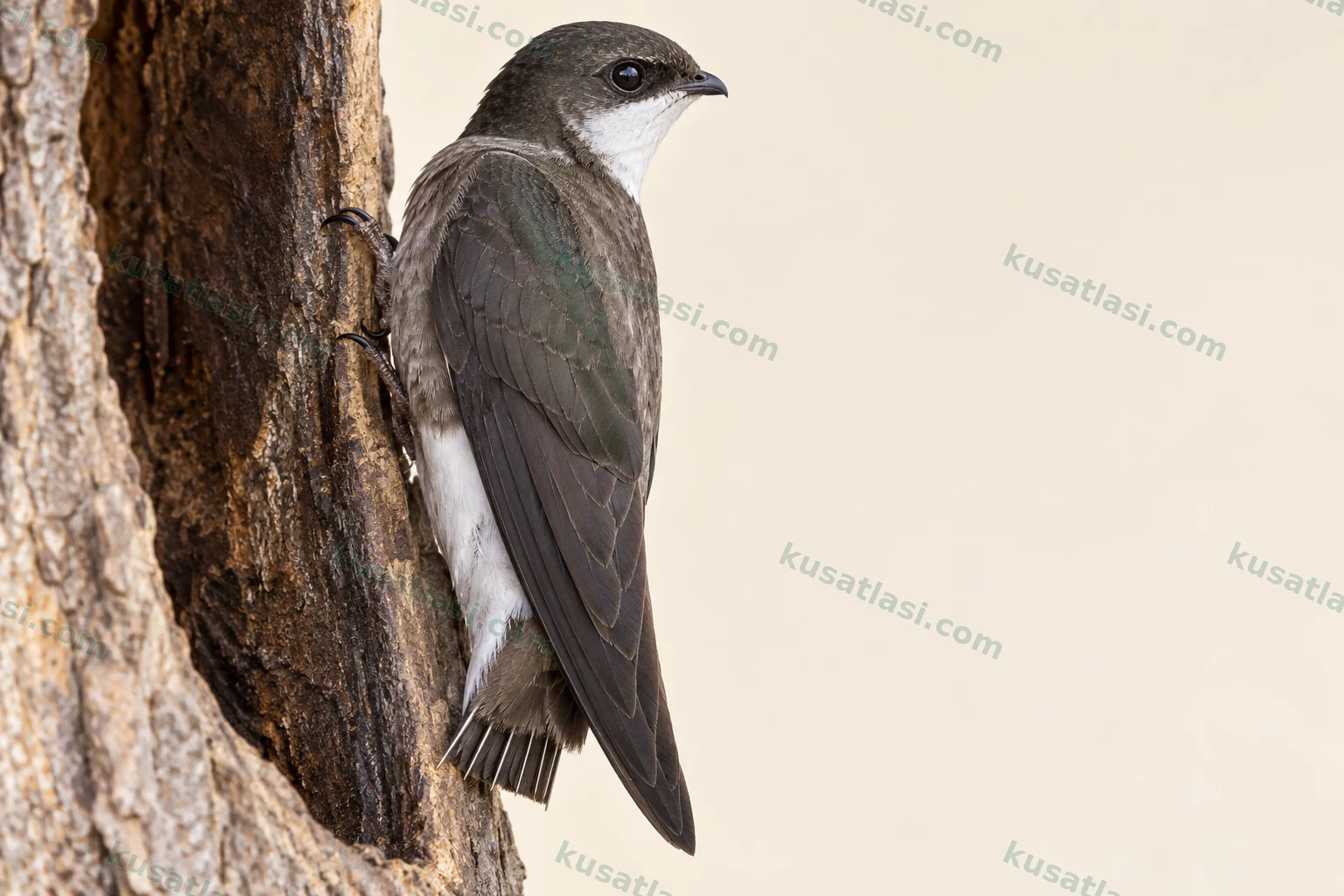
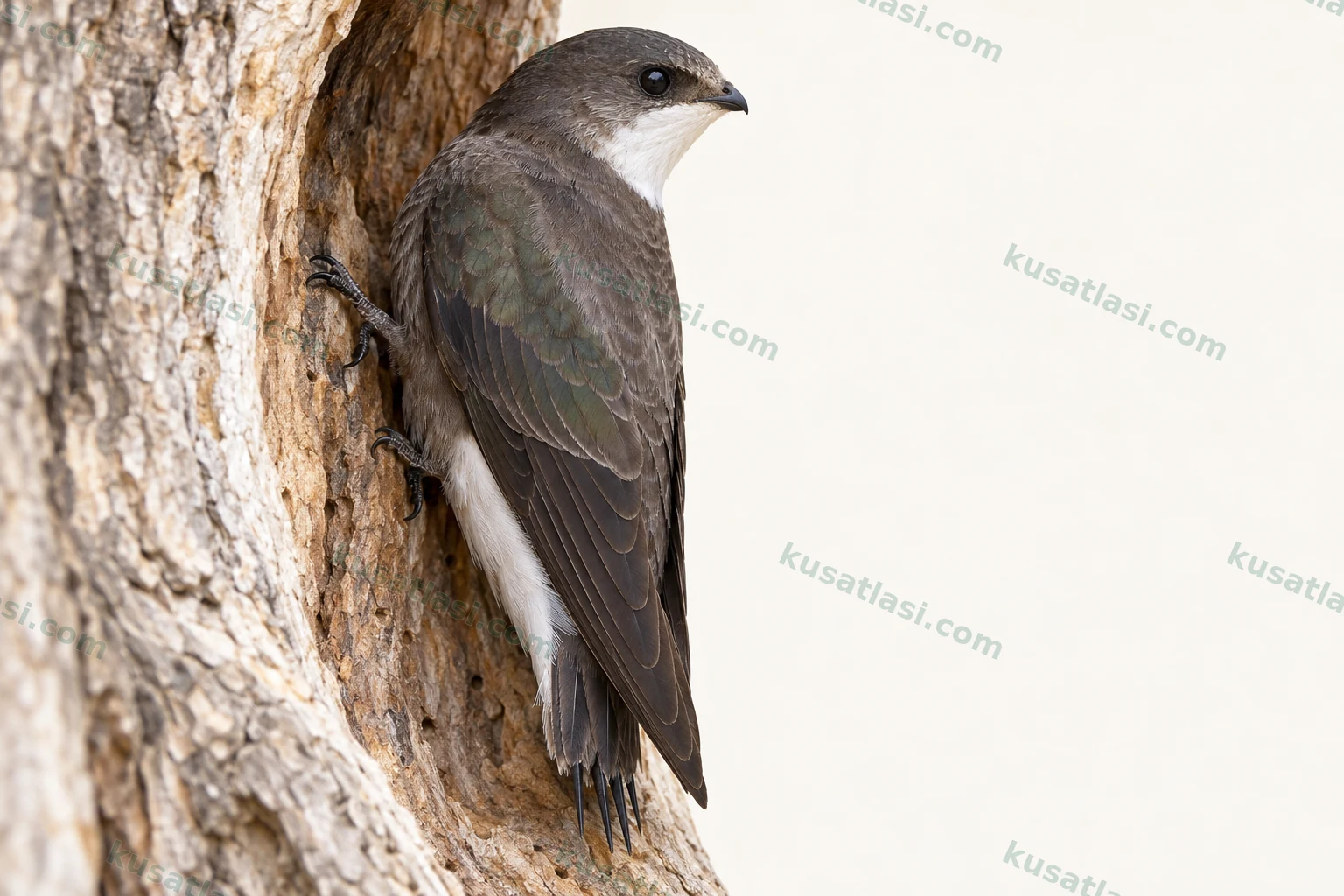
A heavy body, long pointed wings and a short spined tail. The throat is white, and the rear flanks and area below the tail form a white U.
Biometrics
Length
Male19–20 cm
Female19–20 cm
Shared species value
Wingspan
Male49 cm
Female49 cm
Shared species value
Weight
Male47.4–169 g
Female64.5–125 g
White-throated Needletail
East Asia and the Himalayas. The nominate subspecies spends the nonbreeding period in New Guinea and eastern Australia.Observation guide in its natural range
Look for three features together
Do not rely on a single featureThe throat is white. The belly is not entirely white.
It is short and nearly square, with stiff feather shafts projecting beyond it.
Consider the migratory nominate subspecies separately from the Himalayan form.
Compare male and female
 FemaleMale
Adult males and females look alike. In young birds of the nominate subspecies, the white forehead can be less conspicuous.
Where to look in its natural range?
Look for aerial feeding and for breeding areas associated with cavities in large trees.
The regional records differ. The Japanese study recorded laying in June. Southward passage to Australia occurs in September–November and the return north in March–April. Tasmanian flight tracks were concentrated in February and March.
January
The nominate subspecies is a long-distance migrant. No common annual route is applied to all subspecies. No verified regional date was provided for this month. This does not mean the species is locally absent.
February
The nominate subspecies is a long-distance migrant. No common annual route is applied to all subspecies. The 2020–2025 flight records in the Tasmanian study area were concentrated in this period.
March
The nominate subspecies is a long-distance migrant. No common annual route is applied to all subspecies. The return from Australia is a period of northward migration. The 2020–2025 flight records in the Tasmanian study area were concentrated in this period.
April
The nominate subspecies is a long-distance migrant. No common annual route is applied to all subspecies. The return from Australia is a period of northward migration.
May
The nominate subspecies is a long-distance migrant. No common annual route is applied to all subspecies. No verified regional date was provided for this month. This does not mean the species is locally absent.
June
The nominate subspecies is a long-distance migrant. No common annual route is applied to all subspecies. The 2018 study in Tokachi, Japan, recorded egg laying.
July
The nominate subspecies is a long-distance migrant. No common annual route is applied to all subspecies. No verified regional date was provided for this month. This does not mean the species is locally absent.
August
The nominate subspecies is a long-distance migrant. No common annual route is applied to all subspecies. No verified regional date was provided for this month. This does not mean the species is locally absent.
September
The nominate subspecies is a long-distance migrant. No common annual route is applied to all subspecies. This is a period of southward arrival in Australia. It is not a breeding period.
October
The nominate subspecies is a long-distance migrant. No common annual route is applied to all subspecies. This is a period of southward arrival in Australia. It is not a breeding period.
November
The nominate subspecies is a long-distance migrant. No common annual route is applied to all subspecies. This is a period of southward arrival in Australia. It is not a breeding period.
December
The nominate subspecies is a long-distance migrant. No common annual route is applied to all subspecies. No verified regional date was provided for this month. This does not mean the species is locally absent.
Nest, egg and incubation
The species nests in cavities in large trees. The Japanese study recorded 4–6 eggs in natural cavities and 5–7 in artificial cavities. In the 2018 samples, incubation averaged 19.3 days in six nests and the nestling period averaged 39.8 days in five nests.
The specialist account describes series of high-pitched, screeching twitter notes.
Do not play recordings to attract birds; observe quietly, especially near nests.
Species information
Quick identification
The White-throated Needletail Hirundapus caudacutus is a large swift with long pointed wings, a heavy body and a short tail. Look at the white throat together with the white areas at the rear sides and under the tail. These pale areas can form a U on the underside. The whole belly is not white. The paler middle of the back helps in a view from above. The stiff feather shafts projecting beyond the tail give the bird its needle-like appearance.
Its English name is White-throated Needletail and its current family is Apodidae. Chaetura caudacuta in older sources belongs here when the synonym is correctly matched. This bird is a swift rather than a swallow. Assess its short-tailed appearance and strong wings together. Flight speed alone does not establish the identity of a very fast bird. Compare wing posture, body shape and the position of the white areas in the same observation.
General appearance and posture
Hartert's original museum description gives a dark brown crown, nape and head sides with a metallic sheen. The middle of the back is a lighter brown than the surrounding areas. The dark wings and tail can show a greenish or bluish sheen. The sheen varies with viewing angle. A dark bird looking different under several lighting conditions does not establish a new sex-specific or seasonal form.
The throat and chin are white. Most of the remaining lower body is sooty brown, while the rear flanks, the area beneath the tail base and the undertail coverts are conspicuously pale. Dark body plumage separates the white throat from the white at the rear. Describing the two as a continuous white belly changes the identification. A pale tail area visible under the wing does not mean that the colour is on the wing itself.
In adults of the nominate subspecies, the pale feathers on the forehead and between the bill and eye can form a white band. The Himalayan form nudipes differs in the amount of white on the forehead. Hartert described it separately as lacking a white forehead. The current checklist treats the two as subspecies of one species. Not seeing a white forehead, particularly on a juvenile or Himalayan bird, is therefore insufficient to exclude the species.
The original account reports white on the inner surface of the innermost wing feathers. This does not form a broad band across the entire wing. A small pale area visible on the upperwing may look different as the wing opens. The pale middle of the back is a separate feature. Do not assign a detailed wing pattern from a small, motion-blurred photograph if it is unclear which feather surface is visible.
Males, females and young birds
Adult males and females have similar plumage patterns. The historical museum account says the female may be slightly smaller, but does not supply a photographic key applicable to every individual. The short tail, white throat and paler back are not male-only marks. The distance and wing posture of the birds being compared also change apparent size.
Young birds of the nominate subspecies can have less conspicuous forehead white. Hartert also described brown spots on the white undertail feathers of some young specimens. Those spots are not treated as a feature of adult females. Assess a lack of forehead white separately in relation to age and geographic form. Do not decide age from one small area. Consider the whole plumage and reliable information about the record.
Appearance in flight
Long pointed wings and a short, nearly square tail give the outline of a large swift. The swept-back appearance of the wings can change during movement. The stiff shafts at the tail tip may not be visible from far away. Assess the white throat and the U-shaped white area at the rear together with other visible plumage marks. Small flying birds sharing the same sky do not necessarily belong to the same species.
Voice and behaviour
The specialist Cornell account describes sequences of high-pitched, screeching twitter notes. A brief sound from a bird that has not been seen is insufficient for identification. The Australian museum account says that the birds, once thought never to land, can spend the night in trees. Spending much of their time in the air does not mean they fly continuously throughout their lives. Resting, feeding and breeding are distinct activities.
Similar species
Compare the Pacific Swift Apus pacificus by its distinctly forked tail and white rump. The White-throated Needletail has a shorter, almost square tail, with white on the throat and below the tail. Establish whether the rear of the bird is seen from above or below before comparing these different white areas.
When comparing with the Brown-backed Needletail Hirundapus giganteus, look for its dark throat. Use the White-throated Needletail's conspicuous white throat together with its short spined tail and heavy body shape. Hartert's older accounts include other Hirundapus forms, so the appearance of a large swift alone is not conclusive. Age and light also matter.
Global range
The current checklist gives the nominate subspecies a breeding range from south-central and eastern Russia to the Kuril Islands and Japan, south to northern Mongolia, northeastern China and the Korean Peninsula. Its nonbreeding areas are New Guinea and eastern Australia, including Tasmania. Nudipes ranges from the Himalayas to southwestern China. The movement patterns of the two geographic forms are not assumed to be identical.
Status within its natural range
The global checklist gives LC, while the Australian conservation assessment gives Vulnerable. The assessments cover different areas. Australian records do not establish that the bird breeds there. Failing to find it at one study site does not mean it is absent from the entire continent. Interpret the overall map estimate separately from records with a specific time and location.
Movements and migration
A light-recording study documented travel between northern Japan and eastern Australia. The outward and return paths can differ and form a broad figure eight. This is not a fixed route for every individual. Tarburton's analysis of Australian and Asian observations also describes different routes. Scattered records from different countries do not give a precise line of flight. The same long journey is not assumed for the Himalayan form.
Breeding habitat
Original research on Japan's Tokachi Plain examined cavities in large trees remaining in strips of trees and pastures in a farming landscape. The presence of a large cavity does not make every tree suitable for a nest. A nest site and the area used for aerial foraging operate on different scales.
Nest site
The study recorded 5–7 eggs in artificial cavities and 4–6 in the natural cavities used for comparison. In 2018, incubation averaged 19.3 days in six nests and the nestling period averaged 39.8 days in five nests. These are published figures from the Japanese sample. They are not fixed durations for all subspecies and years. The direct measurements are kept separate from older general compilations.
Daily use of habitat
The bird can pass over forests and clearings while hunting in the air. The museum account also mentions night roosting in trees. Do not approach a nest tree, obstruct the cavity entrance or attempt to make the bird fly. Local presence can change with food and weather. A brief pass is not interpreted as a permanent nesting site.
What does it eat?
The specialist museum account lists flying insects such as termites, ants, beetles and flies. The list does not describe the same prey proportions in every region. AVONET also identifies it as an aerial feeder on invertebrates. A pass through an insect swarm does not prove that every species in the swarm was eaten. Keep records of prey actually captured separate.
How does it hunt?
It catches insects in flight with a wide gape. Air movements and the distribution of insects in the air may affect where it searches. Plants on the ground may only be the surface it flies over. That does not mean the bird looks for food on the ground. Record flight direction, height and any prey that can actually be distinguished. Do not infer insect species, prey mass or daily consumption from an image of one very fast or high pass. Local feeding activity is not assumed constant throughout migration.
An aerial life does not mean never landing
The Australian museum account describes how birds once thought never to land can rest in trees. Frequent sightings in the air do not show that they also fly during every hour when observers cannot see them. This distinction matters when describing the lives of migratory swifts. Entering a nesting cavity and resting on an exposed branch are also different behaviours.
Tracking records are not a population count
An automated monitoring study in Tasmania recorded 2,982 flight tracks in 2020–2025. The researchers explain that the same individual could be seen again and some birds might not be recorded at all. The count cannot be used as exactly 2,982 distinct individuals or as the entire local population. The fact that 86 percent of the records occurred in February and March is also a seasonal result from that study site.
Crossing rotor height is not a collision count
In the same study, some flight tracks crossed the height swept by the rotor. Such a pass indicates the possibility of an encounter. It does not mean a bird died on every pass. A flight record and a dead bird actually found are different kinds of evidence. Turning a risk indicator into a definite mortality rate changes the study's result.
The white forehead varies
Hartert's museum account describes weaker forehead white in young birds of the nominate subspecies. Its absence in the Himalayan form is a separate geographic feature. Do not merge the effects of age and subspecies and draw a firm conclusion from one photograph. Look also for more extensive marks such as the white throat and the body pattern.
Migration can follow different routes in each direction
The outward and return tracks in the Japan–Australia study resemble a figure eight. This does not give one fixed route to plot for the whole species. Tracking samples show which breeding population is connected to which nonbreeding area. Evidence is needed before applying the same route to another subspecies or to individuals that were not tracked.