

World Birds IUCN statusLC · Least ConcernGlobal IUCN category. BirdLife v10 (2025); taxon matching: AviList 2026 / IOC 15.2; checked: 29.10.2026. The list year is not the species assessment date. Source and method · BirdLife OrderProcellariiformesTubenoses FamilyProcellariidaeProcellariidae
White-headed Petrel
Pterodroma lessonii
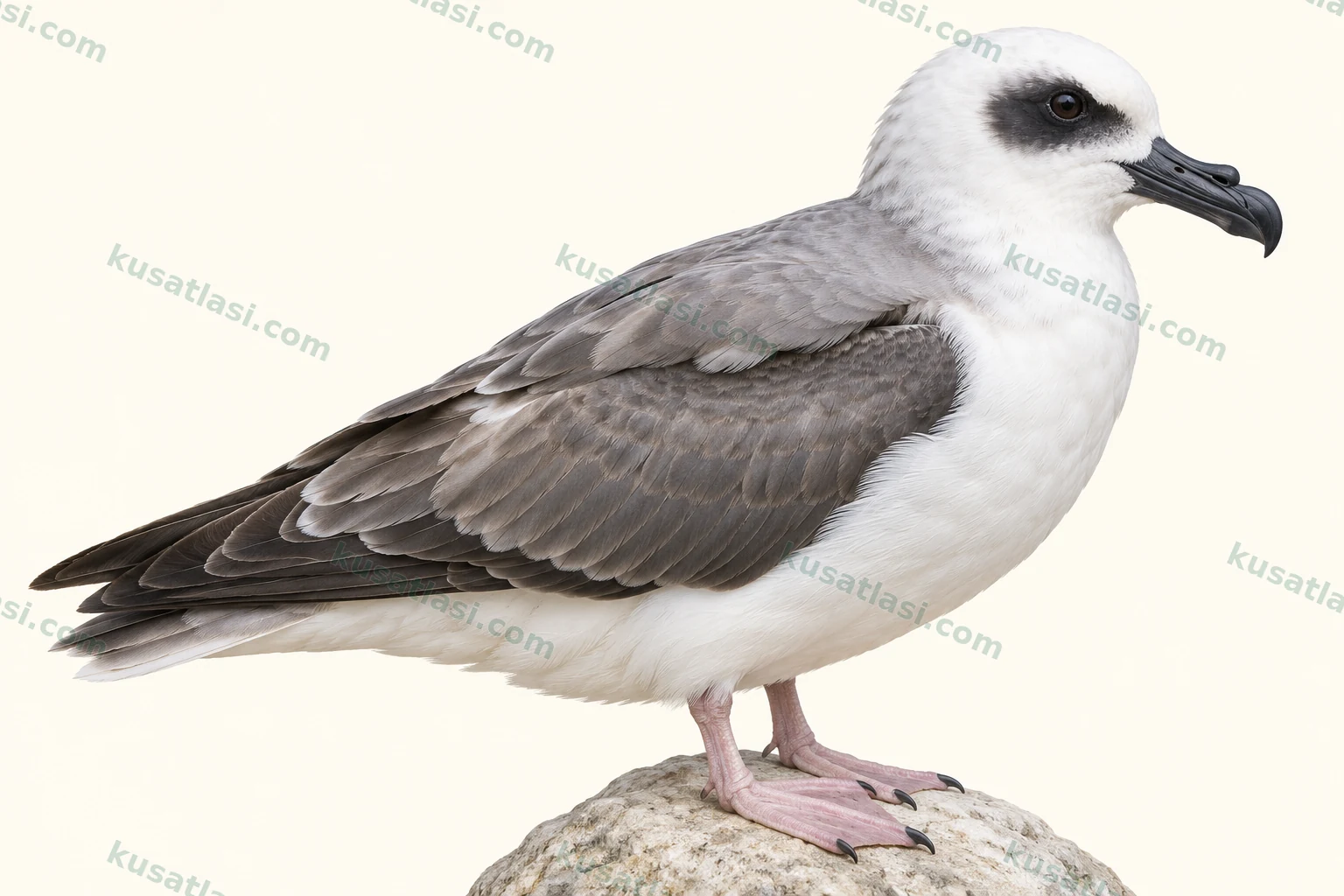
A large grey-and-white petrel of the Southern Ocean, identified by the prominent dark eye patch in its pale head, white body and dark underwings together.
Biometrics
Length
Male40–46 cm
Female40–46 cm
Shared species value
Wingspan
Male109 cm
Female109 cm
Shared species value
Weight
Male580–810 g
Female580–810 g
Shared species value
White-headed Petrel
Southern Ocean; colonies on Crozet, Kerguelen, Macquarie, Auckland and AntipodesObservation guide in its natural range
Look for three features together
Do not rely on a single featureWhite head with a conspicuous dark lower-eye patch; black hooked bill.
Pale-grey back, with darker wings and rump.
White body and dark-grey underwings; long, narrow wings.
Compare male and female
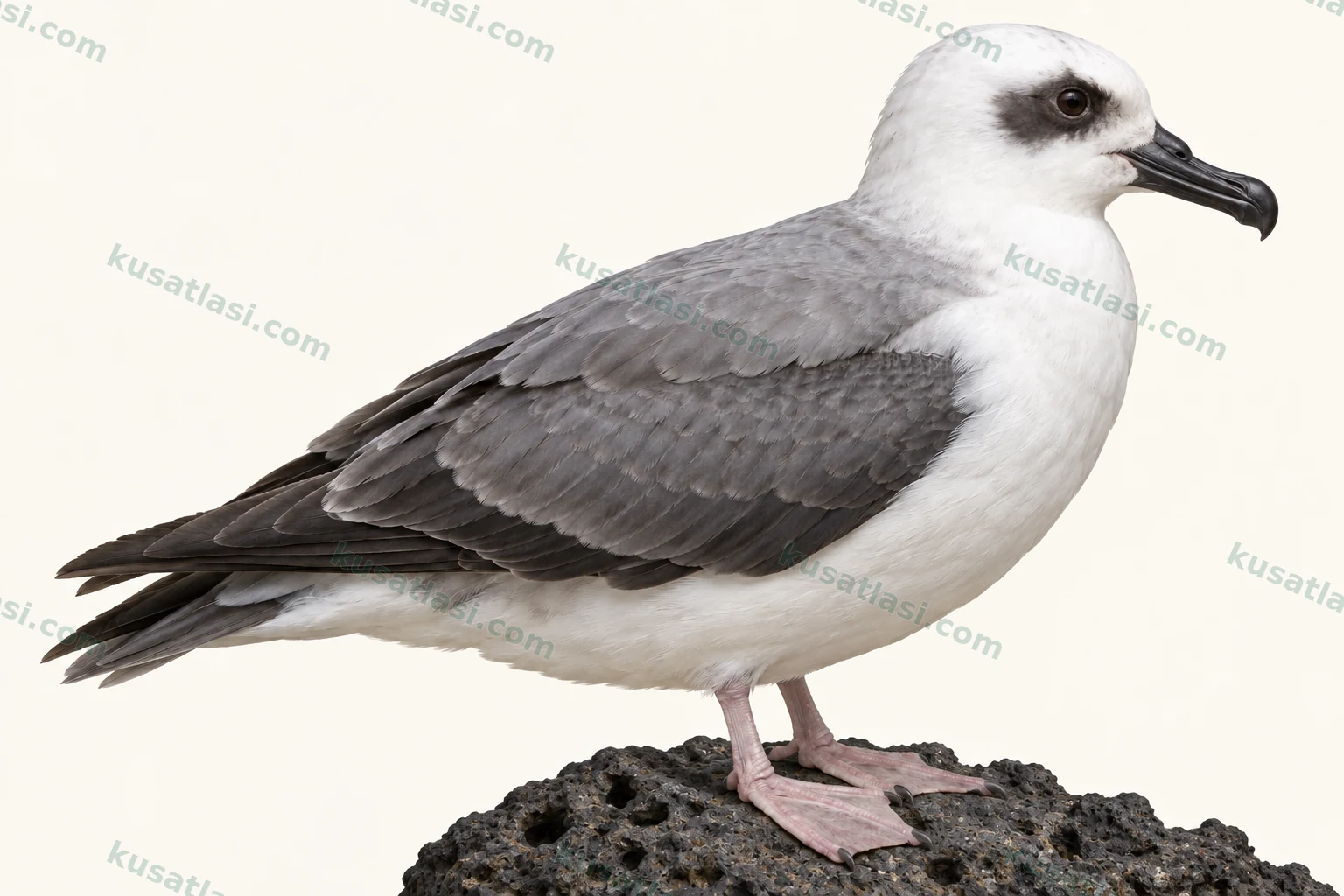 FemaleMale
Adult males and females are similar; fully feathered young may not be reliably separable in the field.
Where to look in its natural range?
Open sea and remote breeding islands; soil nest burrows used at night.
The regional calendar of the Adams Island tracking study in 2011–2014; other colonies are not expected to follow the same dates.
January
Returns to breeding islands and distant ocean movements occur; there is no single shared annual route. Auckland, Adams Island: Egg laying in late November–December; hatching towards late January, approximately inferred from the tracker.
February
Returns to breeding islands and distant ocean movements occur; there is no single shared annual route. Auckland, Adams Island: The period of chick rearing and bringing food from the sea.
March
Returns to breeding islands and distant ocean movements occur; there is no single shared annual route. Auckland, Adams Island: The period of chick rearing and bringing food from the sea.
April
Returns to breeding islands and distant ocean movements occur; there is no single shared annual route. Auckland, Adams Island: The period of chick rearing and bringing food from the sea.
May
Returns to breeding islands and distant ocean movements occur; there is no single shared annual route. Auckland, Adams Island: The period of chick rearing and bringing food from the sea.
June
Returns to breeding islands and distant ocean movements occur; there is no single shared annual route. No verified regional date specific to this month was given; this does not mean local absence.
July
Returns to breeding islands and distant ocean movements occur; there is no single shared annual route. No verified regional date specific to this month was given; this does not mean local absence.
August
Returns to breeding islands and distant ocean movements occur; there is no single shared annual route. Auckland, Adams Island: Returns to the colony and pre-laying visits.
September
Returns to breeding islands and distant ocean movements occur; there is no single shared annual route. Auckland, Adams Island: Returns to the colony and pre-laying visits.
October
Returns to breeding islands and distant ocean movements occur; there is no single shared annual route. Auckland, Adams Island: Returns to the colony and pre-laying visits.
November
Returns to breeding islands and distant ocean movements occur; there is no single shared annual route. Auckland, Adams Island: Egg laying in late November–December; hatching towards late January, approximately inferred from the tracker.
December
Returns to breeding islands and distant ocean movements occur; there is no single shared annual route. Auckland, Adams Island: Egg laying in late November–December; hatching towards late January, approximately inferred from the tracker.
Nest, egg and incubation
A chamber lined with plant pieces lies at the end of a soil tunnel, with one white egg. Both adults incubate and feed the chick. The specialist account gives 55–60 days of incubation and about 102 days from nest to flight; exact days were limited in the older original studies, and GLS did not measure the precise moment of hatching.
At the colony, high whistles and lower moaning calls are heard at night; at sea the bird is generally silent.
Do not play recordings to attract birds; observe quietly, especially near nests.
Species information
Quick identification
The White-headed Petrel Pterodroma lessonii is a large grey-and-white seabird of the Southern Ocean’s open waters. Assess the white head with its conspicuous dark patch around the lower eye, long narrow wings and white underparts together. From above, darker wings flank the pale-grey back; from below, dark-grey underwings flank the pale body. A pale head alone is insufficient; the shape of the dark area beside the eye is especially important.
During a boat observation the same bird may reveal its upper and lower surfaces within seconds. Following the head, underwing and tail together as it turns strengthens identification. Dark wings contrasting with a pale body do not separate all grey-and-white petrels. Make sure the parts seen as the viewing angle changes belong to the same individual.
General appearance and posture
The forehead and front of the crown are white. Fine pale-grey markings may occur on the rear crown and nape; the back also looks pale grey. The dark patch below the eye contrasts strongly with the pale surrounding feathers. The dark upperwing pattern extends behind the back between the wings. The grey tone of fresh feathers may diminish with wear; flight feathers approaching dark brown are not certain evidence of another species.
The upper tail is pale grey, with possible white at the sides and tip. Closed, the tail looks pointed; spread, it appears wedge-shaped. The bill is entirely black with a strong terminal hook. The tubular nostrils on top are conspicuous at close range. The feet combine pink flesh tones with dark parts of the toes and webs; because they are concealed in flight, this detail is not sought on a distant bird.
A narrow grey area sometimes visible on the sides of the neck may extend downwards. This variation can cause confusion with a similar species carrying a broader dark breast band. Seeing pale head area, eye patch, body and upper tail together is more reliable than relying on one line.
Males, females and young birds
Adult males and females have similar plumage. Darkness of the grey or size of the eye patch is not used as a certain field sex criterion. Feather wear, light and individual variation can produce different appearances within the same sex.
A fully feathered young bird may also be difficult to distinguish reliably from an adult. A newly flying bird is not aged solely from its white head. A chick inside the nest looks different in its grey down; later in development the underparts may become paler. A downy chick and an independently flying young bird are not presented as one appearance representing the same age class.
Among adults tracked on Adams Island, some skipped a breeding season. This does not by itself mean that the bird was young or had failed to find a mate. Adults were recorded returning briefly to the same nest site after an earlier successful or failed attempt, then heading to sea again. Annual breeding status cannot be determined from plumage.
Appearance in flight
The long wings may be held forward towards the elbow and swept back in their outer sections. Opening the wing tips in a turn makes the outer part look broader. Assess pale back, dark rump and upperwing pattern from above, and white body with dark underwings from below. Small pale areas at the leading edge near the body do not mean the entire underwing is white.
In light wind it adds wingbeats between glides. In strong wind it may rise and fall in longer glides. Broad arcs over the sea do not mean all individuals use the same height or that flight style alone identifies a bird with certainty. Wind direction, waves and visibility change its apparent movements.
Voice and behaviour
Nocturnal activity is pronounced on breeding islands: birds approach nests in darkness and enter burrows. High repeated whistles and lower moaning sounds may be heard. Calls come mainly from the air and sometimes from the nest burrow. At sea it is generally silent. Voice has not been verified as distinguishing adult males and females in every situation.
Trackers from Adams Island recorded flight and water contact at sea both day and night. This does not contradict nocturnal activity ashore; the time of coming to land and the time of marine foraging are separate matters. It was not measured whether every water contact involved prey capture. The relationship between long periods on the water and winter feather moult was treated as an interpretation in the study.
Similar species
Soft-plumaged Petrel Pterodroma mollis is smaller, with a darker-looking head and neck band. White-headed Petrel’s distinct eye patch in a pale head and pale upper tail are helpful. The variable grey on the neck sides alone does not separate the species; also examine breast-band width and the whole head.
Grey Petrel Procellaria cinerea is larger, with a darker head and pale greenish bill. Pale Kermadec Petrel Pterodroma neglecta lacks a distinct lower-eye patch; broad pale areas towards the outer underwing stand out. Failure to see the bill colour in poor light is not enough to treat that colour as absent.
World distribution
Confirmed breeding areas are in the Crozet, Kerguelen, Macquarie, Auckland and Antipodes island groups. At sea the species uses wide areas of the Southern Ocean around Antarctica. A breeding island and the marine area used for feeding at another time of year are not the same thing. Not every island listed as a possible nesting place in older sources is marked here as a confirmed colony.
Status within its natural range
Its global category is Least Concern. Birds living in nest burrows on remote islands are difficult to count; older total population estimates are not treated as new complete censuses. Introduced mammalian predators and damage to nesting habitat are important conservation issues. The success of the mouse eradication undertaken on Antipodes in 2016 was confirmed by the 2018 check. Mouse presence mentioned in an older species account is not repeated as the current situation.
Migration and movements
Ten adults tracked from Adams Island in 2011–2014 used different marine areas from off South Africa to the central South Pacific. The long pre-laying period at sea and dispersal after breeding differ from a resident bird remaining continuously near the colony. Some individuals returned to similar wintering areas in different years.
Positions in this research were calculated from light and water data; they are not exact metre-scale routes. Neither a single line followed by every bird in the colony nor the same calendar for other island colonies is assumed. The map shows broad ocean geography; it does not report a nest or birds in every month at every point of a coloured area.
Breeding habitat
Peaty soils, large grass tussocks, ferns and low shrubs may be used on breeding islands. Nesting areas beneath forest also occur in the Auckland group. Slope, soil drainage and a structure suitable for burrowing matter. Not every part of an island seen from the sea is assumed to hold the same nest density.
Nest site
A chamber lined with plant pieces lies at the end of a long soil burrow. The typical clutch is one egg. The specialist compilation gives 55–60 days for incubation and about 102 days to the transition from nest to flight. The older Macquarie study had limited certainty for these durations, while the Adams tracking study could not directly establish the moment of hatching. Both adults incubate and feed the chick.
Daily use of space
Feeding takes place on the open sea; an adult may bring food to its chick after a long trip. Opening the burrow of a bird returning ashore at night, blocking its path or pursuing it with light disrupts natural behaviour. Nesting-area observations must follow the island’s conservation rules; an independent sea observation does not require entering the colony.
What does it eat?
Recorded foods include crustaceans, squid and lanternfishes. Crozet stomach samples compiled by HANZAB contained small crustaceans and cephalopods; Antipodes and Kerguelen records also documented marine prey. The frequency of a food group in a few stomach samples is not its percentage by weight in the worldwide population’s annual diet. Regional and seasonal dietary details remain poorly known.
How does it catch food?
Taking prey from the sea surface has been directly recorded. Flight and landings on the water may follow one another offshore. The Adams study’s water-contact data show night and day activity, but do not identify prey taken at each landing. Resting on the surface and feeding may produce the same sensor signal, so they must be distinguished carefully.
During breeding, adults leave the colony to bring food to the chick. The farthest point reached by one tracked bird is not the species’ usual daily foraging distance. Chick-feeding success cannot be understood from journey length alone either; finding prey and the time of return must be assessed together.
A small tracker reveals a large ocean area
The Adams Island study revealed the movements of ten separate adults. Some were followed over several years, so the number of recorded years exceeds the number of birds. Multiple years belonging to one individual must not be interpreted as independent records of different birds. This distinction matters when extending findings from a small tracked group to the entire species.
Nest neighbours can separate at sea
Birds from the same colony went to different marine regions after breeding. Even the two members of one tracked pair used separate ocean surroundings in winter. Sharing a nest site does not mean flying side by side throughout the year. Long-term pair bonds and choice of marine area are different levels of behaviour.
Skipping breeding does not mean never visiting the island
The study found adults that did not lay in one season returning briefly to the nest site before leaving again. Skipping was recorded after a previously successful attempt as well as after a failed one. One return therefore does not prove that the nest contains an egg that year.
A calculated position is not as exact as a drawn route line
A tracker calculating position from light uses day length and the time of noon. Latitude uncertainty increases near the equinoxes; the researchers also assessed water temperature and movement constraints. A thin line on a map does not mean the bird passed exactly above it. The study is valuable for showing use of broad ocean areas.
The date of island information matters
Mouse eradication on Antipodes is a verified conservation gain for the island; it does not by itself establish a particular percentage increase in White-headed Petrel numbers. The population’s response requires separate monitoring.