

World Birds IUCN statusLC · Least ConcernGlobal IUCN category. BirdLife v10 (2025); taxon matching: AviList 2026 / IOC 15.2; checked: 29.10.2026. The list year is not the species assessment date. Source and method · BirdLife OrderStrigiformesOwls FamilyStrigidaeStrigidae
White-throated Screech-Owl
Megascops albogularis
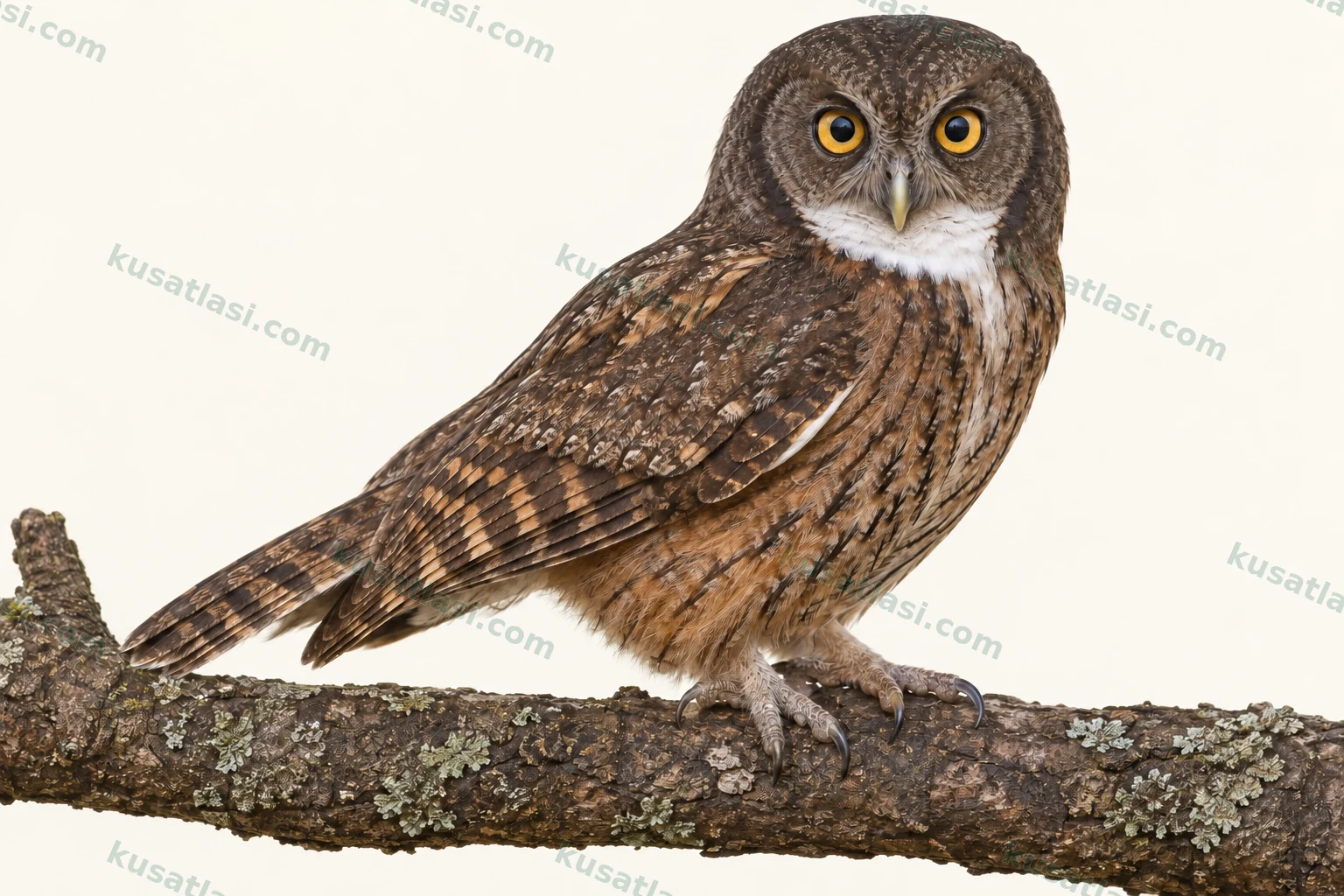
In Andean mountain forests, look for the dark head and upperparts, white throat and warm-coloured streaked belly. Calls exchanged at night help identify the owl.
Biometrics
Length
Male19–25 cm
Female19–25 cm
Shared species value
Wing length
Male19.62 cm
Female19.62 cm
Shared species value
Weight
Male130–185 g
Female130–185 g
Shared species value
White-throated Screech-Owl
Andean mountain forests from Venezuela to BoliviaObservation guide in its natural range
Look for three features together
Do not rely on a single featureLook for the white throat together with the dark upperparts and streaked belly.
From a clear angle, check the head outline for the absence of conspicuous long tufts.
Listen for short descending sequences and the calls exchanged by a pair.
Compare male and female
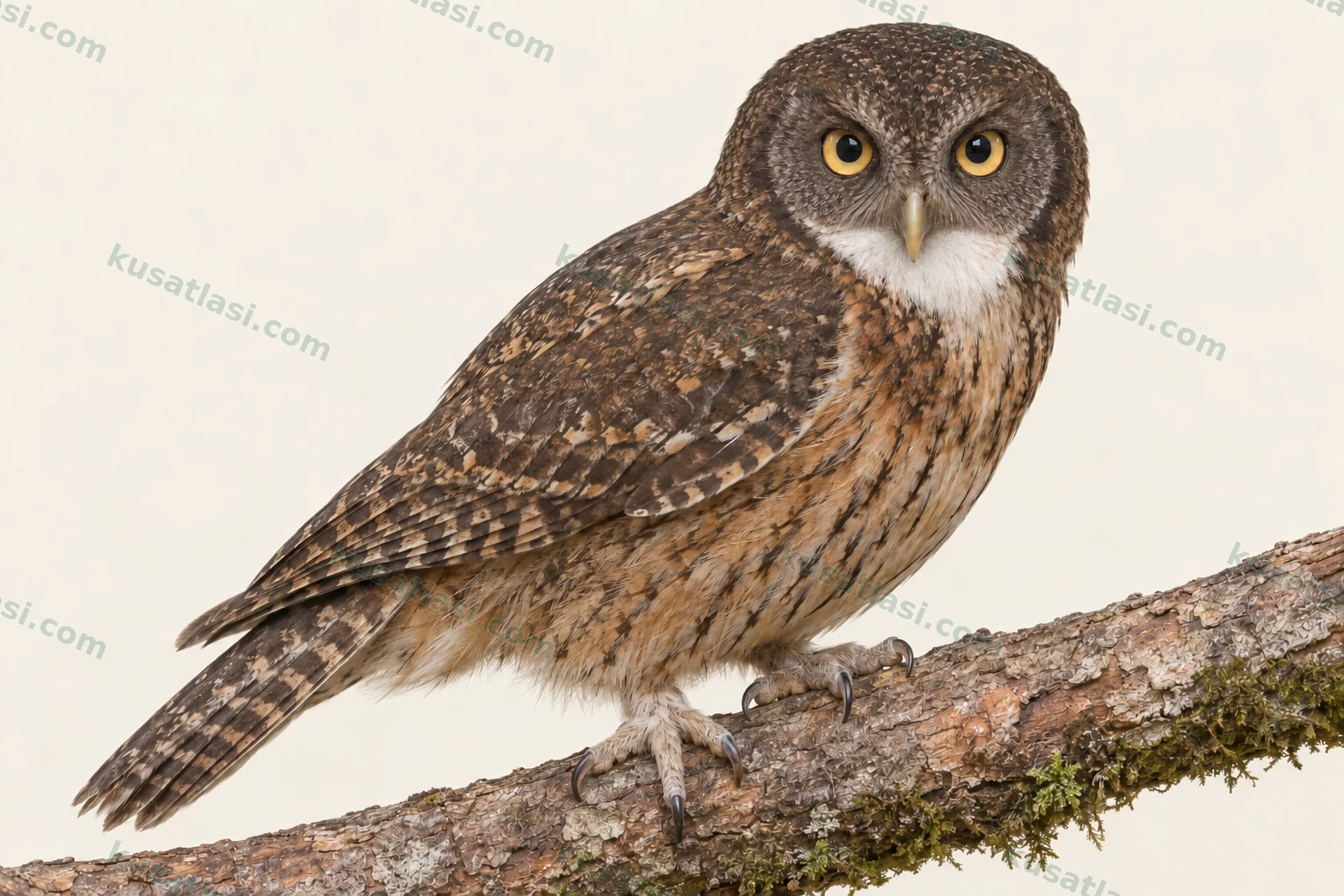 FemaleMale
Basic plumage does not distinguish the sexes. The difference in the voice study samples does not determine sex in every recording.
Where to look in its natural range?
Listen quietly for natural nocturnal calls in humid mountain forest.
A resident mountain-forest species. Exact breeding months have not been verified.
All months: The species is resident. The breeding calendar has not been verified. No verified regional date is given for this month. This does not indicate local absence.
January
February
March
April
May
June
July
August
September
October
November
December
Nest, egg and incubation
Nest structure, typical clutch size, incubation duration and the time the young spend in the nest have not been verified.
Short descending sequences consist of resonant notes. Pairs may call back and forth.
Do not play recordings to attract birds; observe quietly, especially near nests.
Species information
Quick identification
The White-throated Screech-Owl Megascops albogularis inhabits humid mountain forests in the Andes. Look for the dark brown head and upperparts, conspicuous white throat and warmer, paler streaked belly together. Small pale spots and streaks can appear on the head, back and wings. A white throat alone does not identify a nocturnal bird. Consider the face, underparts, voice and mountain habitat together.
Its head looks rounded and lacks conspicuous long feather tufts resembling ears. This can be hard to see in the dark forest. If foliage interrupts the head's outline, leave the presence of tufts uncertain. At night, make a brief, quiet observation instead of keeping the owl exposed under a strong light.
General appearance and posture
Small pale marks on the dark upperparts help the bird blend into its surroundings among trees. The boundary between the white throat and warm-coloured, streaked underparts is more informative. The Peruvian account describes the eye as amber. Bright reflections from a flash or torch can change its apparent colour, so do not rely on the reflection alone. Compare a genuinely white throat with the overall body pattern.
Fluffed feathers on a resting bird change the apparent proportions of the neck and body. One bird may look broader from the front than from the side, without indicating a different species or sex. At night the head and body can merge into one dark shape. Record posture, perch and any voice separately instead of filling in markings that were not visible.
Males, females and young birds
Male and female plumage is broadly similar. A dark head, white throat and warm underparts do not identify the sex. Two birds calling back and forth may be a pair, but distance and the apparent pitch alone do not reliably identify which is male or female. Recording angle and intervening vegetation can also affect how high a call sounds.
A comprehensive account of moult and reliable age criteria for separating young birds from adults were not verified. Fluffed feathers in a photo do not make the bird a juvenile. Note any observed interaction with a parent or food begging separately. If no such behaviour is visible, leave age open. Juvenile streaking in other Megascops species does not determine the age of this one. Regional colour differences should not be mistaken for differences between the sexes.
Appearance in flight
A bird moving between branches at night is usually visible only briefly. Dark wings and a rounded head are insufficient for a firm identification. If the white throat is hidden in flight, a subsequent view of the perched bird or a recording can help. Note the direction of flight, but do not map a short movement along a slope as a regular seasonal migration route.
No mark on either wing surface was verified as diagnostic by itself. Wing patterns of other owls are not assigned to this species. Compare the flight view with the face, throat and belly pattern once the bird perches again.
Voice and behaviour
Most observations begin with sound because the bird is active at night. Listen for short sequences of resonant notes descending in pitch and calls exchanged by a pair. Krabbe's original voice comparison documented repeated duets and sequences that can change when birds are excited. One recording therefore does not define the speed or duration in every situation. Listen to the order of notes and to the beginning and end of the sequence.
Females called at a higher pitch in the duets sampled in that study. This is a finding from those samples. It does not make every high-pitched owl call female. Overlapping calls from two birds can sound like one prolonged call. Repeated playback that agitates an owl changes its natural voice and behaviour. A short natural recording, the timing of the two voices and a note of the locality are more informative.
Similar species
1. To compare Megascops marshalli, look at the white throat, overall darkness and underpart pattern together. Consider the restricted natural area and its local association with elevation. Records in the same mountain region do not show that the birds share every habitat. Without the voice and a good view, similar size alone is insufficient.
2. Other Andean screech-owls, including Megascops ingens, can look similar in dim forest light. Check head tufts, throat colour relative to the breast and the voice separately. Match the names and subspecies treatments in older sources to current taxa. Colour descriptions under an old name do not apply automatically to every White-throated Screech-Owl.
3. Megascops koepckeae is closely related but distinct. Genetic relatedness does not establish identical habitat or voice. Consider dry woodland versus humid mountain forest, local ranges and call patterns. Relatedness cannot replace seeing the head and throat markings in the field.
Global range
Its natural range follows the mountain belt from the northern Andes to Bolivia. Suitable mountain forests in Venezuela, Colombia, Ecuador, Peru and Bolivia fall within that context. The range does not cover all of these countries. Amazonian lowlands, dry coast and high forest are distinct environments. Mountain ranges and local forest structure describe occurrence more precisely than national names alone.
Status within its natural range
The Peruvian account describes roughly 1,800–2,700 m on the eastern Andean slope and humid mountain forests in Piura and Cajamarca in the northwest. Cornell gives about 2,300–3,400 m for elevations where the species is commonly encountered. These figures come from different geographic scopes and should not be averaged. A broader habitat review notes that lower and higher local extremes are possible. One elevation figure is not a hard boundary across all countries.
Movements and migration
The species is generally regarded as a resident of mountain forests. Individual birds need not stay on one branch or in one patch of forest throughout life. No reliable long-distance route or distinct set of wintering countries was confirmed. Approximate observation points on the map are neither migration arrows nor definitive breeding sites. A nocturnal call supports presence at that site. Eggs, nests and young require other evidence.
Breeding habitat
Humid evergreen mountain forests and cloud forests are its main habitat. Expert accounts also include forest edges, gaps in the canopy and partly open areas where trees remain. A sighting in a forest opening does not make a treeless area equivalent habitat. Consider humidity, tree cover and the local mountain landscape together.
Nest site
Species-specific nest structure, typical clutch size, incubation duration and nestling period were not verified in this review. Cavity-nesting behaviour of other screech-owls cannot simply be assigned to this species. A bird resting by day or a pair calling together is not by itself evidence of a nest. Record natural behaviour from a distance instead of following the bird into cover to look for a nest.
Daily use of habitat
At night, note the wooded area and the height from which the sound came. A resting site and a hunting site serve different purposes. Flushing a resting owl by day or repeatedly shining a light on it disturbs its sheltering behaviour. Observe quietly and briefly from a safe distance.
What does it eat?
A scientific diet review from Ecuador reports insects and other invertebrate remains in stomach contents from museum specimens. The samples included grasshopper-like insects and a many-legged invertebrate. A small set of stomach contents cannot establish food proportions across the range or dependence on a single prey group. Frog and rodent records for other owls in the same review are not assigned to this species.
How does it hunt?
It hunts at night. There was insufficient evidence to describe all prey-capture sequences or perch heights across seasons. Record prey visible in the bill or talons separately. Flight direction does not identify what was caught. A pair in Ecuador was also reported to have been fed pieces of chicken by people. This artificial situation does not establish a natural diet of chicken or forest-wide scavenging. Keep human feeding separate from natural hunting.
A duet contains two voices
The original voice study documented short exchanges and showed how a pair's voices can overlap. Distinguishing voices from different directions helps avoid mistaking them for one long sequence. The average pitch measured in the study does not provide a definitive sex key for each new recording. Include the surroundings and the bird's behaviour in the interpretation.
A small sample cannot define a daily menu
Museum stomach contents provide direct clues about what was eaten. Remains from a few individuals do not establish fixed diet percentages for the whole species. Country, date and sample scope all matter. Finding insects does not prove that undocumented prey are never eaten. Record new feeding observations with verified bird identities.
Close relatives do not necessarily look alike
Genetic studies place the White-throated Screech-Owl close to some other Megascops species. This helps explain taxonomy, but does not make related species interchangeable in the field. Verify the species name, voice, appearance and natural range together. When an old Otus name appears, check which current taxon the record concerns.
Read elevations in their geographic context
The Peruvian regional account and the broader expert identification account give different elevations. The difference does not require a new figure combined from all sources. Climate and forest structure can change from north to south. Using each regional value in context avoids assuming the owl is present outside its natural range solely because the elevation fits. Two valleys at the same height can differ in humidity and tree cover.